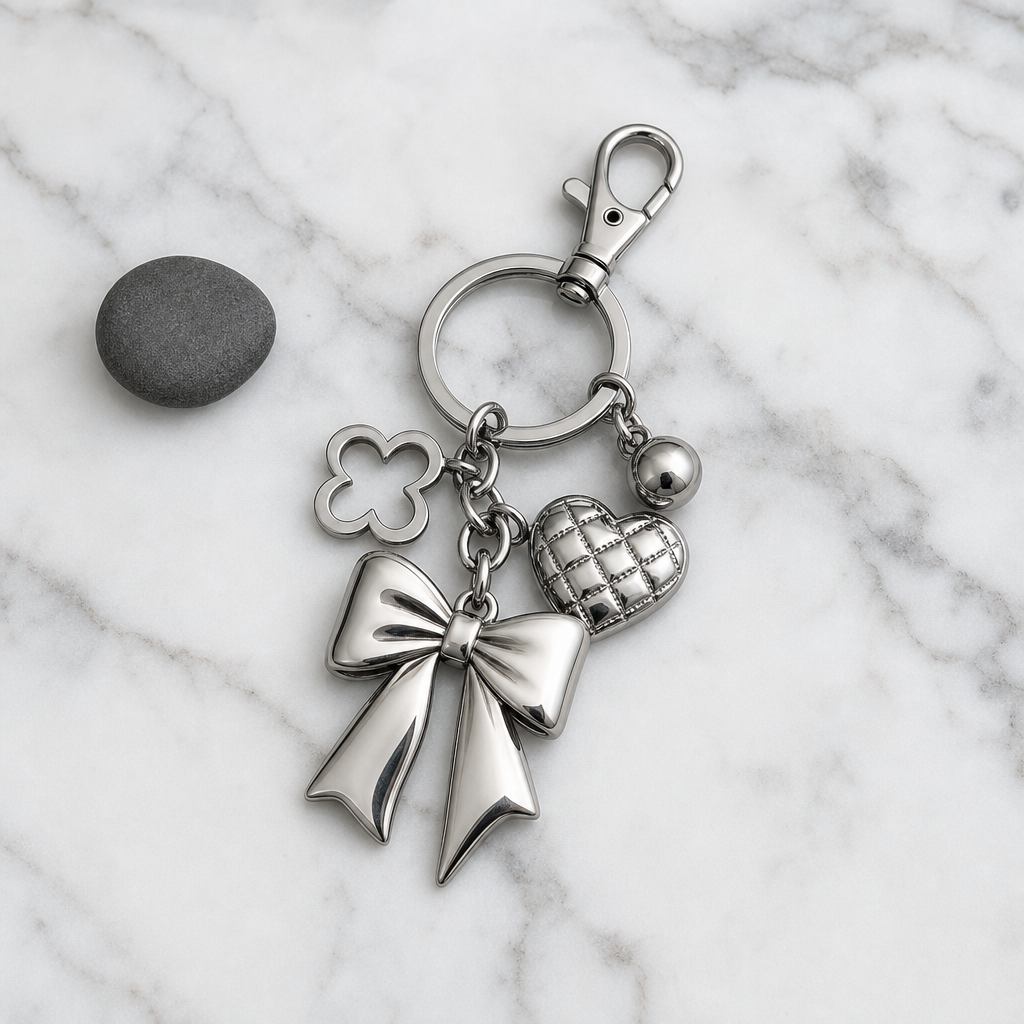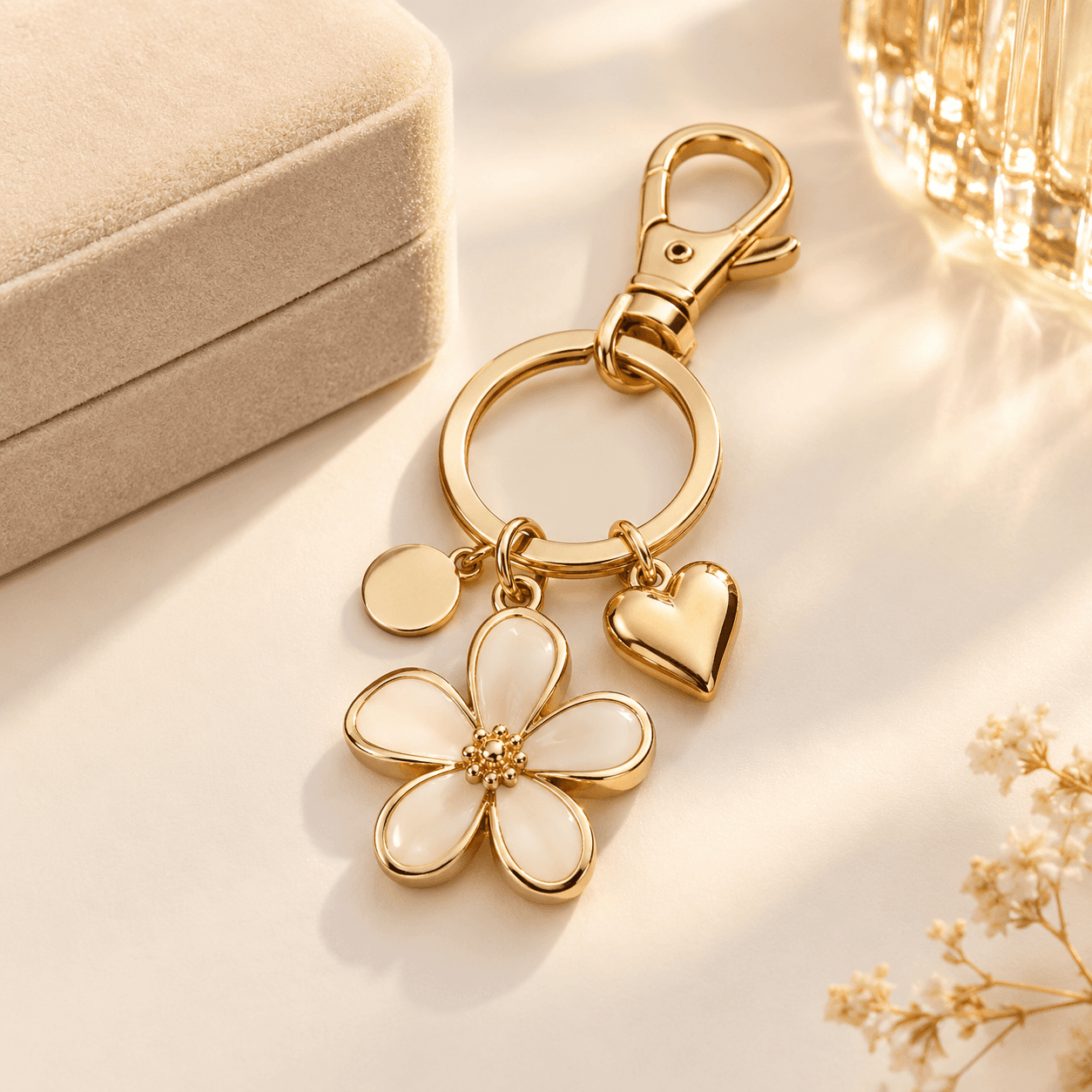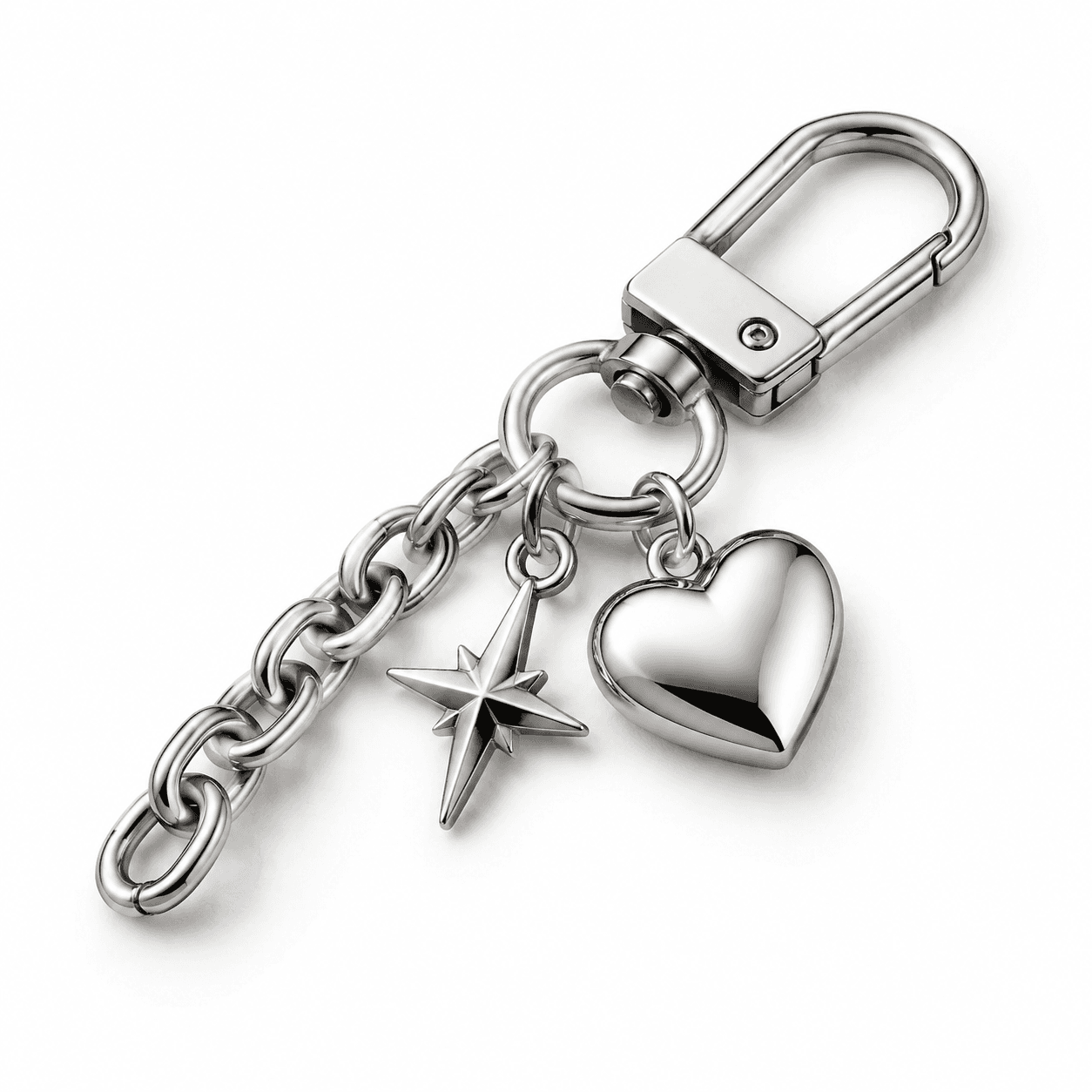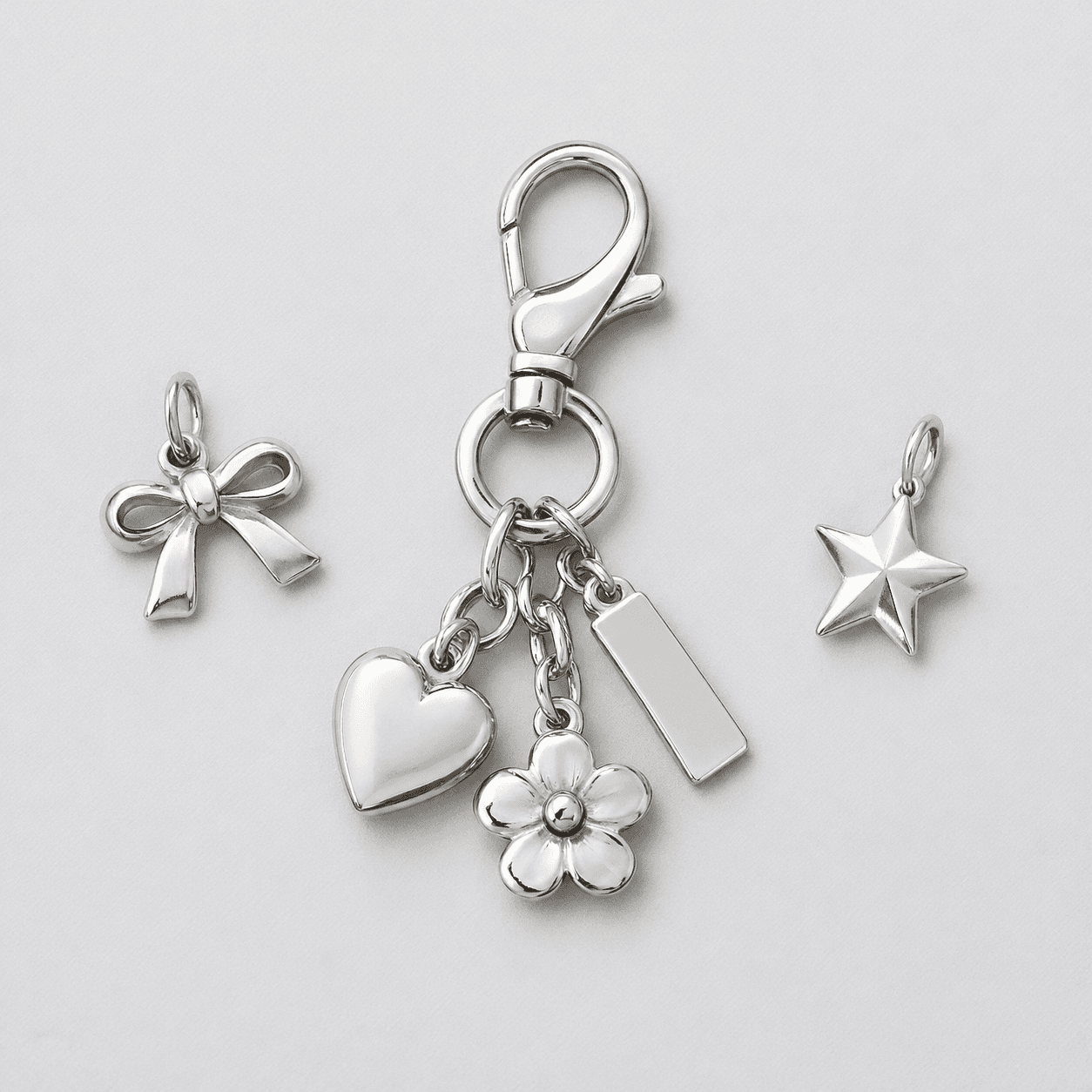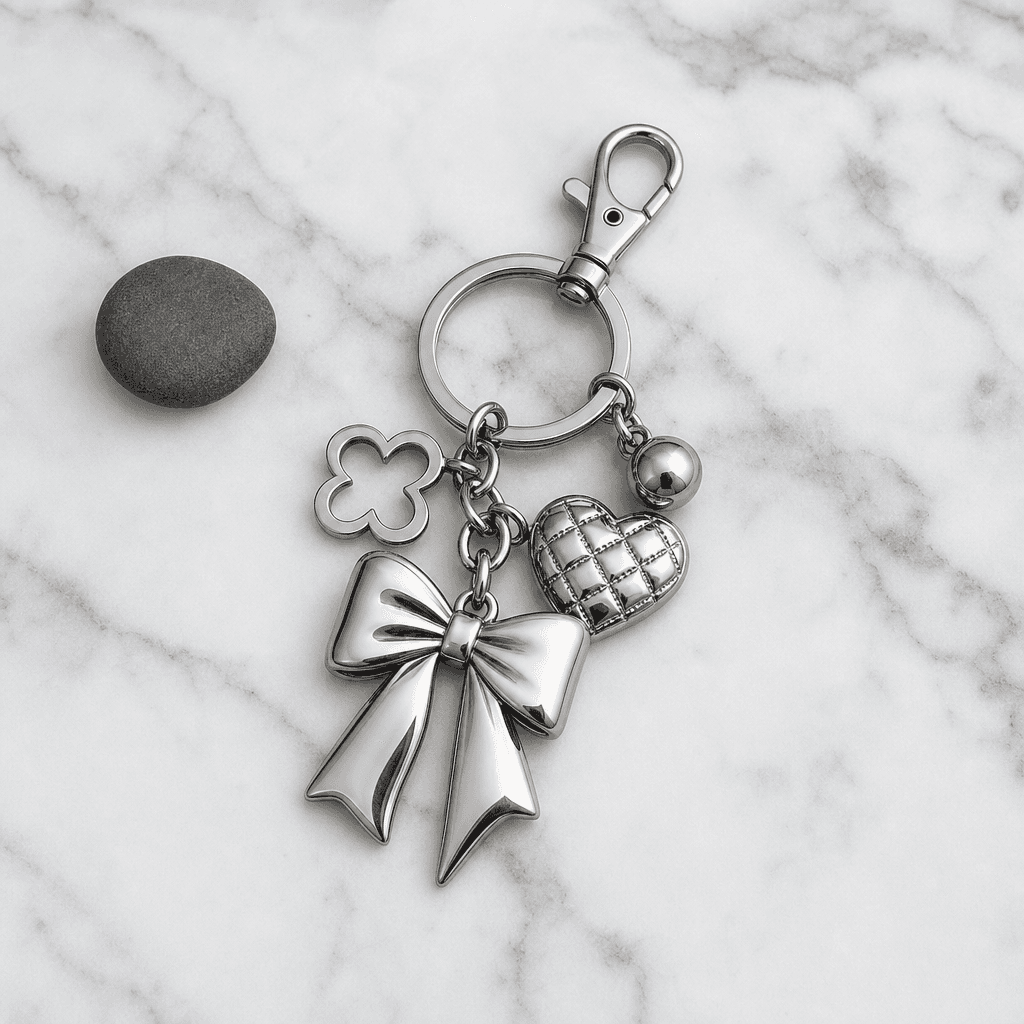
Bag charm keychains live on zippers, hooks, carry handles, and high-touch hardware. If the charm’s finish chips, the metal deforms, or documentation is missing, returns spike fast and brand trust drops just as quickly. This procurement checklist is designed for vendor vetting and audit-ready decision-making—so you can buy with confidence from a stainless steel charms manufacturer that controls risk at every stage of production.
Procurement Checklist: Quality in Stainless Steel Bag Charm Keychain Manufacturing
Goal: verify that your charm factory can consistently produce durable, documentation-backed 316L stainless steel charm components for bag charm keychains—then validate plating, wear resistance, and traceability before bulk orders.
Pre-Sourcing Verification (Documentation & Compliance Readiness)
Design & Durability Requirements (Functional Fit for Real Use)
Process Capability Review (Factory Controls That Prevent Defects)
Quality Control Acceptance Criteria (What “Pass” Means)
Benefits/Why It Matters: Durability, Compliance, and Audit-Ready Documentation
For procurement teams, quality isn’t a vibe—it’s evidence. When you vet a supplier early, you reduce uncertainty across compliance, returns, and supply continuity. A factory-direct approach with documented controls helps you manage risk in every market you serve.
Key benefits (with certifications & testing emphasis)
Detailed Analysis / Guide: How to Vet a 316L Charm Factory for Bag Charm Keychain Quality
Use the following decision framework to evaluate whether your stainless steel charms manufacturer can deliver production consistency—not just one-time sample success.
Step 1: Validate the base material and manufacturing boundaries
- Confirm base material scope: Lancy supports 316L stainless steel charms as the base material for charm production. Request that this is maintained across all SKUs and plating/enamel variants.
- Map the failure modes: for bag charm keychain use, the most common issues are edge wear, finish abrasion, and attachment point stress. Ensure QC targets those areas specifically.
Step 2: Assess the finish system (PVD, plating, and surface integrity)
- Plating readiness: ask how the factory controls adhesion and uniformity for PVD finishes on 316L stainless steel.
- Coating integrity checks: require test-backed expectations for surface stability under exposure (the goal is to avoid “looks fine in the lab” scenarios that fail in daily carry conditions).
- Edge and hole masking: check whether functional zones receive appropriate finishing controls so that the attachment system remains reliable.
Step 3: Require certification packages aligned to market expectations
- Collect the right reports: request the SGS certified documentation set covering RoHS, REACH, Nickel Release EN1811, and salt spray (240H).
- Confirm applicability: ensure the tests correspond to regulatory expectations across your buyer markets (US/EU/UK/AU/CA and EU-facing compliance workflows).
- Make it audit-friendly: ask for document naming conventions and a structured delivery format so procurement can store reports per SKU.
Step 4: Audit sample development and first-article validation
- Use a sample milestone: verify that the factory can complete sample development quickly while still providing measurable acceptance criteria.
- Lock design parameters: for custom logo engraving, confirm engraving depth consistency, edge smoothness, and finishing passivation before plating.
- Sign off with an FAI approach: request an inspection record comparing sample vs. the production target.
Step 5: Define bulk order controls (what happens after approval)
- Production QC plan: ask for how inspections occur across CNC/laser, welding, polishing, plating, and final assembly.
- Batch traceability: require that each bulk shipment includes batch identifiers connected to QC outcomes.
- Packaging for transport: confirm private-label packaging workflows, tray/insert protection, and labeling methods that reduce finish scratches.
Step 6: Procurement safeguards (contract & commercial terms that protect quality)
- Set acceptance thresholds: define what defects cause rejection and how remediation is handled.
- Use RFQ discipline: include test requirements and documentation delivery time inside the RFQ so there is no ambiguity during production.
- Plan for low MOQ and scaling: if your program includes initial runs, confirm the supplier’s process stability across both low MOQ charm production and later bulk scaling.
FAQ (Procurement Teams)
1) What certifications should we request for stainless steel bag charm keychains?
Request certification evidence relevant to metals and exposure, including SGS certified documents for RoHS, REACH, Nickel Release EN1811, and salt spray performance (e.g., 240H) so your compliance and audit files are complete.
2) Why is 316L stainless steel the right base material for durability?
For bag charm keychains, durability depends on structural stability during repeated handling and exposure. Using 316L stainless steel as the base supports long-term resilience while you focus QC on finish integrity and attachment-point reliability.
3) How do we evaluate PVD plated stainless steel charms for wear resistance?
Require process control transparency and test-backed documentation. Evaluate acceptance standards for adhesion, surface integrity, and finish stability under exposure conditions. Then align sample sign-off to your bulk acceptance criteria.
4) What should be included in an RFQ for custom logo charms and private label?
Include SKU specs, base material confirmation (316L stainless steel), requested finishes (e.g., PVD, enamel, crystal inlay if applicable), documentation deliverables, sample development timeline, QC acceptance criteria, and private-label packaging requirements. For sourcing, this reduces risk and speeds approvals.
Partner With Lancy Jewelry for Audit-Ready 316L Charm Production
If you’re sourcing a stainless steel charms manufacturer for custom 316L stainless steel charms used in bag charm keychains, make documentation and durability non-negotiable. Lancy Jewelry supports OEM and ODM production, sample development, consistent finishing quality, and private-label packaging—backed by SGS certified compliance documentation including salt spray 240H.
Next step: Send your requirements via /cart (RFQ and inquiry). We’ll confirm feasibility, timelines, and the quality evidence package for bulk charm orders.
Internal resources: