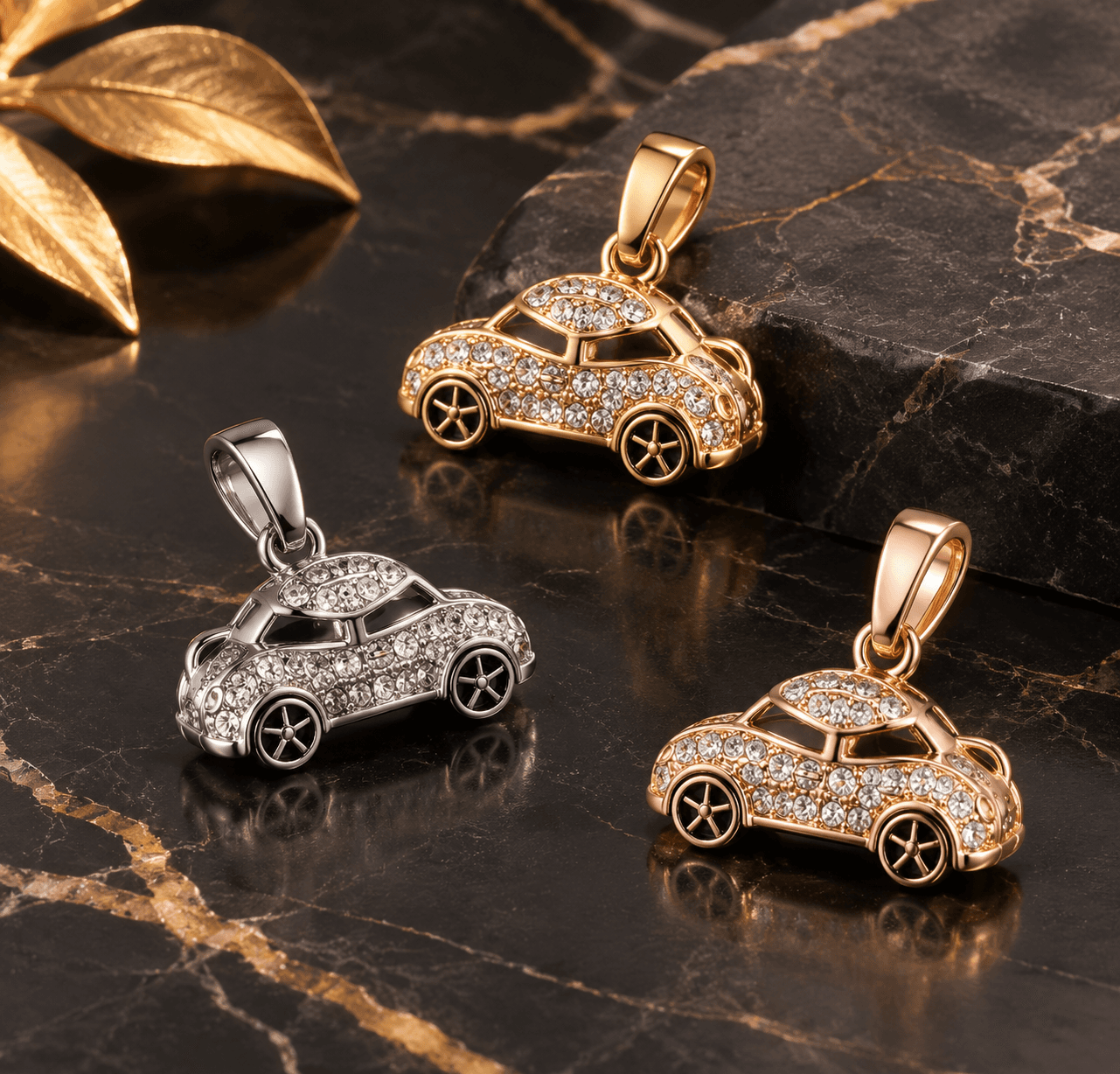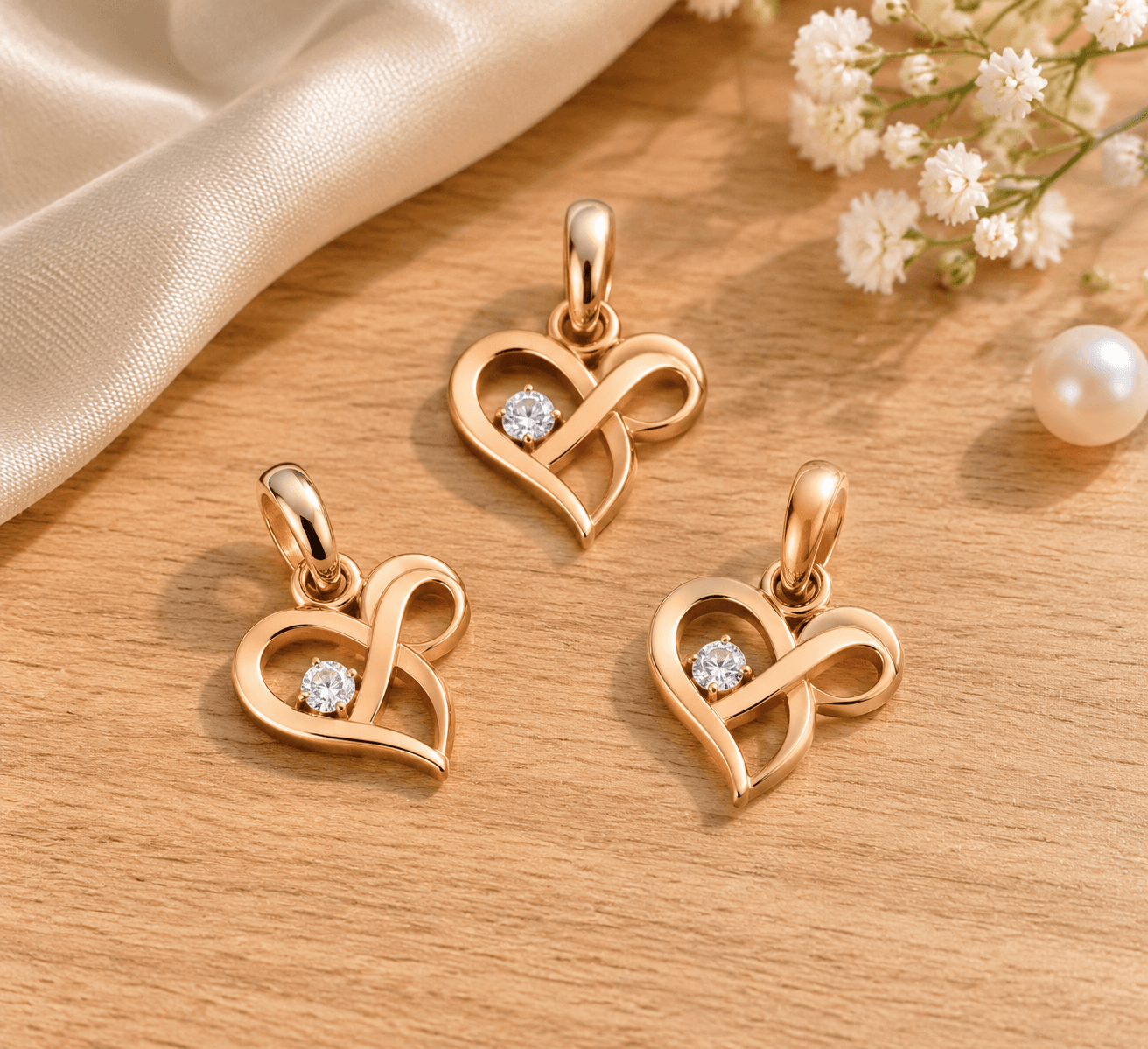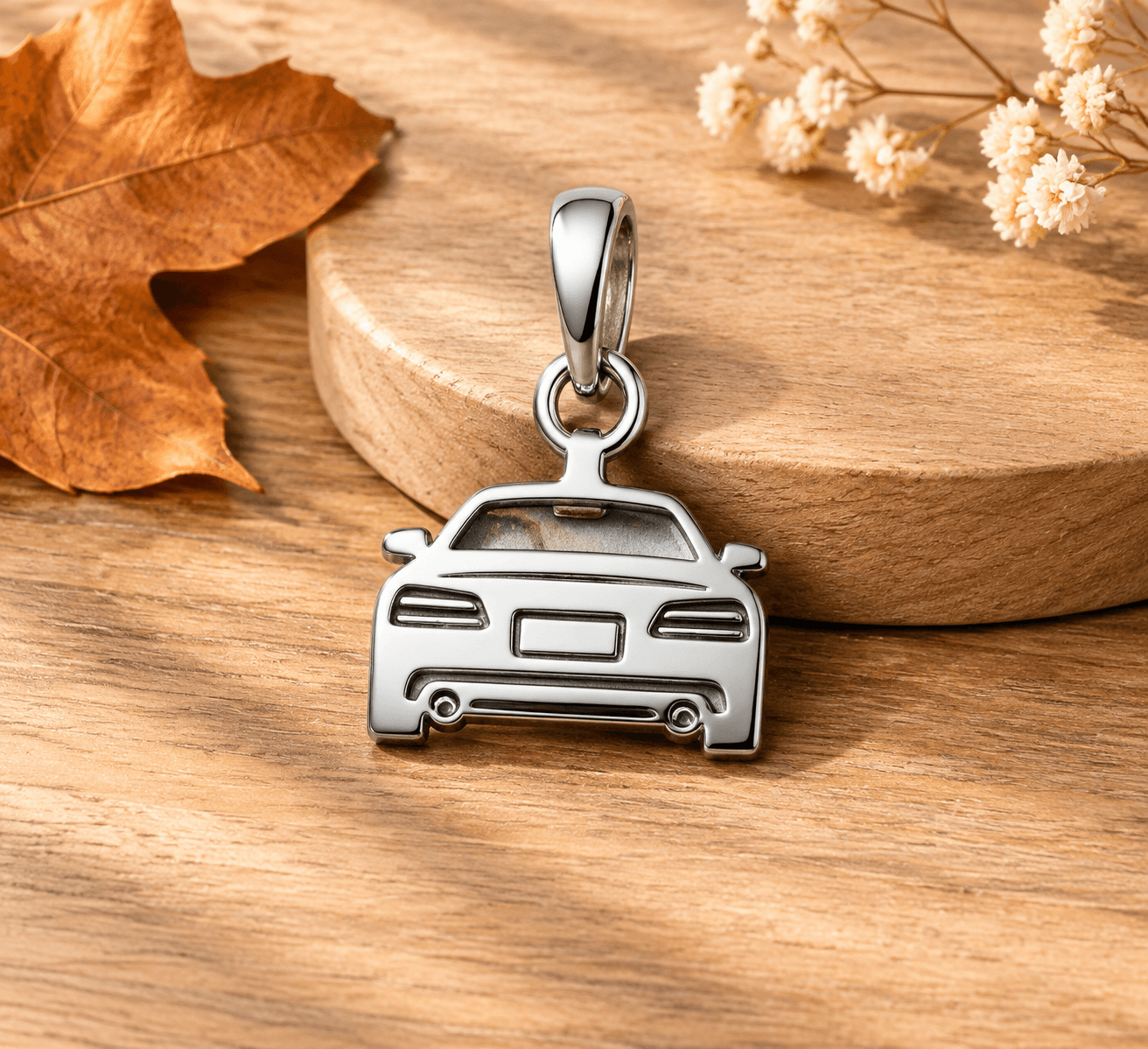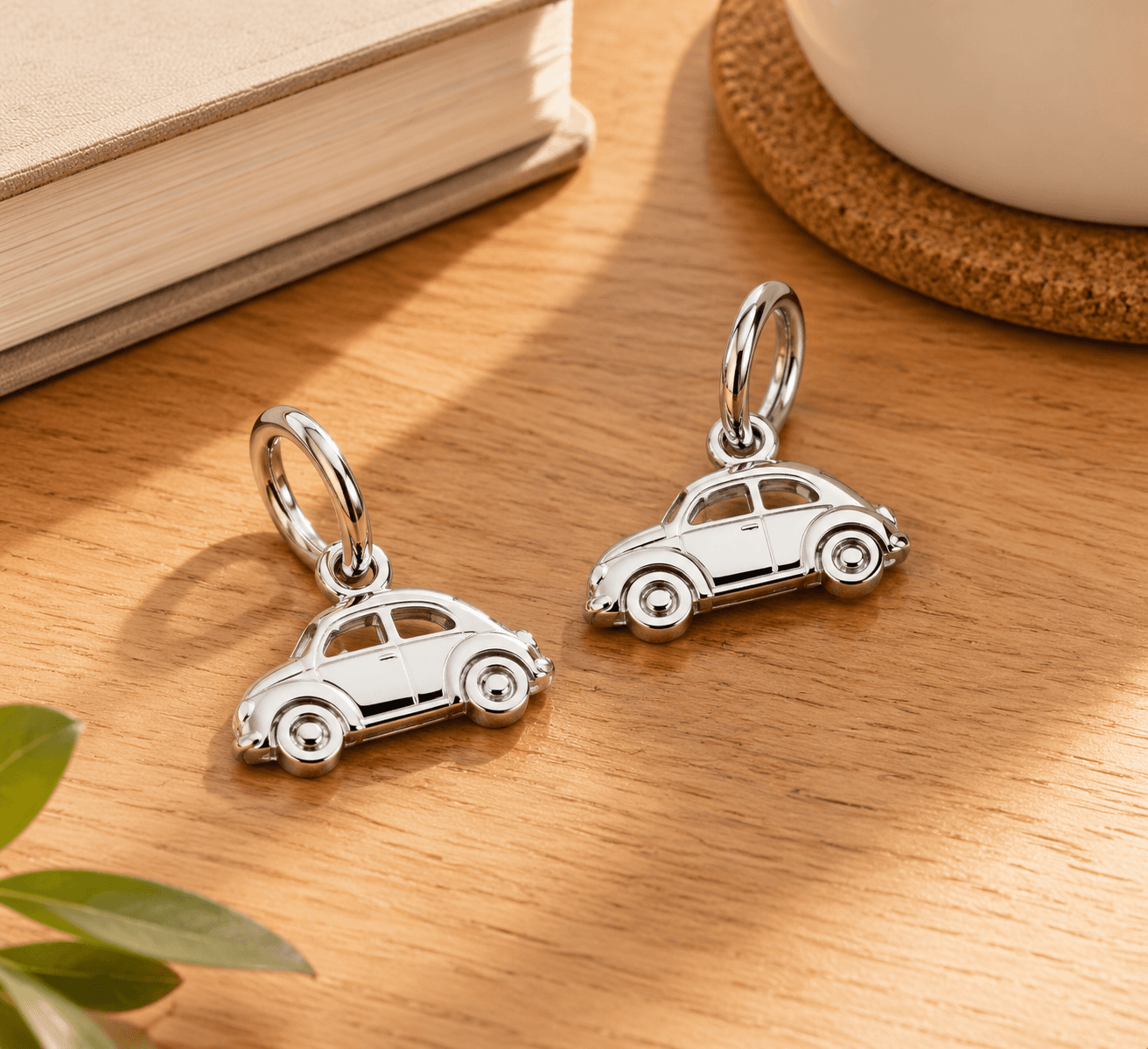
Custom car charms offer wholesale buyers an opportunity to expand gift accessories and personalized product programs with distinctive decorative designs. However, attractive samples do not automatically translate into reliable bulk production. Differences in material quality, plating consistency, attachment strength, and manufacturing control can affect customer satisfaction, return rates, and retail margins.
For boutique brands, gift companies, and private-label buyers in the US and Canada, choosing the right manufacturing partner requires more than comparing unit prices. You need documented material specifications, repeatable production standards, appropriate safety testing, and a supplier capable of delivering consistent results across every reorder. This practical checklist explains how to evaluate stainless steel custom car charms before approving samples or placing bulk orders.
Stainless Steel Custom Car Charms: Essential Buyer Quality Checklist
Start with the product itself. A successful car charm program should combine an attractive front design, dependable attachment hardware, appropriate dimensions, and a durable surface finish. Every specification should be confirmed before mass production begins.
1. Verify the Base Material
- ☐ Confirm that the product uses genuine 316L stainless steel as its base material.
- ☐ Request material specifications and supporting documentation from the manufacturer.
- ☐ Confirm that the same approved material specification will be maintained for repeat orders.
- ☐ Check that the material is suitable for the intended decorative accessory application.
- ☐ Request traceability information for production batches where available.
316L stainless steel is a practical choice for decorative accessories because of its corrosion resistance, structural strength, and suitability for detailed manufacturing. For buyers supplying North American retailers, consistent material specifications help establish product expectations and reduce uncertainty during quality inspections.
Do not rely solely on a supplier's product description. Ask for supporting material information and confirm that the approved specification applies to the actual production batch, not just the development sample.
2. Inspect Design and Manufacturing Precision
- ☐ Check that the complete charm silhouette is clean and symmetrical.
- ☐ Inspect laser-cut edges for burrs, roughness, and visible irregularities.
- ☐ Confirm that engraved logos and decorative details are clear and consistent.
- ☐ Check polishing quality under direct and angled lighting.
- ☐ Compare sample dimensions against the approved technical drawing.
- ☐ Confirm that attachment holes and loops have appropriate dimensions.
Manufacturing precision directly affects perceived quality. A small decorative accessory can contain several visible details, so uneven edges, inconsistent engraving, or poorly finished surfaces become noticeable during retail inspection.
Ask whether the supplier uses CNC processing, laser cutting, laser marking, welding, and controlled polishing operations where appropriate. These capabilities support repeatable manufacturing and more precise customization.
3. Evaluate PVD Plating and Surface Durability
- ☐ Specify the required finish: gold plated, silver finish, or rose gold plating.
- ☐ Request samples showing the actual production finish.
- ☐ Inspect color uniformity across flat surfaces, edges, and recessed details.
- ☐ Ask about plating process controls and thickness specifications.
- ☐ Request relevant abrasion, adhesion, and corrosion-resistance test information.
- ☐ Confirm acceptable color variation between production batches.
PVD is an important consideration when developing premium-looking decorative accessories. Buyers should evaluate not only the initial color but also how the finish performs under relevant wear conditions. Surface preparation, process consistency, and inspection standards all contribute to the final result.
For custom car charms, the intended placement also matters. A charm displayed inside a vehicle may encounter sunlight, temperature changes, dust, and repeated handling. These conditions should inform the finish specification and testing plan.
4. Check Attachment Hardware and Mechanical Reliability
- ☐ Confirm that the jump ring or bail is correctly sized for the intended application.
- ☐ Check that connectors pass through actual holes or closed loops.
- ☐ Inspect soldered or welded connection points where applicable.
- ☐ Request appropriate pull or tensile testing for the attachment structure.
- ☐ Check for sharp edges, loose components, and accidental opening risks.
- ☐ Confirm that the complete attachment assembly is included in the approved sample.
Attachment reliability is especially important for car accessories. A decorative charm that separates from its connector creates an avoidable customer complaint and may become a safety concern if it interferes with vehicle operation.
Buyers should clearly define the intended mounting method. Decorative products designed for stationary display should not automatically be presented as suitable for installation on vehicle controls, steering components, airbags, or visibility-critical areas. Any adhesive or mounting system should be independently evaluated for its intended vehicle application.
5. Assess Decorative Details and Customization
- ☐ Confirm enamel colors against approved color references.
- ☐ Inspect enamel filling for bubbles, gaps, uneven coverage, and contamination.
- ☐ Check crystal inlay positioning and setting security where applicable.
- ☐ Verify logo engraving size, location, and readability.
- ☐ Approve front and back design details before production.
Personalization can increase the commercial appeal of car charms. Initials, meaningful symbols, gift messages, and coordinated color selections can help buyers develop distinctive product assortments without compromising manufacturing consistency.
For every customized design, maintain an approved reference sample and technical specification. This gives the factory and buyer a shared standard for production inspection.
Why Quality Standards Matter for Wholesale Car Charm Programs
Wholesale purchasing decisions should account for more than the initial product cost. Material consistency, finish durability, safety documentation, and supplier reliability influence the total cost of ownership. Strong quality management can reduce rejected goods, customer complaints, replacement expenses, and unnecessary inventory losses.
Key Benefits of Verified Manufacturing Standards
Material and Chemical Compliance
For North American buyers, documented material and chemical compliance helps support responsible product sourcing. Lancy Jewelry has SGS-certified testing documentation covering RoHS, REACH, and Nickel Release EN1811. These standards and regulations address different compliance considerations, so buyers should verify the relevant report, test method, product scope, and applicable market requirements for each order.
Do not assume that one test report automatically establishes compliance with every requirement in the United States or Canada. Ask the supplier to clarify which product configuration and production specifications are covered by each document.
Corrosion Resistance and Longevity
Lancy Jewelry also supports a 240-hour salt spray testing standard. Salt spray testing provides useful comparative information about corrosion performance under controlled test conditions. However, it should not be interpreted as a direct prediction of a product's exact service life in a vehicle.
Buyers should request the applicable test report and confirm the tested finish, sample configuration, evaluation criteria, and results. Additional testing may be appropriate when a product is intended for particularly demanding environments.
Consistent Retail Presentation
Uniform dimensions, color, polishing, and engraving help maintain a professional retail appearance. For buyers managing multiple boutiques or distribution channels, batch consistency is particularly important because customers expect the same product quality regardless of purchase location.
North American Safety and Regulatory Considerations
FDA requirements should be considered according to the product's actual intended use. Ordinary decorative car charms are generally not FDA-regulated merely because they are sold as vehicle accessories. However, other requirements may apply depending on product claims, intended use, construction, packaging, and distribution arrangements.
US buyers should review applicable consumer product safety requirements, advertising claims, and relevant state regulations. Canadian buyers should also assess applicable federal and provincial consumer product and chemical safety requirements. Where products are intended for children or marketed as children's products, additional requirements may apply.
Most importantly, decorative car charms should never obstruct the driver's field of vision, interfere with vehicle controls, or be installed where they could interfere with airbag deployment. Buyers should provide clear placement instructions and avoid unsupported safety or durability claims.
How to Evaluate a Stainless Steel Charms Manufacturer
Once the product specifications are established, evaluate the manufacturing partner. A dependable supplier should demonstrate technical capabilities, organized quality control, transparent communication, and the ability to support commercial production quantities.
6. Review Factory Capabilities and Production Control
- ☐ Confirm that the supplier specializes in 316L stainless steel charms.
- ☐ Review its CNC, laser cutting, laser marking, welding, and polishing capabilities.
- ☐ Ask how dimensional tolerances are controlled.
- ☐ Confirm that PVD plating and decorative finishing are included in the production workflow.
- ☐ Review inspection procedures for incoming materials, work in progress, and finished goods.
- ☐ Ask whether production records and batch inspection results can be provided.
A capable stainless steel charms manufacturer should explain how each production stage affects the final product. General claims about factory experience are less useful than specific answers about tooling, finishing, inspection, and defect management.
7. Evaluate MOQ, Bulk Pricing, and Profit Margins
- ☐ Request the MOQ for each design, finish, and customization option.
- ☐ Ask for tiered pricing at several order quantities.
- ☐ Confirm whether different designs can share a production order.
- ☐ Clarify tooling, engraving, sampling, and packaging costs.
- ☐ Confirm production lead times and reorder conditions.
- ☐ Calculate landed cost rather than comparing factory prices alone.
MOQ flexibility can make a significant difference for boutique buyers. A lower initial order quantity allows businesses to test customer demand, introduce seasonal designs, and expand successful products without committing excessive capital to inventory.
However, a low MOQ does not automatically represent the best commercial deal. Buyers should compare unit prices, development charges, shipping expenses, packaging costs, inspection expenses, and expected defect rates.
For example, request quotations at three different volume levels. Compare the cost per sellable unit, not simply the quoted manufacturing price. This helps determine whether a larger bulk order produces enough savings to justify additional inventory exposure.
Lancy Jewelry provides low MOQ support for suitable projects, helping boutique brands develop coordinated product programs while managing purchasing commitments.
8. Test Sample Development Before Bulk Approval
- ☐ Submit a complete design brief with dimensions and reference artwork.
- ☐ Confirm material, finish, engraving, enamel, and connector specifications.
- ☐ Request a physical sample before approving mass production.
- ☐ Inspect appearance, dimensions, attachment security, and finish quality.
- ☐ Document requested revisions and obtain a revised approval sample.
- ☐ Keep an approved reference sample for future production comparisons.
Sample development is one of the most effective ways to reduce sourcing uncertainty. It allows buyers to identify manufacturing limitations early, confirm the intended appearance, and agree on realistic quality standards before committing to a larger order.
Ask the supplier to identify which elements are technically feasible and which require adjustments. A professional ODM charm supplier should be able to discuss design optimization while preserving the intended commercial appearance.
9. Establish Written Quality and Warranty Conditions
- ☐ Agree on acceptable dimensions and visual tolerances.
- ☐ Define acceptable finish variation and inspection criteria.
- ☐ Establish a procedure for identifying defective products.
- ☐ Confirm responsibility for verified manufacturing defects.
- ☐ Agree on replacement, credit, or other corrective-action arrangements.
- ☐ Define any applicable warranty period and its exclusions in writing.
Longevity guarantees should be specific and measurable. Avoid relying on vague promises such as permanent color or lifetime durability. Instead, request written terms describing the covered defects, claim period, evidence requirements, and resolution process.
Buyers should also distinguish between manufacturing defects and damage caused by improper installation, misuse, accidental impact, or environmental conditions outside the agreed testing scope.
10. Confirm Private-Label Packaging and Delivery Reliability
- ☐ Approve packaging dimensions and product presentation.
- ☐ Confirm logo placement and packaging artwork.
- ☐ Check that products are protected against scratching during transit.
- ☐ Confirm carton quantities, labeling, and shipping documentation.
- ☐ Request a realistic production schedule and shipment commitment.
- ☐ Establish communication procedures for delays or quality issues.
Private-label packaging can help buyers create a consistent retail presentation across boutique stores, gift programs, and online sales channels. Packaging should protect the charm while supporting the intended positioning and price point.
Building a More Profitable Wholesale Car Charm Collection
After supplier qualification, the next challenge is assortment planning. Wholesale buyers should develop products around clear customer preferences rather than ordering too many unrelated designs.
Plan a Coordinated Product Range
Consider organizing car charm collections around personalization, seasonal gifting, travel themes, meaningful symbols, and coordinated color combinations. A focused assortment makes inventory planning easier and allows retailers to present a clear product story.
For North American markets, gift-ready presentation, personalization, practical dimensions, and recognizable decorative themes can support stronger retail appeal. Buyers should validate these preferences through their own sales data and customer feedback.
Protect Margins Through Better Sourcing Decisions
Calculate wholesale profitability using the complete landed cost. Include manufacturing, customization, packaging, freight, duties where applicable, inspection, and expected defect allowances. Then compare the resulting cost with the planned wholesale or retail selling price.
Do not sacrifice critical quality requirements simply to obtain a lower quotation. A small reduction in unit cost can become expensive if it leads to inconsistent finishes, loose connectors, customer returns, or delayed deliveries.
Working with an experienced OEM charms manufacturer can simplify product development, consolidate specifications, and support more predictable production planning. The objective is to build a repeatable supply relationship rather than negotiate each order as an isolated transaction.
Frequently Asked Questions
1. Why should wholesale buyers choose 316L stainless steel for custom car charms?
316L stainless steel offers corrosion resistance, structural strength, and suitability for detailed manufacturing. It is a practical base material for decorative accessories requiring consistent appearance and dependable everyday handling. Buyers should still evaluate the complete finish and attachment assembly through relevant testing.
2. What certifications and testing documents should buyers request?
Request relevant SGS testing documentation covering RoHS, REACH, Nickel Release EN1811, and applicable salt spray testing. Lancy Jewelry supports a 240-hour salt spray testing standard. Always confirm report validity, tested product specifications, and applicability to the intended destination market.
3. How can buyers reduce MOQ and inventory risks?
Begin with sample development, select a focused range of designs, and request quotations at multiple order quantities. Ask whether suitable designs can share production arrangements and confirm all customization charges before ordering. A controlled launch helps buyers validate demand before expanding bulk orders.
4. Can Lancy Jewelry develop private-label custom car charms?
Yes. Lancy Jewelry supports OEM and ODM development for 316L stainless steel charms, including custom designs, logo engraving, PVD plating, enamel color filling, crystal setting, and private-label packaging. Buyers can submit an RFQ with artwork, quantities, finish requirements, and packaging specifications to begin sample development.
Partner With Lancy Jewelry for Reliable Custom Car Charm Manufacturing
Choosing the right manufacturing partner is a commercial decision that affects product quality, customer satisfaction, inventory investment, and long-term margins. The strongest sourcing strategy combines verified material specifications, documented testing, practical sample approval, clear MOQ arrangements, and written quality expectations.
Lancy Jewelry is a B2B OEM/ODM 316L stainless steel charms manufacturer supporting boutique jewelry brands, gift companies, distributors, and private-label buyers. Our modern manufacturing facility uses CNC processing, laser cutting, laser marking, welding, and polishing to support detailed product development and consistent production.
Our capabilities include custom stainless steel charms, logo engraving, PVD plating, enamel color filling, crystal setting, and private-label packaging. With low MOQ support and sample development, we help buyers move from initial concepts to coordinated commercial collections.
Explore our product catalog to review available product directions, learn about our OEM and ODM manufacturing services, or contact our team to discuss your sourcing requirements.
Ready to develop a custom car charm collection? Send Lancy Jewelry your design files, target quantities, preferred finishes, and packaging requirements. Request an RFQ and let us help you establish a clear specification, evaluate samples, and plan your next wholesale order with confidence.