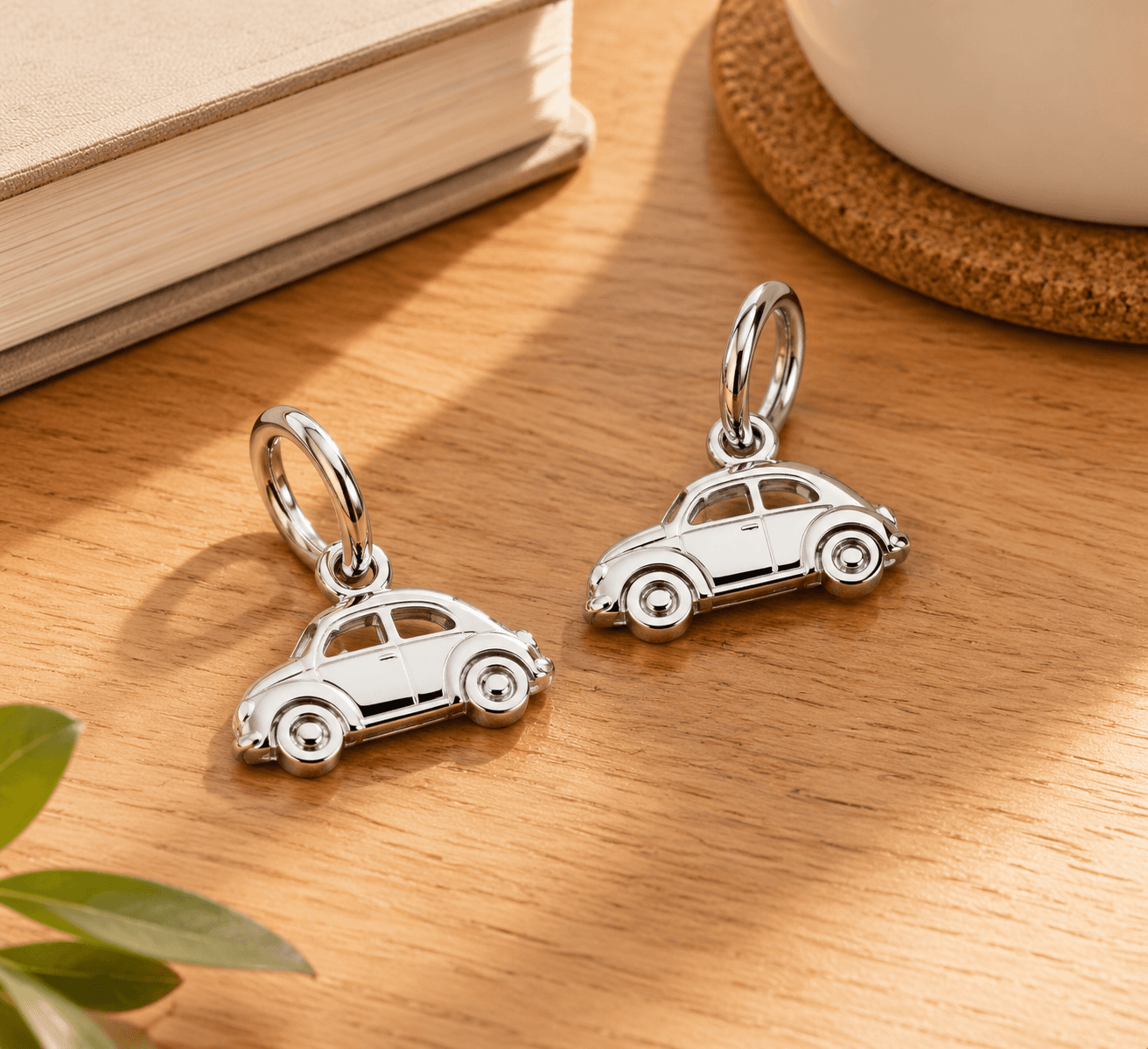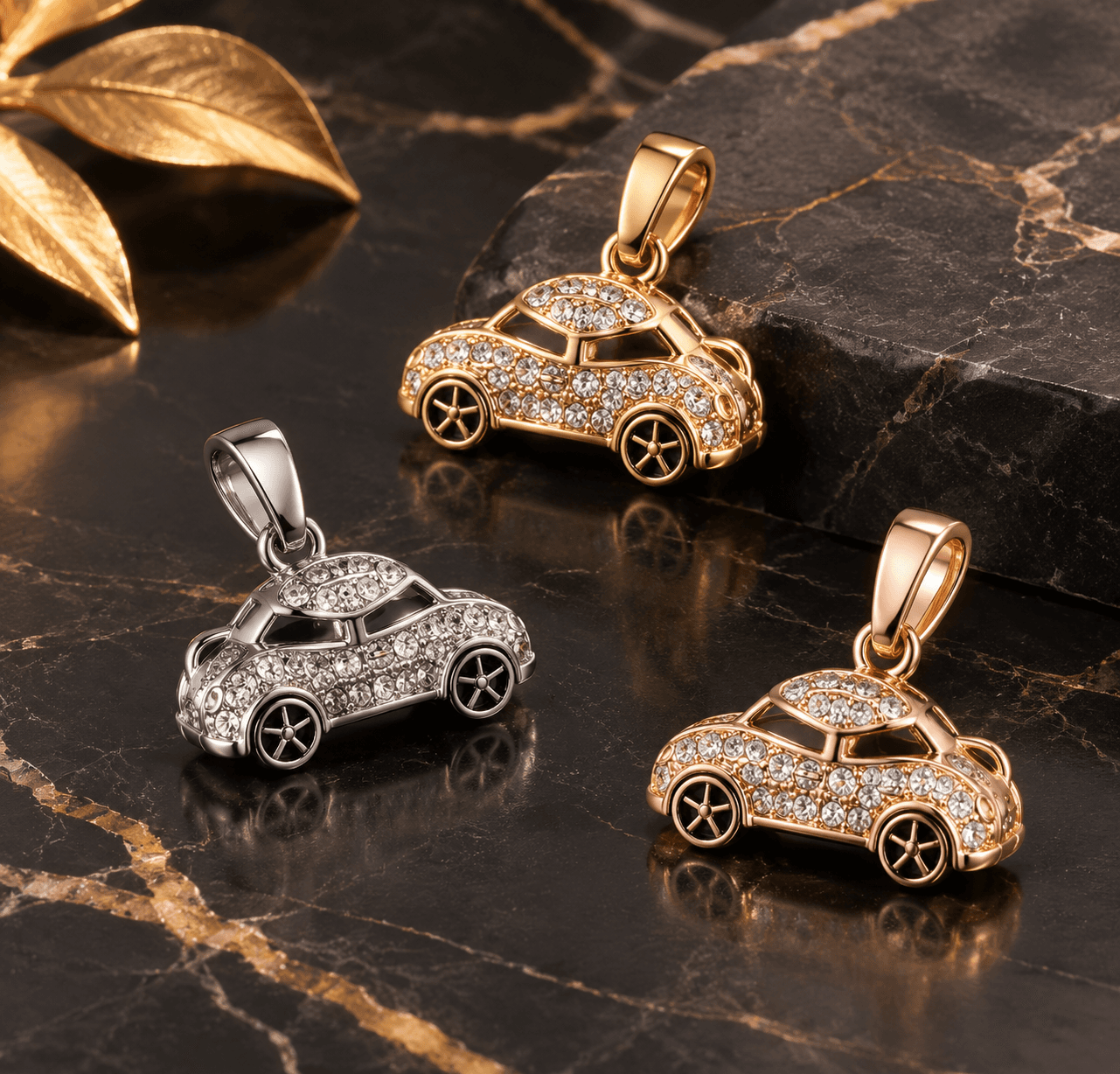
For wholesale buyers, attractive crystal car charms are only the starting point. The real sourcing question is whether each order can deliver consistent appearance, durable finishing, reliable attachment hardware, predictable margins, and repeatable quality at scale. A supplier that performs well on samples but struggles with production consistency can quickly create returns, rework, and margin pressure.
This checklist is designed for North American wholesale buyers evaluating stainless steel crystal car charms for automotive accessory programs, gift collections, boutique assortments, and private-label projects. Use it before approving samples, negotiating MOQ, or placing bulk orders.
Stainless Steel Crystal Car Charms Wholesale: Buyer Checklist
1. Confirm the base material
- ☐ Confirm that the charm base is 316L stainless steel.
- ☐ Request clear material documentation from the supplier.
- ☐ Check that the material specification remains consistent between approved samples and production orders.
- ☐ Confirm that the supplier's production process is designed around the stated material rather than switching materials to meet price targets.
For buyers, material consistency is a basic quality-control requirement. 316L stainless steel provides a practical foundation for decorative accessories because buyers can evaluate a defined material specification alongside measurable finishing and testing requirements.
2. Inspect the crystal inlay
- ☐ Check that crystal elements are seated evenly.
- ☐ Look for gaps, loose settings, visible adhesive, or uneven alignment.
- ☐ Compare the color, clarity, and size of crystal elements across multiple samples.
- ☐ Test whether normal handling causes movement or loosening.
Crystal detailing can create a strong retail presentation, but it also introduces another quality checkpoint. Ask the supplier how the setting process is controlled and whether production inspection includes a dedicated check for loose or misaligned crystal components.
3. Verify the attachment mechanism
- ☐ Confirm that the bail, jump ring, loop, or other attachment point is mechanically plausible.
- ☐ Check that connecting hardware passes through a real hole or loop.
- ☐ Inspect soldered or welded areas for visible defects where applicable.
- ☐ Test the attachment under repeated movement and normal handling.
For car-accessory applications, attachment reliability matters because vibration and repeated movement can place additional stress on small connection points. A visually attractive charm should not be approved until the complete attachment system has been inspected.
Why Quality and Durability Matter for Wholesale Buyers
4. Review measurable testing and certifications
Wholesale buyers should ask for objective evidence instead of relying only on appearance or supplier claims. Lancy Jewelry's production capabilities are supported by SGS certification covering RoHS, REACH, Nickel Release EN1811, and Salt Spray 240H requirements.
- ☐ Request relevant test documentation for the material and finish being purchased.
- ☐ Check whether nickel-release requirements are documented where applicable to the intended market and product use.
- ☐ Review salt-spray test information when corrosion resistance is an important purchasing criterion.
- ☐ Confirm that the tested specification corresponds to the actual production configuration.
Testing does not replace production inspection, but it gives sourcing teams a stronger basis for supplier evaluation. For North American buyers, documented quality controls can also make internal purchasing reviews easier and provide useful technical records for product files.
5. Evaluate finish consistency
- ☐ Compare color and surface appearance across several production samples.
- ☐ Check PVD finishes for even coverage and consistent tone.
- ☐ Inspect edges, recessed areas, holes, and attachment points.
- ☐ Establish an acceptable visual standard before mass production.
For gold plated or rose gold plating programs, color consistency can directly affect the perceived value of a collection. A professional supplier should be able to explain how plating parameters, polishing, cleaning, and inspection are controlled.
6. Assess wear resistance
- ☐ Ask which durability tests are used for the selected finish.
- ☐ Review salt-spray results where relevant.
- ☐ Ask how the supplier checks surface wear after repeated handling.
- ☐ Define acceptable changes in appearance before production approval.
Be cautious about vague claims such as “long lasting” without supporting criteria. A better sourcing discussion identifies the test method, test duration, product configuration, and acceptance standard. This turns durability from a marketing statement into a measurable purchasing requirement.
Detailed Supplier Evaluation Guide
7. Check manufacturing capability
A capable stainless steel charms manufacturer should be able to explain how the product moves from drawing to production. Lancy Jewelry operates a modern facility with CNC machining, laser cutting, laser marking, welding, and polishing capabilities.
- ☐ Ask whether the supplier can develop samples from drawings, reference specifications, or production requirements.
- ☐ Confirm that logo engraving and marking can be controlled at production scale.
- ☐ Review how polishing quality is checked before finishing.
- ☐ Confirm that production inspection covers dimensions, surface quality, attachment points, and decorative details.
For custom programs, integrated manufacturing capability can reduce communication gaps between development and production. It can also make it easier to correct technical issues before a bulk order is released.
8. Review sample development before approving a bulk order
- ☐ Provide a clear drawing, size, finish, crystal specification, and attachment requirement.
- ☐ Request a production-representative sample.
- ☐ Compare the sample against your intended retail positioning and packaging requirements.
- ☐ Record approved dimensions, finish, artwork, and quality standards.
- ☐ Keep an approved reference sample for future purchase orders.
Sample development is especially important for buyers building a new assortment. A sample should confirm not only visual design but also manufacturing feasibility, attachment strength, finishing consistency, and packaging presentation.
9. Evaluate MOQ and wholesale economics
Wholesale purchasing decisions should be based on landed economics rather than unit price alone. A low quoted price may not be advantageous if inconsistent quality increases inspection, returns, replacement, or rework costs.
- ☐ Confirm the MOQ for each design and finish.
- ☐ Ask whether low MOQ production is available for initial assortment testing.
- ☐ Calculate unit cost, packaging cost, freight, inspection cost, and expected selling price.
- ☐ Compare expected gross margin across different order quantities.
- ☐ Confirm lead times for both samples and bulk orders.
Lancy supports low MOQ projects for buyers that want to validate designs before scaling. For boutique brands and gift companies, this can make it easier to test several designs while controlling initial inventory exposure.
10. Review private-label readiness
- ☐ Confirm whether custom logo engraving is available.
- ☐ Review private-label packaging options.
- ☐ Confirm artwork and packaging approval procedures.
- ☐ Check whether packaging specifications can be repeated for future orders.
Private-label readiness matters when a wholesale buyer wants a consistent customer-facing presentation. Packaging, product marking, and assortment planning should be discussed early rather than added after production is already scheduled.
11. Test supplier communication and reliability
- ☐ Measure how quickly technical questions receive clear answers.
- ☐ Ask for realistic sample and production lead times.
- ☐ Confirm who handles artwork, sampling, quality approval, and order coordination.
- ☐ Ask how production deviations are reported and resolved.
- ☐ Confirm how repeat orders are matched to approved specifications.
Supplier reliability is not simply about delivering on time. It also includes documentation, communication, quality consistency, and the ability to reproduce an approved product over multiple purchase cycles.
12. Build a final pre-order checklist
Before releasing an RFQ or purchase order, document the commercial and technical requirements in one place.
- ☐ Product dimensions and tolerances approved.
- ☐ 316L stainless steel specification confirmed.
- ☐ Crystal inlay specification approved.
- ☐ PVD or other selected finish approved.
- ☐ Attachment hardware and connection method approved.
- ☐ Logo artwork approved where applicable.
- ☐ Packaging specification approved.
- ☐ MOQ and unit pricing confirmed.
- ☐ Sample approval completed.
- ☐ Testing and certification documentation reviewed.
- ☐ Production lead time confirmed.
This checklist gives purchasing teams a practical record for comparing suppliers and reducing avoidable production risks.
Frequently Asked Questions
What should I verify first when buying crystal car charms wholesale?
Start with the 316L stainless steel specification, crystal-setting quality, attachment mechanism, finish consistency, available testing documentation, MOQ, and sample approval process. These factors establish whether the supplier can support both product quality and commercial requirements.
What certifications should wholesale buyers request?
Request documentation relevant to the product configuration and target market. Lancy Jewelry's SGS certifications cover RoHS, REACH, Nickel Release EN1811, and Salt Spray 240H requirements. Buyers should confirm that the documentation corresponds to the actual product and finish being ordered.
How can I reduce risk when ordering a new collection?
Begin with sample development, define measurable quality standards, confirm MOQ and lead time, and retain an approved reference sample. A staged purchasing approach can help buyers validate demand before committing to larger bulk orders.
Can Lancy support custom and private-label crystal charm programs?
Yes. Lancy Jewelry provides OEM and ODM development, logo engraving, PVD plating, enamel color filling, crystal setting, private-label packaging, and sample support. Buyers can use the OEM Service route to discuss custom development requirements.
Partner With Lancy Jewelry for Wholesale Charm Production
Choosing a supplier for stainless steel crystal car charms should be based on more than a catalog image or unit quotation. Material consistency, testing, finishing, attachment quality, sample accuracy, MOQ flexibility, and production communication all influence the final commercial result.
Lancy Jewelry is an OEM/ODM 316L stainless steel charms manufacturer serving boutique brands, gift companies, distributors, and private-label buyers. Our facility combines CNC, laser cutting, laser marking, welding, and polishing capabilities with support for PVD plating, enamel color filling, crystal setting, logo engraving, and private-label packaging.
If you are planning a new wholesale assortment, request specifications and sample development requirements before committing to a bulk order. Browse the All Products catalog, learn about OEM Service, or submit an RFQ to discuss your target designs, MOQ, finishes, packaging, and production schedule.