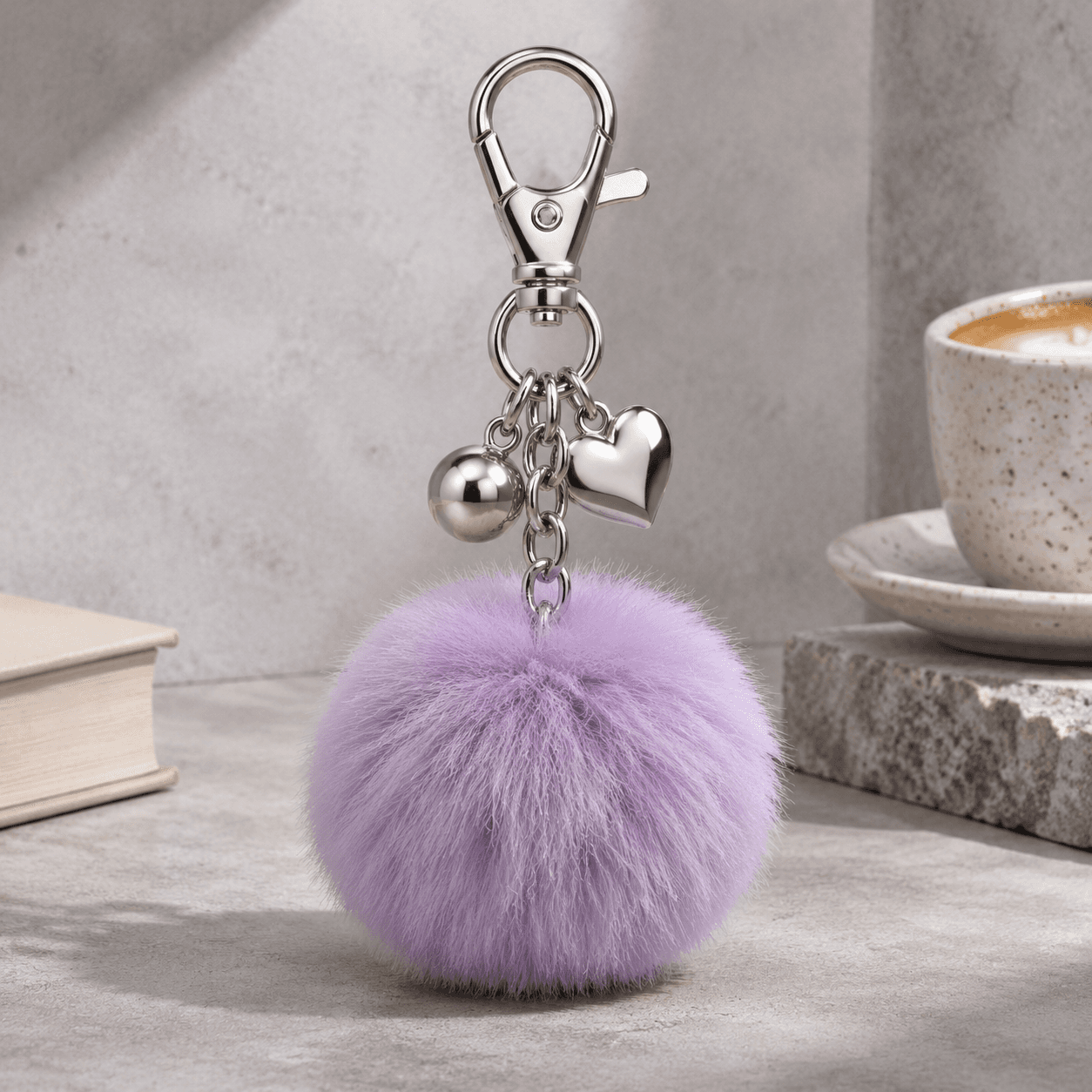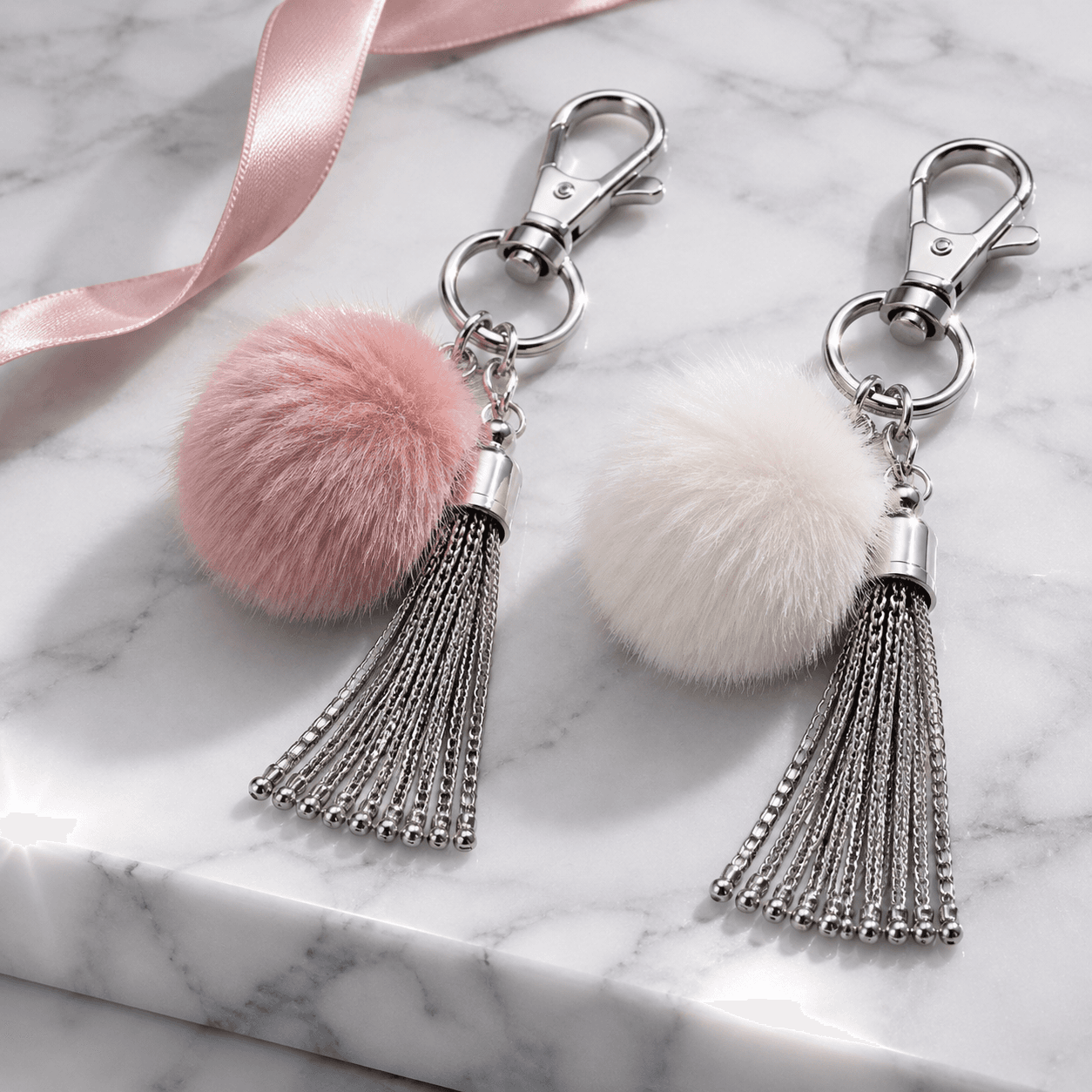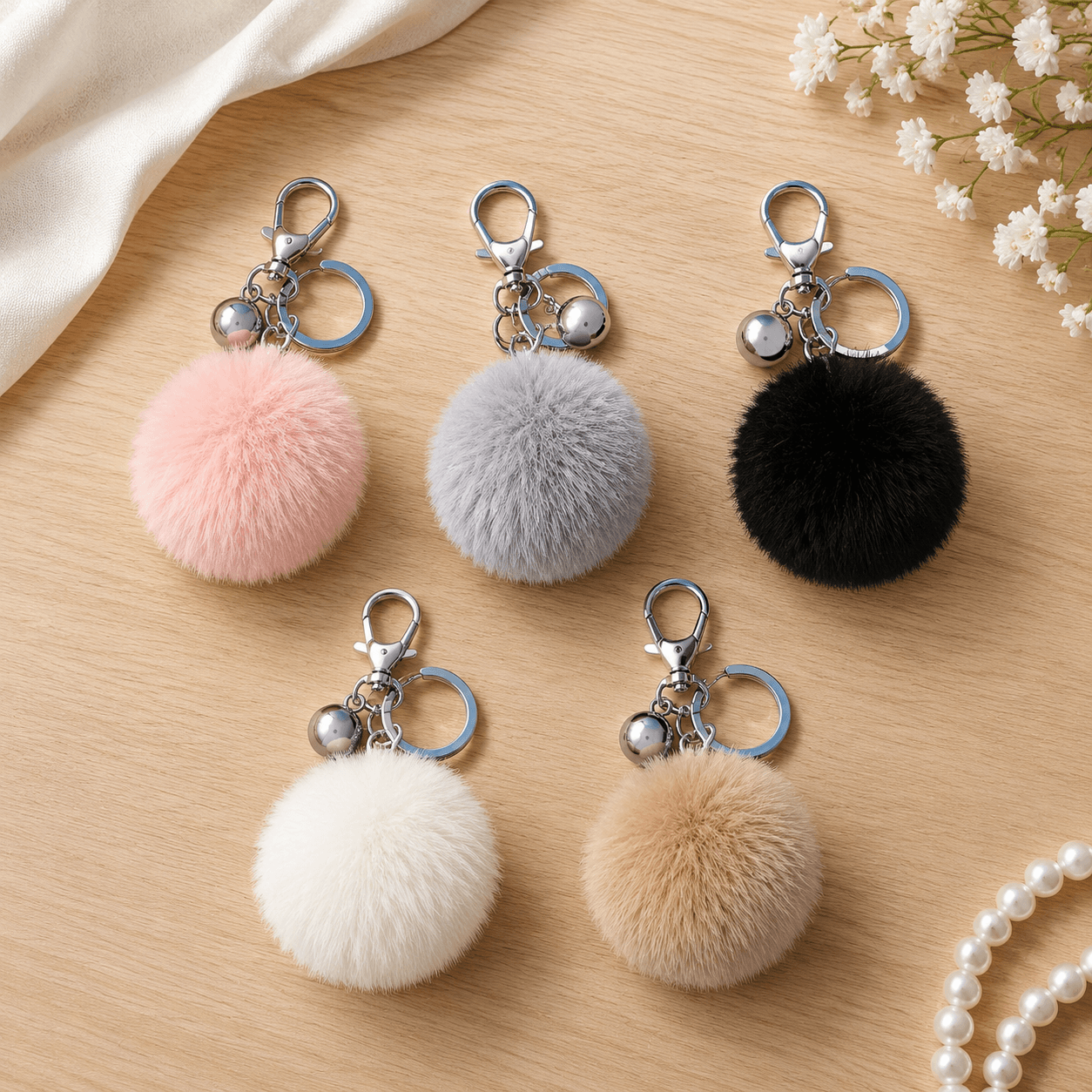
Bulk bag charm programs live or die on documentation. When a procurement team sources stainless steel pom pom bag charm hardware, the visual sample is only the first checkpoint. The real risk sits in material declarations, nickel release reports, plating durability, and attachment integrity. This checklist is written for procurement teams vetting suppliers for bulk charm orders where the structural component is 316L stainless steel charms and hardware. It focuses on the stainless steel charm, clasp, key ring, and chain elements that determine compliance and attachment performance. Decorative pom-pom components should be assessed separately under the buyer's own material policy.

Bulk Stainless Steel Pom Pom Bag Charm Compliance Checklist
1. Define the Scope and Product Composition
- ☐ Confirm the base product is 316L stainless steel charms, not a mixed-material charm base.
- ☐ List every component: charm body, bail, jump ring, clasp, key ring, chain segment, PVD coating, enamel, crystal inlay.
- ☐ Separate the decorative pom-pom component from the stainless steel hardware in the technical file.
- ☐ Require supplier drawings with dimensions, tolerances, attachment points, and finish.
- ☐ Verify that any shown connector passes through a real hole or loop and closes properly.
2. Request Material and Finish Documentation
- ☐ Mill certificate or material declaration confirming 316L stainless steel.
- ☐ PVD gold plating, silver finish, or rose gold plating specification with thickness target.
- ☐ Enamel color filling and crystal inlay process description if used.
- ☐ Logo engraving artwork approval and placement drawing.
- ☐ Private label packaging artwork and labeling requirements.
3. Verify Nickel Release and Skin-Contact Safety
- ☐ Nickel Release EN1811 report for items intended for prolonged skin contact.
- ☐ Test sampling plan and batch traceability.
- ☐ Statement on PVD barrier performance and wear resistance.
- ☐ Re-test expectations after plating, polishing, or assembly changes.
4. Confirm Chemical and Environmental Compliance
- ☐ RoHS declaration and test report.
- ☐ REACH compliance statement, including SVHC screening where applicable.
- ☐ SGS certification or third-party lab reports.
- ☐ Packaging compliance for the destination market.
- ☐ Documentation language and validity dates for customs review.
5. Review Plating Durability and Salt Spray Performance
- ☐ Salt Spray 240H report for PVD plated 316L stainless steel charms.
- ☐ Abrasion and tarnish resistance claims supported by test data.
- ☐ Color consistency limits for gold plated, rose gold plating, and silver finish.
- ☐ Rejection criteria for pits, scratches, coating gaps, and discoloration.
6. Audit Attachment Hardware and Physical Logic
- ☐ Bail or jump ring is fully closed and threaded through a real hole or loop.
- ☐ Clasp opening, lever, and connector points are visible and mechanically plausible.
- ☐ Key ring split detail is clean and does not show fused or broken edges.
- ☐ Charm-to-chain connection uses real jump rings, not floating hardware.
- ☐ Maximum visible component count and assembly method are documented.
7. Validate Labeling, Packaging, and Traceability
- ☐ SKU, batch code, material name, and finish are printed or labeled correctly.
- ☐ Private label packaging does not imply affiliation with any third-party brand.
- ☐ Carton markings match customs and retail channel requirements.
- ☐ Traceability links finished bulk charm orders to material lots and test reports.
- ☐ Sample retention policy is agreed before mass production.
8. Compare Quotes on Total Compliance Cost
- ☐ MOQ, sample development fee, tooling, plating, and packaging are itemized.
- ☐ Test reports are included or quoted separately.
- ☐ Lead time includes lab testing and sample approval.
- ☐ Change-control process is documented for post-approval modifications.
- ☐ Supplier can support OEM and ODM requests without vague exceptions.
Why Compliance Vetting Matters for Bulk Bag Charm Programs
Reduce Customs and Marketplace Risk
Destination-market requirements vary, but the core evidence set is consistent across major markets. RoHS and REACH declarations, SGS-certified test reports, and clear material naming reduce the chance of customs delays, buyer disputes, and channel rejections. For global programs, the technical file should be readable by a sourcing manager, a compliance officer, and a customs broker without further interpretation.
Protect Brand Quality and Customer Safety
Nickel release is a skin-contact safety issue, not a cosmetic detail. A Nickel Release EN1811 report, supported by controlled PVD plating and consistent polishing, helps protect the end customer and the brand. Salt Spray 240H data adds useful evidence for plating durability, especially on gold plated and rose gold plating finishes that must survive handling and transport.
Improve Supplier Accountability
A structured checklist turns supplier conversations into verifiable commitments. Procurement teams can compare vendors on documentation, sample development discipline, batch traceability, and change control. That makes it easier to reject vague claims and to keep approved specifications stable across repeat bulk charm orders.
Supplier Evaluation Guide for Procurement Teams
Step 1: Pre-Qualify the Stainless Steel Charms Manufacturer
Start with a short document request before reviewing pricing. A qualified stainless steel charms manufacturer should provide material declarations, SGS-certified RoHS and REACH reports, Nickel Release EN1811 evidence, Salt Spray 240H data, and written plating specifications. Ask how the supplier defines 316L stainless steel, how it controls PVD plating thickness, and how it documents enamel or crystal inlay when used.
Step 2: Use Sample Development to Test Compliance Before Scale
Sample development should produce a compliance pack, not just a photo. Request a physical sample, a dimension drawing, finish swatches, attachment photos, and the applicable test reports. Review the bail, jump ring, clasp, and key ring under magnification. Confirm that hardware is threaded through real holes or loops and that the assembly remains mechanically plausible after handling.
Step 3: Audit Batch Consistency and Change Control
Ask how the supplier controls plating color, surface finish, and attachment alignment from batch to batch. Define rejection criteria for pits, scratches, coating gaps, discoloration, and broken connectors. Require written approval before any change to material source, polishing method, plating process, packaging, or assembly sequence. This is especially important for private label charms sold under a buyer's own brand.
Step 4: Lock Documentation Into the Purchase Order
Attach the approved drawings, material declarations, test reports, packaging artwork, and inspection criteria to the purchase order. Confirm that the supplier will retain samples and batch records for the agreed period. For repeat programs, schedule periodic report refreshes and spot-check incoming shipments against the approved standard.
FAQ: Compliance Questions for Bulk Bag Charm Sourcing
Which reports should I request from a stainless steel charms manufacturer?
Request a 316L material declaration, RoHS report, REACH statement, Nickel Release EN1811 report, Salt Spray 240H report, and finish specification. For skin-contact items, confirm the test scope and sampling plan. Lancy Jewelry provides SGS-certified RoHS, REACH, Nickel Release EN1811, and Salt Spray 240H reports.
Does nickel release testing apply to PVD gold plated charms?
Yes. If the charm or hardware is intended for prolonged skin contact, nickel release testing should be part of the compliance file. PVD plating can act as a barrier, but the final tested condition must reflect the actual production finish, polishing, and assembly process. Re-test after significant process changes.
How should procurement teams verify attachment hardware?
Review drawings, physical samples, and close-up photos. The bail or jump ring should be fully closed and pass through a real hole or loop. Clasp openings and connector points must be mechanically plausible. Key ring split details should be clean and free from fused or broken edges. Reject floating hardware, impossible overlaps, and disconnected parts.
Can Lancy Jewelry support private label charms and bulk packaging?
Yes. Lancy Jewelry supports OEM and ODM development for 316L stainless steel charms, including logo engraving, PVD plating, enamel color filling, crystal setting, private label packaging, low MOQ support, and sample development. Procurement teams can submit an RFQ with target quantities, finishes, and packaging requirements.
Partner With Lancy Jewelry for Compliant Bulk Charm Programs
Lancy Jewelry is a B2B OEM/ODM 316L stainless steel charms manufacturer serving boutique brands, charm bar retailers, gift companies, distributors, and private-label buyers. The factory supports CNC, laser cutting, laser marking, welding, and polishing, with SGS-certified RoHS, REACH, Nickel Release EN1811, and Salt Spray 240H reports. To review suitable product directions, browse the 316L stainless steel charm collections, review OEM charm development, submit an RFQ, or contact the sales team for compliance documentation and bulk charm order planning.