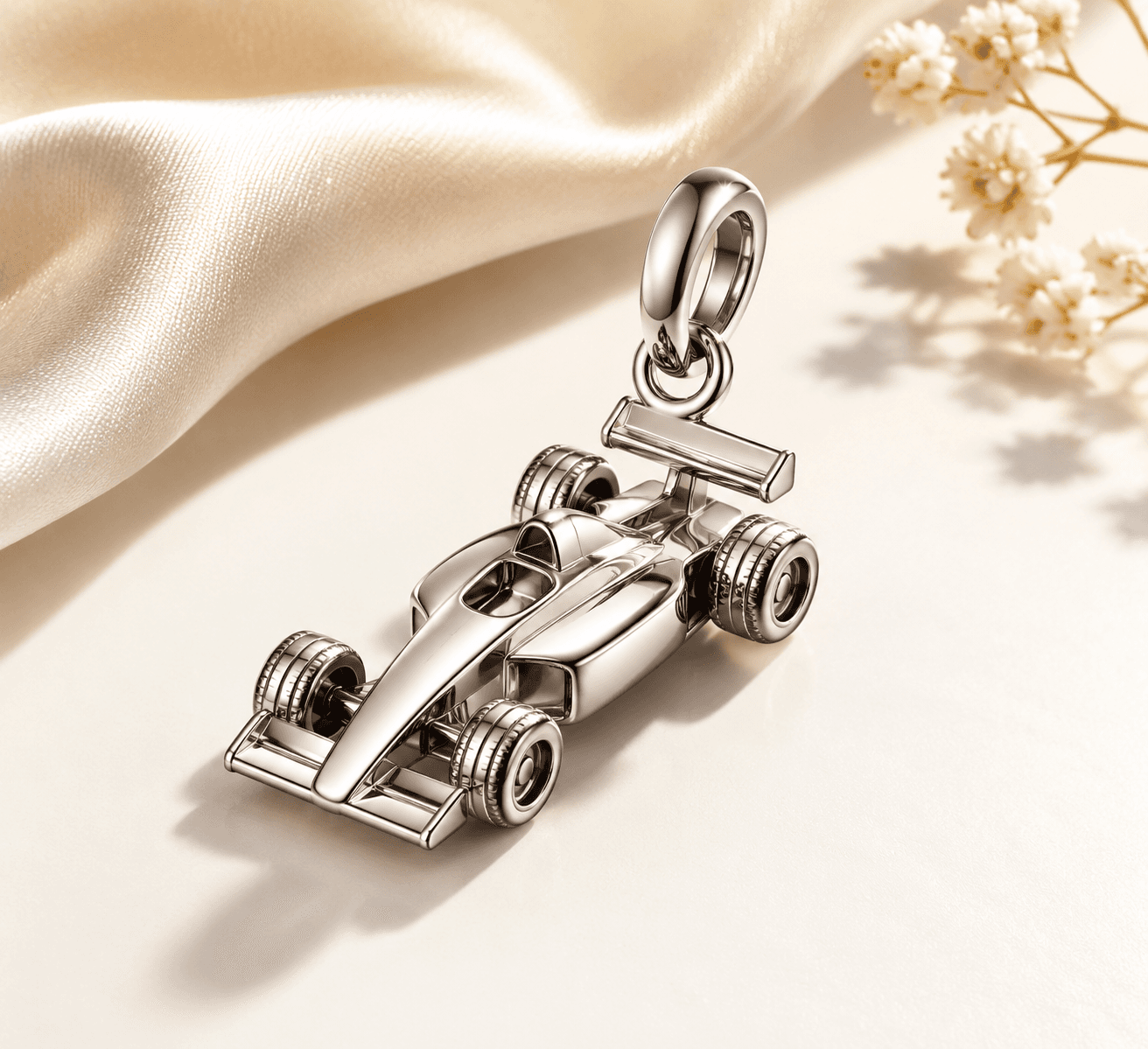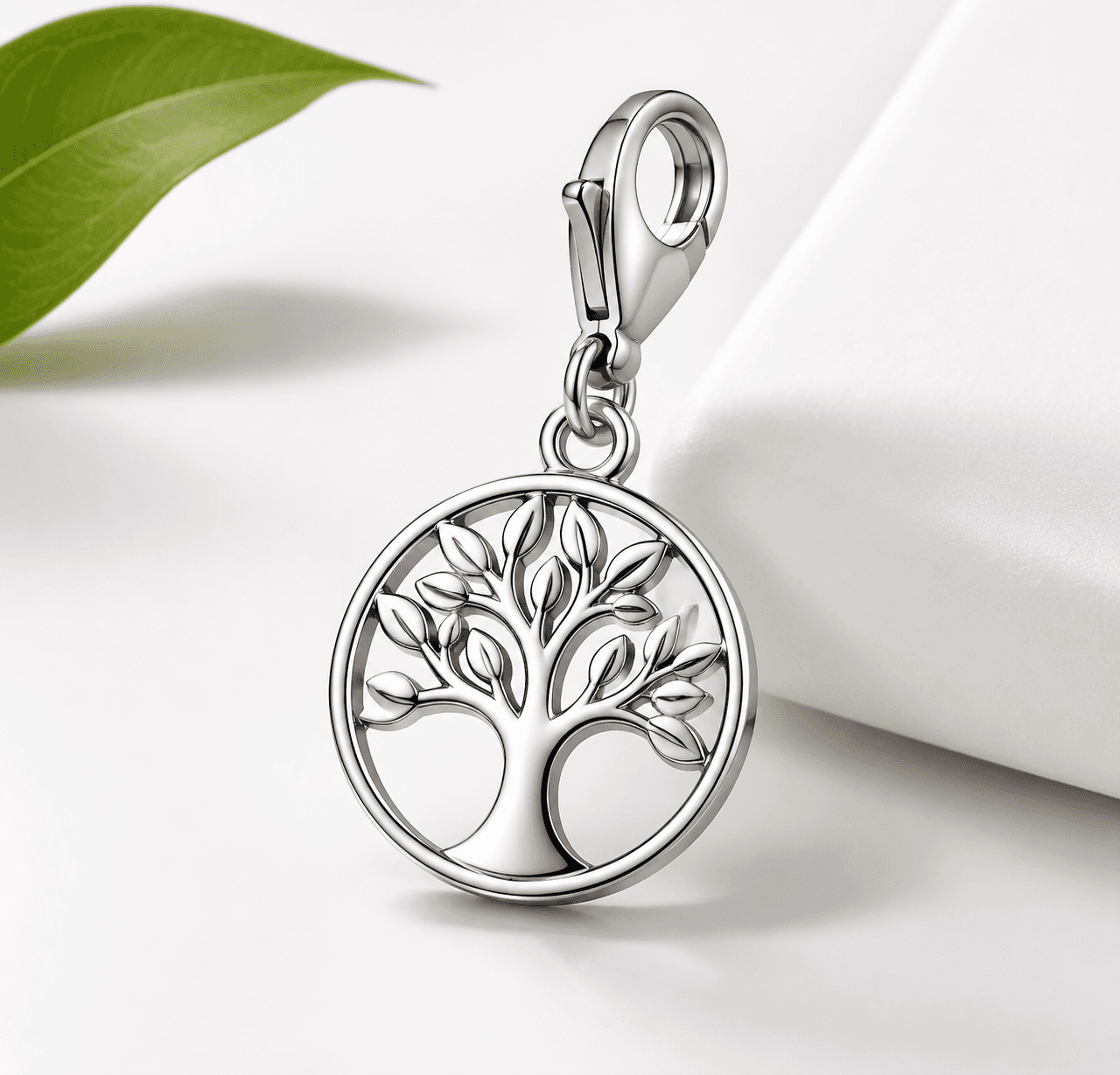
Rear view mirror car charms offer e-commerce sellers an opportunity to expand their decorative accessories assortment with products that combine personalization, gifting appeal, and visual interest. However, a successful wholesale product requires more than an attractive design. Buyers must evaluate material quality, attachment security, surface durability, product consistency, packaging, and supplier reliability before committing to bulk orders.
For North American online retailers, these considerations also influence customer satisfaction, product reviews, return rates, and shipping costs. A charm that looks attractive in a listing but develops surface wear, has an unreliable attachment, or arrives damaged can quickly become a sourcing problem. This checklist explains how to assess stainless steel rear view mirror car charms wholesale suppliers, verify manufacturing standards, and prepare products for e-commerce sales.
Stainless Steel Rear View Mirror Car Charms Wholesale: The Complete Buyer Checklist
Before requesting a quotation, establish clear purchasing specifications. A professional sourcing process should evaluate the complete product, including the decorative charm, attachment hardware, surface treatment, packaging, and documentation.
1. Verify the Base Material and Manufacturing Information
Material selection is the foundation of long-term product performance. Lancy Jewelry focuses on 316L stainless steel charms, providing a consistent material direction for boutique brands, gift companies, and private-label buyers.
Use this checklist when evaluating a potential supplier:
- Confirm that the decorative charm uses 316L stainless steel as its base material.
- Request material specifications and available supporting documentation.
- Confirm whether the attachment hardware follows the same material specification.
- Ask whether the supplier can maintain material consistency across repeat production orders.
- Check that the product description accurately identifies the material and finish.
316L stainless steel is a practical choice for decorative accessories because of its corrosion resistance, structural strength, and suitability for repeated everyday handling. Nevertheless, buyers should not assume that every product described as stainless steel has identical performance. Material grade, manufacturing quality, polishing, and surface treatment all influence the finished product.
Ask the supplier to explain how material identity is verified and whether documentation can be associated with the specific production batch. This is particularly important for e-commerce businesses that need consistent product specifications across multiple listings.
2. Inspect the Attachment Mechanism
A rear view mirror charm needs a reliable connection system. Even when the decorative component is manufactured correctly, poorly designed attachment hardware can create customer complaints.
- Check that the bail, jump ring, or connector is fully closed where applicable.
- Confirm that the connector passes through a genuine hole or loop.
- Inspect connection points for sharp edges, gaps, and uneven finishing.
- Confirm that the attachment is appropriate for the intended mirror accessory installation.
- Request photographs showing the complete attachment mechanism.
Ask for photographs from the front, back, and side. These views help reveal connector alignment and mechanical construction. A product photograph showing only the decorative front is insufficient for evaluating functional details.
Buyers should also consider the intended installation environment. A hanging accessory should not obstruct the driver's view, interfere with vehicle controls, or create an avoidable safety hazard. Applicable vehicle requirements vary by jurisdiction, so retailers should provide appropriate installation guidance and avoid unsupported universal safety claims.
3. Evaluate Surface Finishing and Plating Consistency
Surface appearance is a major purchasing consideration for decorative accessories. Customers expect the delivered product to match the photographs and description shown on the online store.
For PVD plated stainless steel charms, inspect the following:
- Check whether the PVD gold plated finish has consistent color across the surface.
- Look for visible discoloration, pinholes, scratches, and uneven coating.
- Inspect corners, recessed details, and attachment areas for finishing inconsistencies.
- Compare samples from different production batches when available.
- Confirm that approved samples are retained as the production reference.
Other available finish directions can include silver finish and rose gold plating. Enamel color filling and crystal inlay may also be considered when developing decorative designs. Buyers should specify the desired finish, color references, and decorative details in their product requirements.
Request close-up photographs under neutral lighting. Strong reflections, filters, and excessive image editing can conceal surface defects. A reliable supplier should be able to provide straightforward product photographs that accurately represent the finished item.
4. Check Dimensions, Weight, and Structural Quality
Size and weight affect both product presentation and shipping suitability. A rear view mirror charm should be visually balanced without unnecessary bulk.
- Record the overall length, width, and thickness.
- Confirm the finished product weight in grams.
- Check dimensional tolerances for repeat production.
- Inspect edges and decorative details for burrs or rough finishing.
- Evaluate whether the complete assembly remains stable during ordinary handling.
For many decorative charm applications, a compact 8–18 mm charm format provides a useful starting point, although the final dimensions should reflect the design and intended use. Buyers should assess the weight of the complete assembly rather than evaluating the decorative component alone.
Why Quality Verification Matters for North American E-commerce Sellers
Quality control has a direct commercial impact. For online sellers in the United States and Canada, product defects can result in refunds, replacement shipments, negative reviews, and additional customer service costs. These expenses can reduce the profitability of an otherwise attractive wholesale purchase.
Key Benefit 1: More Consistent Product Performance
A documented inspection process helps buyers identify manufacturing inconsistencies before products reach customers. Suppliers should establish clear quality criteria covering dimensions, surface appearance, attachment construction, and packaging condition.
Rather than relying only on a general statement that products are inspected, request information about inspection stages. These may include incoming material checks, in-process inspections, finishing inspections, and final order verification.
Key Benefit 2: Better Confidence in Corrosion and Wear Resistance
Rear view mirror car charms may encounter humidity, temperature changes, handling, and ordinary environmental exposure. Surface durability should therefore be considered during supplier evaluation.
Ask whether the supplier can provide relevant testing documentation and explain the tested product configuration. A test report should identify the applicable method, sample description, test conditions, results, and reporting organization.
Lancy Jewelry has SGS-certified testing credentials covering RoHS, REACH, Nickel Release EN1811, and Salt Spray 240H. These testing credentials provide useful reference points for buyers assessing material-related compliance and corrosion resistance. Buyers should still request applicable reports and confirm their scope, product coverage, and validity for the specific items being purchased.
Key Benefit 3: More Reliable Product Listings
Consistent product specifications make it easier to prepare accurate listings. When dimensions, finishes, materials, and attachment details are documented, e-commerce sellers can create more informative product descriptions and reduce misunderstandings.
For US and Canadian markets, product information should be clear, truthful, and appropriate for the intended customer. The FDA is generally not the primary regulatory authority for ordinary decorative vehicle accessories. However, sellers should evaluate applicable product safety, consumer protection, labeling, and import requirements based on the product's intended use and destination.
Do not market an accessory with unsupported claims such as guaranteed lifetime performance, universal vehicle suitability, or certified safety for every installation condition.
Detailed Supplier Evaluation Guide: Six Steps Before Placing a Wholesale Order
Step 1: Review the Supplier's Manufacturing Capabilities
A capable stainless steel charms manufacturer should be able to explain how product designs move from initial development to finished production.
Ask potential suppliers about their equipment, production processes, quality checkpoints, and customization capabilities. Relevant manufacturing operations may include CNC processing, laser cutting, laser marking, welding, and polishing.
For custom rear view mirror car charms, determine whether the supplier can support:
- Custom decorative shapes and dimensions.
- Logo engraving and laser marking.
- PVD surface finishing.
- Enamel color filling and crystal setting.
- Custom attachment configurations.
- Private-label packaging and branded presentation.
Manufacturing transparency is especially important when ordering multiple designs. A supplier should explain which operations are performed in-house and which processes involve external partners.
Step 2: Request Samples Before Approving Bulk Orders
Sample development is one of the most useful stages in wholesale sourcing. It allows buyers to assess the actual product instead of making a purchasing decision based exclusively on digital photographs.
Evaluate each sample against a written checklist:
- Material identification and documented specifications.
- Overall dimensions and finished weight.
- Surface color, polishing, and decorative details.
- Connector construction and closure.
- Packaging protection and presentation.
- Consistency between the approved sample and listing photographs.
For customized products, request a pre-production sample before authorizing the complete order. Once approved, retain a reference sample and written specification sheet. This creates a clearer standard for future repeat orders.
Step 3: Establish a Practical Durability Testing Checklist
Testing should reflect the product's expected use and the claims made in its listing. Buyers should ask suppliers which tests are available and how the results relate to the finished product.
Consider these verification areas:
- Salt spray testing to assess corrosion resistance under specified conditions.
- Nickel release testing where relevant to applicable market requirements.
- Surface inspection before and after controlled handling.
- Connector inspection for opening, closure, and deformation.
- Packaging evaluation to identify possible transit damage.
Salt Spray 240H is a useful documented testing reference, but buyers should not interpret a test duration as a guarantee of a specific number of years of real-world service. Laboratory conditions differ from actual vehicle environments.
Likewise, a supplier's general certification statement does not automatically establish that every product or production batch has undergone every test. Request the relevant documentation and confirm what was actually tested.
Step 4: Compare MOQ, Lead Times, and Wholesale Pricing
Wholesale purchasing decisions should consider total sourcing cost rather than unit price alone. A low quotation may become less attractive if it excludes packaging, sampling, inspection, or additional customization charges.
Request a detailed RFQ response covering:
- Unit pricing at different order quantities.
- MOQ for standard and customized designs.
- Sample development fees and sample lead times.
- Production lead time after sample approval.
- Packaging and customization costs.
- Available shipping methods and estimated delivery arrangements.
- Payment terms and repeat-order conditions.
Low MOQ support can be particularly valuable for smaller online retailers testing a new product category. Instead of immediately purchasing a large assortment, sellers can evaluate a smaller selection, measure customer response, and adjust future purchasing decisions based on actual sales data.
Also distinguish production lead time from shipping time. These are separate stages and should be confirmed independently when planning inventory replenishment.
Step 5: Evaluate Product Photography and Listing Readiness
Product photography is a major factor in online conversion because customers cannot physically inspect the accessory before purchasing.
Ask the supplier whether clear product photographs can be provided for commercial listing preparation. Ideally, the photography package should include:
- A clean front-facing product image on a white background.
- Rear and side views showing construction details.
- Macro images showing engraving, enamel, or surface finishing.
- A scale reference using a packaging card or display tray.
- An attachment detail showing how the hardware connects.
- A lifestyle image showing an appropriate vehicle interior context.
For US and Canadian e-commerce listings, use accurate dimensions and avoid misleading scale presentation. A decorative charm photographed very close to the camera may appear significantly larger than its actual dimensions.
Prepare product titles and descriptions around practical search intent, such as stainless steel car charms, decorative rear view mirror accessories, material specifications, finish options, and gifting applications. Clearly explain what is included in the package and whether installation hardware is supplied.
Retailers should also confirm image usage rights with the supplier before publishing manufacturer-provided photographs.
Step 6: Confirm Shipping Protection and Dropship Options
Shipping arrangements can influence both product condition and customer experience. Small decorative accessories still require appropriate protection against scratches, pressure, and movement during transit.
Before ordering, confirm:
- Individual product packaging protects finished surfaces.
- Multiple products are separated to reduce contact damage.
- Outer cartons provide suitable protection for the shipping route.
- Carton dimensions and shipment weights are documented.
- Shipping responsibilities and customs documentation are clearly defined.
- Dropship availability, if required, is confirmed in writing.
Not every factory offers individual dropshipping services. If a seller requires direct-to-customer fulfillment, confirm whether the supplier can handle individual order processing, neutral or private-label packaging, tracking information, and destination-specific shipping arrangements.
For businesses importing into the United States or Canada, confirm the applicable customs classification, country-of-origin information, duties, taxes, and importer responsibilities with the appropriate logistics or customs professional.
How Lancy Jewelry Supports Wholesale and Private-Label Buyers
Choosing a manufacturing partner involves more than comparing catalog designs. Buyers need a supplier that can coordinate product development, finishing, quality verification, and repeat production.
Lancy Jewelry is a B2B OEM/ODM manufacturer specializing in 316L stainless steel charms for boutique jewelry brands, gift companies, distributors, and private-label buyers.
Manufacturing and Customization Capabilities
Our modern manufacturing facility uses CNC equipment, laser cutting, laser marking, welding, and polishing to support different charm designs and production requirements.
Available customization services include:
- Custom stainless steel charms with buyer-defined decorative designs.
- Logo engraving and laser marking for private-label programs.
- PVD gold plated, silver finish, and rose gold plating options.
- Enamel color filling and crystal inlay customization.
- Sample development for design and quality approval.
- Private-label packaging for retail-ready presentation.
Documented Quality and Compliance Support
Lancy Jewelry has SGS-certified credentials covering RoHS, REACH, Nickel Release EN1811, and Salt Spray 240H. These testing areas support buyers who need documented information when evaluating products for international distribution.
Our approach emphasizes material consistency, surface quality, functional construction, and clear communication throughout the sourcing process. Buyers can discuss product specifications, MOQ requirements, sampling arrangements, and production planning before confirming an order.
Explore our 316L stainless steel charm collections or learn more about our OEM and ODM manufacturing services.
Frequently Asked Questions
1. What should buyers check first when sourcing rear view mirror car charms wholesale?
Start with the base material, attachment construction, surface finish, dimensions, and supplier documentation. Request physical samples and inspect the complete assembly before approving bulk production. Testing records and packaging specifications should also be reviewed before placing an order.
2. Is 316L stainless steel suitable for decorative car charms?
Yes. 316L stainless steel offers useful corrosion resistance, strength, and suitability for decorative accessories. Actual product performance also depends on manufacturing quality, surface finishing, attachment construction, and environmental exposure. Buyers should request relevant test documentation rather than relying on material descriptions alone.
3. What testing documents should a wholesale buyer request?
Depending on the product and destination market, buyers can request relevant RoHS, REACH, Nickel Release EN1811, and salt spray testing documentation. Confirm the tested sample, applicable standard or method, results, and report scope. A Salt Spray 240H result should not be interpreted as a guaranteed real-world product lifespan.
4. Can Lancy Jewelry manufacture custom rear view mirror car charms with private-label packaging?
Yes. Lancy Jewelry supports OEM/ODM development, custom logo engraving, PVD finishing, enamel color filling, crystal setting, sample development, and private-label packaging. Buyers can submit their design requirements and request an RFQ covering MOQ, sample costs, production lead times, and bulk pricing.
Partner With Lancy Jewelry for Your Wholesale Car Charm Program
Successful wholesale sourcing starts with clear specifications, reliable samples, documented quality checks, and a manufacturing partner that understands commercial requirements. By evaluating material quality, plating consistency, attachment security, testing documentation, photography, and shipping arrangements, e-commerce sellers can make more informed purchasing decisions.
Whether you are launching a new decorative accessory category, expanding an existing gift assortment, or developing a private-label collection, Lancy Jewelry can support your project from sample development through production planning.
Share your preferred designs, target quantities, finish requirements, packaging expectations, and destination market. Our team can help evaluate your specifications and prepare a manufacturing quotation.
Ready to discuss your next wholesale project? Contact Lancy Jewelry or submit your RFQ to start a conversation about custom 316L stainless steel charms.