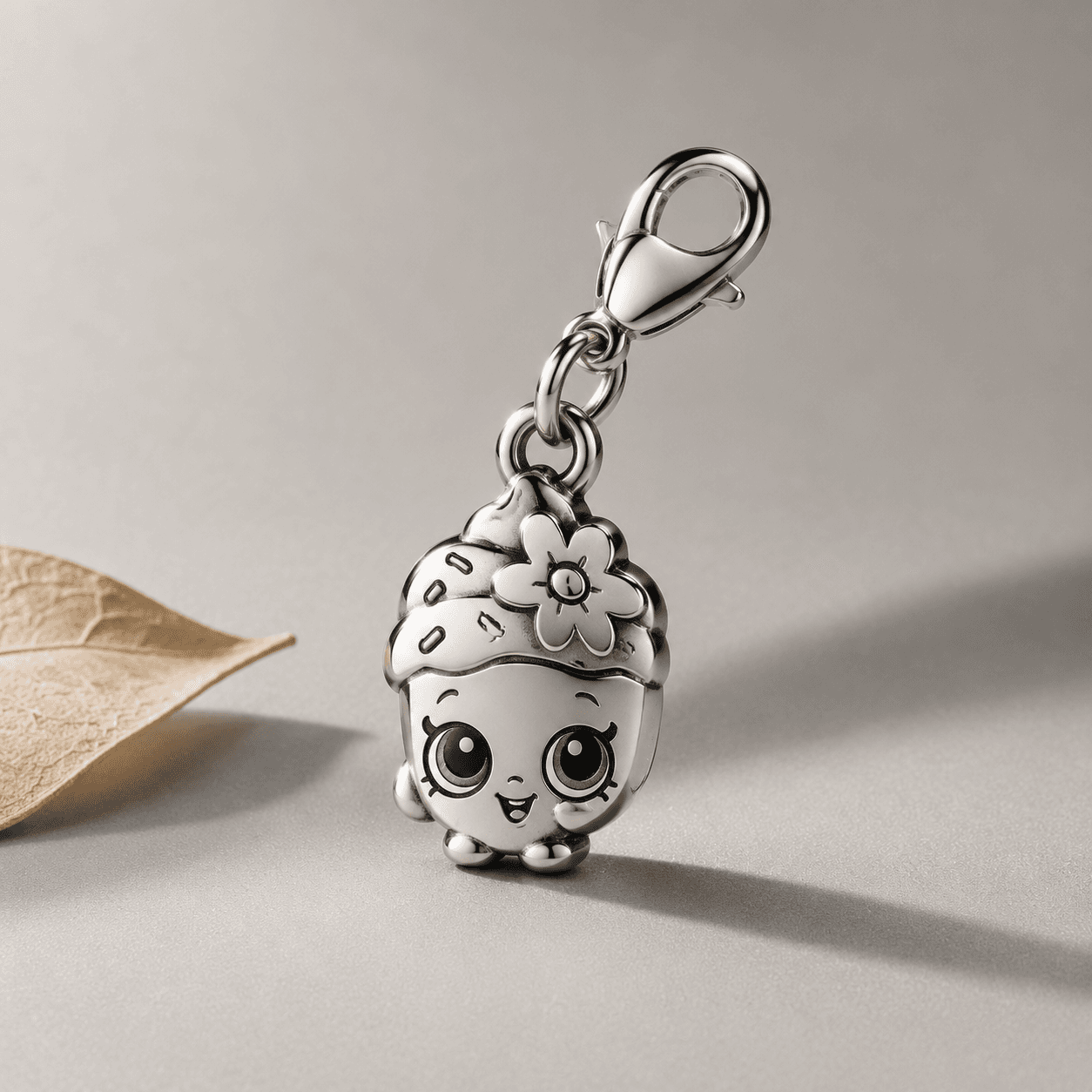
For wholesale buyers, an ODM stamped 316L stainless steel angel charm is more than a decorative accessory. It is a product-development decision that affects landed cost, retail margins, quality consistency, replenishment speed, and long-term customer confidence. In Southeast Asia, where buyers serve diverse boutique, gift, and fashion-accessory segments, the right sourcing strategy must balance competitive pricing with reliable production and a distinctive product assortment.
This guide explains how to evaluate customization options, negotiate bulk pricing, establish practical MOQ targets, assess supplier capabilities, and build a productive manufacturing relationship. Whether you are expanding an established catalog or launching a private-label collection, use the following framework to turn an initial concept into a commercially viable product program.
ODM Stamped 316L Stainless Steel Angel Charm Customization: What Should Buyers Know?
What does ODM customization mean for angel charms?
ODM customization allows a buyer to develop a product from a manufacturer's existing design capabilities, production processes, or configurable design concepts. For an angel charm, customization may include silhouette proportions, engraved details, surface texture, dimensions, finish selection, enamel accents, crystal inlay, logo placement, and packaging presentation.
The commercial advantage is a more structured development process than starting every technical detail from scratch. Buyers can define a target customer, price position, and desired appearance while working with the manufacturer to establish a feasible specification.
Clarify the boundary between design selection and original development before placing an order. Ask which features are established manufacturing options, which require new tooling or process development, and which may affect production lead time. A clear scope prevents unexpected costs and makes supplier quotations easier to compare.
What does stamped mean in a custom angel charm project?
In product sourcing, stamped can refer to a pressed or formed design, a stamped visual effect, or a marked decorative detail. Buyers should define the intended process instead of relying on the term alone. Specify whether the requirement concerns the charm outline, raised or recessed decoration, a logo, lettering, or a combination of features.
For Lancy Jewelry, the production brief should identify the required design and confirm the appropriate manufacturing route with the technical team. Available capabilities include CNC processing, laser cutting, laser marking, welding, and polishing. The manufacturer should confirm which process combination is appropriate for the proposed design and whether any additional development work is required.
Why specify 316L stainless steel?
316L stainless steel provides a defined material specification for buyers seeking consistent product construction and a durable finish. The material should be stated explicitly in the RFQ, technical drawing, sample approval record, and purchase order. Do not rely on a general product description when the base material is a mandatory sourcing requirement.
Finish requirements should be documented separately. Options may include a polished silver finish, PVD gold plated appearance, rose gold plating, enamel color filling, and crystal inlay, subject to design feasibility. Each option requires clear acceptance criteria so that the approved sample and bulk production can be evaluated against the same standard.
Why Does a Structured ODM Sourcing Strategy Matter?
How does product consistency protect wholesale margins?
Wholesale profitability depends on more than the unit price. A low quotation can become expensive when surface defects, inconsistent dimensions, unclear specifications, or delayed deliveries create additional inspection work and missed sales opportunities.
A controlled ODM process establishes the product specification before bulk production. It also provides a reference sample, a documented finish standard, agreed packaging requirements, and an inspection plan. These controls reduce avoidable disagreements and help buyers maintain a consistent retail presentation across replenishment orders.
For Southeast Asian distributors and boutique retailers, assortment planning deserves equal attention. A coordinated range of angel charms with controlled variations in size, finish, and decorative detail can support multiple price points without requiring an entirely separate development project for every SKU. Confirm which variations can share manufacturing processes and which require independent setup or inspection.
How can supplier qualifications reduce purchasing risk?
A qualified stainless steel charms manufacturer should demonstrate more than an attractive sample. Buyers need evidence of technical capability, repeatable quality controls, responsive communication, and realistic production planning.
Lancy Jewelry operates a modern facility with CNC, laser cutting, laser marking, welding, and polishing capabilities. Its SGS certification coverage includes RoHS, REACH, Nickel Release EN1811, and Salt Spray 240H. Buyers should request the relevant documentation and verify its scope, applicable products, and validity before using it for their own compliance decisions.
These credentials support supplier evaluation, but they do not eliminate the need for product-specific checks. Confirm the requirements of the destination market, the finish being ordered, and any documentation needed for the finished product. Buyers should also agree on how production deviations, inspection failures, and corrective actions will be handled.
Why is a long-term supplier relationship commercially valuable?
A dependable manufacturing partner can improve forecast accuracy, sample turnaround, product continuity, and replenishment planning. The greatest value often comes from fewer repeated explanations and faster decisions because both parties work from a shared specification and understand the product's commercial purpose.
For a growing buyer, this relationship can also support controlled experimentation. New angel charm variations can be assessed through samples and limited production commitments before successful designs receive larger purchase orders. This approach protects working capital while providing a disciplined way to expand a product range.
How Should Buyers Evaluate Custom Angel Charm Specifications?
Which design details belong in the initial brief?
Prepare a concise technical brief before requesting a quotation. The more precise the brief, the less room there is for conflicting assumptions about appearance, construction, or cost.
- Product identity: Identify the product as an angel charm made from 316L stainless steel and specify its intended application.
- Dimensions: State the target height, width, thickness, and acceptable tolerances. A typical charm may fall within an 8–18 mm size range, depending on its intended use and proportions.
- Design geometry: Supply a drawing or reference artwork showing the silhouette, wings, facial details, decorative lines, and any raised or recessed areas.
- Attachment: Specify the hole or loop location, required opening dimensions, and intended attachment hardware. The connection must be mechanically plausible and suitable for the finished product.
- Surface finish: Define the requested polish level, PVD finish where applicable, edge treatment, and acceptable visual variation.
- Decoration: Identify any enamel color filling, crystal inlay, laser-marked details, or logo engraving, including their placement and color references.
- Packaging: State whether the order requires individual packaging, branded cards, labels, or other private-label presentation components.
Attach approved artwork and identify the controlling file version. If a drawing conflicts with a written instruction, the purchase documents should specify which requirement takes precedence.
How should buyers assess decorative complexity?
Not every decorative feature contributes enough perceived value to justify its production cost. Fine engraving, narrow gaps, intricate wing patterns, multiple enamel colors, and crystal placement can increase process complexity and inspection requirements.
Ask the ODM team to identify features that are sensitive to size, depth, alignment, or surface treatment. Request a proposed simplification when a detail is difficult to reproduce consistently at the intended dimensions. Simplification should preserve the design's recognizable character while improving manufacturing feasibility.
Evaluate the sample under normal retail lighting as well as close inspection. Look for clear contours, balanced proportions, clean edges, even surface treatment, secure decorative elements, and a correctly formed attachment point. Agree on acceptable cosmetic variation before bulk approval rather than negotiating quality after delivery.
How Can Buyers Negotiate MOQ and Bulk Pricing Effectively?
What determines the MOQ for an ODM angel charm?
MOQ depends on design complexity, process setup, finish requirements, decorative features, packaging, and the amount of production preparation required. A simple variation of an established design may have different commercial requirements from a new design involving multiple decorative processes.
Buyers seeking low MOQ charm production should explain their expected demand and the purpose of the first order. A pilot launch, seasonal assortment, regional test, and established replenishment program create different planning requirements. Request the MOQ for each configuration and ask whether separate finishes, colors, or packaging versions require separate minimum quantities.
Do not assume that sharing a design family automatically allows all quantities to be combined. The manufacturer must confirm whether the proposed variants can share setup, material planning, and production processes. Any approved grouping arrangement should be recorded in the quotation.
How should bulk pricing be compared?
Request tiered quotations for realistic order quantities, such as an initial test quantity and two larger purchasing scenarios. The manufacturer should identify the applicable unit price, minimum quantity, sample charges, setup or tooling charges where relevant, packaging costs, and any other agreed fees.
Compare the complete commercial offer rather than ranking suppliers solely by unit price. A lower quoted price may exclude packaging, additional inspection, or certain finish requirements. A higher quotation may include services that reduce internal purchasing work or improve delivery reliability.
For a disciplined comparison, calculate the estimated landed cost per saleable unit. Include the quoted product cost, packaging, freight, applicable duties and taxes, inspection expenses, and a reasonable allowance for nonconforming units or other foreseeable costs. Keep assumptions consistent across suppliers.
What negotiation strategies improve total profitability?
Use a fact-based negotiation process. Share a realistic forecast, the expected order cadence, target cost range, and potential annual demand when these figures are available. In return, request a transparent explanation of the pricing structure and the production conditions associated with each quantity tier.
Consider negotiating the following commercial points:
- Quantity tiers: Agree on pricing at specific quantities instead of relying on an informal promise of future discounts.
- Repeat-order terms: Establish how pricing will be reviewed if order volumes increase or specifications remain unchanged.
- Sampling charges: Confirm sample costs, revision charges, and whether any agreed development fee can be credited against a qualifying bulk order.
- Packaging consolidation: Ask whether shared packaging components can reduce complexity across a coordinated product range.
- Payment milestones: Agree on deposits, balance payments, and any production release conditions in writing.
- Forecast visibility: Provide rolling estimates to help the supplier plan capacity without treating unconfirmed forecasts as guaranteed orders.
Never negotiate away essential quality requirements simply to reach a target unit price. Instead, identify which design features, packaging choices, or order quantities can be adjusted without undermining the product's intended positioning.
How Should Buyers Manage Sample Development and Quality Control?
What should happen before sample approval?
Sample development should be managed through defined stages. First, submit the design brief and commercial requirements. Second, obtain confirmation of technical feasibility, estimated costs, and development timing. Third, review the sample against the agreed specification. Finally, document all approved revisions before authorizing mass production.
A sample is a decision tool, not simply a visual preview. Check its dimensions, weight if relevant, finish, logo placement, attachment geometry, decorative details, and packaging presentation. If a change is required, record it clearly and ensure that the next sample incorporates the complete revision list.
When reviewing PVD plated stainless steel charms, examine finish uniformity, coverage around edges and recesses, and visible marks under consistent lighting. For enamel stainless steel charms, assess color consistency, filling boundaries, and the appearance of the finished surface. Where crystal inlay is specified, examine placement, retention, and visible alignment.
How can buyers control bulk production quality?
Establish measurable acceptance criteria before the production order begins. These criteria should distinguish critical functional requirements from major cosmetic defects and minor variations. Define inspection methods, sampling arrangements, defect reporting procedures, and the process for resolving disputed results.
For an angel charm, functional checks may include attachment-hole dimensions, secure connections, and the absence of sharp or unfinished edges. Cosmetic checks may cover silhouette accuracy, surface marks, polishing consistency, logo clarity, color uniformity, and decorative alignment.
Where applicable, request production inspection records and relevant test documentation. Salt spray results, nickel release testing, and regulatory documentation should be interpreted according to their stated methods and scope. A Salt Spray 240H result, for example, should not be treated as a universal guarantee against every form of corrosion in every usage environment.
Agree on corrective-action procedures before problems arise. If a shipment fails the approved criteria, the supplier should document the issue, identify the affected quantity, propose containment measures, and agree on corrective actions and commercial responsibility with the buyer.
How Can Southeast Asian Buyers Build a Reliable Supplier Partnership?
How should buyers communicate forecasts and market requirements?
Southeast Asia includes markets with different retail channels, purchasing patterns, consumer preferences, and import requirements. Buyers should avoid treating the region as one uniform market. Define the intended country, sales channel, target retail price, preferred finish, packaging language, and relevant compliance expectations for each program.
Share forecasts in a practical format, separating confirmed purchase orders from tentative demand. Identify seasonal peaks, promotional periods, and expected replenishment windows. This information helps a manufacturer plan production capacity while allowing the buyer to retain flexibility when actual demand differs from projections.
Use one agreed communication channel for technical approvals and maintain a written record of design revisions, pricing, delivery commitments, and packaging changes. Establish named contacts for purchasing, technical development, and quality matters so that urgent decisions reach the correct person.
How can buyers protect working capital while expanding a range?
Start with a focused assortment instead of ordering every possible variation. Select designs with clear target customers, complementary finishes, and manageable packaging requirements. Evaluate initial sales and customer feedback before increasing quantities or adding more complex options.
Use reorder points based on actual sales velocity, supplier lead time, and the cost of holding inventory. A reliable replenishment agreement can help reduce unnecessary safety stock, but buyers should retain a contingency for seasonal demand spikes and shipping disruptions.
For new programs, consider negotiating a staged development and purchasing plan. The first phase confirms design feasibility and sample quality. The second establishes a commercially sensible initial quantity. Later phases can expand successful designs or introduce additional finishes after sales performance is demonstrated.
Frequently Asked Questions
1. What information should an RFQ include for ODM stamped 316L stainless steel angel charms?
An effective RFQ should include the design drawing, dimensions, base material, finish, decoration, attachment requirements, logo details, packaging specifications, target quantity, destination market, delivery expectations, and any required documentation. Request a clear breakdown of sample charges, MOQ, unit pricing, and other applicable costs. Complete information improves quotation accuracy and reduces clarification cycles.
2. Can Lancy Jewelry support low MOQ and private-label angel charm projects?
Lancy Jewelry supports OEM and ODM development, sample support, logo engraving, PVD plating, enamel color filling, crystal setting, and private-label packaging. MOQ depends on the specific design, finish, production requirements, and packaging configuration. Buyers should submit their requirements to confirm feasibility, minimum quantities, sample costs, and production timing for the proposed project.
3. Which quality documents should wholesale buyers request?
Request applicable SGS certification and test documentation covering relevant requirements, including RoHS, REACH, Nickel Release EN1811, and Salt Spray 240H where appropriate. Verify document scope and validity, confirm whether the tested product and finish match the intended order, and assess any additional destination-market obligations. Documentation should support, not replace, product-specific inspection and acceptance procedures.
4. How can buyers improve margins on repeat bulk orders?
Standardize approved specifications, forecast demand early, consolidate compatible purchasing requirements where feasible, and negotiate transparent quantity tiers. Track landed cost, defect rates, delivery performance, and sales velocity rather than unit price alone. Use documented sample approval and repeat-order specifications to reduce rework, avoid preventable disputes, and make replenishment decisions more predictable.
Partner With Lancy Jewelry for Your Next Angel Charm Project
Selecting an ODM charm supplier is a strategic purchasing decision. The right partner should understand your target market, communicate technical constraints early, provide a transparent commercial proposal, and maintain consistent standards from sample approval through bulk delivery.
Lancy Jewelry works with boutique jewelry brands, charm bar retailers, gift companies, distributors, and private-label buyers seeking customized 316L stainless steel charms. Its manufacturing capabilities include CNC processing, laser cutting, laser marking, welding, polishing, logo engraving, PVD plating, enamel color filling, crystal setting, sample development, and private-label packaging.
Prepare your design brief, expected order quantity, target finish, packaging requirements, and delivery destination before starting the discussion. A well-defined RFQ gives both parties a stronger foundation for evaluating feasibility, pricing, and production planning.
Explore the Lancy product catalog to review available product directions, visit the OEM and ODM manufacturing service page to understand customization support, or use the Request a Quote route to submit your project requirements. For direct assistance, contact the team through the Lancy Jewelry contact page.
Build your next angel charm program around documented specifications, realistic purchasing commitments, and a supplier relationship designed for repeat business. That is how wholesale buyers protect margins, improve quality consistency, and create a scalable private-label assortment.