Bulk purchasing can improve your unit economics, but it can also tie up cash in products that sell more slowly than expected. For North American marketplace sellers, stocking stainless steel charm keychains successfully means balancing demand, fulfillment costs, product quality, and replenishment timing. The goal is not simply to order more units. It is to maintain enough sellable inventory to meet demand without creating unnecessary storage expenses or a costly backlog.
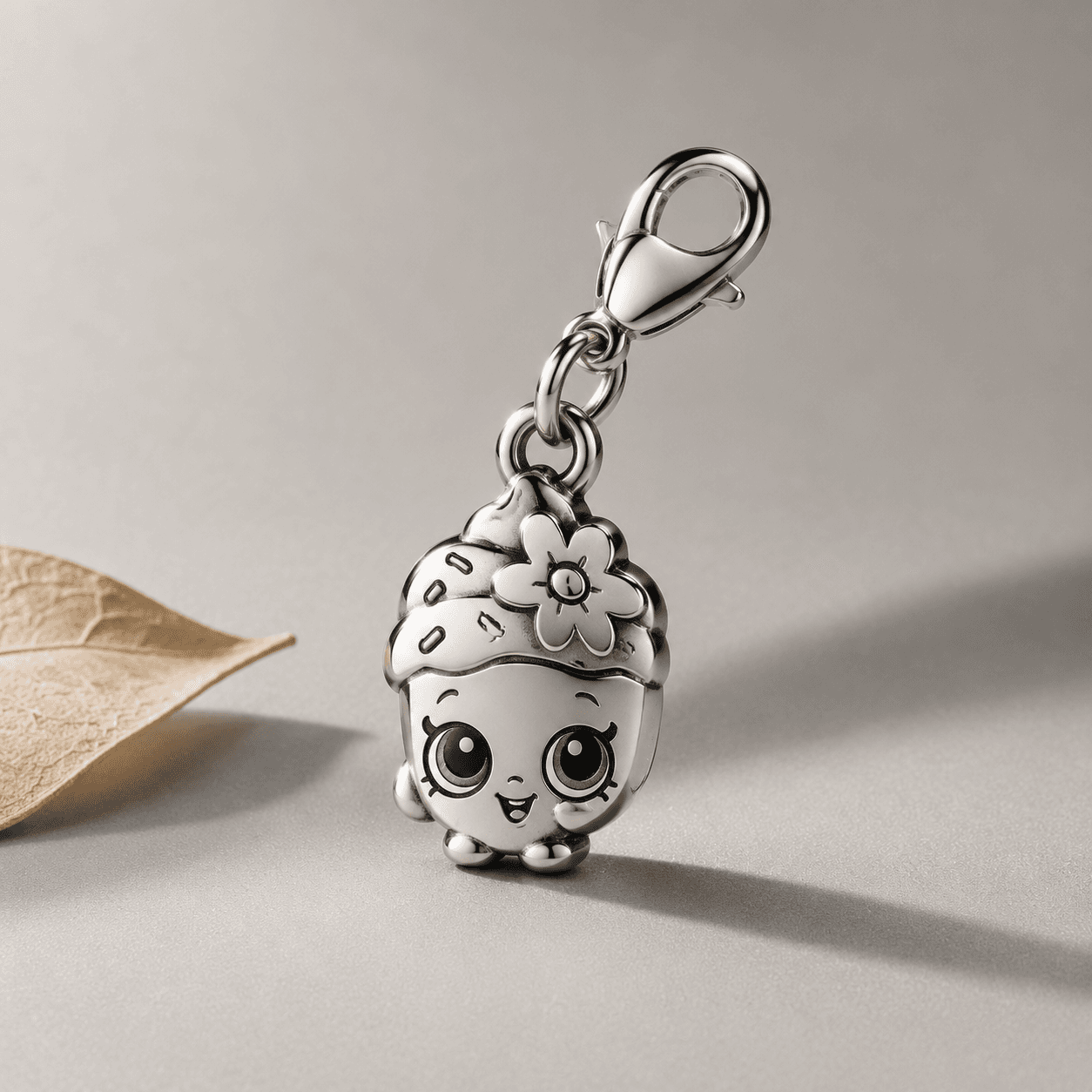
This buyer guide explains the advantages and disadvantages of bulk sourcing, how to forecast demand, when to reorder, and what to check before committing to a production run. It also covers how a B2B manufacturing partner can support a more predictable inventory plan. One important distinction: the focus here is on original stainless steel charm keychains and decorative charm products, not on products associated with third-party intellectual property.
How to Stock Stainless Steel Charm Keychains in Bulk for FBA Success
Understand the Product Before Setting Your Order Quantity
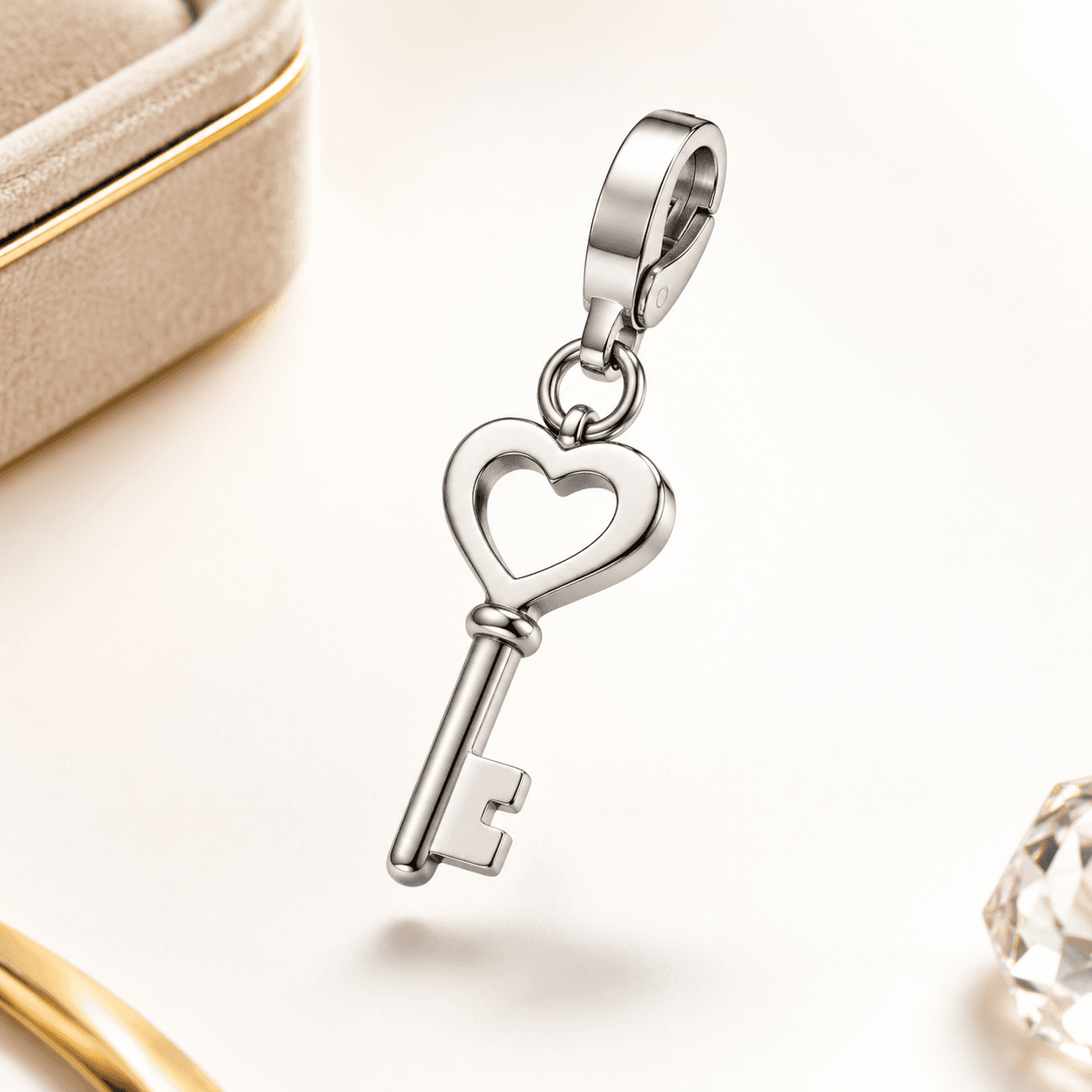
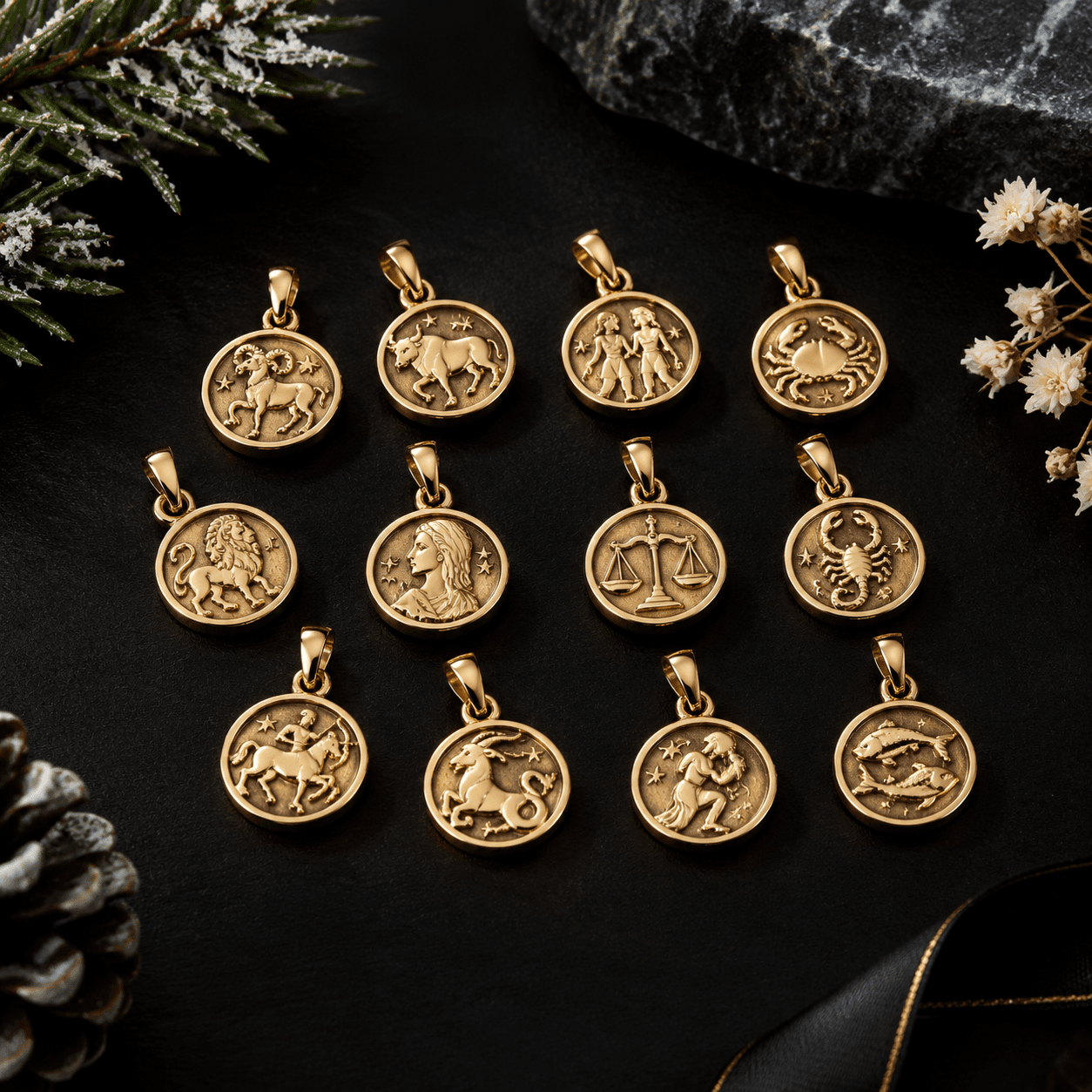
Before calculating a bulk order, define the exact product you intend to sell. A charm keychain program may include small decorative charms, initial designs, hearts, zodiac symbols, botanical shapes, or coordinated gift collections. Each design can attract a different audience and produce a different sales pattern.
For a consistent sourcing specification, consider 316L stainless steel charms with a defined surface finish, clear design dimensions, a practical attachment mechanism, and packaging suitable for your sales channel. Available design treatments may include PVD gold plating, silver finish, rose gold plating, enamel, or crystal inlay, depending on the approved product specification.
Ask your supplier to document the dimensions, weight, finish, attachment construction, packaging configuration, and approved sample. These details help you compare quotations accurately and reduce the chance of receiving stock that differs from your listing images.
Advantages and Disadvantages of Buying in Bulk
Bulk purchasing can support a growing marketplace business, but its benefits depend on actual sell-through and reliable replenishment.
Pros
- Potentially lower unit costs: Larger production runs can spread setup and processing costs across more units. Ask for price breaks at several quantities rather than assuming the largest order is automatically the most profitable.
- More consistent product presentation: Ordering a defined batch against an approved sample helps maintain consistency in dimensions, surface finish, and appearance across a product listing.
- Better promotional readiness: Adequate inventory can help you prepare for seasonal gifting, advertising campaigns, and periods of higher demand.
- More room for private-label development: Coordinated designs, logo engraving, and private-label packaging can help establish a recognizable product range for your own business.
- Fewer emergency replenishment orders: A sensible inventory buffer can reduce the need for expensive expedited production or freight when sales rise unexpectedly.
Cons
- Higher upfront cash requirements: Paying for more units before sales occur can restrict the budget available for advertising, product development, and other operating expenses.
- Risk of slow-moving stock: An attractive design does not guarantee demand. Unproven colors, motifs, or product variations may remain in storage longer than planned.
- Storage and fulfillment exposure: Inventory stored in a fulfillment network may generate storage charges and other fees according to the applicable program and product characteristics.
- Quality issues affect more units: A specification or production defect can affect an entire batch. Pre-production approval and inspection become especially important as order quantities grow.
- Forecasting errors become expensive: An optimistic sales forecast can turn a lower unit price into a poor overall investment if inventory remains unsold.
Practical takeaway: Use bulk orders for products with credible demand evidence, stable specifications, and manageable replenishment lead times. For new designs, start with a controlled test quantity whenever the supplier's MOQ and economics permit.
Benefits of a Structured Stainless Steel Charm Inventory Plan
Protect Availability Without Overcommitting Cash
Marketplace inventory planning works best when purchasing decisions are based on sales velocity rather than intuition alone. Monitor units sold per day, available inventory, inbound stock, supplier lead time, and any upcoming promotions. Reviewing these figures together gives you a more realistic picture of how long your stock will last.
A structured plan also helps distinguish between products that deserve deeper inventory and products that should remain in smaller quantities. Strong performers can receive more frequent replenishment, while slower designs can be purchased conservatively until demand becomes clearer.
Improve Quality Confidence With Documented Specifications
Product quality influences customer satisfaction, return rates, and the accuracy of product reviews. A consistent sourcing process should include a written specification, a retained approved sample, inspection criteria, and a procedure for reporting defects.
Lancy Jewelry supports B2B buyers sourcing 316L stainless steel charms through OEM and ODM development, logo engraving, PVD plating, enamel color filling, crystal setting, and private-label packaging. Its modern manufacturing facility uses CNC processing, laser cutting, laser marking, welding, and polishing to support product development and production.
Available certification and testing documentation includes SGS-related RoHS, REACH, Nickel Release EN1811, and 240-hour salt spray testing. Buyers should request the relevant reports and verify that their scope, product coverage, and test conditions match the goods being purchased. Testing documentation supports sourcing decisions, but it does not replace applicable legal review or product-specific compliance checks.
Support Better Reviews and Listing Accuracy
Customer reviews can be affected by whether the delivered product matches its photos, dimensions, finish, and description. For example, a charm that looks substantially larger in a listing image than it does in person can lead to disappointment even when the manufacturing quality is acceptable.
Use accurate product photography, clearly stated dimensions, close-up views of the finish, and realistic descriptions of the attachment mechanism. Where relevant, show a neutral scale reference and explain how the charm is intended to be used. Avoid unsupported claims about durability, skin sensitivity, or performance.
A Step-by-Step Guide to Bulk Inventory Management
Step 1: Forecast Demand Using Real Sales Data
Start with daily or weekly unit sales for each product variation. If a product is new, use a conservative estimate based on your test results, comparable products within your own catalog, planned advertising, and seasonal patterns. Treat these estimates as hypotheses rather than guarantees.
For an established listing, calculate average daily demand over a representative period. A 30-day window can be useful for an initial review, but also compare it with longer-term results and recent changes. A sudden promotion, temporary stockout, or advertising campaign can distort the average.
For example, suppose a charm keychain sells 12 units per day during a representative period. A planned 15% increase in demand would produce a working forecast of approximately 13.8 units per day. Round appropriately for operational planning, and revisit the estimate as new sales data arrives.
Step 2: Calculate Your Reorder Point
Your reorder point is the stock level at which you should initiate replenishment to reduce the risk of running out. A useful starting formula is:
Reorder point = Average daily demand × Total replenishment lead time + Safety stock
Total replenishment lead time should account for the relevant production, quality inspection, transportation, receiving, and fulfillment preparation stages. Use realistic estimates for your own supply chain rather than relying solely on the factory production time.
Consider a product selling 12 units daily with a total replenishment lead time of 35 days and safety stock of 100 units. The calculation is 12 × 35 + 100 = 520 units. Under these assumptions, initiate replenishment when your usable inventory position approaches 520 units.
The inventory position should include available sellable stock and confirmed inbound quantities, minus outstanding commitments where applicable. If your stock records do not distinguish available inventory from reserved, damaged, or inbound units, improve that tracking before relying on an automated reorder rule.
Step 3: Set Safety Stock Based on Uncertainty
Safety stock provides a buffer against demand spikes, supplier delays, and transportation variability. The right amount depends on how quickly the product sells, how predictable demand is, and how reliably replenishment arrives.
A simple starting method is to hold a chosen number of additional selling days. If average demand is 12 units per day and you want eight days of coverage, safety stock would be 96 units. This is a planning example, not a universal recommendation.
Increase the buffer cautiously for proven bestsellers with volatile demand or longer lead times. For untested designs, excess safety stock can become slow-moving inventory. Review the buffer monthly and adjust it when your sales history or supply reliability changes.
Step 4: Evaluate Supplier MOQ and Production Lead Time
The minimum order quantity affects both cash flow and assortment planning. A low MOQ can make it easier to test several original designs, while a larger MOQ may offer a more attractive unit price but increase the amount of stock you must sell before recovering your investment.
Ask suppliers to quote multiple order quantities and identify any setup costs, packaging requirements, sample charges, and production lead times. Clarify whether different designs or finishes can be combined within an order, because MOQ rules may apply separately to each specification.
Lancy Jewelry provides OEM and ODM development for buyers looking for custom stainless steel charms, including sample development and private-label options. Share your expected order volume, target market, design requirements, and replenishment schedule when requesting a quotation through the OEM service page.
Step 5: Test Samples Before Approving Bulk Production
Review a production-representative sample before committing to a larger run. Check the charm's silhouette, dimensions, edges, finish, color consistency, attachment strength, and packaging. For designs with enamel or crystal inlay, establish acceptance criteria for color filling, placement, and visible defects.
Confirm that the final product matches the approved specification and listing images. If changes are needed, document them before production approval. Keep a reference sample and retain records of inspection results so incoming batches can be checked against a consistent standard.
For new products, sample development is especially valuable because it helps expose design or assembly issues before those issues affect a large inventory investment.
Step 6: Check FBA Preparation and Compliance Requirements
Before shipping inventory to a fulfillment center, review the current requirements for your selling account, destination marketplace, product category, packaging, labeling, carton preparation, and shipment plan. Requirements and fee structures can change, so verify them using the applicable official seller documentation before each shipment.
In the United States, the Food and Drug Administration regulates certain products and product claims, but ordinary decorative charm keychains are not automatically FDA-regulated merely because they are consumer products. Determine whether the product's intended use, claims, or specific features bring it within any applicable FDA requirements. Do not assume that a general material test report establishes compliance with every rule relevant to a particular product.
Also review applicable consumer product safety obligations, chemical restrictions, labeling rules, and destination-market requirements. For Canadian sales, confirm the requirements relevant to your product and intended use. Keep technical documentation organized, and seek qualified regulatory advice when the classification or obligations are unclear.
Step 7: Track Sell-Through and Reorder Before Stock Runs Low
Set a recurring inventory review, preferably weekly for active listings. Track sell-through, days of cover, aged inventory, return reasons, advertising performance, and inbound shipment status. These indicators help you identify both emerging winners and products that need corrective action.
When a design performs below expectations, consider whether the problem is pricing, imagery, unclear sizing, weak demand, or customer dissatisfaction. Improve the listing where appropriate, but do not assume that additional advertising will fix a product with persistent quality or value concerns.
When sales rise, compare the updated forecast with the production and transit timeline before placing a larger order. A demand increase that lasts only a few days may not justify a permanent increase in stock commitments.
How to Choose a Wholesale Stainless Steel Charms Manufacturer
Compare Total Cost, Not Just Unit Price
A competitive quotation should be evaluated against the complete cost of acquiring and selling the product. Include product pricing, sampling, custom tooling where applicable, packaging, inspection, freight, import charges, fulfillment preparation, marketplace fees, and a reasonable allowance for returns or defects.
Compare suppliers using the same specification and quantity assumptions. A lower quote may not be comparable if it excludes packaging or uses a different finish, attachment construction, or inspection standard.
Assess Communication and Repeat-Order Consistency
A dependable supplier should answer practical questions clearly, document approved specifications, communicate production milestones, and explain how changes will be handled. Ask how repeat orders are checked against the approved sample and what records are retained for quality control.
For growing sellers, a supplier's ability to support coordinated collections can also matter. A planned range of alphabet initials, hearts, zodiac symbols, or botanical motifs may offer a more coherent retail assortment than an assortment selected solely because each individual item has a low quoted price.
Lancy Jewelry focuses on 316L stainless steel charms manufacturing for boutique brands, distributors, gift companies, and private-label buyers. Explore the product catalog to review product categories or use the contact page to discuss your sourcing requirements.
Build a Replenishment Plan Around Your Bestsellers
Once you have reliable sales history, classify products by their commercial importance and demand stability. Your strongest performers may justify a higher service level and more frequent inventory checks. Experimental designs can remain in smaller batches until performance becomes clearer.
Consider these practical rules:
- Review fast-selling products more frequently than slow-moving designs.
- Use actual lead-time performance to update reorder calculations.
- Confirm production capacity before planning around a promotional date.
- Avoid increasing every SKU's safety stock simply because one design sold well.
- Use periodic stock reviews to identify aging inventory and reduce repeat orders for weak performers.
- Keep enough cash available to cover replenishment, freight, and normal operating expenses.
Frequently Asked Questions
How many stainless steel charm keychains should I order for my first FBA shipment?
Begin with a quantity supported by your demand forecast, available budget, supplier MOQ, and replenishment lead time. For a new design, test demand before committing to a deep inventory position whenever practical. Include packaging and fulfillment requirements in your calculations, and leave room to correct the forecast after observing actual sales.
How do I calculate a reorder point for bulk charm orders?
Multiply average daily demand by total replenishment lead time, then add safety stock. For example, demand of 12 units per day, a 35-day replenishment lead time, and 100 units of safety stock produce a reorder point of 520 units. Adjust the inputs as demand and supplier performance change.
What should I check before buying 316L stainless steel charms wholesale?
Confirm the material specification, dimensions, surface finish, attachment construction, packaging, MOQ, production timeline, and inspection process. Approve a representative sample and request relevant testing documentation, including applicable RoHS, REACH, nickel release, and corrosion-related reports where appropriate. Verify that each report covers the relevant product and requirements.
Can Lancy Jewelry support custom designs and private-label orders?
Yes. Lancy Jewelry supports OEM and ODM development, logo engraving, PVD plating, enamel color filling, crystal setting, sample development, and private-label packaging for 316L stainless steel charms. Buyers can discuss their target quantities, specifications, and packaging needs to establish a suitable production plan.
Partner With Lancy Jewelry for More Predictable Bulk Sourcing
Successful FBA inventory management starts well before a shipment reaches a fulfillment center. A clear product specification, a realistic demand forecast, a practical reorder point, and a dependable manufacturing process work together to reduce avoidable stockouts and excess inventory.
When selecting products for your next buying cycle, prioritize designs with a clear customer proposition, manageable production requirements, and a replenishment plan supported by real sales data. Compare quotations using total landed cost, validate samples before bulk production, and review inventory performance regularly.
Lancy Jewelry is a B2B stainless steel charms manufacturer supporting OEM and ODM projects for boutique brands, gift companies, and private-label buyers. Its 316L stainless steel charms program supports custom designs, PVD finishes, enamel details, crystal inlay, and private-label packaging, with low MOQ support available for suitable projects.
Ready to evaluate a new collection or improve your replenishment plan? Visit the OEM service page to discuss product development, or submit your requirements through the RFQ page. Include your preferred designs, target quantities, finish requirements, packaging needs, and expected delivery schedule so your sourcing discussion can start with practical details.