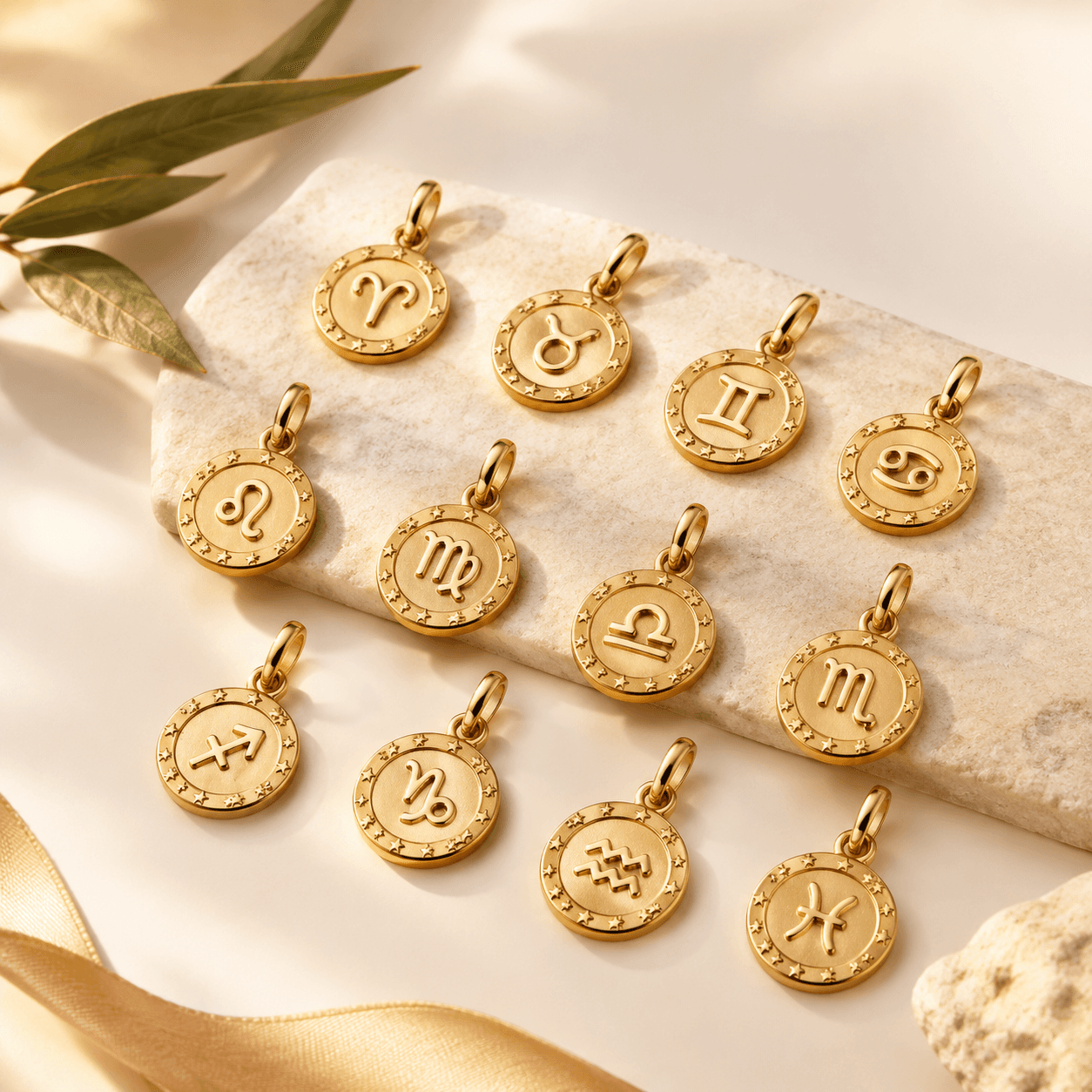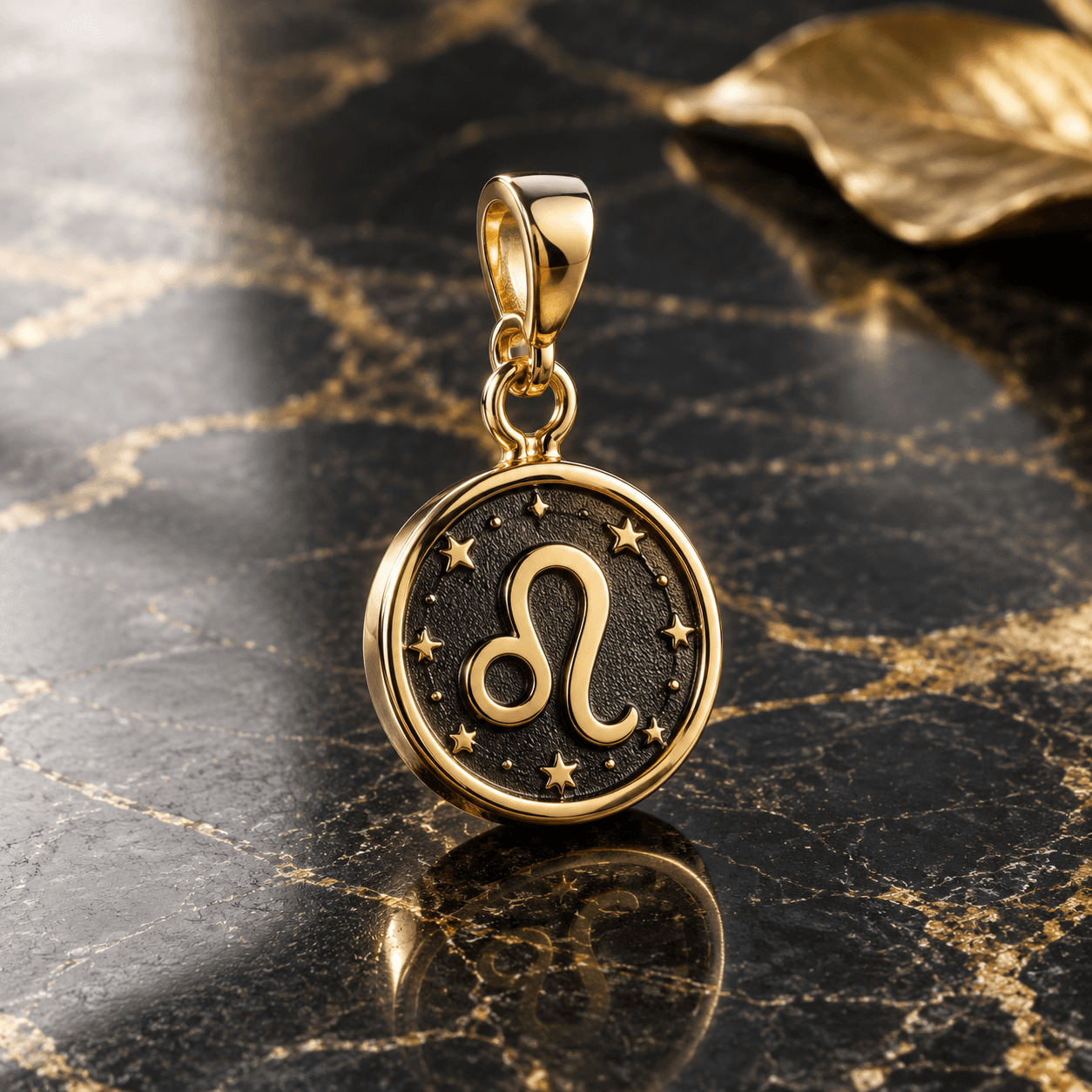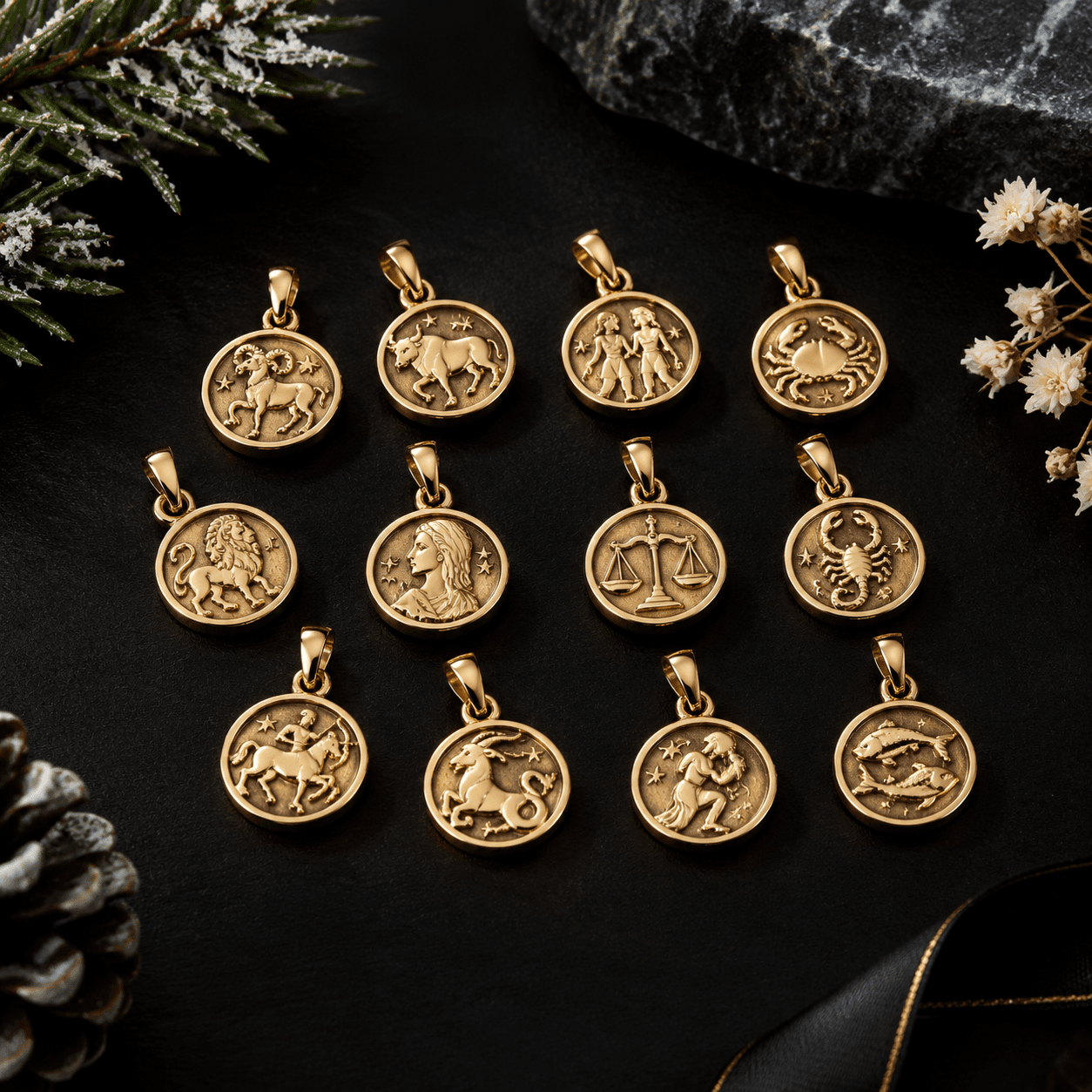
For e-commerce sellers, sourcing zodiac charms is not simply a matter of selecting attractive designs and negotiating a unit price. Consistent product quality, reliable finish performance, accurate product photography, documented compliance, and dependable shipping all influence customer satisfaction and repeat purchases. A structured purchasing checklist helps buyers compare suppliers objectively, identify risks before placing bulk orders, and build a more reliable assortment for their stores.
This guide explains how to evaluate 316L stainless steel zodiac charms wholesale, from material verification and wear-resistance testing to listing preparation, packaging, and fulfillment. It is designed for boutique jewelry brands, online retailers, gift companies, and private-label buyers who need practical quality controls before committing to production.
316L Stainless Steel Zodiac Charms Wholesale: Essential Quality Checklist
Use the following checklist during supplier evaluation, sample approval, and pre-shipment inspection. Request written evidence wherever possible rather than relying exclusively on product descriptions or verbal assurances.
1. Verify the Base Material
- [ ] Request documentation identifying the base material as 316L stainless steel.
- [ ] Confirm that the documentation corresponds to the proposed product, production specification, or material batch.
- [ ] Ask whether material verification can be supported by appropriate laboratory testing or traceable supplier records.
- [ ] Review the approved sample for consistent thickness, weight, surface finish, and overall construction.
- [ ] Confirm that the material specification remains unchanged throughout the production run.
Material verification matters because the product specification establishes the foundation for durability, finish performance, and consistent purchasing. For an OEM charms manufacturer, clear material controls also make it easier to reproduce approved designs across multiple zodiac signs and future replenishment orders.
2. Inspect Design Accuracy and Construction
- [ ] Check that each zodiac symbol, constellation detail, and decorative element matches the approved drawing.
- [ ] Inspect edges for burrs, sharp points, uneven polishing, and visible manufacturing defects.
- [ ] Confirm that the charm has a properly formed hole or loop for its intended attachment.
- [ ] Verify that the jump ring or other specified connector passes through the actual attachment point and closes securely.
- [ ] Compare dimensions, thickness, weight, and tolerances against the approved specification.
- [ ] Check that repeated units show consistent engraving depth, contour definition, and alignment.
Small construction defects can create disproportionate problems for e-commerce sellers. A connector that opens too easily, a poorly finished edge, or an unclear zodiac symbol can lead to returns and negative reviews. Request close-up photographs of the sample, including the attachment point and side profile, before approving production.
3. Evaluate PVD and Other Surface Finishes
- [ ] Specify the required finish, such as PVD gold plated, silver finish, or rose gold plating.
- [ ] Confirm the approved color reference, surface appearance, and acceptable variation between batches.
- [ ] Request available PVD process specifications and documented finish-testing results.
- [ ] Inspect for uneven color, visible spots, scratches, peeling, and incomplete coverage.
- [ ] Ask whether testing evaluates corrosion resistance, finish adhesion, and wear under defined conditions.
- [ ] Approve a physical reference sample for comparison with mass-production output.
PVD is relevant to buyers seeking a consistent decorative finish, but the process name alone does not establish a universal durability level. Performance depends on the complete manufacturing process, surface preparation, coating specifications, product geometry, and conditions of use. Ask suppliers to explain their test methods and acceptance criteria.
For enamel stainless steel charms or designs featuring crystal inlay, inspect color consistency, filling quality, setting alignment, and component security separately. Confirm that decorative details remain within the approved design and do not interfere with the attachment mechanism.
4. Request Meaningful Durability Evidence
- [ ] Obtain the available salt spray test report and verify the test duration, method, sample identification, and result.
- [ ] Ask for relevant nickel release test documentation when required for the intended market.
- [ ] Review any available coating adhesion, abrasion, or simulated-use testing appropriate to the finish.
- [ ] Confirm the conditions under which each test was performed and what the results actually demonstrate.
- [ ] Establish written acceptance criteria for visible defects, finish variation, and mechanical integrity.
- [ ] Agree on the procedure for reporting defects, investigating root causes, and handling nonconforming shipments.
Lancy Jewelry can provide information about available testing and compliance documentation upon request. Buyers should request applicable reports or certificates and verify their scope, issue dates, product coverage, and issuing organization. If a report states a specific salt spray testing duration, evaluate it in the context of the documented method and acceptance criteria. A stated testing duration should not be interpreted as a guarantee that every charm will remain unchanged for a specific number of years.
Why a Structured Quality Checklist Matters
More Predictable Product Quality
Documented specifications reduce ambiguity between the sample, production order, and delivered goods. This is particularly important when an assortment includes twelve zodiac signs, multiple finish options, or several sizes. Define the acceptable appearance and dimensions of each SKU before production, then inspect finished units against the same approved criteria.
Better Durability and Lower Return Risk
Appropriate testing helps buyers evaluate whether a product meets their intended quality requirements. It also creates a reference point for supplier discussions when a finish, connector, or decorative detail fails inspection. While no test can reproduce every customer's environment, a combination of laboratory evidence and practical sample evaluation provides a stronger basis for purchasing decisions.
More Credible Compliance Documentation
Buyers should distinguish product quality claims from legal compliance obligations. In the United States, regulatory requirements depend on the product, intended wearer, and sales channel. Jewelry importers and sellers should identify the federal and state rules that apply to their products rather than assuming that a single certificate covers every obligation.
For products intended for children, additional requirements may apply, including relevant restrictions on lead and other regulated substances, testing, and certification obligations. Canadian importers should assess applicable federal requirements, including the Canada Consumer Product Safety Act and relevant product-specific regulations. For products sold in multiple markets, review the rules applicable to each destination rather than assuming one report covers every obligation.
More Efficient Merchandising and Reordering
Consistent samples, repeatable specifications, and clearly identified SKUs help e-commerce teams prepare listings and plan replenishment. Buyers can photograph approved samples while production is underway, organize descriptions by zodiac sign, and reduce discrepancies between product images and delivered inventory.
Detailed Buying Guide for E-Commerce Sellers
5. Build a Complete Supplier Evaluation File
Before comparing quotations, prepare a specification sheet that covers product dimensions, thickness, weight, attachment design, finish, decorative details, packaging, and expected order quantities. Request the same information from every shortlisted stainless steel charms manufacturer so quotations can be evaluated on equivalent terms.
- [ ] Record the supplier's manufacturing capabilities, quality-control process, and relevant testing documentation.
- [ ] Confirm which operations are handled in-house, including laser marking, polishing, finish processing, and final inspection where applicable.
- [ ] Ask how production batches are identified and how approved specifications are retained for repeat orders.
- [ ] Review the proposed MOQ, sample charges, production lead time, and payment milestones.
- [ ] Confirm how tooling changes, design revisions, and rejected samples affect costs and timing.
A lower quoted price may not represent better total value if specifications are incomplete, finish variation is high, or packaging and inspection costs are excluded. Compare the total landed cost, including product charges, packaging, freight, duties where applicable, and expected quality-control expenses.
6. Approve Samples Before Bulk Production
Sample development gives buyers an opportunity to evaluate physical details before authorizing bulk charm orders. For a zodiac collection, request representative samples that demonstrate the most complex engraving, the smallest design features, and each proposed finish. If the range includes enamel or crystal inlay, approve those features independently.
- [ ] Measure each sample against the technical drawing.
- [ ] Examine the front, reverse, edges, hole, and connector under consistent lighting.
- [ ] Photograph samples from repeatable angles and compare color against the agreed reference.
- [ ] Conduct reasonable handling and attachment checks appropriate to the product's intended use.
- [ ] Record approval dates, revision numbers, and any conditions that must be followed during production.
- [ ] Keep a signed or otherwise clearly identified reference sample where practical.
Do not treat a visually acceptable sample as proof of long-term durability or regulatory compliance. Combine physical inspection with relevant test documentation, and require notification and approval before material, finish, or construction changes are introduced.
7. Set Practical Inspection and Acceptance Standards
Write a quality agreement that identifies critical, major, and minor defects in language both parties understand. A critical defect may involve a serious safety or regulatory concern. Major defects can include a broken attachment loop, significant finish failure, or an incorrect zodiac symbol. Minor defects may involve limited cosmetic variation that remains within agreed tolerances.
- [ ] Define inspection sampling, acceptance limits, and the inspection stage.
- [ ] Identify the approved sample and specification as the production reference.
- [ ] Confirm whether inspection occurs during production, before shipment, or at both stages.
- [ ] Request photographs or inspection records showing the sampled units and identified defects.
- [ ] Document corrective-action timelines and responsibilities for confirmed nonconformities.
Choose a sampling plan appropriate to order size and risk, and state the plan in writing. Sampling reduces inspection effort but cannot guarantee that every unit in a shipment is defect-free. For products with safety-sensitive features or high-value orders, consider additional verification based on the consequences of failure.
8. Prepare E-Commerce Product Photography and Listings
Clear images and accurate descriptions help customers understand what they are purchasing. A strong product listing should communicate the zodiac sign, dimensions, finish, attachment design, and any decorative features without overstating performance or compliance.
- [ ] Use a clean white-background hero image showing one complete charm and its functional attachment point.
- [ ] Include close-up views of engraving, surface finish, enamel details, or crystal inlay when applicable.
- [ ] Add a scale reference, such as a packaging card or neutral measurement grid, to communicate the charm's size.
- [ ] Photograph each finish accurately and avoid editing that materially changes its appearance.
- [ ] Include dimensions in millimeters and inches for North American shoppers.
- [ ] Use descriptive image alt text, clear SKU names, and concise product specifications.
- [ ] Verify that product titles and descriptions identify 316L stainless steel accurately.
For organic search, use relevant terms naturally in page titles, product descriptions, image alt text, and category market-relevant. Useful phrases include 316L stainless steel charms, wholesale stainless steel charms, and custom stainless steel charms. Keep each listing specific to the actual design and avoid repeating the same keyword unnaturally.
9. Confirm Packaging, Shipping, and Fulfillment
Reliable fulfillment protects the product and supports predictable inventory planning. Ask the supplier how individual charms are separated, protected against scratching, labeled, and packed for transport. Private-label packaging should be reviewed before production to verify branding artwork, SKU labels, barcode placement where needed, and package dimensions.
- [ ] Approve packaging materials, inserts, labels, and carton specifications.
- [ ] Confirm unit quantities per inner pack and shipping carton.
- [ ] Request protective packing that minimizes contact damage during transit.
- [ ] Establish production and dispatch milestones, shipping terms, and tracking procedures.
- [ ] Clarify who handles export documents, import duties, and destination-specific paperwork.
- [ ] Ask whether split shipments or replenishment orders are available for approved programs.
- [ ] Confirm whether direct-to-customer fulfillment or dropship options are actually supported before advertising them.
Do not assume that a manufacturer offering private-label packaging also provides individual-order dropshipping. Confirm the service scope, inventory handling, shipping destinations, dispatch times, and return procedures in writing. These details help prevent delivery promises that the supply chain cannot meet.
10. Plan MOQ, Assortment Breadth, and Reorders
A commercially useful zodiac range balances assortment coverage with inventory exposure. Buyers can start with the signs most relevant to their audience, then expand using sales data and customer requests. For a complete twelve-sign assortment, compare the MOQ for each individual design with any combined order option offered by the supplier.
- [ ] Confirm whether MOQ applies per design, finish, color, or total order.
- [ ] Ask whether multiple zodiac signs can share a production schedule or packaging plan.
- [ ] Calculate the cost of carrying slow-moving designs and maintaining sufficient stock of popular SKUs.
- [ ] Set reorder triggers using sales velocity, supplier lead time, and safety stock.
- [ ] Agree on whether repeat orders require new samples when the approved specification remains unchanged.
Low MOQ support can help smaller e-commerce businesses validate demand without committing to excessive inventory. However, confirm any price breaks, minimum quantities, and lead times for each configuration instead of assuming that every finish or customization has the same terms.
Frequently Asked Questions
What should buyers verify before purchasing wholesale zodiac charms?
Verify the 316L stainless steel base material, dimensions, design accuracy, attachment construction, surface finish, relevant test reports, packaging requirements, and written acceptance criteria. Approve samples before bulk production and confirm that the delivered goods will follow the approved specification.
Does a 240-hour salt spray test guarantee long-term durability?
No. Salt spray testing evaluates performance under defined laboratory conditions. It does not establish a universal service life or guarantee that every charm will remain unchanged during everyday use. Review the test method, result, sample identification, and acceptance criteria alongside other relevant evaluations.
What compliance documents should buyers request?
Request applicable material records, relevant RoHS or REACH documentation when appropriate to the product and market, nickel release results where required, and available corrosion or finish-testing reports. Determine which federal, state, and destination-market requirements apply to the intended product and customer group. A supplier report does not automatically establish compliance with every destination's rules.
Can Lancy Jewelry support custom designs and private-label orders?
Lancy Jewelry provides OEM and ODM development for 316L stainless steel charms, including logo engraving, PVD plating, enamel color filling, crystal setting, and private-label packaging. Sample support and MOQ options can be discussed according to design complexity, finish requirements, and order scope. Buyers should submit their specifications to confirm feasibility, pricing, and timing.
Partner With Lancy Jewelry for Wholesale Zodiac Charms
Choosing the right supplier requires more than a competitive quotation. Material traceability, documented testing, controlled finishes, approved samples, practical inspection criteria, and dependable packaging all contribute to a more predictable wholesale program. A disciplined checklist helps e-commerce sellers protect product quality while planning assortment growth and replenishment.
Lancy Jewelry is a B2B 316L stainless steel charms manufacturer supporting OEM and ODM projects for boutique brands, charm bar retailers, gift companies, distributors, and private-label buyers. Its manufacturing capabilities include CNC processing, laser cutting, laser marking, welding, polishing, PVD plating, enamel color filling, and crystal setting. The team can discuss custom stainless steel charms, sample development, logo requirements, packaging specifications, and wholesale order planning.
To review available designs, visit the Lancy product catalog. For custom manufacturing requirements, explore the OEM and ODM service. Buyers ready to share quantities, target finishes, technical drawings, or packaging requirements can request a quote or contact the team through the Lancy Jewelry contact page.
When submitting an RFQ, include the zodiac designs required, estimated quantities per SKU, preferred finish, dimensions, decorative details, test documentation needs, packaging requirements, destination market, and target delivery schedule. These details help the team evaluate feasibility and prepare a more relevant quotation.
Use this checklist as a repeatable purchasing standard for every new collection and replenishment order. Consistent specifications and documented approvals give your business a stronger foundation for dependable product listings, controlled quality, and long-term supplier relationships.