A zodiac charm collection must deliver more than attractive designs. For jewelry designers, boutique brands, and private-label buyers in the US and Canada, consistent dimensions, dependable surface finishes, documented material properties, and reliable production quality determine whether a collection is ready for repeat orders. A sample that looks excellent under studio lighting is not enough; it must also withstand realistic wear and meet the quality requirements established for the intended market.
This checklist explains how to evaluate a supplier of 316L stainless steel zodiac charms wholesale, from material documentation and design customization to plating tests, production controls, and commercial terms. Use it during sample approval, supplier qualification, and pre-shipment inspection to reduce avoidable sourcing risks.
316L Stainless Steel Zodiac Charms Wholesale: The Essential Quality Checklist
Before comparing quotations, establish measurable acceptance criteria. Zodiac charms typically combine small decorative details with functional attachment points, so even minor inconsistencies in dimensions, polishing, engraving, or opening size can affect the finished product. Evaluate each supplier against the same checklist rather than relying on appearance or price alone.
1. Verify the Base Material and Its Documentation
Start by confirming that every zodiac charm uses 316L stainless steel as its base material. The specification should be written into the purchase order, technical drawing, and approved sample record. Do not rely solely on a product title or a supplier's general statement about material quality.
- [ ] Confirm the 316L stainless steel specification for every SKU in the zodiac range.
- [ ] Request relevant material documentation and verify that it corresponds to the supplied product or production batch.
- [ ] Ask whether material identity can be checked through suitable analytical testing when additional verification is required.
- [ ] Record the approved base material, surface finish, dimensions, and any decorative treatments in the product specification.
- [ ] Establish a process for handling material substitutions or undocumented production changes.
316L stainless steel is valued for its corrosion resistance and suitability for many jewelry applications. However, material grade alone does not establish that a finished product is corrosion-proof, nickel-free, or suitable for every wearer. Manufacturing quality, surface condition, exposure, and individual sensitivities remain relevant.
2. Inspect Zodiac Design Accuracy and Mechanical Construction
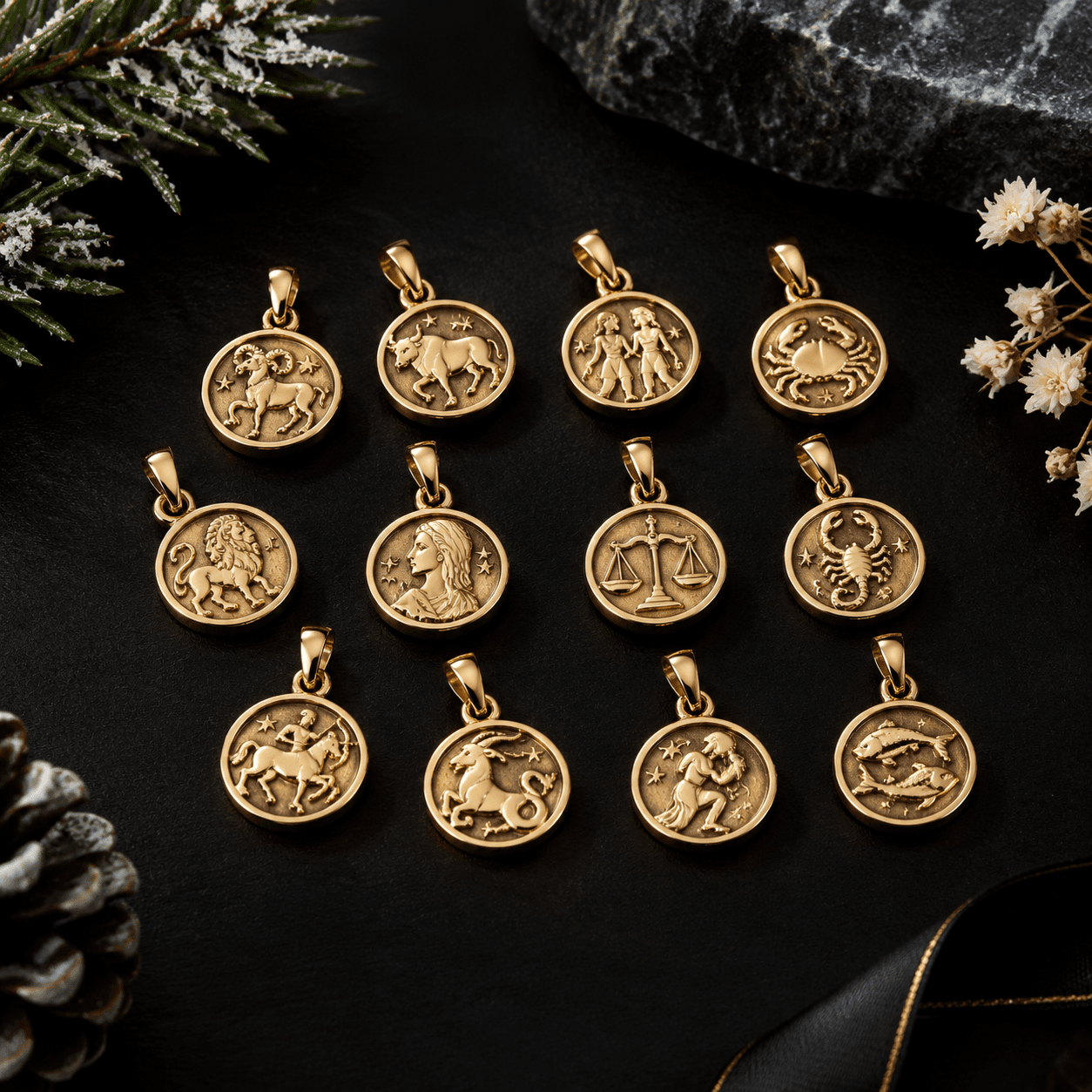
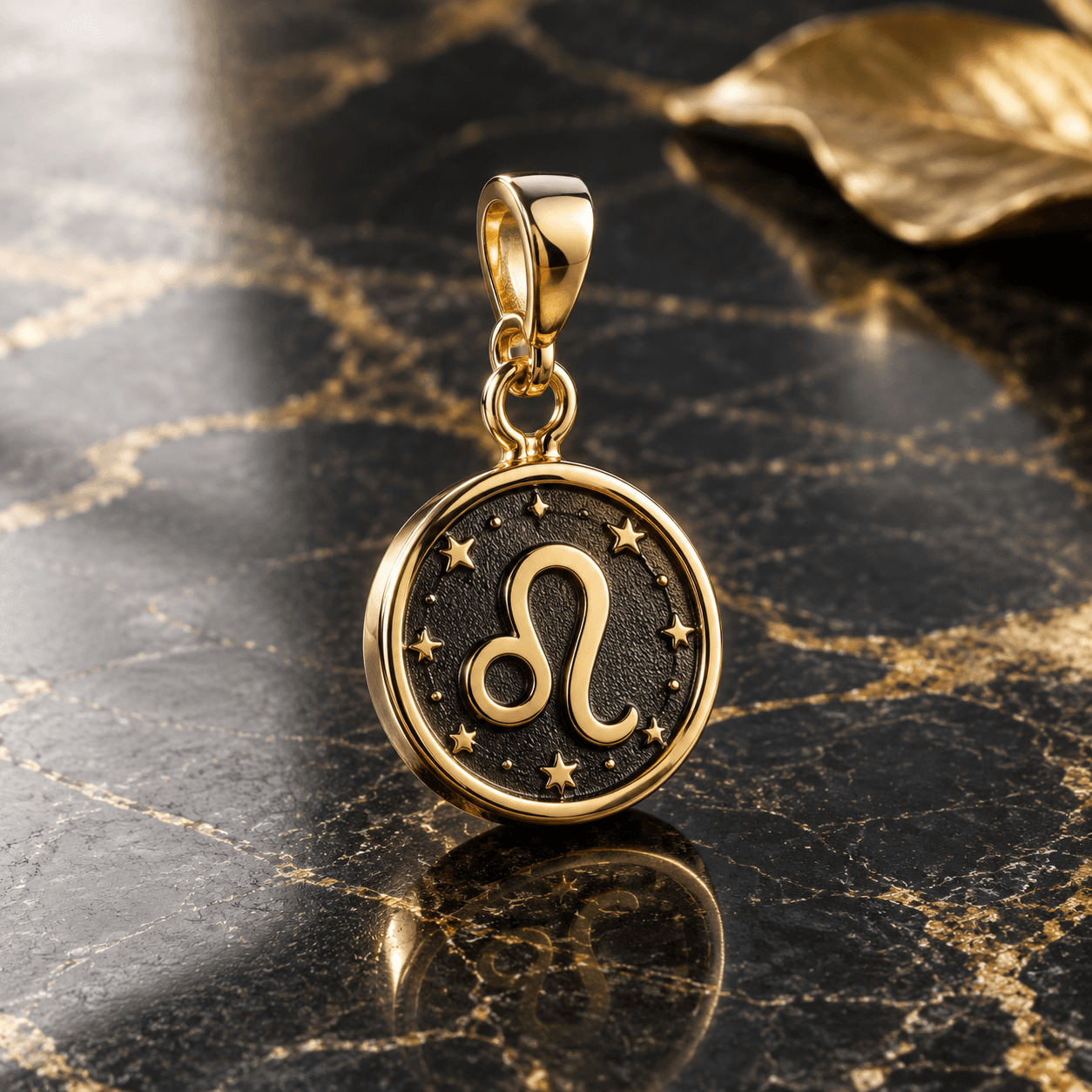
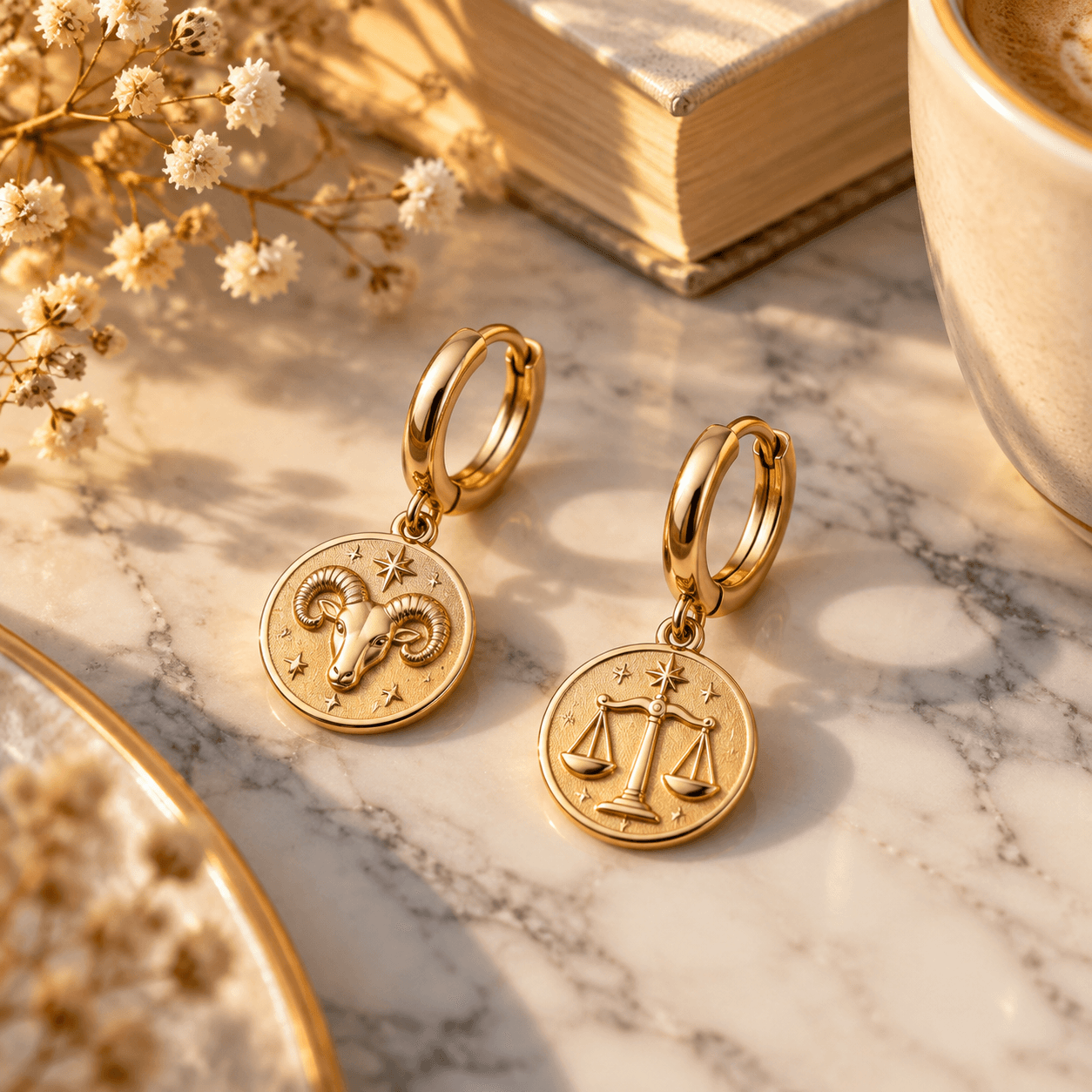
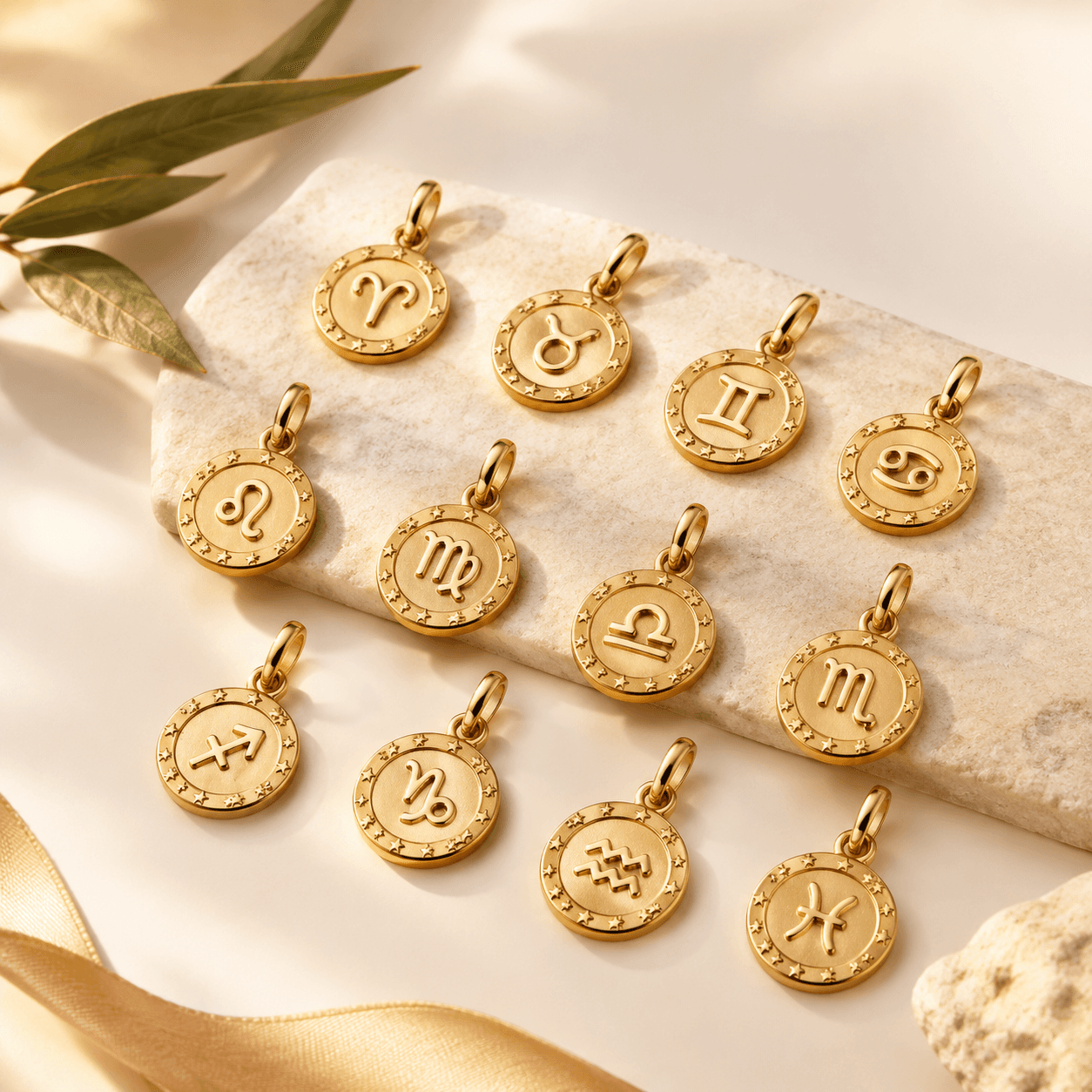
Astrology-themed collections depend on recognizable symbols and consistent design language. Aries, Taurus, Gemini, Cancer, Leo, Virgo, Libra, Scorpio, Sagittarius, Capricorn, Aquarius, and Pisces should each have clearly defined artwork and production specifications. Small deviations can make a coordinated collection appear inconsistent on a retail display.
- [ ] Check the silhouette, line weight, engraving depth, and orientation against the approved artwork.
- [ ] Confirm that symbol details remain legible at the finished charm size.
- [ ] Inspect edges for burrs, sharp points, and unfinished areas.
- [ ] Verify that the bail or jump ring passes through a real opening and is fully closed where applicable.
- [ ] Check attachment strength and ensure the charm hangs in the intended direction.
- [ ] Compare dimensions and thickness across the full zodiac series.
For most small jewelry charms, a design in the 8–18 mm range can be a useful starting point, although the ideal dimensions depend on the intended application. Confirm the finished measurements with physical samples rather than assuming that a digital drawing accurately represents scale.
3. Evaluate Surface Finish and Plating Consistency
Surface finish influences perceived quality, retail presentation, and long-term appearance. A supplier should explain how polishing, cleaning, surface preparation, and finishing are controlled. For gold plated or rose gold plating options, ask how PVD processing is specified and monitored. A silver finish should also have a documented appearance standard.
- [ ] Compare color, gloss, and surface texture with a signed or otherwise documented reference sample.
- [ ] Inspect recessed areas, edges, holes, and attachment points for uneven coverage or visible defects.
- [ ] Check for scratches, pits, polishing marks, discoloration, and inconsistent reflectivity.
- [ ] Define acceptable color variation for repeat production and different production lots.
- [ ] Request documented wear-resistance or adhesion test results relevant to the selected finish.
- [ ] Establish the inspection method, acceptance criteria, and corrective-action process before bulk production.
PVD can support durable decorative finishes, but performance depends on process control, surface preparation, coating specifications, and actual use conditions. Do not treat the term PVD as a guarantee of a particular service life. Ask the supplier to identify the test method, sample condition, and acceptance threshold behind every durability claim.
4. Check Enamel and Crystal Inlay Details
Enamel and crystal inlay can help designers create distinctive zodiac themes without changing the 316L stainless steel base material. These details require additional quality controls because small decorative elements can be sensitive to dimensional tolerances and handling during production.
- [ ] Confirm enamel color references and inspect for uneven filling, gaps, contamination, or overflow.
- [ ] Check that decorative boundaries are clean and consistent across repeated units.
- [ ] Inspect crystal alignment, setting security, and visible spacing where crystal inlay is specified.
- [ ] Ask how the factory checks decorative elements before packing.
- [ ] Define the acceptable appearance standard and the procedure for defective units.
Approve decorative options on production-representative samples. A finish that looks correct on a single prototype may require additional process adjustment when repeated across twelve coordinated zodiac designs.
Why Quality Verification Matters for Wholesale Zodiac Charms
Wholesale buyers need repeatable results, not just a promising first sample. A consistent quality program helps jewelry designers plan coordinated releases, protect retail presentation, manage returns, and reorder successful designs with fewer unexpected changes.
Key Benefits of a Documented Quality Program
- More predictable repeat orders: Approved drawings, material specifications, and reference samples help maintain consistency between production batches.
- Better wear performance: Appropriate corrosion, coating, and mechanical tests provide evidence about how the finished charm performs under defined conditions.
- Clearer customer communication: Accurate product specifications support responsible descriptions of material, finish, and care requirements.
- Reduced incoming inspection risk: Agreed sampling plans and defect classifications make acceptance decisions more objective.
- More reliable collection planning: Standardized design and finish requirements help designers coordinate a complete twelve-sign assortment.
Review Certifications and Test Reports Carefully
Lancy Jewelry reports SGS certification and testing covering RoHS, REACH, nickel release under EN 1811, and a 240-hour salt spray test. Buyers should request the applicable certificates or reports and confirm their scope, product identification, testing date, and relevance to the specific item being sourced.
- [ ] Review RoHS documentation for applicable restricted-substance requirements and product scope.
- [ ] Review REACH documentation for the applicable chemical and market requirements.
- [ ] Check nickel-release results against the relevant EN 1811 test scope and applicable product requirements.
- [ ] Request the salt spray report and confirm the tested finish, test conditions, and acceptance criteria.
- [ ] Verify whether the documentation covers the exact product, representative samples, or a defined product family.
These documents do not automatically establish compliance with every requirement in every market. RoHS, REACH, nickel-release testing, and salt spray testing address different questions. A 240-hour salt spray result is evidence of performance under a specified test protocol, not a guarantee that a charm will remain unchanged for a fixed number of years in everyday use.
Detailed Supplier Evaluation Guide: From Sample to Bulk Order
5. Test Wear Resistance and Longevity Before Approval
Durability should be evaluated against the charm's intended use, finish, and expected exposure. Jewelry worn daily may encounter perspiration, moisture, cosmetics, friction, and repeated handling. A gift accessory displayed occasionally may face different conditions. Establish the relevant use case before selecting tests.
Build a Practical Test Plan
- [ ] Corrosion resistance: Request suitable testing, such as salt spray testing, with the method and acceptance criteria documented.
- [ ] Coating adhesion: Use an appropriate method to assess whether the decorative finish remains attached under the specified test conditions.
- [ ] Wear resistance: Define a repeatable abrasion or rubbing test relevant to the selected finish and intended application.
- [ ] Color stability: Assess whether the finish retains an acceptable appearance after the agreed exposure or wear simulation.
- [ ] Mechanical integrity: Inspect attachment points and test their resistance to expected handling loads where applicable.
- [ ] Decorative security: Check enamel and crystal inlay for defects or movement using a suitable inspection procedure.
Ask the supplier to document the test method, equipment or laboratory used, sample preparation, number of samples, results, and pass/fail criteria. Where independent verification is commercially important, agree on an external laboratory and testing responsibility before production.
A longevity guarantee should be written in specific commercial terms. It should identify the covered product and finish, the applicable defect types, the warranty period, the evidence required for a claim, and the remedy available. Avoid accepting an unsupported promise that a finish will never fade or that corrosion cannot occur.
6. Assess Customization and Manufacturing Capability
Jewelry designers often need a consistent visual theme while adapting the details for different sales channels. An experienced stainless steel charms manufacturer should be able to discuss artwork feasibility, tooling or process requirements, finish options, logo placement, and production tolerances before confirming a quotation.
- [ ] Submit vector artwork or clear technical drawings for each zodiac symbol.
- [ ] Confirm available dimensions, thickness, relief, cutout details, and engraving options.
- [ ] Review PVD gold plating, rose gold plating, silver finish, enamel, and crystal inlay options where relevant.
- [ ] Ask whether custom logo engraving can be accommodated without compromising the charm's design.
- [ ] Request a sample development schedule with milestones for artwork review, prototype approval, and finish confirmation.
- [ ] Confirm how approved specifications will be retained and referenced for future orders.
Lancy Jewelry operates a modern manufacturing facility with CNC processing, laser cutting, laser marking, welding, and polishing capabilities. These processes can support the development of custom stainless steel charms, subject to the design and technical requirements of each project.
For an overview of customization options and production support, visit the Lancy OEM manufacturing service.
7. Evaluate MOQ, Lead Times, and Production Controls
Commercial flexibility matters for boutique brands testing new zodiac themes or expanding a proven range. A competitive quotation should explain not only the unit price but also the production assumptions, quality controls, packaging scope, and costs that may change as order quantities increase.
- [ ] Confirm the MOQ for each design, finish, and customization requirement.
- [ ] Ask whether a coordinated twelve-sign order can use a shared production plan while retaining SKU-level specifications.
- [ ] Obtain a sample cost, sample lead time, bulk production estimate, and shipping preparation timeline.
- [ ] Confirm which costs cover setup, custom marking, finishing, decorative details, and packaging.
- [ ] Request the inspection plan, sampling level, defect classification, and rework policy.
- [ ] Define how production delays, out-of-specification goods, and approved design changes will be managed.
Low MOQ support can help buyers test demand before committing to larger quantities, but the available quantity depends on the design, finish, and production setup. Ask for written confirmation rather than assuming every customization is available at the same MOQ.
Review the Lancy product catalog to assess available charm categories and product directions before submitting a detailed RFQ.
8. Check Packaging and North American Market Requirements
For US and Canadian buyers, product presentation and compliance documentation should be considered together. Boutique packaging, clear SKU identification, and accurate material descriptions help support receiving, inventory management, and customer service. Any product claims should match the evidence available for the actual finished product.
- [ ] Confirm packaging dimensions, protective inserts, barcode requirements, and private-label artwork.
- [ ] Ensure each SKU can be traced to its approved specifications and relevant production records.
- [ ] Review material and finish descriptions for accuracy and consistency across product pages and packaging.
- [ ] Identify applicable US and Canadian consumer-product, chemical, labeling, and import requirements for the product and its intended use.
- [ ] Request supporting documents for any safety, chemical-compliance, or durability claims made to customers.
- [ ] Confirm whether the packaging and product presentation satisfy the buyer's retail and distribution requirements.
FDA considerations require particular care. The US Food and Drug Administration does not generally approve ordinary jewelry as a category before sale. However, specific FDA requirements may apply depending on intended use, product claims, or other regulated characteristics. Do not assume that an SGS test report constitutes FDA approval. Ask qualified compliance professionals to determine whether any FDA requirements apply to the specific product.
In both the US and Canada, requirements can depend on product design, intended use, applicable chemical restrictions, labeling rules, and the buyer's distribution model. A supplier's general certification statement should not replace a market-specific compliance review.
9. Approve the Final Sample Before Authorizing Production
The approved sample should be the reference point for all subsequent production decisions. Keep the sample, artwork, specifications, and test documentation together so that the sourcing team and factory are evaluating the same requirements.
- [ ] Sign off on the base material, dimensions, weight where relevant, finish, and decorative details.
- [ ] Approve the attachment mechanism and check that all functional components connect correctly.
- [ ] Record acceptable color variation, surface defects, and design tolerances.
- [ ] Confirm packaging artwork, labeling, and SKU identification.
- [ ] Establish pre-shipment inspection requirements and the process for reporting defects.
- [ ] Retain a reference sample and document any approved changes before repeat production.
For bulk charm orders, specify whether inspection takes place during production, before shipment, or at both stages. Agree on how nonconforming goods will be segregated, corrected, replaced, or otherwise resolved. Written acceptance criteria make these decisions more consistent than subjective judgments made after delivery.
Supplier Qualification Checklist: Questions to Ask Before You Buy
Use these final questions when comparing quotations from potential OEM or ODM partners.
- [ ] Can the supplier document the 316L stainless steel base material for the products being quoted?
- [ ] Can it provide relevant reports for finish durability, corrosion resistance, and nickel release?
- [ ] Are design customization, logo engraving, sample development, and private-label packaging available for the requested project?
- [ ] Are MOQ, sample charges, lead times, payment terms, and inspection requirements clearly documented?
- [ ] Can the supplier maintain consistent specifications across all twelve zodiac designs and subsequent production batches?
- [ ] Is there a defined procedure for defects, quality disputes, and corrective actions?
A supplier that answers these questions with clear documentation and realistic technical explanations is easier to qualify than one that relies on broad quality promises. For an initial comparison, score each supplier against material traceability, finish consistency, test evidence, customization, delivery reliability, and commercial transparency.
Frequently Asked Questions
What should buyers verify when sourcing 316L stainless steel zodiac charms wholesale?
Verify the base material, approved design dimensions, attachment construction, surface finish, relevant chemical and durability test reports, production tolerances, MOQ, and inspection terms. Keep an approved reference sample and require written specifications for repeat orders.
Does a 240-hour salt spray test guarantee that gold plated charms will last for years?
No. A 240-hour salt spray result reflects performance under a defined laboratory test. Actual wear depends on the coating process, surface preparation, friction, moisture, chemicals, and handling. Request the full report and agree on realistic acceptance criteria rather than treating the test duration as a service-life guarantee.
What certifications or reports should a US or Canadian buyer request?
Request applicable material documentation, RoHS and REACH reports where relevant, nickel-release results under EN 1811 where applicable, and finish-specific corrosion or wear testing. Confirm the scope of each document and assess additional US or Canadian requirements based on the product, claims, and intended market. FDA approval should not be assumed for ordinary jewelry.
Can Lancy Jewelry customize zodiac charms for private-label collections?
Lancy Jewelry supports OEM/ODM development for 316L stainless steel charms, with capabilities including logo engraving, PVD plating, enamel color filling, crystal setting, and private-label packaging. Custom project feasibility, MOQ, sampling time, and production terms depend on the approved design and finishing requirements.
Partner With Lancy Jewelry for Your Zodiac Charm Collection
Reliable wholesale sourcing starts with clear specifications, relevant test evidence, and a manufacturing partner that understands both design intent and production consistency. Lancy Jewelry supports boutique jewelry brands, charm bar retailers, gift companies, and private-label buyers developing coordinated 316L stainless steel zodiac charm collections.
Share your zodiac artwork, target dimensions, preferred finish, decorative requirements, estimated order quantity, packaging needs, and destination market. Our team can review the project scope, discuss customization options, and help establish a practical sample development and quality approval process before bulk production.
To discuss your requirements, contact Lancy Jewelry or submit an RFQ and quote request. Provide your target specifications and quality expectations so the quotation can address the details that matter to your collection.
Make supplier decisions with evidence, approve samples against measurable standards, and document every critical production requirement before placing your order.