MOQ Negotiation for Stainless Steel Charms: An Advanced Guide
In global sourcing, procurement teams face increasing pressure to optimize cost while preserving quality and speed to market. For boutique brands and private-label buyers, negotiating minimum order quantities (MOQs) on 316L stainless steel charms is a strategic lever to improve ROI. This advanced guide provides practical, data-driven methods for experienced professionals to align cost, value, and supplier capability within an OEM/ODM framework. It draws on Lancy Jewelry’s modern manufacturing facility, which features CNC, laser cutting, laser marking, welding, and polishing, plus SGS-certified RoHS, REACH, Nickel Release EN1811, and Salt Spray 240H performance. If you are evaluating vendors, RFQ processes, or private-label programs, this guide helps you structure negotiations that deliver measurable business results. For quick access to our OEM service and inquiry options, see the internal links to /oem and our RFQ workflow at /cart.
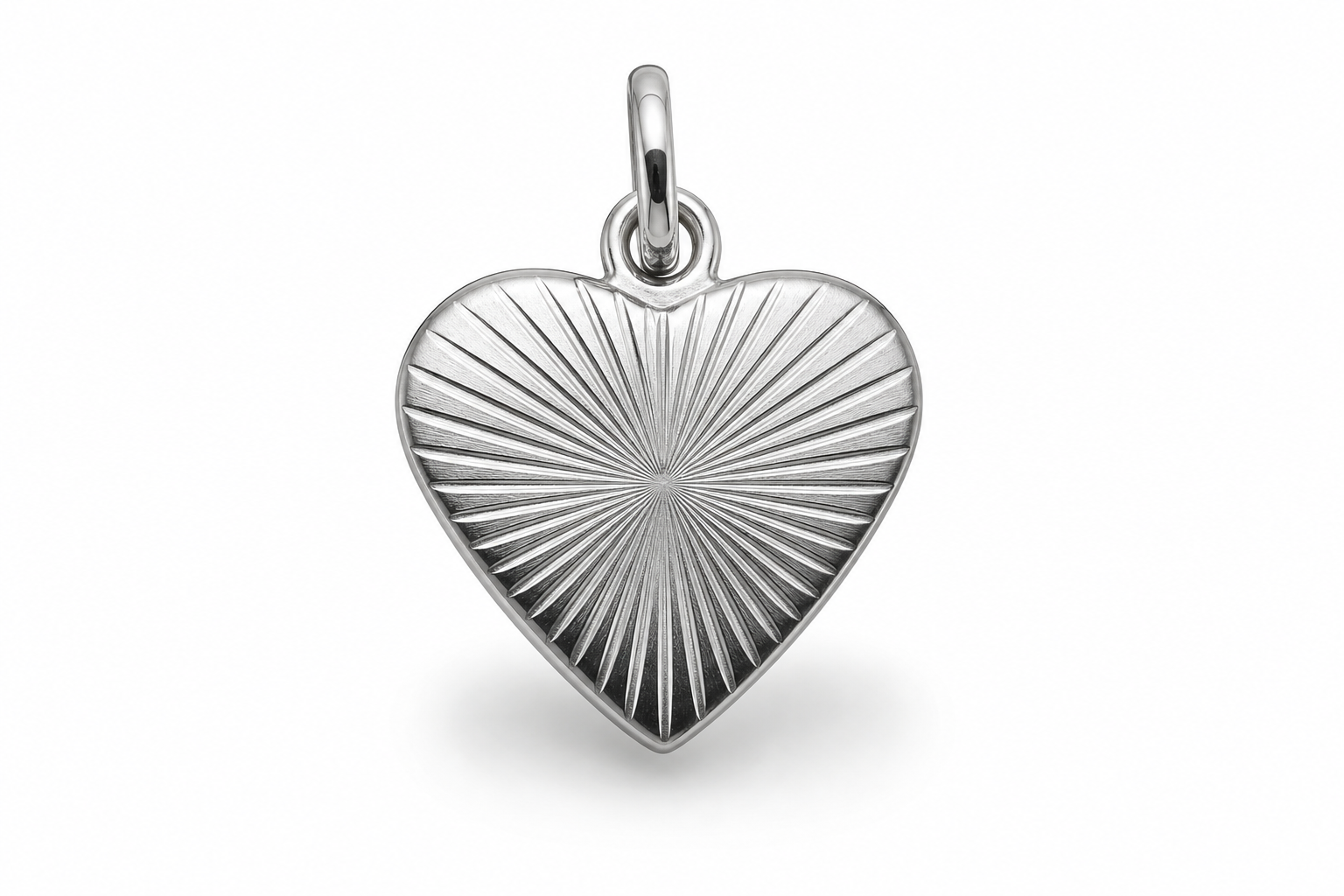
MOQ Negotiation for Stainless Steel Charms: Main Topic
Negotiating MOQs for 316L stainless steel charms requires understanding cost drivers, value levers, and risk management across cross-market supply chains. This section sets the stage for practical steps you can deploy in real-world supplier negotiations, while keeping a strict focus on the material and process constraints that define Lancy Jewelry’s offerings. The emphasis remains on 316L stainless steel charms as the base material, with finishes like PVD gold plating, silver finish, rose gold plating, enamel, and crystal inlay as optional value-adds. When you evaluate suppliers, emphasize your need for consistent plating quality, fast sample development, and private-label packaging—facts that differentiate an OEM/ODM partner capable of supporting low MOQs and scalable growth. For vendor vetting and formal documentation, reference our OEM service page and RFQ guidance via /oem and /cart.
1) Cost Drivers in MOQ Pricing
The first step is to map all cost components that influence MOQs. Understanding these drivers helps you set a realistic baseline and build a negotiation plan that improves ROI. Key factors include:
- Material price and lot consolidation: 316L stainless steel base material costs are influenced by alloy composition, coil yield, and supply stability. If a supplier can consolidate orders or source from a single mill, per-unit cost declines can justify higher MOQs or enable tiered pricing for private-label runs.
- Finishes and value-adds: PVD plating (gold, rose gold, or silver), enamel filling, and crystal inlay add significant cost but can deliver premium price points. MOQs are often tiered by finish complexity, so define your required finishes up front.
- Tolling, tooling, and setup: Initial tooling, fixture preparation, and laser marking or engraving programs create upfront fees. With longer production runs, these fixed costs get amortized across more units.
- Labor and throughput: CNC, laser cutting, and welding efficiency determine unit cost at different volume bands. A factory with high automation tends to offer tighter cost curves for mid-to-high MOQs.
- Quality assurance and testing: SGS-certified processes, including RoHS, REACH, Nickel Release EN1811, and Salt Spray testing, add value but may appear as additional line items. Consider these as total cost of ownership components rather than discrete charges.
2) Total Cost of Ownership (TCO) and ROI Modeling
ROI is not just unit price. A robust TCO model considers lifecycle costs, defect rates, lead times, and packaging. When you negotiate MOQs, build a simple ROI model that includes:
- Cost per unit at target MOQ and possible tiered pricing at different volumes.
- Inventory carrying costs, minimizing risk of obsolescence in private-label programs.
- Waste and rework penalties, as high defect rates erode margin even at low unit costs.
- Time-to-market advantages from shorter sample development cycles and faster private-label packaging readiness.
- Brand protection and regulatory compliance costs covered by a supplier with SGS certifications and robust process controls.
In practice, model scenarios at multiple MOQs (e.g., baseline, mid, and high volumes) and compare total program cost against expected wholesale or private-label revenue. A partner like Lancy Jewelry can help you build a repeatable ROI template aligned with your product roadmap and cross-market needs.
3) Cross-Market Considerations
Global programs require harmonized specifications and consistent quality across regions. Different markets may enforce distinct packaging, labeling, or sustainability demands. When negotiating MOQs, request:
- Standardized finish tolerances and plating thicknesses that translate across regions.
- Private-label packaging configurations optimized for both domestic distribution and international fulfillment centers.
- Export documentation and regulatory compliance packages that support US, EU, UK, AU, CA, DE, FR, SP, NE, RU markets.
- Lead-time commitments and contingency stock options to cover demand volatility in different regions.
With a structured cross-market approach, MOQs become a lever to balance regional demand with manufacturing efficiency, rather than a rigid barrier to scale.
Benefits/Why It Matters
Negotiating MOQs effectively yields tangible business benefits that align with strategic sourcing objectives. The advantages include predictable capacity, improved cash flow, and higher-quality outcomes across product lines. This section also highlights why SGS certifications matter in independent audits and supplier assessments.
Key Benefits
- Cost transparency and better price discovery through tiered MOQs aligned with demand planning.
- Lower risk of excess inventory thanks to private-label packaging options and efficient sample development cycles.
- Quality consistency across batches, backed by SGS-certified RoHS, REACH, Nickel Release EN1811, and Salt Spray testing.
- Faster time-to-market through streamlined OEM/ODM processes, including logo engraving and enamel finish capabilities.
- Stronger supplier relationships built on documented processes, auditable data, and clear contractual terms.
These benefits are especially relevant for procurement teams pursuing private-label programs and wholesale partnerships where reliability and traceability are non-negotiable. To explore these capabilities, review Lancy Jewelry’s OEM service offerings and start with a formal RFQ in your quote cart.
Detailed Analysis/Guide: Step-by-Step Playbook
This section provides a practical, step-by-step playbook for experienced procurement professionals to negotiate MOQs for 316L stainless steel charms. Each step maps to decision points, required data, and recommended negotiation tactics you can apply in vendor conversations.
Step 1: Define Baseline Specifications and Scope
Before engaging suppliers, document your baseline specs and scope. This includes:
- Base material: 316L stainless steel, with optional PVD plating or enamel/crystal finishes.
- Charm size range and weight targets, including default 8-18 mm for most charms and 16-25 mm for pendant-like pieces.
- Finish requirements: silver, gold (PVD), rose gold, enamel colors, and crystal inlay options.
- Finish tolerances, plating thickness targets, and post-processing QA checks.
- Packaging preferences: private-label packaging and labeling guidelines for cross-market use.
- Quality requirements and testing: SGS-certified tests, sampling plan, and defect-rate acceptance criteria.
Having a precise spec sheet helps you compare MOQs meaningfully and reduces negotiation friction later. Use this baseline in your RFQ to ensure supplier quotes align with your intended private-label or wholesale program. You can initiate supplier outreach by referencing Lancy Jewelry’s OEM/ODM capabilities.
Step 2: Screen and Vet Vendors with Data-Driven Criteria
Advanced procurement teams rely on objective data when shortlisting suppliers. Assess vendors on:
- Manufacturing capability and automation level (CNC, laser cutting, welding, polishing).
- Quality control rigor, including in-process inspections and end-of-line testing data.
- Materials sourcing integrity, traceability, and consistency of 316L stainless steel base material.
- Finish performance, plating consistency, and durability under intended use (PVD finishes, enamel inlay, crystal settings).
- Regulatory compliance posture demonstrated by SGS certifications and batch traceability.
Document your vetting results and include a risk assessment for each supplier. A well-documented vendor scorecard supports negotiation by providing objective criteria for MOQs, price breaks, and lead-time guarantees. For formal discussions, reference Lancy Jewelry’s established manufacturing footprint and QA regime as a benchmark.
Step 3: Build a Rigorous RFQ with Tiered MOQ Scenarios
Your RFQ should present multiple MOQ scenarios with corresponding pricing and lead times. Include:
- Baseline MOQ with standard finishes and private-label packaging.
- Adjusted MOQs for premium finishes (PVD gold, enamel, crystal) and sampling runs.
- Long-term contract options with price protection and volume-based discounts.
- Warranty, defect rate targets, and return/repair policies aligned with private-label programs.
- Delivery and payment terms, including incoterms, lead times, and resupply commitments for cross-market needs.
Use precise quantities and realistic expectations to avoid quote drift. If you plan a multi-region rollout, request regional pricing bands and ensure the quotes reflect cross-border logistics realities. For process alignment, consult our OEM service team and use the RFQ workflow to capture all required data.
Step 4: Model TCO and ROI Across MOQs
Develop a structured TCO model that includes unit costs, packaging costs, shipping, duties, inventory carrying costs, and potential obsolescence. Then, translate TCO into ROI projections by linking MOQs to product launch cadence, marketing plans, and expected sell-through. In the context of Lancy Jewelry, you can leverage the supplier’s capability set to deliver consistent plating quality and fast sample development, reducing headwinds in new-private label introductions.
Step 5: Negotiate Levers Beyond Price
Price is only one lever. Consider negotiating on these terms to unlock value without increasing risk:
- Volume-based pricing tiers and fixed-price milestones for long-term partnerships.
- Flexible private-label packaging options and customization windows for seasonal collections.
- Sample development timelines and aborted-sample penalties to protect your schedule.
- Lead-time guarantees and safety stock arrangements to minimize stockouts in cross-market launches.
- Quality assurance protocols and on-site audits to ensure batch-to-batch consistency.
In negotiation, frame MOQs as an alignment with demand certainty rather than a restriction. Demonstrate how your private-label program reduces risk for both sides by stabilizing orders and enabling predictable production planning. For scalable execution, engage with Lancy Jewelry’s OEM/ODM teams that can translate your private-label requirements into fixed, auditable specifications.
Step 6: Pilot, Sample Development, and Validation
A well-structured sampling program validates design intent and manufacturing feasibility before committing to larger MOQs. Key activities include:
- Prototype charm in base material (316L stainless steel) with chosen finish (PVD/plating) and optional enamel/crystal.
- Engraving/logo marking or laser engraving verification for brand integrity.
- Functional tests (durability, clasp/attachment compatibility, hole integrity) for realistic usage scenarios.
- Quality sampling report with defect rates, plating consistency, and finish uniformity across samples.
Sample development is central to private-label programs, allowing you to validate aesthetics, weight, and operability before placing larger MOQs. Lancy Jewelry supports rapid sample cycles to accelerate decision-making and minimize time-to-market.
Step 7: Finalize Terms and Onboarding
Once you achieve agreement on MOQs, contract terms, and quality requirements, proceed with onboarding. Key elements include:
- Documentation of material compliance, plating specifications, and finish tolerances.
- Defined QA gates, acceptance criteria, and corrective action processes for non-conformities.
- Clear packaging, labeling, and private-label artwork guidelines for cross-market distribution.
- Regular audit and performance review cadences to sustain quality and on-time delivery.
With a rigorous onboarding framework, MOQs become a predictable component of your supply chain rather than an obstacle to growth. For ongoing collaboration and access to scalable production capabilities, explore our OEM/ODM offerings and contact us at sales to start an RFQ.
FAQ: Negotiating MOQs for 316L Stainless Steel Charms
Q1: What is a typical MOQ for 316L stainless steel charms?
A typical MOQ varies by factory, finish complexity, and whether private-label packaging is included. For many ODM/OEM providers, MOQs are structured to align with sample development cycles and the scale of an upcoming release. A practical approach is to start with a baseline MOQ that supports your initial launch and request tiered pricing for higher volumes. Discuss with the supplier how MOQs may be adjusted based on finishes and packaging requirements.
Q2: How can I improve ROI when MOQs are higher than planned?
ROI improves when higher MOQs are offset by lower per-unit costs, reduced logistics complexity, and faster time-to-market. Consider multi-region demand pooling, private-label packaging optimization, and improved waste reduction through tighter QA. Request price breaks tied to volume bands and explore stockholding or safety-stock arrangements to reduce stockouts across markets.
Q3: What role do certifications play in MOQ negotiations?
SGS certifications (RoHS, REACH, Nickel Release EN1811, Salt Spray 240H) demonstrate compliance and quality control discipline. They support risk mitigation and can be leveraged to justify slightly higher MOQs if the supplier offers strong traceability and consistent performance. Documenting certifications in the RFQ and contract reduces ambiguity and accelerates approvals in audits and partner programs.
Q4: How should private-label packaging influence MOQs?
Private-label packaging often increases initial MOQs due to packaging customization. However, it can be a strategic asset if it enables faster time-to-market and stronger brand positioning. Negotiate packaging scope as a separate line item with its own pricing and lead times, ensuring that the private-label program remains scalable and financially viable across regions.
Call to Action: Partner With Us
For experienced procurement teams seeking a reliable, scalable, and compliant 316L stainless steel charms partner, consider Lancy Jewelry as your ODM/OEM ally. We offer a modern factory ecosystem, certified quality controls, and private-label packaging capabilities designed to support low MOQ charm production and high-volume wholesale programs. Our team can help you refine MOQs, optimize total cost of ownership, and accelerate sample development to keep your product roadmap on track. Partner with us to translate strategic sourcing goals into tangible, revenue-driving outcomes.
Ready to discuss your MOQs, finishes, and private-label needs? Start with an RFQ in your quote cart, or contact our sales team through the contact page to schedule a consultation. For direct OEM/ODM capabilities and detailed service information, visit OEM service and explore how Lancy Jewelry can support your next collection with consistent plating quality, fast sample cycles, and a private-label packaging program tailored to boutique brands.