Hook paragraph
In the realm of boutique charm programs, 316L stainless steel crystal car charms stand out when material science and manufacturing discipline align. This deep-dive examines how 316L alloy chemistry, process controls, and finishing options come together to produce durable car charms suitable for private-label brands and OEM/ODM collaborations. For designers, understanding the material properties helps translate creative concepts into scalable, globally marketable products. At Lancy Jewelry, we combine a modern CNC-driven factory with laser cutting, welding, polishing, and meticulous plating to deliver consistent results across volumes and markets.
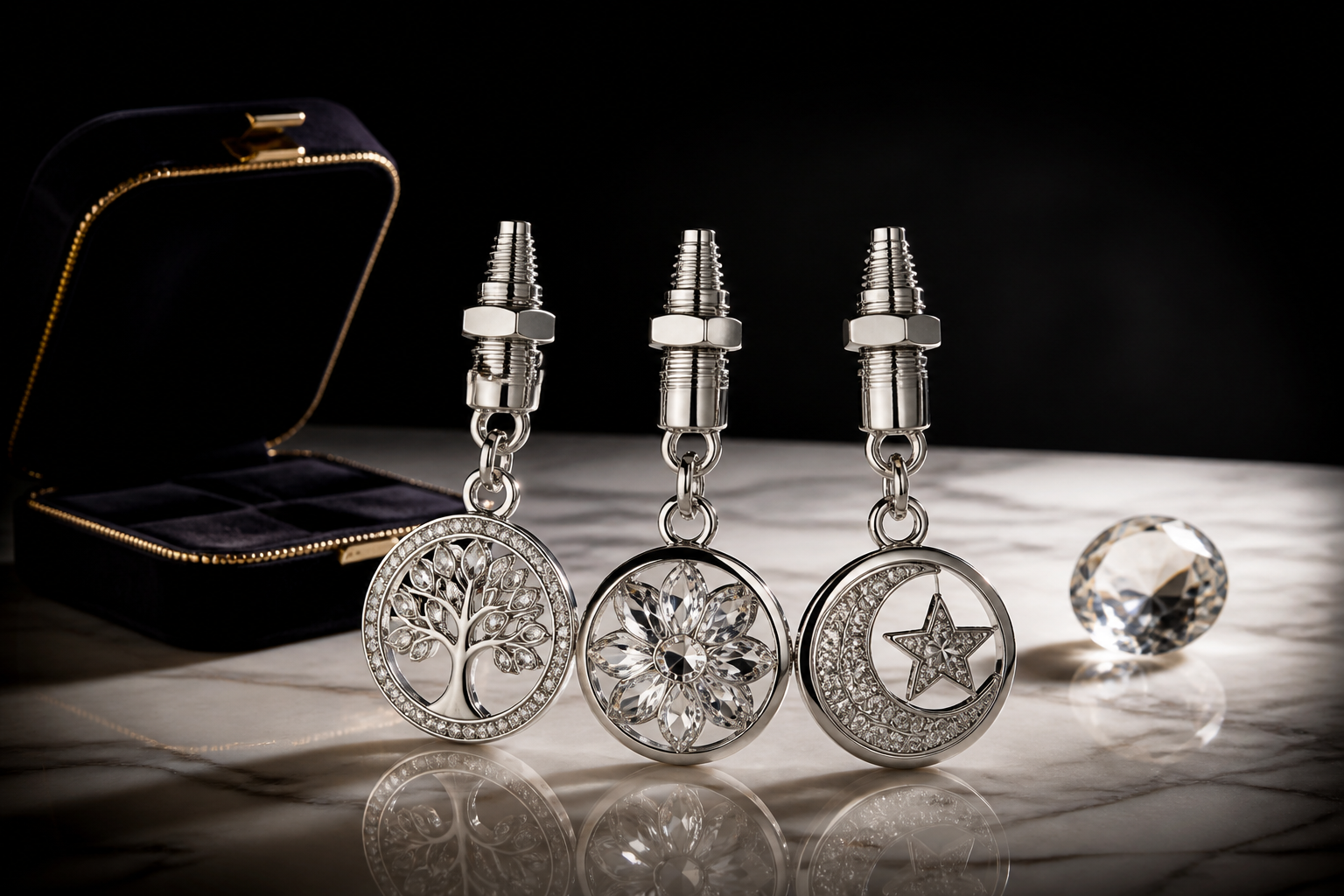
Main topic: Stainless Steel Crystal Car Charms and 316L Material Chemistry
316L alloy composition overview
316L stainless steel is specified for its low carbon content, typically around 0.03%, which minimizes carbide precipitation during welding and improves corrosion resistance. The base alloy also includes chromium in the 16–18% range to form a stable, passive surface and molybdenum around 2–3% to enhance resistance to chlorides and other corrosive environments. Nickel content, usually in the 10–14% range, stabilizes austenitic structure, improving formability and ductility. For charm applications, this chemistry translates into a robust, non-magnetic, body-friendly substrate that can tolerate plating, enamel filling, and crystal inlays without compromising integrity. For designers, this means dependable performance across the US, EU, UK, AU, CA, DE, FR, SP, NE, and RU markets, including exposure to humidity and sweat in daily wear.
Crystal inlays and enamel filling: chemistry and compatibility
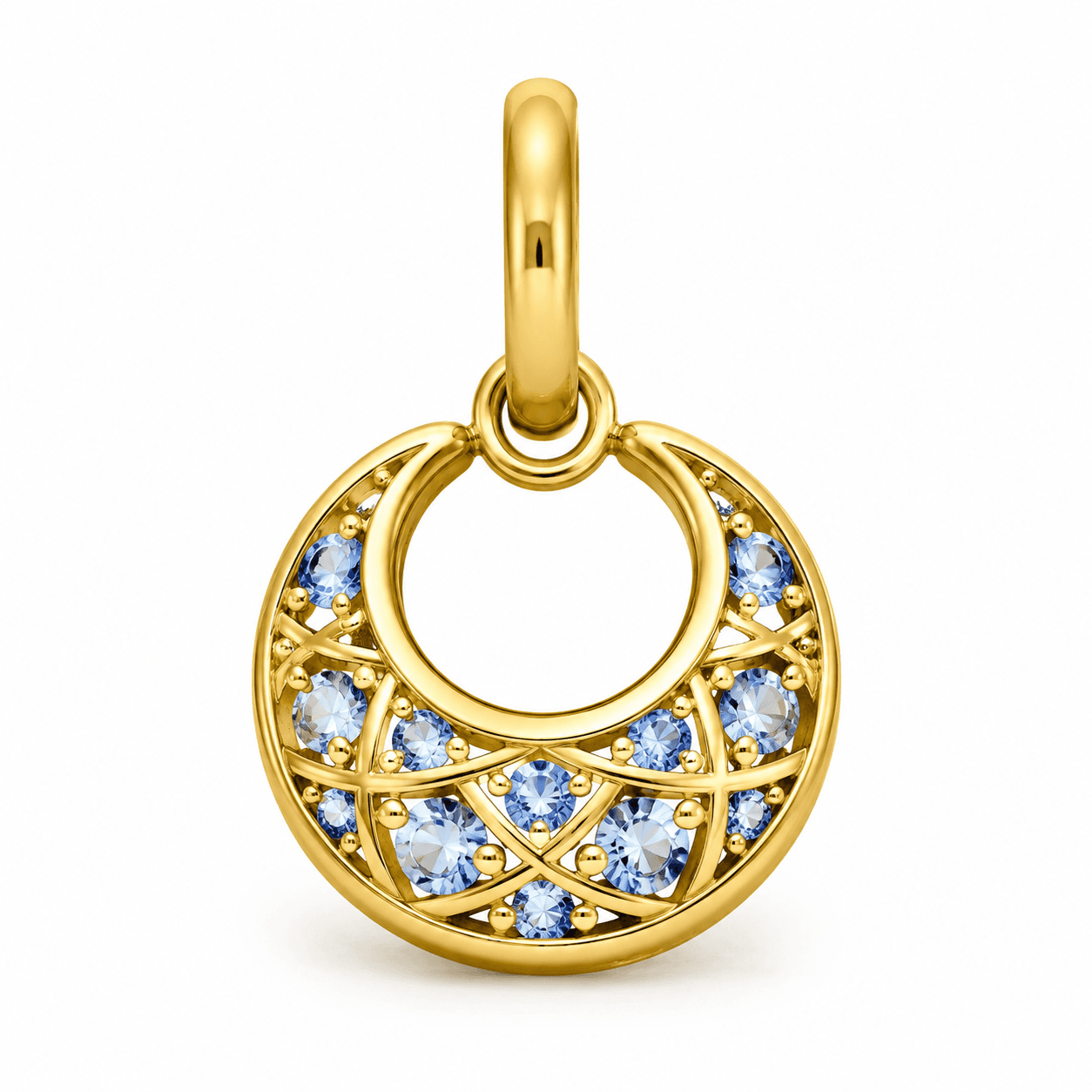
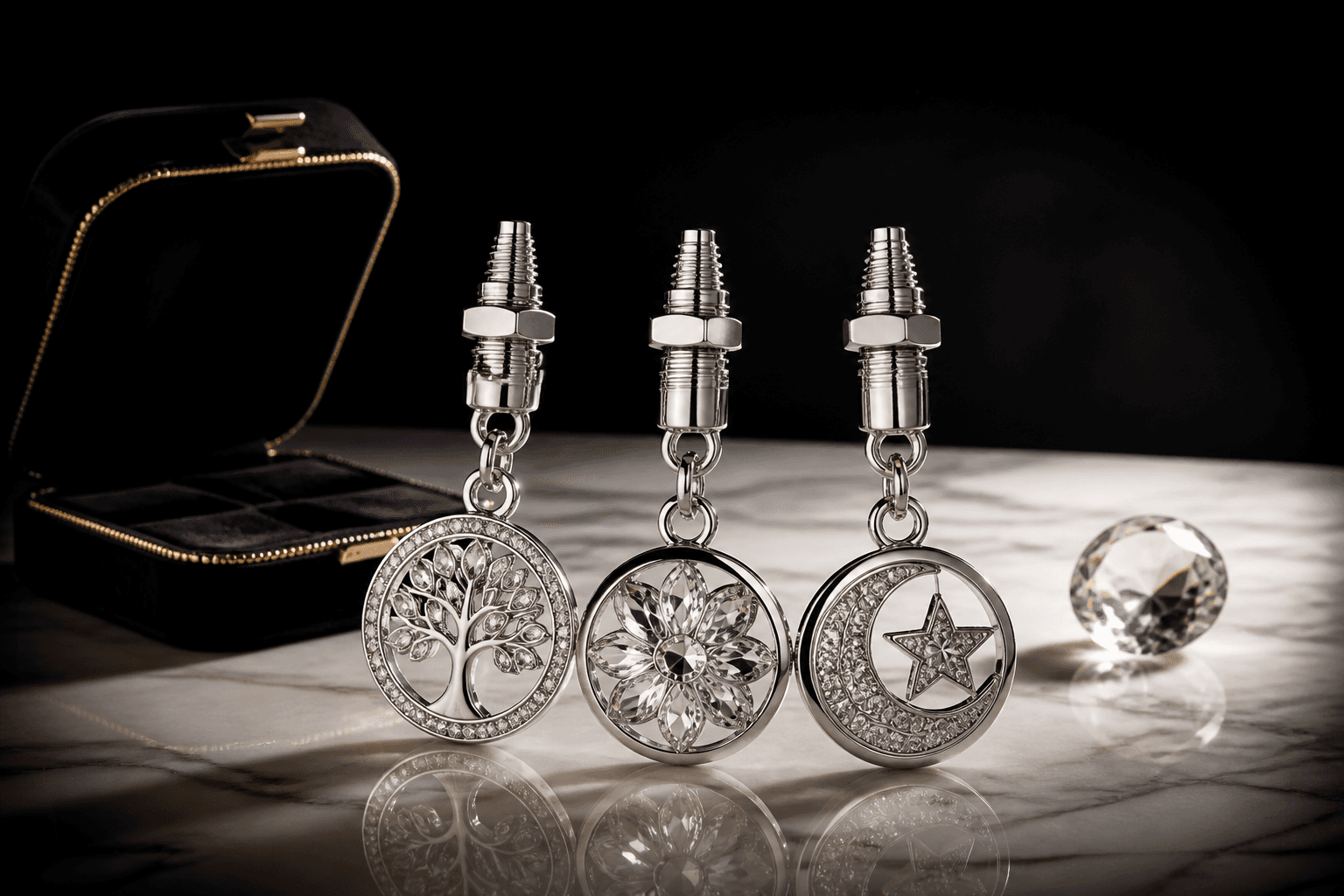
Crystal inlays and enamel color filling rely on compatible interfaces between the 316L substrate and additives. Crystal settings demand precise hardness and surface finish to resist micro-abrasion during wear and cleaning. Enamel fills rely on stable matrix materials that bond with the base steel without micro-cracking. The 316L matrix, when properly passivated, provides a clean canvas for crystal retention and enamel adhesion. PVD-coated finishes (gold, silver, rose gold) layer atop the base for color and protection, while preserving the substrate’s corrosion resistance. From a design perspective, this combination enables intricate motifs, durable color blocks, and high-brilliance crystals that stay securely seated through manufacturing and consumer use.
PVD plating interactions: why finishes matter
PVD plating creates durable, boutique-grade surfaces on 316L stainless steel charms. The process deposits a hard, adherent film—often gold plated, silver finish, or rose gold plating—onto the substrate. Proper surface preparation, including cleaning, surface roughness control, and rinse protocols, ensures plating uniformity across production runs. For designers, the takeaway is that a well-executed PVD layer not only imparts aesthetic appeal but also improves scratch resistance and chemical stability, enabling consistent coloration across batches and markets. In addition, Lancy’s SGS-certified processes verify RoHS and REACH compliance, nickel release control (EN1811), and salt spray durability, providing peace of mind for private-label packaging and wholesale programs.
Quality certifications you can rely on
Quality assurance matters in high-volume charm programs. Our SGS-certified facility confirms RoHS compliance, REACH adherence, Nickel Release EN1811 testing, and Salt Spray 240H durability. These certifications underpin cross-market confidence, especially in regions with stringent material safety expectations. For designers and sourcing managers, certifications streamline supplier qualification, reduce risk in RFQ responses, and support rapid approval cycles for OEM/ODM projects and private-label lines.
Benefits and Why It Matters for Car Charm Programs
Key benefits (with certification context)
316L stainless steel offers exceptional corrosion resistance in humid environments, urban pollutants, and sweat exposure—critical for car charm wear that travels from car interiors to daily accessories. The low-carbon composition reduces weld-hardening risks, enabling flexible geometry for complex car-charm silhouettes. PVD plating provides color-fast finishes that resist dulling and peeling, supporting boutique aesthetics for long-term programs. Crystal inlays and enamel fills deliver premium visual appeal without sacrificing durability when paired with a robust substrate. SGS certifications provide independent validation of safety and performance, a crucial factor for OEM/ODM and wholesale partnerships. For private-label brands, these attributes translate into consistent plating quality, reliable sample development timelines, and scalable production for bulk orders.
Strategic benefits for cross-market programs
Across the US, EU, UK, AU, CA, and other markets, the same base material and finishing strategy delivers a universal product language. Designers can confidently translate a motif into a car charm with enamel color choices and crystal accents, knowing the alloy will perform consistently in varying climates and handling scenarios. The combination of 316L substrate, PVD-coated finishes, and controlled enamel/crystal application supports a scalable, global supply chain—precisely the kind of capability boutique brands seek when engaging with an OEM/ODM partner or when placing wholesale orders.
Detailed Analysis and Guide
Material properties of 316L stainless steel
316L’s chromium provides passivation, forming a protective oxide layer that resists rust and staining. The low carbon content minimizes carbide precipitation during welding, preserving toughness. The addition of nickel stabilizes the austenitic structure, enhancing ductility and formability—helpful for achieving the curved and interlocking shapes typical of car charms. In practice, 316L exhibits excellent heat resistance, good weldability, and reliable color retention when paired with PVD finishes. This makes 316L particularly suitable for intricate charm geometries with enamel fills or crystal inlays, where precise depth and smooth curvature matter for both aesthetics and wear resistance.
Alloy chemistry breakdown and design considerations
From a design perspective, understanding the interplay between chromium, nickel, and molybdenum informs how the charm will perform under heat, humidity, and cleaning regimens. Molybdenum reduces pitting from chlorides, a consideration for car charms that might encounter road salt or coastal climates. Nickel content supports formability but also raises a potential safety concern in nickel-sensitive users; however, in jewelry-grade applications, the final product’s surface is protected by passivation and plating. For OEM/ODM workflows, this means you can push for chalice-like profiles or high-relief motifs without sacrificing structural integrity. The alloy’s stability also helps ensure consistent performance when applying PVD coatings and subsequent enamel or crystal layers.
Surface finishes: choices and trade-offs
Finish options balance aesthetics, durability, and cost. Gold plated and rose-gold plated finishes deliver warm tones that pair well with enamel colors and crystal tones, while silver finish offers a cooler, contemporary look. PVD plating imparts enhanced hardness and colorfastness, reducing micro-scratches from handling and cleaning. When designing a car charm collection, consider how each finish responds to enamel filling—some colors require a compatible bonding layer to avoid micro-cracking during curing. For private-label lines, finish consistency across batches is essential; this is precisely where a controlled factory environment and SGS-backed processes matter most.
Manufacturing workflow: concept to sample development
Our workflow begins with concept sketching and 3D modeling, followed by precision CNC machining and laser cutting to achieve accurate silhouettes. Welding, deburring, and polishing are performed to produce a smooth, uniform surface ready for plating. PVD deposition is applied in tightly controlled vacuum environments to ensure consistent adhesion and color. Enamel filling and crystal setting occur in clean-room-like conditions with precise temperature and curing controls. For designers, the critical milestones are robust sample development cycles, accurate color matching, and rapid iteration—capabilities we support through dedicated sample teams, quick-turn demonstrations, and clear RFQ timelines.
Quality testing and ongoing verification
Quality is a continuum. In addition to SGS certification, executed batch testing ensures plating thickness uniformity, adhesion strength, and crystal retention under simulated wear. Salt spray tests provide long-term corrosion data, while EN1811 nickel-release testing ensures compliance with consumer-safety expectations. Ongoing process controls—statistical process control, visual inspection criteria, and traceability records—keep private-label programs aligned with buyer specs and regulatory expectations. For wholesale and bulk orders, this translates into reproducible results across shipments and markets, reducing the risk of product rejection at distribution points.
FAQ
Q1: What makes 316L stainless steel ideal for car charms?
A1: 316L offers excellent corrosion resistance, good formability for complex shapes, and compatibility with PVD finishes and enamel/crystal inlays. Its low carbon content reduces weld-related issues and improves long-term durability in varied climates, which is essential for cross-market car charm programs.
Q2: Can you customize finishes and color options for private-label lines?
A2: Yes. Our OEM/ODM services support multiple finishes, enamel color palettes, and crystal configurations. We provide sample development to refine color and clarity before mass production, ensuring alignment with brand aesthetics and market expectations.
Q3: What certifications support private-label and wholesale programs?
A3: SGS certifications covering RoHS, REACH, Nickel Release EN1811, and Salt Spray 240H underpin compliance and durability across markets. These validations help accelerate supplier qualification, RFQ responses, and approval timelines for private-label packaging and wholesale orders.
Q4: How does your factory support rapid sample development and MOQ considerations?
A4: We offer low MOQ options, rapid prototype cycles, and dedicated sample teams to shorten lead times from concept to first-off samples. This enables faster testing of aesthetics, fit with enamel/crystal elements, and plating performance before committing to larger private-label production or bulk orders.
Call to Action: Partner With Us
If you’re designing a car charm program for boutique brands, Lancy Jewelry provides 316L stainless steel charms with enamel and crystal options, backed by a modern factory and SGS certifications. Explore our OEM and ODM capabilities, request formal quotes, and begin with a controlled sample development process to validate fit, finish, and durability across markets. OEM service supports full customization, while our Request a Quote flow streamlines private-label and wholesale collaborations. For ongoing inspiration or catalog browsing, consult our product catalog and discover how a standardized yet customizable supply chain can power your private-label charm programs.