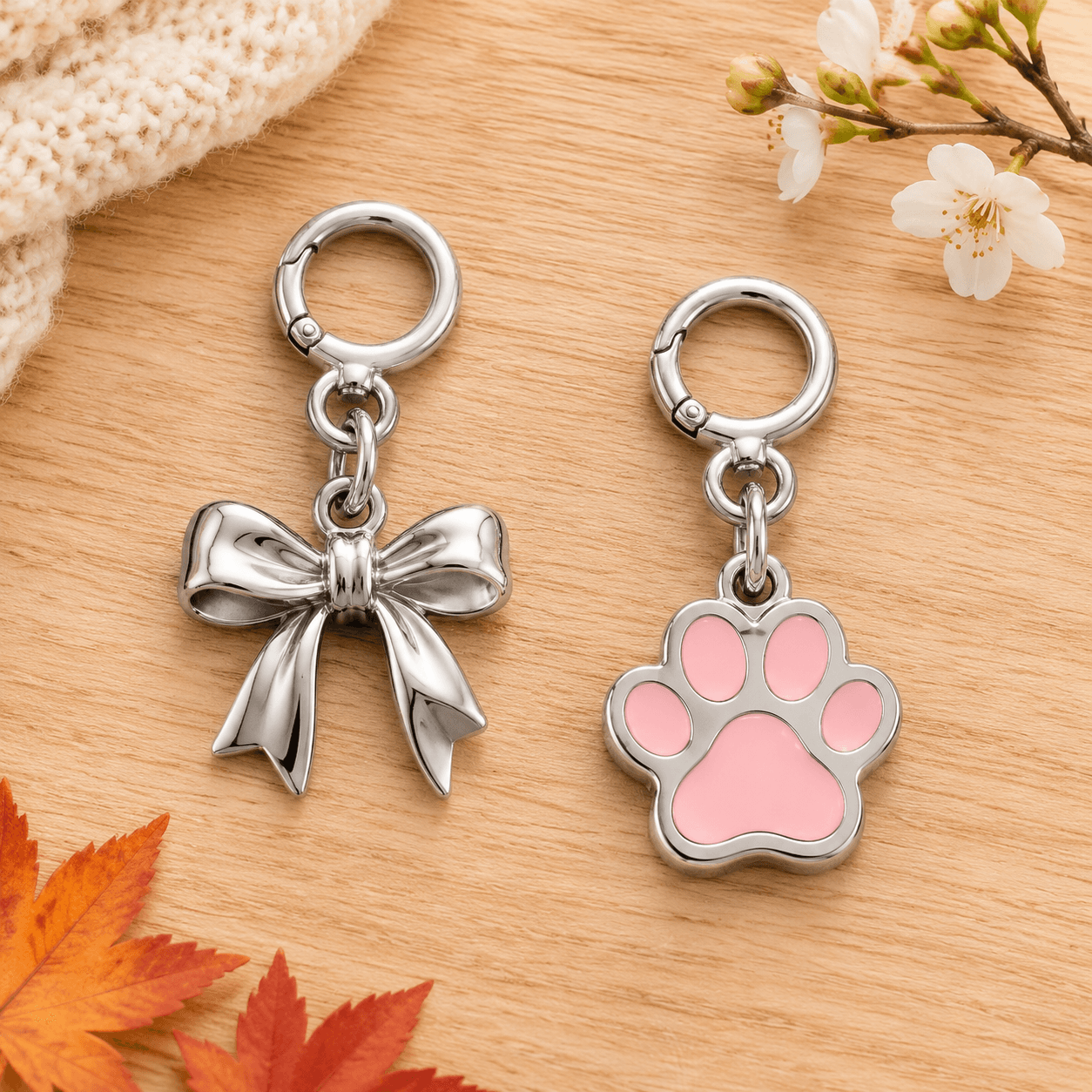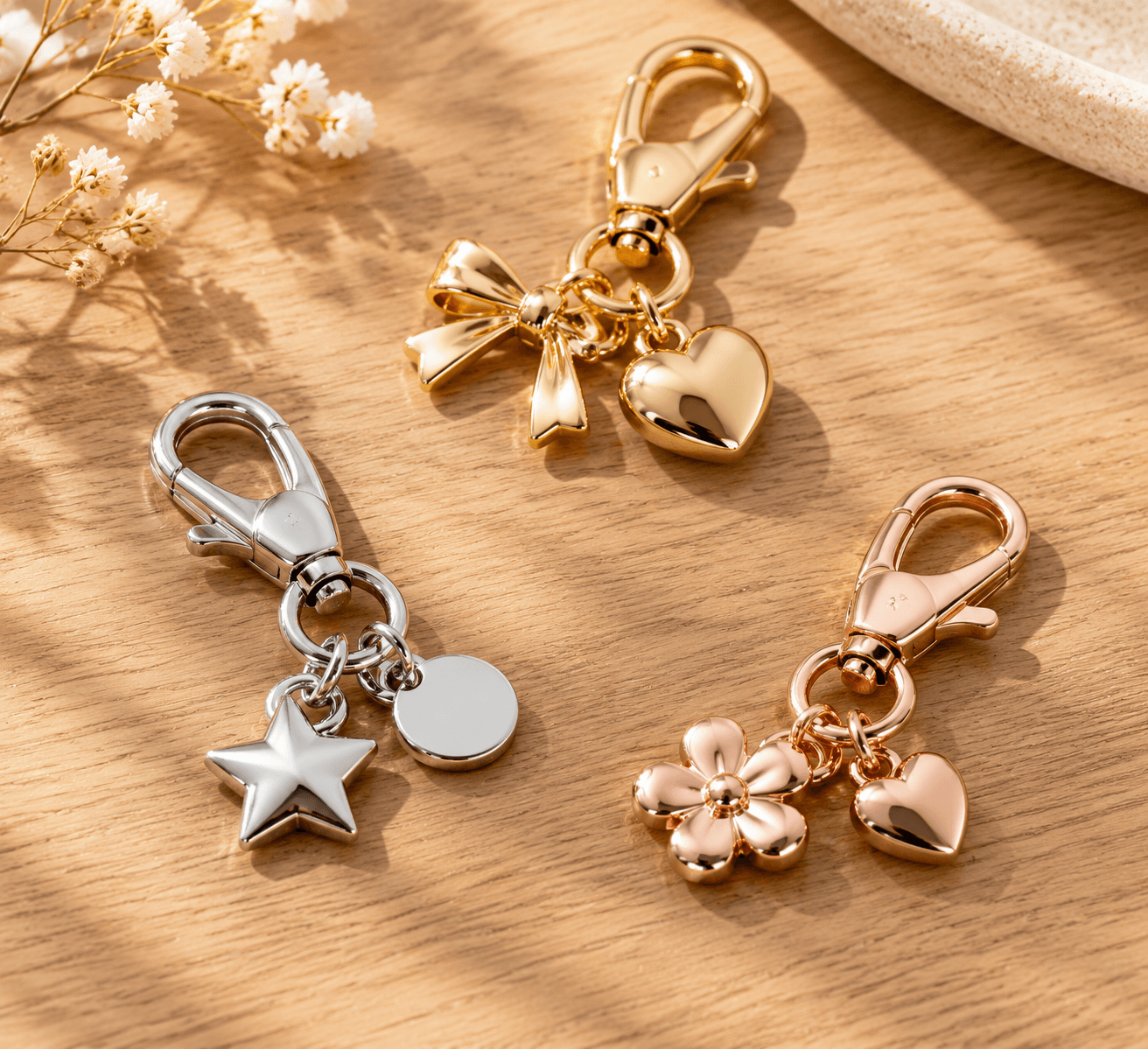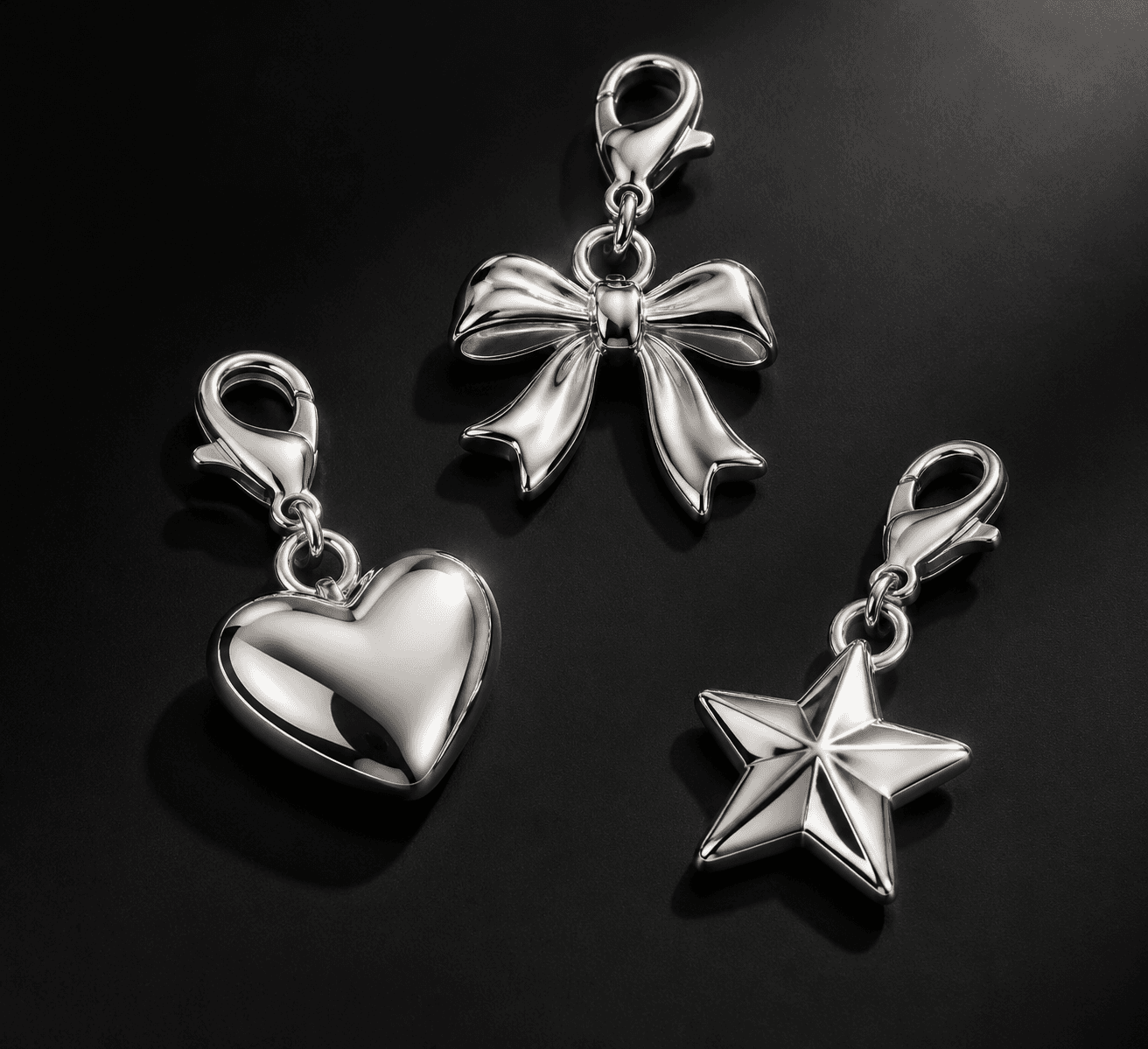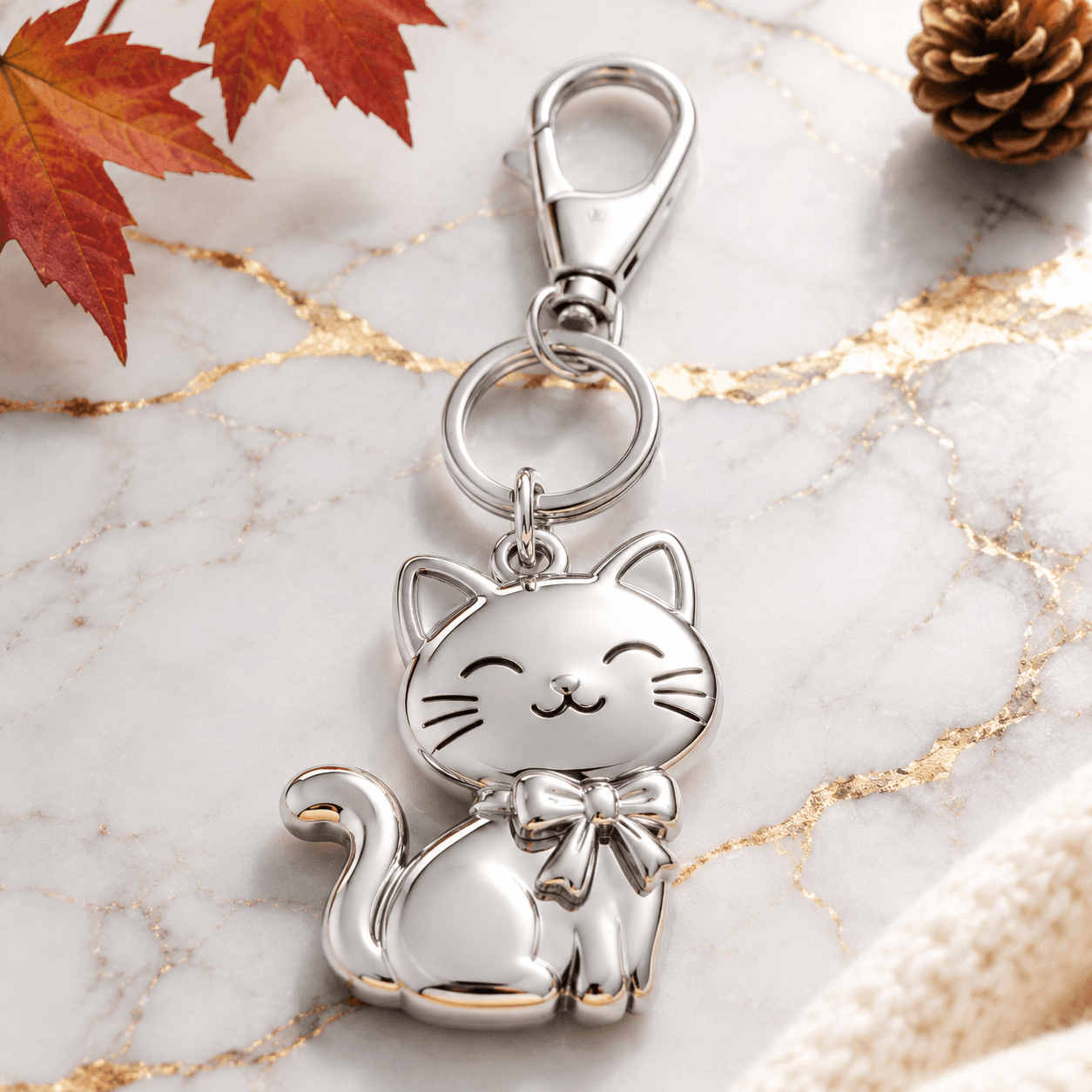
For an e-commerce seller, a cute bag charm is more than a small decorative product: it is a photographed detail, a listing promise, a shipping item, and a repeatable part of a seasonal assortment. Choosing the right factory in China therefore requires more than checking a sample photo or comparing unit prices. Buyers should verify the 316L stainless steel base, examine how each finish is produced and tested, and confirm that the supplier can keep samples, bulk orders, packaging, and fulfillment aligned. This checklist explains how to assess a stainless steel cute bag charm manufacturer in China, with practical points for US and Canadian sellers.
How to Choose a Stainless Steel Cute Bag Charm Manufacturer China
Start with product and factory fit
Before requesting a quotation, define the product brief. Specify the charm silhouette, dimensions, thickness, target weight, front and back details, attachment method, finish, color accents, and packaging. Cute designs often rely on small visual details, such as rounded edges, polished contours, fine engraving, enamel color blocks, or crystal inlay. Provide clear reference drawings and dimensioned artwork so the manufacturer can evaluate feasibility accurately.
Use this initial checklist:
- [ ] Confirm that 316L stainless steel is the base material for every proposed charm.
- [ ] Define the intended application, such as bag charms, keychain charms, or gift accessories.
- [ ] Specify the dimensions, thickness, weight, and acceptable dimensional tolerances.
- [ ] Identify whether the design requires laser marking, welding, polishing, enamel filling, or crystal setting.
- [ ] Request details about the bail, jump ring, or other attachment hardware.
- [ ] Confirm whether private-label packaging and custom logo engraving are available.
Check manufacturing capabilities
A reliable stainless steel charms manufacturer should explain how it develops a design from artwork to finished sample. Ask whether the facility has CNC processing, laser cutting, laser marking, welding, and polishing capabilities. These processes help control dimensional consistency, engraving clarity, edge quality, and attachment construction.
For an e-commerce collection, repeatability matters. A sample that looks attractive under studio lighting is not sufficient if subsequent production batches have inconsistent dimensions, uneven color, or poorly finished edges. Ask the supplier to explain its inspection stages and how approved samples are used as production references.
Why Finishing Quality Matters for E-commerce Bag Charms
1. PVD coating and color consistency
PVD is an important finishing option for 316L stainless steel charms. It can provide a durable decorative surface and support finishes such as gold plated and rose gold plating. However, buyers should not evaluate a finish based on color alone. Coating appearance, coverage, adhesion, surface preparation, and batch consistency all affect the final result.
- [ ] Ask which PVD finishing options are available for the proposed design.
- [ ] Request physical samples in the exact finish intended for sale.
- [ ] Inspect color consistency across front surfaces, edges, recesses, and attachment points.
- [ ] Ask how surface preparation is controlled before coating.
- [ ] Request relevant test documentation and clarify the conditions covered by each test.
- [ ] Establish an approved finish sample as the reference for repeat orders.
Do not assume that two finishes with similar names will have identical appearance. Request actual production samples and evaluate them under consistent lighting before approving a collection.
2. Electroplating and surface treatment
Electroplating and other surface-treatment processes may be part of a supplier's finishing workflow. Buyers should ask which process is used for each specified finish rather than assuming that every color is produced in the same way. The supplier should explain the preparation, finishing, rinsing, drying, and inspection stages relevant to the product.
Surface treatment also affects small decorative details. Recesses, engraved lines, corners, and narrow attachment areas need particular attention because uneven coverage can reduce visual consistency. Request close-up photographs of finished samples, including the front, reverse, edges, and hardware connections.
3. Polishing and edge quality
Polishing is essential when a design has rounded contours, smooth borders, or reflective surfaces. Poorly controlled polishing can leave visible marks, inconsistent reflections, or uneven transitions between decorative areas.
- [ ] Inspect the charm under direct and indirect lighting.
- [ ] Check edges for rough areas and visible processing marks.
- [ ] Examine the reverse side, not only the main decorative face.
- [ ] Check that engraving remains clear after finishing.
- [ ] Confirm that the attachment point is smooth and mechanically sound.
4. Enamel and crystal details
Enamel color filling and crystal inlay can help create distinctive product variations. For enamel designs, examine color boundaries, fill consistency, and surface cleanliness. For crystal inlay, check setting alignment, visible gaps, and whether each decorative element is securely positioned. Request close-up sample photographs and inspect physical samples before approving production.
Key Benefits of Choosing a Qualified Manufacturer
More predictable product quality
A qualified ODM charm supplier can help translate a design brief into a repeatable manufacturing specification. This is especially valuable for e-commerce sellers managing multiple product listings, seasonal releases, and recurring inventory orders. Clear specifications reduce ambiguity around dimensions, finish, engraving, and packaging.
Better control over compliance documentation
For US and Canadian sellers, product compliance should be reviewed before inventory is ordered. Lancy Jewelry has SGS certification and supporting test documentation covering RoHS, REACH, Nickel Release EN1811, and Salt Spray 240H. Buyers should request the relevant reports and verify that their scope, product identification, and testing conditions apply to the items being purchased.
These documents support supplier evaluation, but they do not automatically establish compliance with every legal requirement in every destination market. US and Canadian importers should assess the applicable requirements for their product category, intended use, claims, packaging, and distribution channel.
More efficient product launches
Sample development allows buyers to evaluate appearance, attachment function, finish, and packaging before committing to bulk charm orders. A factory that provides clear sampling stages and realistic production schedules can make collection planning more manageable.
Detailed Supplier Evaluation Checklist
Step 1: Verify the 316L stainless steel specification
Ask the supplier to identify the base material in its quotation and technical specification. The material description should be explicit rather than relying on broad terms such as stainless steel without a grade. Confirm that the finished product specification, sample, and production order all refer to 316L stainless steel.
- [ ] Obtain written confirmation of the 316L stainless steel base material.
- [ ] Request relevant material documentation.
- [ ] Confirm whether the material specification applies to the charm and its included hardware.
- [ ] Check that the approved sample matches the production specification.
Step 2: Evaluate sample development
Sample development should be treated as a structured approval process. Provide artwork, dimensions, finish references, logo requirements, and packaging instructions. Ask for a sample timeline and identify which changes may require another sample round.
When evaluating a sample, inspect it as a customer would receive it. Check the overall appearance, front and reverse details, attachment mechanism, surface finish, and packaging presentation. Photograph the sample using the same lighting conditions planned for the final product listing.
Step 3: Compare finishing processes objectively
Do not select a manufacturer solely because its quotation describes a finish as premium or durable. Request process details and evidence that can be reviewed against your requirements. For PVD, ask about coating consistency and relevant testing. For polishing, inspect edge smoothness and surface uniformity. For electroplating, ask how coverage and adhesion are evaluated.
Build a simple comparison record covering:
- [ ] Finish specification and available color options.
- [ ] Surface preparation and polishing standards.
- [ ] Relevant coating or corrosion test documentation.
- [ ] Visual consistency between approved samples and production batches.
- [ ] Inspection criteria for defects and acceptable variation.
Step 4: Review logo engraving and private-label packaging
Brand presentation influences how a product performs in an online store. Ask whether the manufacturer can provide laser logo engraving and private-label packaging. Confirm artwork file requirements, logo placement, packaging dimensions, insert card specifications, and whether packaging can be supplied separately or assembled before shipment.
For US and Canadian e-commerce operations, packaging should protect the charm during transportation while remaining easy to photograph and present. A clean packaging card or display tray can also provide a useful scale reference for product photography.
Step 5: Assess product photography support
Product images influence click-through rates, customer expectations, and return risk. Ask whether the supplier can provide clear sample photographs or support photography after sample approval. The main image should show one complete charm against a clean white background, with its attachment mechanism visible and mechanically plausible.
Plan a consistent image set for each listing:
- [ ] Front view showing the complete decorative design.
- [ ] Reverse view showing construction and finishing quality.
- [ ] Close-up image showing engraving, enamel, crystal inlay, or surface detail.
- [ ] Scale image using a packaging card or display tray.
- [ ] Lifestyle image showing the charm attached to a suitable bag accessory.
Avoid images that exaggerate dimensions, conceal attachment details, or show hardware that is not included in the actual product. Maintain consistent lighting, color balance, framing, and image proportions across the collection. These practices help buyers compare variations and reduce misunderstandings about product size.
Step 6: Confirm MOQ, pricing, and production capacity
For smaller online businesses, MOQ can determine whether a new product line is commercially practical. Ask for the MOQ per design, finish, color, and packaging configuration. Clarify whether different designs can be combined in an order and whether sample costs are credited against production orders.
Request an itemized quotation that separates tooling or development charges, unit pricing, finishing costs, packaging, and shipping. Also confirm the production lead time, inspection arrangements, payment milestones, and the process for handling nonconforming products.
Low MOQ support can help sellers test demand before expanding a successful design into a broader assortment. However, evaluate the complete landed cost rather than focusing only on the quoted unit price.
Step 7: Review shipping and fulfillment options
Shipping arrangements should be confirmed before an order is placed. Ask the supplier about available shipping methods, estimated transit times, carton dimensions, packing quantities, shipping marks, and export documentation. Confirm who arranges transportation and who is responsible for import duties, taxes, and customs procedures under the agreed shipping terms.
For US and Canadian sellers, plan inventory around seasonal demand, promotional dates, and warehouse receiving schedules. If the supplier offers dropship options, verify whether individual-order fulfillment is genuinely available, how orders are transmitted, whether neutral or private-label packaging is supported, and how tracking information is provided.
Do not assume that dropshipping is included in a standard wholesale arrangement. Obtain written confirmation of service scope, handling fees, order cut-off times, return procedures, and responsibility for shipping errors.
Step 8: Check communication and production controls
Effective communication is a practical indicator of supplier reliability. The manufacturer should respond clearly to technical questions, explain production limitations, and document changes. Establish a single approved specification covering material, dimensions, finish, logo, hardware, packaging, and inspection requirements.
- [ ] Assign a contact person for sampling and production updates.
- [ ] Request confirmation before any specification changes.
- [ ] Agree on inspection points before shipment.
- [ ] Document acceptable finish and dimensional tolerances.
- [ ] Confirm procedures for defects, replacements, and order discrepancies.
North American Market Considerations
Product presentation and customer expectations
US and Canadian customers often shop through product photographs, concise descriptions, and clear shipping information. Sellers should communicate dimensions in familiar units, provide accurate finish descriptions, and show how the attachment mechanism works. Avoid unsupported claims about durability, hypoallergenic properties, or performance.
Where relevant, review applicable US requirements, including restrictions that may apply to certain product uses and chemical substances. FDA requirements are product-category specific and should not be assumed to apply to every decorative bag accessory. If a product is marketed for a regulated use, consult the applicable requirements before making claims or importing inventory. Canadian importers should similarly review applicable federal and provincial requirements.
Inventory planning and shipping transparency
For e-commerce sellers, a successful supplier relationship combines stable product quality with predictable inventory replenishment. Request realistic production schedules and maintain a buffer for sampling, inspection, international transportation, and customs clearance. Confirm packaging quantities and carton measurements early so warehouse and fulfillment costs can be estimated accurately.
Frequently Asked Questions
What should buyers check when choosing a stainless steel cute bag charm manufacturer in China?
Check the 316L stainless steel specification, manufacturing capabilities, PVD and other finishing processes, sample quality, attachment construction, certifications, MOQ, private-label packaging, and shipping arrangements. Approve a physical sample before placing a bulk order.
Is PVD finishing suitable for gold plated stainless steel bag charms?
PVD is an available finishing approach for decorative gold plated 316L stainless steel charms. Buyers should request samples and relevant testing information, then evaluate color consistency, surface preparation, coating coverage, and performance against their own product requirements.
Can a manufacturer support low MOQ and private-label orders?
Some manufacturers offer low MOQ support, custom logo engraving, and private-label packaging. Confirm the MOQ for each design and finish, sampling charges, packaging requirements, and production schedule directly in the RFQ and quotation.
What product images should e-commerce sellers request?
Request front, reverse, close-up, scale, and lifestyle images. The main product image should show the complete charm and its real attachment mechanism. Consistent lighting and accurate dimensions help customers understand the product before purchasing.
Partner With Lancy Jewelry
Choosing a stainless steel cute bag charm manufacturer should be a documented sourcing decision, not simply a price comparison. Buyers need confidence in the 316L stainless steel specification, finishing quality, sample approval process, packaging, and shipping arrangements.
Lancy Jewelry supports boutique brands, charm bar retailers, gift companies, distributors, and private-label buyers with OEM and ODM manufacturing. Our modern facility uses CNC processing, laser cutting, laser marking, welding, and polishing to support product development. Available services include PVD finishing, enamel color filling, crystal setting, logo engraving, private-label packaging, and sample development. Our SGS certification and supporting documentation cover RoHS, REACH, Nickel Release EN1811, and Salt Spray 240H.
Whether you are developing a small seasonal collection or planning recurring wholesale stainless steel charms orders, our team can help review your specifications and manufacturing requirements.
Explore our product catalog, learn about our OEM and ODM services, or contact Lancy Jewelry to discuss your project. Send your artwork, target quantities, preferred finishes, and packaging requirements when preparing your RFQ.