For boutique jewelry brands and accessory designers, a cute bag charm needs more than an attractive shape. Its surface finish influences visual appeal, perceived quality, color consistency, durability, and long-term customer satisfaction. Choosing the right finishing technique is therefore an important purchasing decision when developing a coordinated bag charm collection.
For B2B buyers in the United States and Canada, the challenge is balancing creative flexibility with production consistency. A polished surface may emphasize clean shapes, while PVD coating can introduce attractive gold and rose gold tones. Electroplating and additional surface treatments offer other finishing considerations, depending on the intended design and manufacturing specifications.
This guide compares the principal finishing techniques used for 316L stainless steel charms, explains their practical differences, and provides a sourcing framework for jewelry designers evaluating a stainless steel cute bag charm manufacturer. It also explores how Lancy Jewelry supports OEM development, private-label projects, and wholesale production.
Stainless Steel Cute Bag Charm Manufacturer: Understanding Finishing Options
Finishing is the collection of manufacturing processes used to refine a charm's appearance and surface characteristics. For cute bag charms, the choice affects how decorative details appear, how light reflects from the surface, and how consistently multiple pieces look within a collection.
1. PVD Coating: Consistent Decorative Color
Physical Vapor Deposition (PVD) is a surface coating process that deposits a thin coating under controlled vacuum conditions. It is widely considered for stainless steel accessories requiring decorative color and a refined appearance.
For bag charm development, PVD offers several practical advantages:
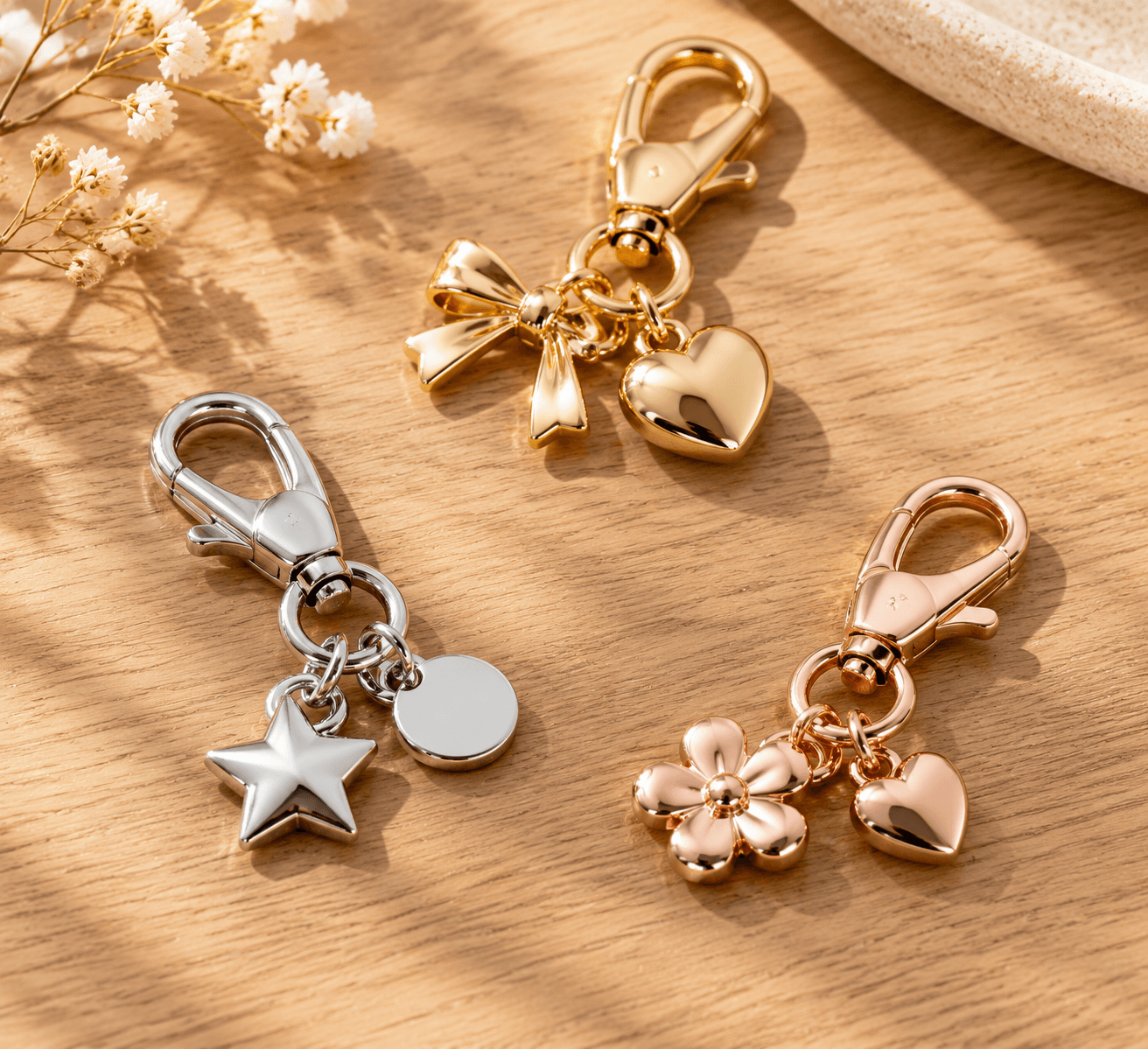
- Color options: Supports attractive gold plated and rose gold plating finishes.
- Surface consistency: Controlled processing helps achieve repeatable color across production batches.
- Design flexibility: Works well with geometric shapes, decorative symbols, initials, and coordinated charm collections.
- Surface performance: Properly prepared and processed surfaces can provide good resistance to everyday wear.
PVD quality depends on substrate preparation, coating parameters, component geometry, and quality control. Buyers should request representative samples rather than judging the finish from digital photographs alone.
2. Electroplating: An Alternative Decorative Finishing Process
Electroplating uses an electrical current to deposit a metallic coating onto a prepared surface. It is an established finishing method for decorative accessories and can be considered when evaluating specific color requirements and production specifications.
For B2B buyers, important evaluation points include coating uniformity, surface preparation, color accuracy, adhesion, and resistance to environmental exposure.
Electroplating results are influenced by the preparation process and plating parameters. Recessed details, edges, and small decorative features require particular attention because inconsistent processing can produce visible differences.
When comparing electroplating with PVD, buyers should avoid assuming that one method is automatically superior in every application. The appropriate choice depends on the required appearance, performance expectations, design geometry, and verified sample results.
3. Mechanical Polishing: Creating a Refined Surface
Polishing is an important preparation and finishing operation for 316L stainless steel charms. It improves surface smoothness, refines edges, and helps establish the visual character of the final product.
Common polishing objectives include:
- Mirror polishing: Creates a highly reflective appearance suitable for clean, elegant charm designs.
- Satin finishing: Produces a softer visual effect with reduced reflectivity.
- Edge refinement: Helps remove unwanted sharpness and improve the feel of decorative contours.
- Detail preparation: Improves the surface condition before subsequent finishing operations.
For jewelry designers, polishing is particularly important for small decorative components. Even a well-designed charm can appear less refined when edges are inconsistent or the surface contains visible processing marks.
4. Additional Surface Treatments: Enamel and Crystal Inlay
Surface finishing is not limited to metallic appearance. Enamel color filling and crystal inlay introduce additional decorative possibilities for boutique-ready bag charm collections.
Enamel creates defined color areas within recessed design sections. It works particularly well for flowers, hearts, animals, initials, and playful decorative symbols. Buyers should evaluate color uniformity, filling accuracy, edge definition, and the appearance of the finished surface.
Crystal inlay introduces reflective decorative details and can help distinguish premium gift-oriented designs. The setting should be evaluated for alignment, secure placement, and consistency across samples and production units.
These decorative techniques can be combined with suitable surface finishes when the design and manufacturing sequence allow. However, every additional process should be assessed for its effect on production complexity, lead time, and inspection requirements.
Benefits of Choosing the Right Finishing Technique
Finishing decisions directly influence the commercial potential of a bag charm collection. A consistent appearance helps boutique retailers present coordinated products, while suitable surface treatments support a more recognizable private-label product identity.
Key Benefits for Boutique Brands and Wholesale Buyers
Improved Product Presentation
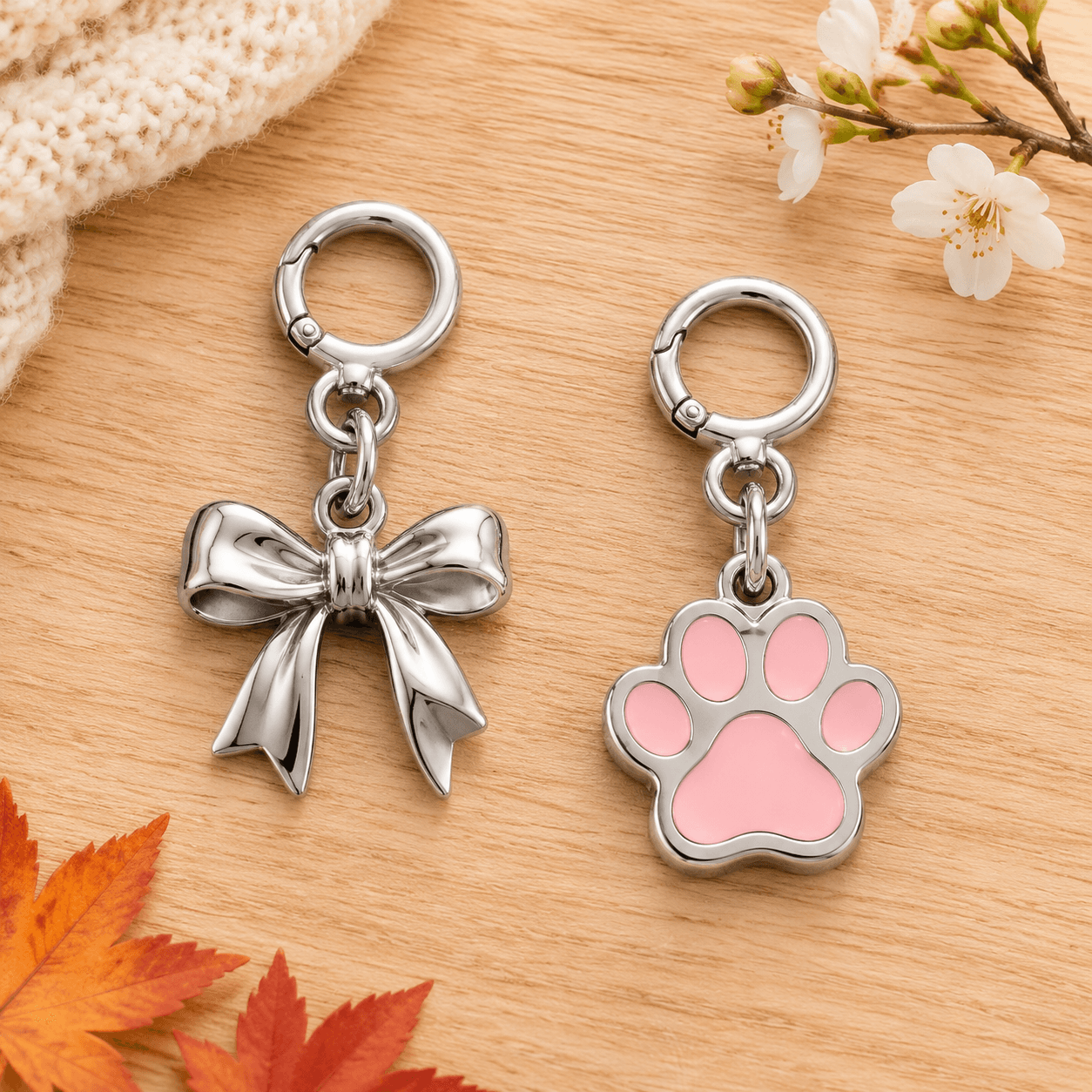
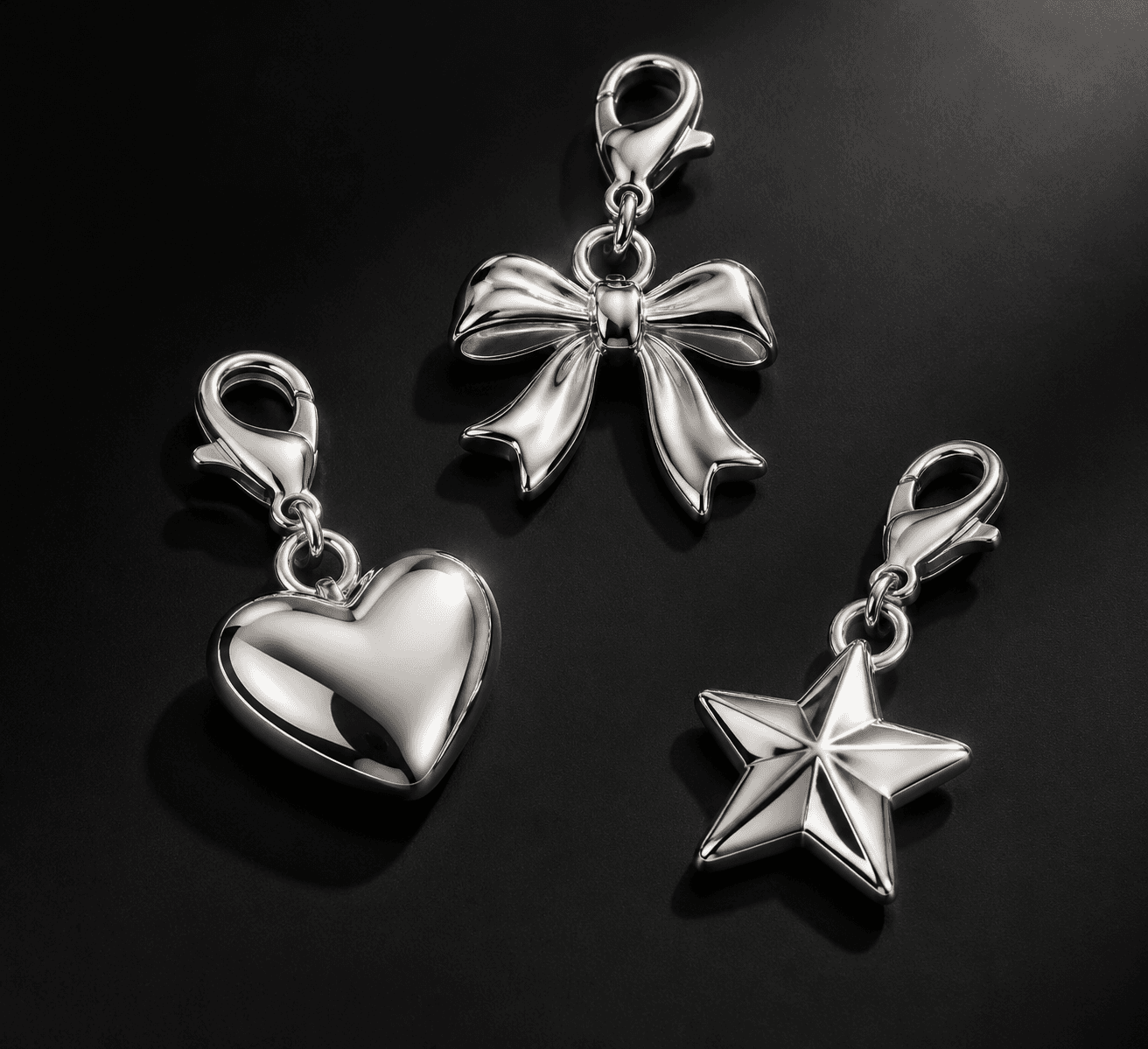
Different finishes create different visual effects. Mirror polishing emphasizes clean contours, PVD gold plating introduces a warm decorative appearance, and enamel adds distinctive color. Combining these options thoughtfully allows designers to develop cohesive collections without relying on overly complicated shapes.
Better Collection Consistency
When several charms belong to the same collection, matching surface appearance becomes especially important. Consistent color, reflectivity, and polishing quality help products look coordinated across different designs and production batches.
Greater Customization Flexibility
Working with an experienced stainless steel charms manufacturer gives designers access to multiple development options. Logo engraving, laser marking, custom shapes, enamel filling, and crystal setting can help translate a creative concept into a commercially practical product.
Documented Quality and Compliance Support
Material verification and finishing tests are important parts of supplier evaluation. Lancy Jewelry holds SGS certification support covering RoHS, REACH, Nickel Release EN1811, and Salt Spray 240H. These documented standards and test results can help buyers assess material and surface-related requirements.
Buyers should request relevant reports, confirm their scope and validity, and check whether the testing conditions match the intended product and destination market. Certification or test documentation should not be interpreted as universal approval for every finished product or application.
Detailed Comparison: PVD, Electroplating, and Polishing
The following comparison provides a practical starting point for selecting a finishing approach for custom stainless steel charms.
Side-by-Side Finishing Comparison
| Evaluation Factor | PVD Coating | Electroplating | Mechanical Polishing |
|---|---|---|---|
| Primary purpose | Decorative surface coating | Decorative metallic deposition | Surface refinement |
| Visual appearance | Controlled decorative color | Metallic decorative appearance | Reflective or satin surface |
| Color options | Gold and rose gold options | Depends on plating specification | Depends on underlying surface |
| Surface preparation | Requires careful cleaning and preparation | Requires careful cleaning and preparation | Directly refines the surface |
| Quality priorities | Color uniformity and adhesion | Coverage and coating consistency | Smoothness and edge quality |
| Typical application | Decorative colored charms | Specified decorative finishes | Polished stainless steel charms |
| Buyer verification | Color and wear testing | Coverage and adhesion testing | Visual and tactile inspection |
Which Finishing Method Should Buyers Choose?
Choose PVD when: Your collection requires a consistent decorative gold or rose gold appearance and you want a finishing process with controlled coating parameters.
Evaluate electroplating when: Your project has a defined decorative finish requirement and the supplier can demonstrate satisfactory coating consistency, adhesion, and performance through samples and testing.
Choose polishing when: The design emphasizes the natural appearance of 316L stainless steel, clean reflective surfaces, or refined edges.
Combine surface treatments when: Your design requires multiple visual elements, such as a polished base appearance, decorative enamel sections, and crystal inlay. The supplier should confirm the appropriate processing sequence before sample approval.
How to Evaluate a 316L Stainless Steel Bag Charm Supplier
Finishing capability is only one part of supplier selection. Jewelry designers should also examine manufacturing equipment, sample development procedures, production management, and the supplier's ability to maintain consistent specifications.
Step 1: Confirm the Base Material
Specify 316L stainless steel as the required base material in your RFQ. Ask the manufacturer to confirm material identification and provide relevant supporting documentation. Material consistency is important because the finishing process depends on the underlying surface condition.
At Lancy Jewelry, the production focus is exclusively on 316L stainless steel charms, allowing manufacturing specifications and quality procedures to remain centered on this material.
Step 2: Define the Desired Finish
Do not rely on descriptions such as shiny, premium, or golden when submitting an inquiry. Provide specific requirements, including:
- Requested finish: polished stainless steel, PVD gold plated, silver finish, or rose gold plating.
- Preferred reflectivity: mirror, satin, or another clearly defined surface appearance.
- Color reference: an approved physical sample or documented color specification.
- Decorative details: enamel colors, crystal positions, and logo engraving.
- Inspection requirements: acceptable surface marks, color variation, and coating coverage.
These details reduce interpretation differences between the designer and manufacturing team.
Step 3: Request Physical Samples
Sample development should be treated as an essential purchasing stage rather than an optional extra. A physical sample allows designers to assess proportions, attachment details, surface quality, finish color, and overall product presentation.
Ask the supplier to prepare a sample using the intended production material and finishing specifications. If your collection includes multiple finishes, evaluate each finish independently.
Step 4: Review Manufacturing Capabilities
A capable ODM charm supplier should be able to support both creative development and repeatable manufacturing. Lancy Jewelry operates a modern manufacturing facility equipped with CNC processing, laser cutting, laser marking, welding, and polishing capabilities.
These processes support custom shapes, detailed markings, structural components, and refined surfaces. Buyers can discuss their artwork, dimensions, attachment requirements, and finish preferences during the development stage.
Step 5: Establish Quality Control Standards
Before approving bulk orders, establish measurable inspection criteria. Recommended checkpoints include:
- Material verification: Confirm the specified 316L stainless steel base material.
- Dimensional inspection: Check charm dimensions, thickness, hole positions, and attachment geometry.
- Surface inspection: Examine scratches, polishing marks, uneven surfaces, and visible defects.
- Finish inspection: Compare color, coverage, reflectivity, and coating consistency with the approved sample.
- Functional inspection: Confirm that the bail or jump ring is properly connected and mechanically suitable for the intended application.
- Packaging inspection: Verify product protection, labeling, and private-label presentation requirements.
North American Market Considerations: US and Canada
North American buyers often prioritize attractive gift presentation, practical everyday use, reliable finishing, and clearly documented product specifications. Cute bag charms are suitable for seasonal gift programs, boutique accessory collections, charm bars, and personalized merchandise programs.
Consumer Preferences and Product Presentation
Several design directions are worth considering for the US and Canadian markets:
- Personalization: Initials, meaningful symbols, and logo engraving support gift-oriented collections.
- Playful designs: Hearts, flowers, animals, stars, and zodiac symbols provide creative options for boutique assortments.
- Coordinated finishes: Consistent PVD gold, rose gold, and polished silver-finish options help retailers organize related products.
- Color accents: Enamel and crystal inlay create additional visual variety without changing the 316L stainless steel base material.
- Gift-ready packaging: Private-label packaging and organized display cards can improve retail presentation.
FDA and Product Compliance Considerations
Buyers should distinguish between material testing, consumer product compliance, and regulatory approval. Ordinary decorative bag charms are not generally products requiring routine FDA premarket approval. FDA requirements should be assessed according to the actual product function and any claims made about its intended use.
For North American jewelry and accessory programs, buyers should also evaluate applicable US Consumer Product Safety Commission requirements, relevant chemical restrictions, state-level disclosure obligations, and Canadian consumer product requirements. Additional considerations may apply when products are marketed specifically for children.
For example, product classification, intended age group, component composition, labeling, and applicable testing obligations should be reviewed before commercial distribution. Buyers should obtain appropriate compliance documentation and consult qualified regulatory professionals where necessary.
For Lancy OEM projects, requesting relevant SGS reports and agreeing on product-specific inspection requirements early in development can help establish a more transparent sourcing process.
Why Work With Lancy Jewelry?
Lancy Jewelry is a B2B 316L stainless steel charms manufacturer supporting boutique brands, charm bar retailers, gift companies, and private-label buyers. Our manufacturing approach combines material specialization, finishing capabilities, and product development support.
OEM and ODM Development
Our OEM and ODM services support customized shapes, logo engraving, PVD plating, enamel color filling, crystal setting, and coordinated decorative collections. Designers can submit sketches, reference dimensions, or artwork for technical evaluation.
Low MOQ Support
We understand that boutique brands often need to validate a new design before committing to larger quantities. Low MOQ support provides an opportunity to explore product concepts, develop initial assortments, and plan future bulk production. Actual MOQ requirements depend on the design, finish, processing complexity, and packaging specifications.
Private-Label Packaging
Private-label charms require more than a finished product. Packaging, presentation, and coordinated product identification all contribute to a consistent retail experience. Lancy can discuss packaging requirements as part of the overall development project.
Sample Development and Production Control
Our sample support helps buyers review product appearance and finishing specifications before production approval. By establishing the approved sample as a reference, both parties can work toward more consistent results during subsequent manufacturing.
Explore our OEM manufacturing services to learn more about custom development. You can also browse our product catalog for additional design and collection ideas.
Frequently Asked Questions
1. Is PVD better than electroplating for stainless steel bag charms?
Neither process is automatically better for every project. PVD is suitable for controlled decorative colors such as gold and rose gold, while electroplating can meet certain specified metallic finishing requirements. Buyers should compare physical samples, coating consistency, adhesion, and wear-test results before making a purchasing decision.
2. Can 316L stainless steel bag charms have multiple finishes?
Yes. Depending on the design and production requirements, 316L stainless steel charms can be developed with polished surfaces, PVD gold plating, rose gold plating, silver finish, enamel color filling, and crystal inlay. The manufacturing sequence should be confirmed during sample development.
3. What information should I provide when requesting an OEM bag charm quote?
Provide your design artwork, dimensions, required 316L stainless steel specification, preferred finish, logo requirements, estimated order quantity, and packaging preferences. Include any inspection or testing requirements. These details help the manufacturer evaluate feasibility, sample costs, MOQ, and production pricing.
4. How can I check whether a stainless steel bag charm manufacturer is reliable?
Review the manufacturer's production equipment, material documentation, finishing samples, quality inspection procedures, testing reports, communication, and sample development process. Request evidence relevant to your product specifications and approve a representative sample before placing a bulk order.
Partner With Lancy Jewelry for Custom Bag Charm Manufacturing
Choosing the right finishing technique is an investment in product consistency, collection identity, and customer satisfaction. Whether you are developing polished decorative charms, PVD gold plated designs, colorful enamel accents, or crystal-inlay collections, the most effective sourcing strategy starts with clearly defined specifications and verified samples.
Lancy Jewelry combines 316L stainless steel manufacturing expertise with OEM and ODM development, polishing, PVD finishing, laser marking, enamel filling, crystal setting, and private-label packaging support.
For boutique brands and wholesale buyers seeking a dependable manufacturing partner, we welcome custom development discussions and new collection inquiries. Share your design concept, target quantity, preferred finish, and packaging requirements with our team.
Ready to develop your next bag charm collection? Submit an RFQ and request a quotation, or contact Lancy Jewelry to discuss your project, sample development, and production requirements.