Stainless Steel Charms for Keychains: How to Find and Vet Suppliers
Across global procurement teams, choosing reliable suppliers for stainless steel charms for keychains requires a disciplined approach to material science, documentation, and vendor governance. This sourcing guide outlines a systematic, step-by-step process to identify qualified partners, verify 316L stainless steel chemistry, assess plating and QC practices, and establish a program that supports private-label or OEM/ODM ambitions. The goal is to reduce risk, shorten development cycles, and enable wholesale or bulk orders with confidence.
Step-by-Step: How to Find and Vet Suppliers
1. Define technical specifications for 316L stainless steel charms
Begin with a precise specification set that aligns with your product brief and market expectations. For 316L stainless steel charms, codify:
- Base material: 316L stainless steel (ensure compliance with RoHS/REACH where applicable).
- Alloy chemistry targets: chromium, nickel, molybdenum content ranges, and minimum yield strength typical of 316L grades.
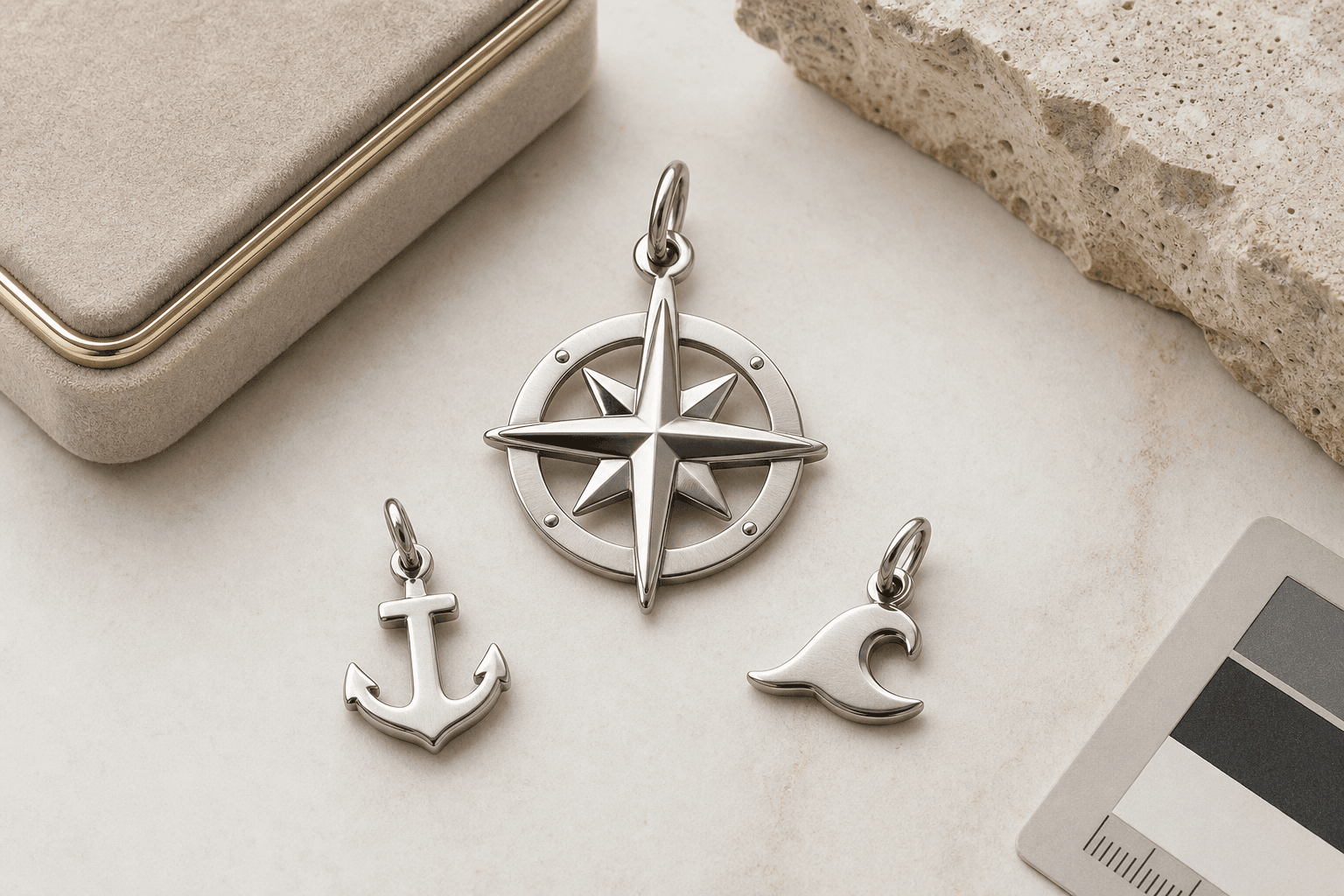
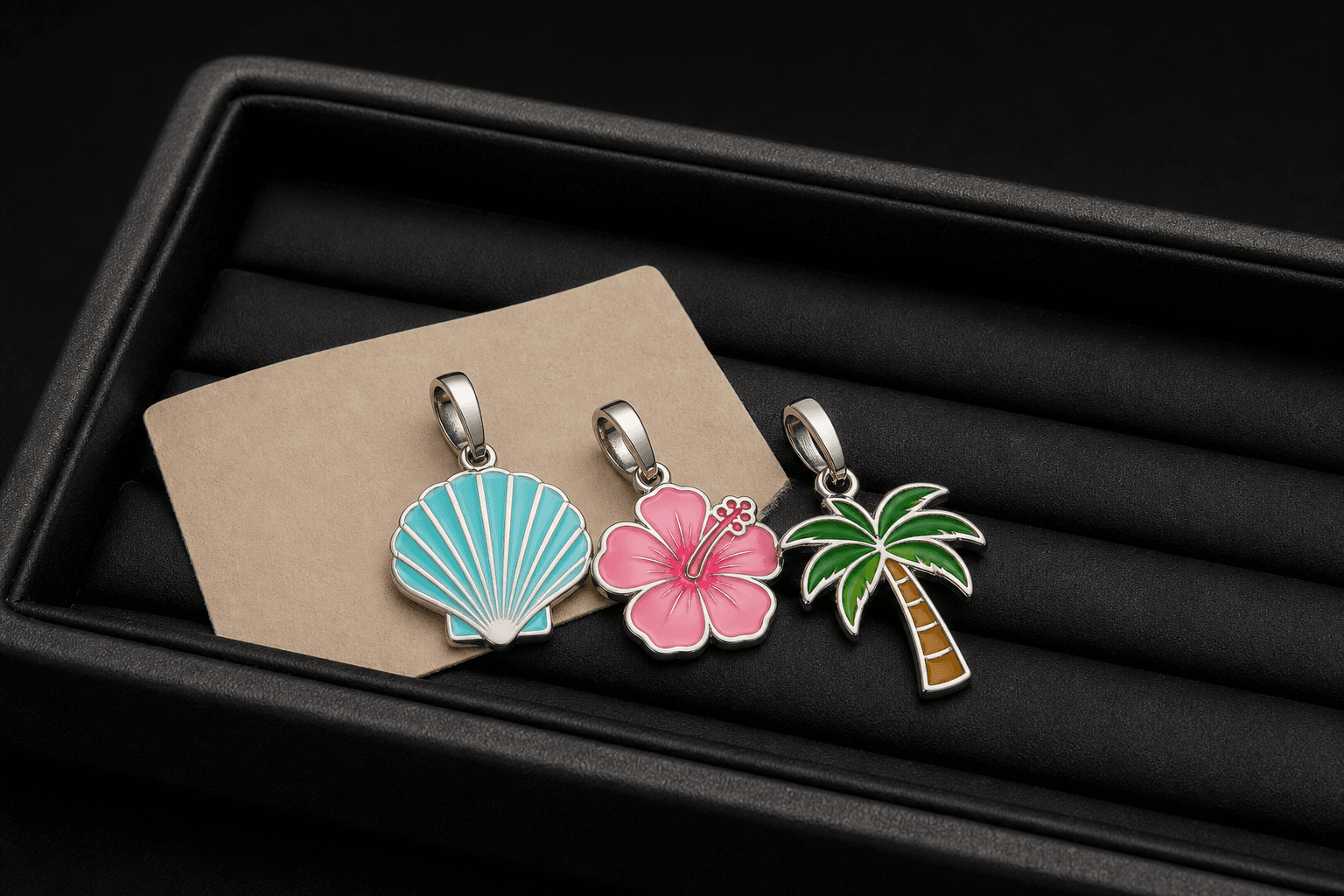
- Finish options: PVD gold plating, silver finish, rose gold plating, enamel color filling, crystal inlay.
- Plating quality requirements: adhesion, thickness tolerance, color consistency, wear resistance, salt spray resistance (Salt Spray 240H).
- Geometry: size range 8–25 mm, bail/jump ring compatibility, forward-facing front design visibility, full silhouette with no missing components.
- Manufacturing capabilities: CNC, laser cutting, laser marking, welding, polishing, engraving for logos if needed.
- Compliance and testing: SGS certifications (RoHS, REACH, Nickel Release EN1811), packaging and labeling requirements, traceability documents.
- Packaging: private-label packaging options, labeling standards, baggage of certificates for buyers.
2. Build a supplier shortlist and screening criteria
Develop a short, prioritized list of potential partners who explicitly advertise capability in 316L stainless steel charms and private-label or OEM/ODM services. Apply screening criteria such as:
- Technical responsiveness: willingness to share material certificates and process control data.
- Manufacturing footprint: CNC, laser, welding, polishing, and laser marking capabilities.
- Quality control: in-process checks, finished-product inspection plans, and pass/fail criteria.
- Certifications: SGS (RoHS, REACH, Nickel Release EN1811, Salt Spray 240H) and any other relevant standards.
- Private-label and OEM/ODM readiness: ability to engrave logos, provide packaging, and support sample development.
- Commercial terms: MOQ, sample lead times, price bands for bulk orders, and private-label options.
3. Request documentation and verify material chemistry
Request a documentation package that demonstrates material integrity and supplier reliability. Key documents include:
- Chemistry reports or third-party test results for 316L stainless steel (elemental composition, corrosion performance).
- Material certifications (RoHS/REACH) and any restricted substance declarations.
- Plating process specifications: plating thickness, adhesion tests, plating color standard, and plating stability under cleaning processes.
- Processing capability statements: CNC machining tolerances, laser engraving resolution, welding seam integrity, and finishing tolerances.
- Quality management documents: QA/QC procedures, process control plans, and traceability records.
4. Assess manufacturing capabilities and QC processes
Deep-dive into production capabilities and quality assurance. Look for evidence of:
- Engineering controls and repeatability: documented process controls for machining, finishing, and plating.
- Equipment maturity: CNC machines, laser cutters/markers, automated polishing lines, and leak/plating baths with controlled chemistries.
- Process validation: first-article inspection, in-process checks, and final inspection criteria.
- Measurement systems: calibrated gauges, micrometers, and metallographic assessments where appropriate.
- Traceability: lot numbers, batch records, and defect-tracking systems that tie back to raw materials.
5. Evaluate private-label and OEM/ODM options
Private-label buyers and boutique brands often require packaging and branding support, as well as flexible configuration. Evaluate:
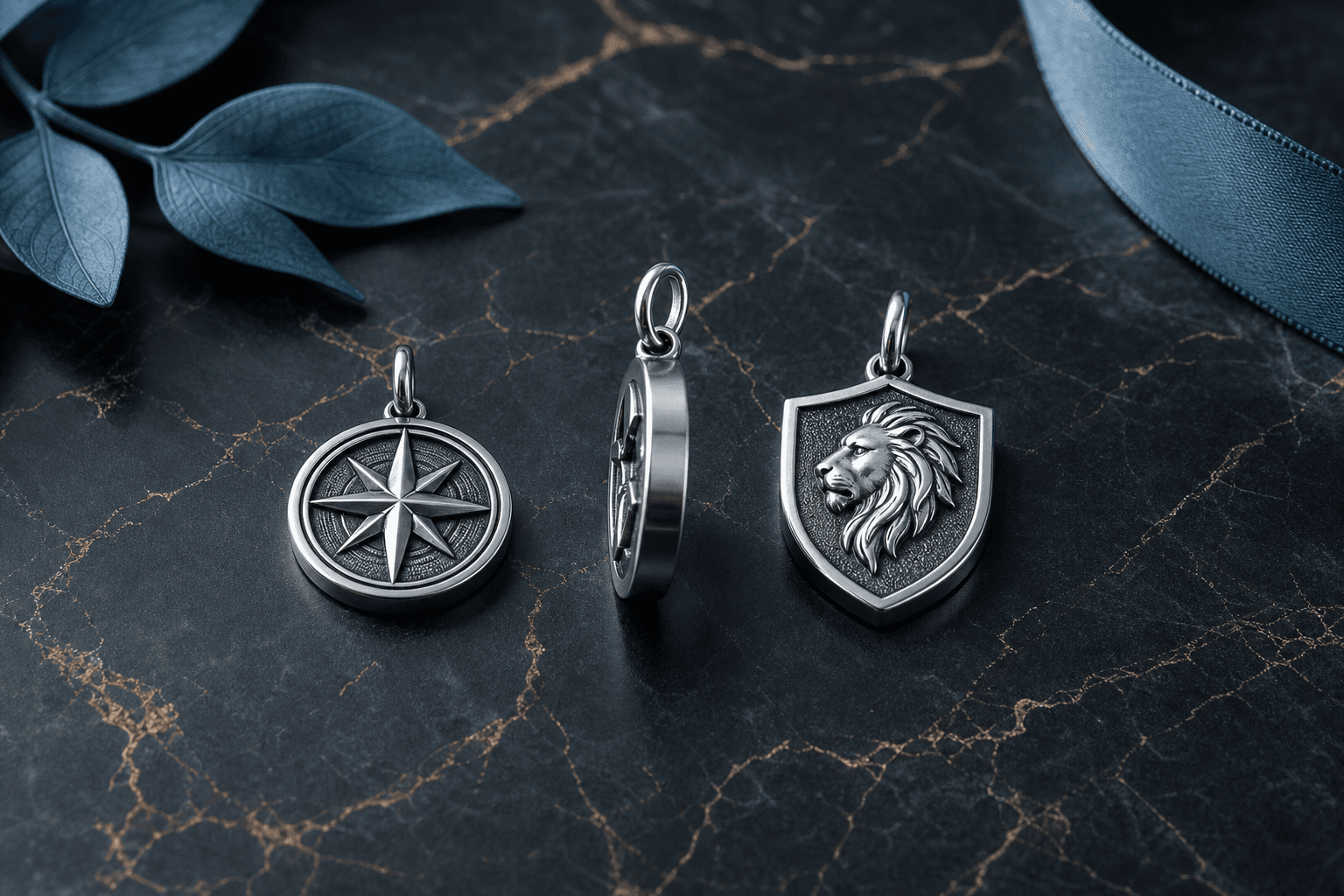
- Logo engraving capabilities and tolerance for different logo placements and sizes.
- Private-label packaging programs: anti-tamper packaging, branding on packaging, and labeling compliance.
- OEM/ODM development: ability to co-design new charm concepts, variations, or collections, including color fills and crystal inlays.
- Lead times for samples and production, and the ability to scale for wholesale or bulk orders.
6. Request samples and evaluate plating quality
Velocity and fidelity of samples are critical. When requesting samples, specify:
- Material verification: 316L stainless steel sample with documentation for the specific alloy batch.
- Plating fidelity: color, hardness, adhesion, wear performance, and plating thickness tolerance.
- Dimensional accuracy: size, hole diameters for bail attachment, and overall geometry adherence to spec.
- Finish consistency: uniform finish across multiple samples and aging behavior under basic cleaning.
7. Audit and supplier scorecard considerations
For ongoing supplier relationships, implement a scorecard that tracks:
- Quality performance: defect rate, corrective action responsiveness, and containment effectiveness.
- Delivery reliability: on-time delivery, lead times for samples, and production ramp rates.
- Regulatory compliance: up-to-date certifications, nickel release testing, and packaging compliance.
- Communication and program support: responsiveness to RFQs, willingness to support private-label packaging, and collaborative readiness for OEM/ODM projects.
8. Make a decision and negotiate terms
With data from tests, samples, and audits, select a partner that demonstrates technical competence, consistent plating quality, and scalable private-label or ODM capabilities. Negotiate terms around:
- MOQ and pricing bands tied to volumes, with clear escalation paths for larger orders.
- Sample development timelines, final delivery times, and change-control processes.
- Intellectual property protections for logos and branding, and any co-design agreements for new collections.
- Quality agreements, acceptance criteria, and warranty or return policies for nonconforming lots.
9. Pilot program and ongoing governance
Start with a pilot order to validate process stability, then expand to larger bulk orders. Establish governance including regular audits, quarterly reviews, and a continuous improvement plan that maps to your private-label or wholesale strategy.
Benefits of a Rigorous Vetting Process
While the mechanics of 316L stainless steel chemistry inform many decisions, the broader benefits accrue to procurement teams that adopt a rigorous vetting framework. Key advantages include:
- Material integrity: verifying the 316L alloy composition reduces corrosion risk and ensures consistent performance across markets.
- Plating reliability: consistent plating thickness and adhesion minimize color shifts and wear in high-use environments.
- Documentation and traceability: SGS-certified documentation provides assurance across US, EU, UK, AU, CA, DE, FR, SP, NE, RU markets.
- Private-label readiness: ability to launch private-label programs with packaging and branding that meet your regulatory and consumer expectations.
- Operational efficiency: supplier scorecards and defined SLAs improve predictability for OEM/ODM collaborations and wholesale programs.
Detailed Analysis: Materials Science and Supplier Evaluation
This section expands on the material science considerations and supplier evaluation criteria that underpin durable, code-compliant stainless steel charms. A strong foundation in alloy chemistry informs decisions about processing, compatibility with finishes, and long-term performance.
316L stainless steel: composition, properties, and implications
316L stainless steel is a low-carbon version of 316 that balances corrosion resistance with formability. Typical composition features include:
- Chromium (Cr): enhances corrosion resistance and surface hardness.
- Nickel (Ni): improves ductility and maintains a stable austenitic structure.
- Molybdenum (Mo): boosts resistance to chlorides and pitting corrosion, critical for salt spray environments and exposure to sweat or moisture during wear.
- Carbon (C): low carbon content (the “L” in 316L) reduces carbide precipitation, aiding weldability and corrosion resistance at higher temperatures.
These characteristics translate into practical benefits for keychain charms: better longevity, resistance to moisture and sweat, and compatibility with diverse finishes such as PVD and enamel. When evaluating suppliers, request composition data or third-party test reports that confirm 316L chemistry and consistency across production lots.
Finishes, plating, and bonding compatibility
316L substrates interact differently with finishes. PVD plating produces durable color finishes (gold, rose gold, silver) with excellent wear resistance, but requires careful cleanliness, surface preparation, and adhesion testing. Enamel fills demand precise sealing, color stability, and mechanical resilience. Crystal inlay adds aesthetic value but requires robust bonding and squarely controlled tolerances to prevent debonding during wear. Your vetting should verify:
- Adhesion strength of plating and enamel to 316L substrate.
- Color reproduction accuracy across batches and light conditions.
- Mechanical integrity of crystal settings and welds, including impact and flex testing where applicable.
- Coatings that meet regulatory standards for consumer products in target markets.
Compliance and risk management: certifications and testing
Beyond material chemistry, governance is essential. Prioritize suppliers with:
- SGS certification coverage for RoHS, REACH, Nickel Release EN1811, and Salt Spray 240H testing.
- Documentation for traceability: material lot numbers, production batch data, and packaging provenance.
- Clear change-control procedures to manage formula or process updates that could affect quality or compliance.
FAQ
Q1: What makes 316L stainless steel ideal for keychain charms?
A1: 316L offers corrosion resistance in humid or sweaty conditions, good formability for stamping or engraving, and compatibility with durable finishes like PVD and enamel. Its low carbon content reduces sensitization risk during welding and handling, which is advantageous for small-batch OEM/ODM runs.
Q2: What documentation should we request during supplier vetting?
A2: Request material certifications (316L composition), RoHS/REACH declarations, Nickel Release EN1811 test results, Salt Spray test data, plating thickness specifications, and QA/QC procedures. Also seek traceability records linking raw material lots to finished lots.
Q3: How long does sample development typically take for private-label programs?
A3: Sample development timelines vary by complexity, but a typical window ranges from 1–3 weeks for a basic charm with a logo engraving, plus 1–2 weeks for final finish approval and packaging proofs. OEM/ODM concepts may require additional iterations and design validation cycles.
Q4: What red flags should we watch for when vetting suppliers?
A4: Inconsistent or missing material data, reluctance to share CADs or process documentation, vague QA/QC procedures, lack of traceability or certification updates, long lead times without justification, and reluctance to provide private-label packaging or logo engraving. A supplier with robust documentation and a transparent testing history is typically more reliable for long-term programs.
Partner With Us
If you are seeking a trusted partner for 316L stainless steel charms with private-label and OEM/ODM capabilities, consider Lancy Jewelry. Our modern facility leverages CNC, laser cutting, laser marking, welding, and polishing to deliver consistent plating quality and boutique-ready series planning. We hold SGS certifications for RoHS, REACH, Nickel Release EN1811, and Salt Spray testing, and we support sample development, logo engraving, enamel color filling, crystal inlay, and private-label packaging. We offer low MOQ options to help boutique brands and private-label buyers ramp up quickly while maintaining quality and traceability across markets.
To begin a formal collaboration, explore our catalog and services:
- Browse our offerings: All Products
- Discuss OEM/ODM capabilities: OEM Service
- Request a quote or initiate RFQ: Request a Quote
- Contact our sales team: Contact
Partner with Lancy Jewelry to access reliable supply of 316L stainless steel charms with consistent plating quality, private-label packaging, and a structured path from sample development to bulk orders. For precise requirements, we can tailor a plan around your materials, finishes, and branding needs, ensuring a smooth, compliant supply chain across global markets.