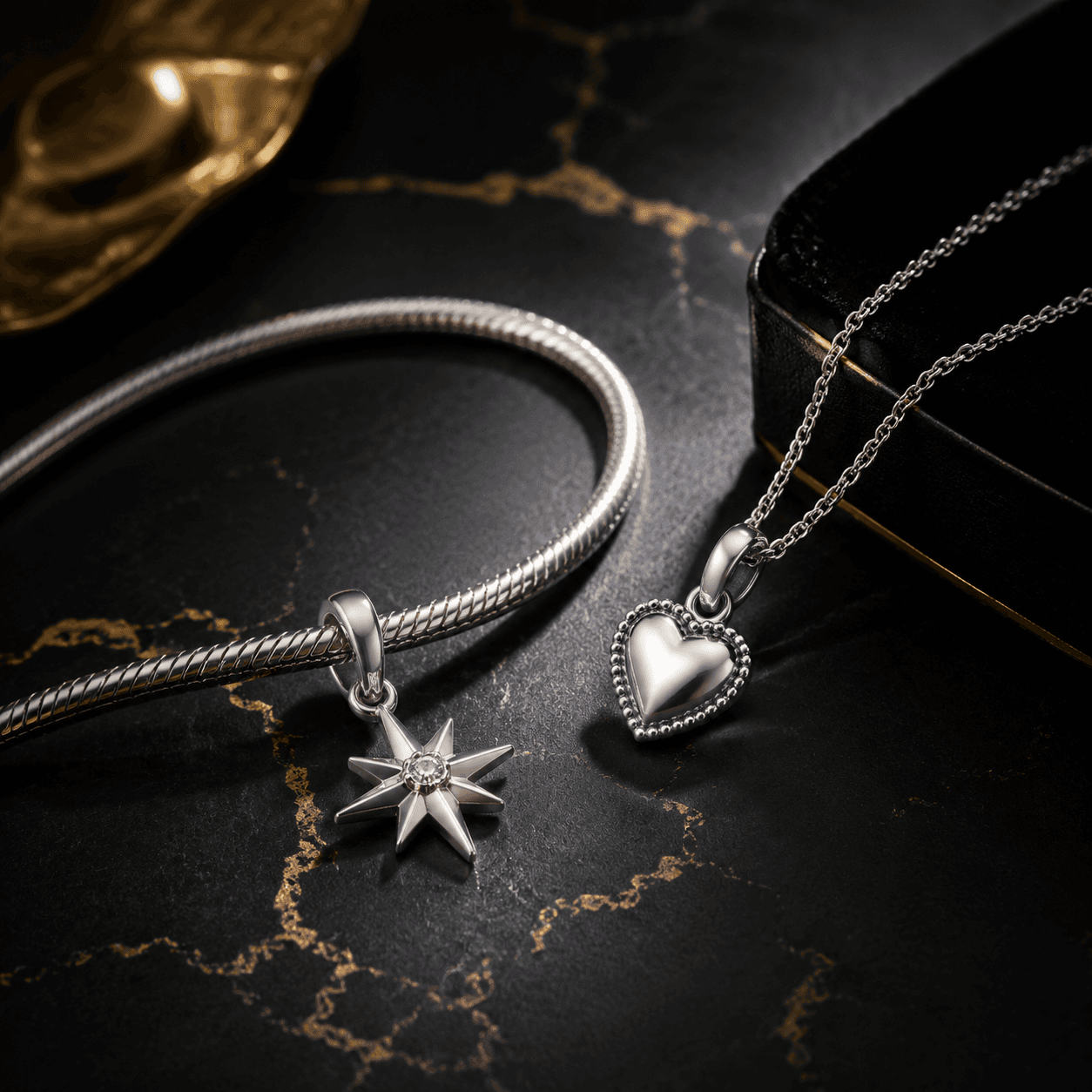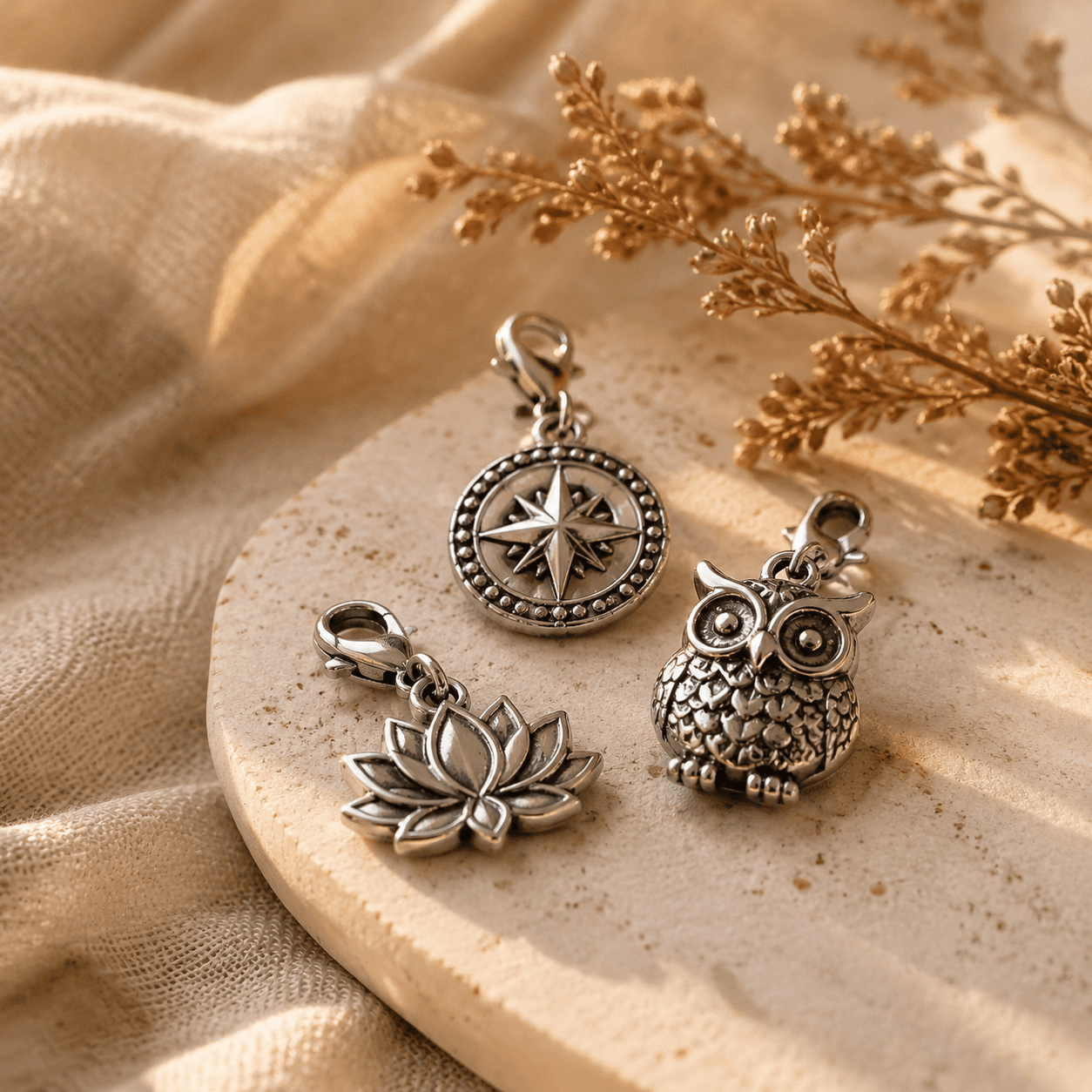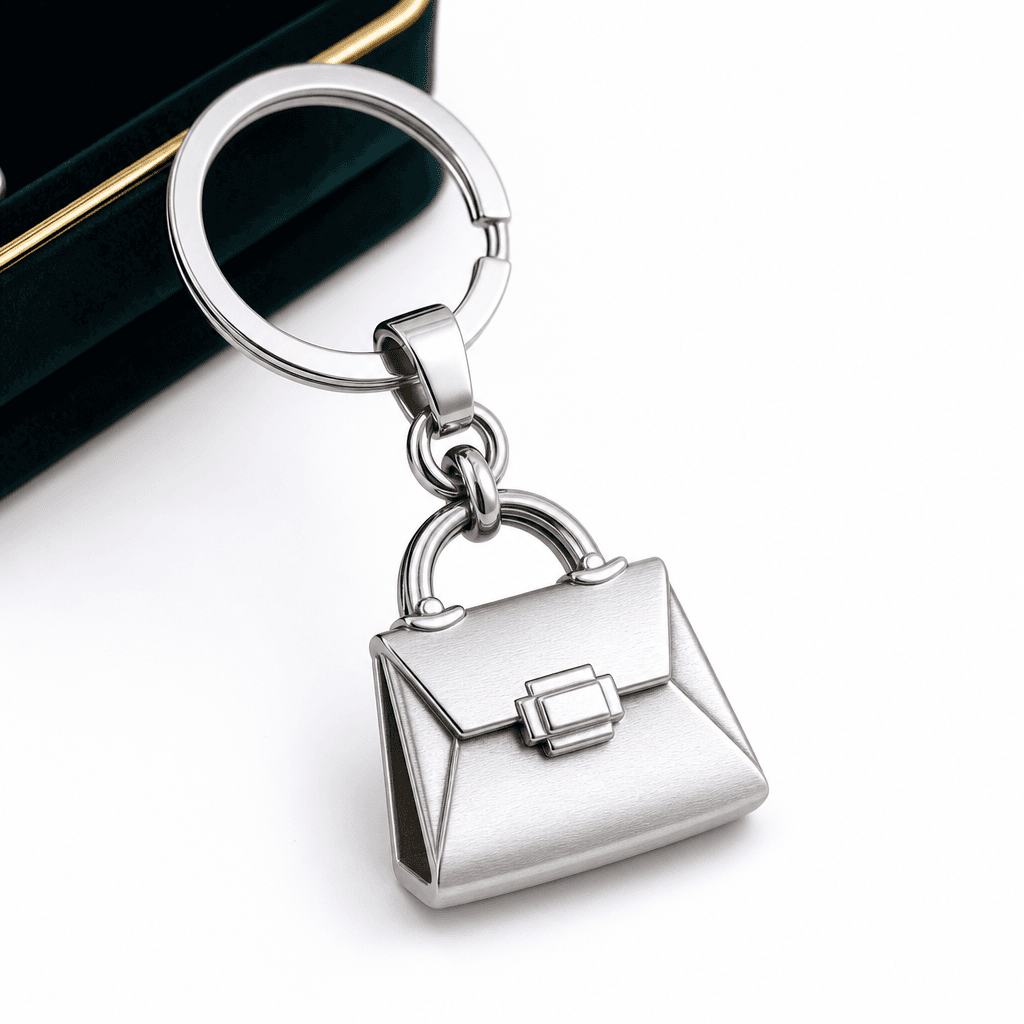
In today’s global supply network, securing a reliable source for stainless steel keychain bag charms is a strategic procurement decision. For boutique brands, gift specialists, and private-label buyers, consistency in material, finish, and process discipline translates to fewer quality issues, faster time-to-market, and healthier margins. This guide from Lancy Jewelry, a leading B2B OEM/ODM 316L stainless steel charms manufacturer, walks procurement teams through a rigorous supplier sourcing workflow. It emphasizes materials science, supplier governance, and documentation that supports audit readiness across markets.
Stainless steel keychain bag charm: A procurement guide for sourcing
1) Define your spec and performance targets
The first step is to crystallize the exact charm profile you need. For a 316L stainless steel base, specify: diameter or height in the target range (typical 8–18 mm for charm sizing), weight, and the outer silhouette. Clarify if you want a single-decorative finish or a mixed-decor option (for example, enamel color filling or crystal inlay). Document tolerance bands for holes, bail width, and overall finish smoothness. Your spec should also enumerate acceptable plating options: PVD gold plating, silver finish, rose gold plating, or combinations with enamel or crystal accents. In practice, most OEM/ODM collaborations begin with a 316L stainless steel base, then evolve through logo engraving, plating, and decorative fill as optional features.
2) Align material science and finish options
316L stainless steel is the backbone of reliable, corrosion-resistant charms. It offers low carbon content, high corrosion resistance, and good formability, making it ideal for small decorative pieces that must endure daily wear. When you pair the base with finishes such as PVD plating or enamel, it’s essential to document plating thickness, adhesion requirements, and color-fastness standards. PVD plating improves wear resistance and color stability, while enamel and crystal inlays unlock vibrant branding opportunities. For global procurement, insist on clear material declarations and finish specifications aligned with RoHS and REACH expectations, supported by supplier test data where applicable.
3) Establish supplier governance and vetting criteria
A robust supplier evaluation should cover capabilities, equipment, and quality systems. At a minimum, verify: CNC machining capability, laser cutting, laser marking, welding, polishing, and precision finishing. Confirm process controls such as in-process inspection, final inspection, and statistical process control (SPC). Look for certifications or third-party verifications that demonstrate compliance with international standards. For Lancy Jewelry, SGS certified (RoHS, REACH, Nickel Release EN1811, Salt Spray 240H) status signals alignment with global compliance and durability testing—critical especially for private-label and wholesale programs.
4) Assess OEM/ODM capability and value-add services
When sourcing stainless steel keychain bag charms, evaluate a supplier’s ability to support your entire product development cycle. This includes OEM/ODM development, logo engraving, PVD plating, enamel color filling, crystal setting, private-label packaging, and comprehensive sample support. A true partner should offer a structured path from concept to commercial release, with clear milestones and cost control. At Lancy Jewelry, the combination of factory-capable equipment and design-to-sample workflows enables boutique brands and private-label buyers to iterate quickly and confidently.
5) Define quality control, testing, and documentation requirements
Quality documentation is the backbone of trust in a B2B relationship. Require material test reports for 316L stainless steel, plating thickness measurements, adhesion test results, and salt spray or corrosion tests for plated finishes. Nickel release testing (EN1811) is especially relevant to ensure consumer-safety compliance. Ensure the supplier can provide packaging specs for private-label programs and BOM-level documentation for each lot. Well-documented QMS and traceability reduce supply risk across cross-market production and audits.
6) Clarify MOQ, sampling, and lead times
Low MOQ support is a core value for many buyers, particularly when testing new designs or introducing a private-label collection. Your sourcing plan should define the MOQ range for initial orders, with a path to scale for bulk orders as demand grows. Sample development lead times should be published, with a cost model that is transparent and negotiable. A reliable supplier will offer expedited sampling or fast-track options for urgent programs while maintaining plating quality and dimensional accuracy.
7) Align commercial terms and logistics
Commercial terms shape the speed and cost of your program. Align on price curves by volume, lead times, packaging preferences, and private-label packaging options. Confirm responsibilities for freight, insurance, and destination port handling, and ensure terms cover quality acceptance criteria and return policies. In many cross-border programs, a clear RFQ workflow and well-defined MOQs help procure lead times to align with product launches and seasonal demand patterns.
8) Plan for auditing and ongoing performance management
Audits can be scheduled or unannounced. Plan for supplier scorecards that track defect rates, on-time delivery, plating uniformity, and any non-conformances. The ability to address corrective actions swiftly demonstrates reliability in wholesale stainless steel charms programs and private-label collaborations. With SGS-certified facilities and a modern manufacturing footprint, Lancy Jewelry positions buyers to conduct effective supplier audits and maintain supply chain integrity across markets.

Benefits/Why it matters
Key benefits for procurement teams
- Material stability and corrosion resistance from 316L stainless steel, ensuring long service life for bag charms and keychain accessories.
- Finishes that meet design briefs across markets, including PVD plating, enamel fills, and crystal inlay capabilities.
- End-to-end OEM/ODM support, from concept through logo engraving to private-label packaging, reducing project risk.
- Low MOQ options and fast sample development, enabling rapid testing of new lines and seasonal collections.
- Global compliance confidence via SGS certifications, supporting audits in US, EU, UK, AU, CA, DE, FR, SP, NE, RU and beyond.
Why certifications matter in a cross-market program
Certifications like RoHS and REACH compliance help ensure product safety and market eligibility. Nickel Release EN1811 testing demonstrates that finishes and coatings won’t release harmful levels of nickel, addressing regulatory and consumer-safety concerns. Salt spray testing provides a practical indicator of finish durability in humid or coastal environments. When evaluating a supplier, request recent test reports and ensure ongoing compliance through periodic re-testing and documentation updates.
Detailed analysis/Guide (continued): Steps in practice
Step A: Define the product family and variability
Map out the collection strategy: will you run a single charm with variations (finish, color fill, or crystal accents) or multiple motifs within a theme? For private-label programs, establish packaging options and branding guidelines early to align with store concepts and display environments. This planning reduces rework and accelerates time-to-market for wholesale stainless steel charms programs.
Step B: Verify supply chain resilience
Assess supplier capacity to handle multi-market demand, including production scalability and risk mitigation. Confirm manufacturing lead times and buffer stock for core SKUs, and implement contingency plans for raw material fluctuations, particularly for plating chemicals and enamel pigments used in decorative finishes.
Step C: Design-for-manufacture and design-for-quality reviews
Collaborate with the supplier’s engineering team on manufacturability of the chosen design, including hole tolerances, bail width, and mechanical fit with standard jump rings and connectors. A well-executed DFM/DFQ review prevents costly retooling and quality issues in mass production, especially for 316L stainless steel charms that require precise finishing and consistent plating.
Step D: Establish a robust sampling plan
Request sample sets that cover base material, plating variants, enamel fills, and crystal inlays. Use samples to evaluate tactile feel, weight, and visual uniformity. Keep a record of sampling costs, which can often be credited against first bulk orders or MOQ credits under the contract terms. A rapid sample development cycle is a competitive advantage in fast-moving markets.
Step E: Formalize packaging and private-label requirements
For private-label buyers, packaging is a crucial brand touchpoint. Define packaging materials, label placements, and carton-level artwork approvals. Align packaging specs with retail display constraints and any regional packaging regulations. A well-documented private-label program reduces time-to-market friction and supports consistent brand storytelling across channels.
FAQ
Q1: What is a typical MOQ for 316L stainless steel charms in a private-label program?
A1: MOQs vary by supplier and program scope, but many manufacturers offer low MOQs to enable trial runs or pilot collections. For established OEM/ODM suppliers with robust tooling and a broad finish library, MOQs commonly range from a few hundred pieces per SKU for initial runs, rising with complexity or customization levels. When negotiating, tie MOQs to sample development milestones and lead times to maintain project momentum.
Q2: How do I assess plating quality and finish durability?
A2: Request plating thickness targets, adhesion test results, and visual inspection criteria. Look for consistency across multiple units, and ask for independent test results if available. If possible, obtain a salt spray test report for the finish and ensure that nickel release testing (EN1811) has been performed for compliant parts. A supplier with repeatable results across production lots indicates a mature plating process and reliable supply chain.
Q3: What documentation should I request before approving a supplier?
A3: Ask for material declarations confirming 316L stainless steel as the base, plating process details, finish specifications, and any enamel or crystal inlay materials. Request SGS-related certifications (RoHS, REACH), Nickel Release EN1811 testing, Salt Spray performance data, and a current factory audit summary if available. Include packaging specs, private-label artwork approvals, and a certificate of conformity for each lot where applicable.
Q4: How can I ensure a supplier supports private-label packaging and logo engraving?
A4: Confirm capabilities for laser engraving or laser marking of logos, consistent with the brand guidelines, and verify throughput for private-label packaging lines. Ask for samples of engraved pieces and private-label packaging mockups to validate branding fidelity and production fit. A strong partner should provide a clear project timeline, cost breakdown, and a defined path from concept through to final packaging ready for distribution.
Call to action: Partner With Us
If you are seeking a dependable stainless steel charms manufacturer with proven OEM/ODM capabilities, consider Lancy Jewelry as your partner for custom stainless steel charms. Our modern facility features CNC machining, laser cutting, laser marking, welding, and polishing, supported by a robust quality program and SGS-certified compliance. We offer low MOQs, fast sample development, consistent plating quality, and comprehensive private-label packaging options to accelerate your private-label and wholesale programs. Let us help you design a signature line that travels across markets with confidence.
Explore our All Products to see our core 316L stainless steel charm ranges, then connect with our team via OEM service to begin your private-label or co-branded program. For quotes or inquiries, use Request a Quote or reach out through Contact. We are ready to support global procurement teams with rigorous vendor vetting, documentation, and audits.