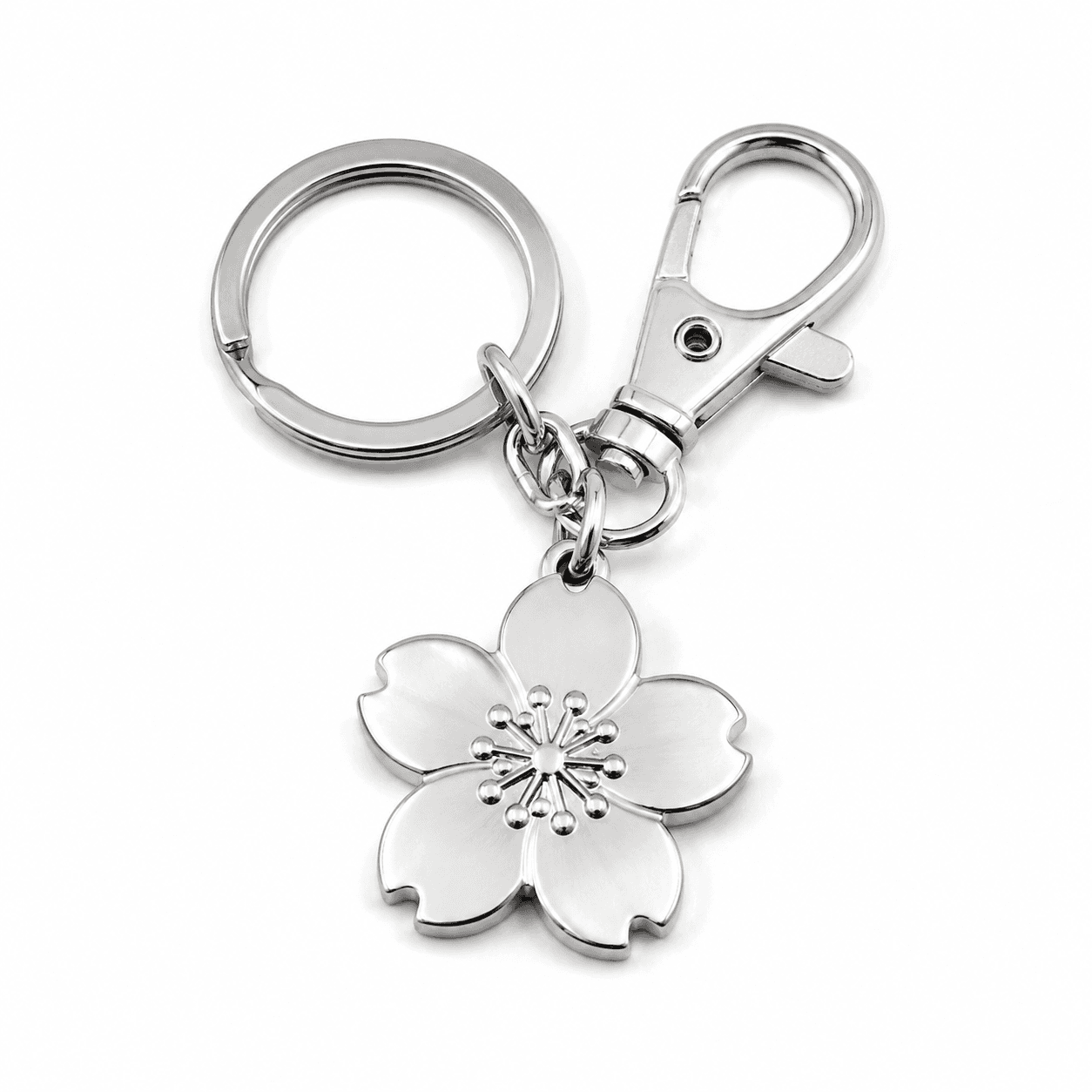
Procurement failures don’t usually surface on the factory floor—they show up later during compliance reviews, returns, or chargebacks tied to safety and durability. If you’re sourcing 316L stainless steel charms for bag keychain applications, you need a vendor vetting process that is audit-ready and documentation-backed. Below is a practical quality standards checklist designed for sourcing teams validating performance, safety, and regulatory alignment across global markets.
Quality Standards Checklist for Stainless Steel Bag Keychain Charms
Scope, risk, and documentation first (do before production)
Certifications & compliance verification (RoHS, REACH, SGS, nickel release)
For procurement teams, the goal is not simply to “collect certificates.” The goal is to confirm test relevance to the exact product configuration you will sell. Use the checklist below to validate safety and regulatory alignment.
Durability and environmental resistance checks (buyers care about returns)
Mechanical performance and assembly reliability (attachment points must be real)
Production control and quality gates (how compliance becomes repeatable)
Benefits / Why it matters for procurement teams
Cut risk across US, EU, UK, AU, CA, and beyond
A global charm program requires consistent compliance evidence and durability proof. When you standardize your evaluation checklist, you reduce audit back-and-forth and speed up internal approvals for cross-market requirements.
Compliance confidence you can defend in audits
- RoHS and REACH readiness: supports procurement evidence for restricted substances and regulatory expectations tied to your finish configuration.
- SGS-aligned reporting: helps buyers present evidence packages during customer audits and retailer onboarding.
- Nickel release testing: strengthens skin-safety confidence and reduces customer returns linked to sensitivity concerns.
- Corrosion durability evidence: supports long-term finish integrity under real-world exposure patterns.
Operational benefits: faster approvals and fewer rework cycles
When certification scope, material confirmation, and finish durability are validated up front, your team can move from sample development to bulk charm orders faster. Lancy supports low MOQ charm production and structured sample development so buyers can confirm fit for purpose with fewer surprises.
Detailed analysis & guide: how to score vendors with a repeatable system
Step 1: Map required proof to the exact product configuration
Before requesting documents, capture the product build: base material requirement (316L stainless steel), finish type (PVD gold plated, silver finish, rose gold plating, enamel, crystal inlay), and any customization (logo engraving, private-label packaging). Then request test reports that match the final configuration.
Step 2: Use a “certificate relevance” rule
- Pass: documentation explicitly covers the finished charm article (or test samples identical in materials and process) and includes the named test type.
- Fail: documentation is generic metal-only testing, incomplete scope, mismatched finish type, or unclear sampling details.
Step 3: Evaluate durability evidence by failure mode
For bag keychain usage, typical failure modes include coating wear, corrosion at edges/holes, enamel chipping, and retention issues around set components. Confirm that reports include corrosion testing (such as Salt Spray 240H) and that the vendor’s production process supports controlled deburring and finish integrity.
Step 4: Confirm nickel release control applies to the final product
Nickel release is a procurement-critical measure for skin-contact risk. Ensure the vendor’s nickel release test matches the charm’s finished state and not only the raw base material.
Step 5: Tie quality gates to your bulk program
- Ask for pre-shipment inspection criteria aligned to expected defect classes.
- Require confirmation that plating color and enamel color are controlled across runs.
- Confirm how the vendor manages change control so private label charms remain consistent across seasons.
Step 6: Validate with sample development you can audit
Use sample development to verify: (1) surface appearance stability, (2) attachment mechanism reliability, and (3) packaging protection quality. For a sourcing manager, samples are a physical reference for audit alignment—not just “approval.”
FAQ
1) Do I need RoHS and REACH reports for stainless steel bag keychain charms?
Yes, procurement teams typically require RoHS and REACH documentation as part of regulatory evidence. Request reports that match your specific 316L stainless steel charms configuration (base material and chosen finish) so your internal compliance review is defensible.
2) What does nickel release testing verify for charm buyers?
Nickel release testing evaluates nickel ion release risk, supporting skin-safety decisions. Confirm the report is aligned to the finished charm configuration you will sell, not only base material.
3) How do I assess durability beyond surface appearance?
Ask for corrosion and environmental evidence (such as Salt Spray 240H), plus clarity on deburring, edge finishing, and quality gates for holes/loops. This helps predict real-world wear when charms are attached to bags and handled frequently.
4) Can a 316L stainless steel charms manufacturer support low MOQ and private label?
Yes. A capable OEM charms manufacturer should support low MOQ charm production, custom logo engraving, PVD plated stainless steel charms, enamel stainless steel charms, and private-label packaging, backed by relevant compliance documentation for audit readiness.
Partner With Lancy Jewelry for compliance-first charm manufacturing
If you’re sourcing a reliable stainless steel charms manufacturer for bag keychains and charm bar accessories, Lancy Jewelry is built for procurement speed and compliance confidence. As an OEM/ODM factory focused on 316L stainless steel charms, we support sample development, consistent PVD plating quality, enamel and crystal inlay execution, and private-label packaging—supported by SGS-aligned certification evidence including RoHS, REACH, nickel release testing, and corrosion durability evidence.
Next step: Use our OEM/ODM service to align on specifications, RFQ documentation needs, and bulk charm orders, then proceed to sample development with audit-ready proof.
OEM Service | Request a Quote (RFQ) | Contact Sales