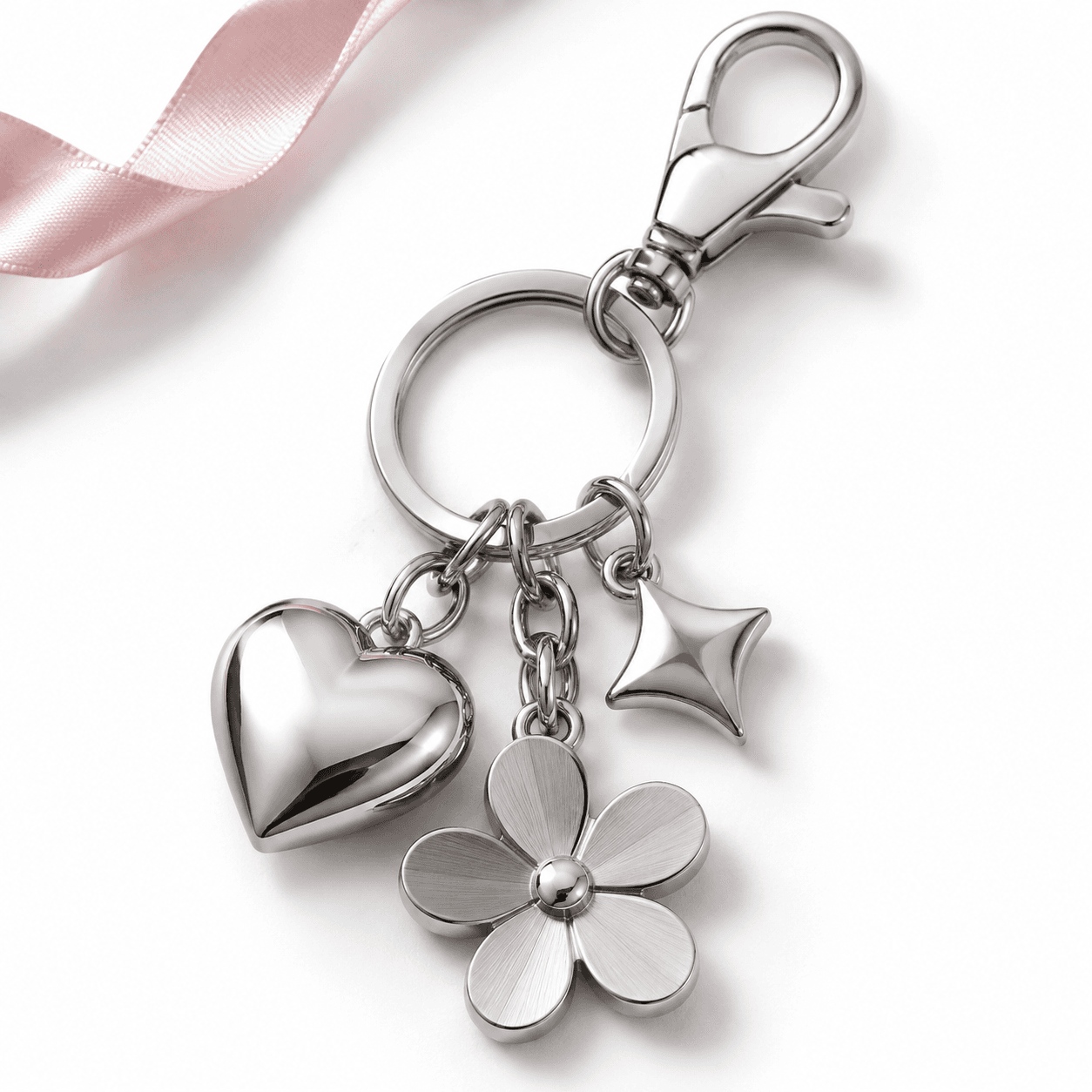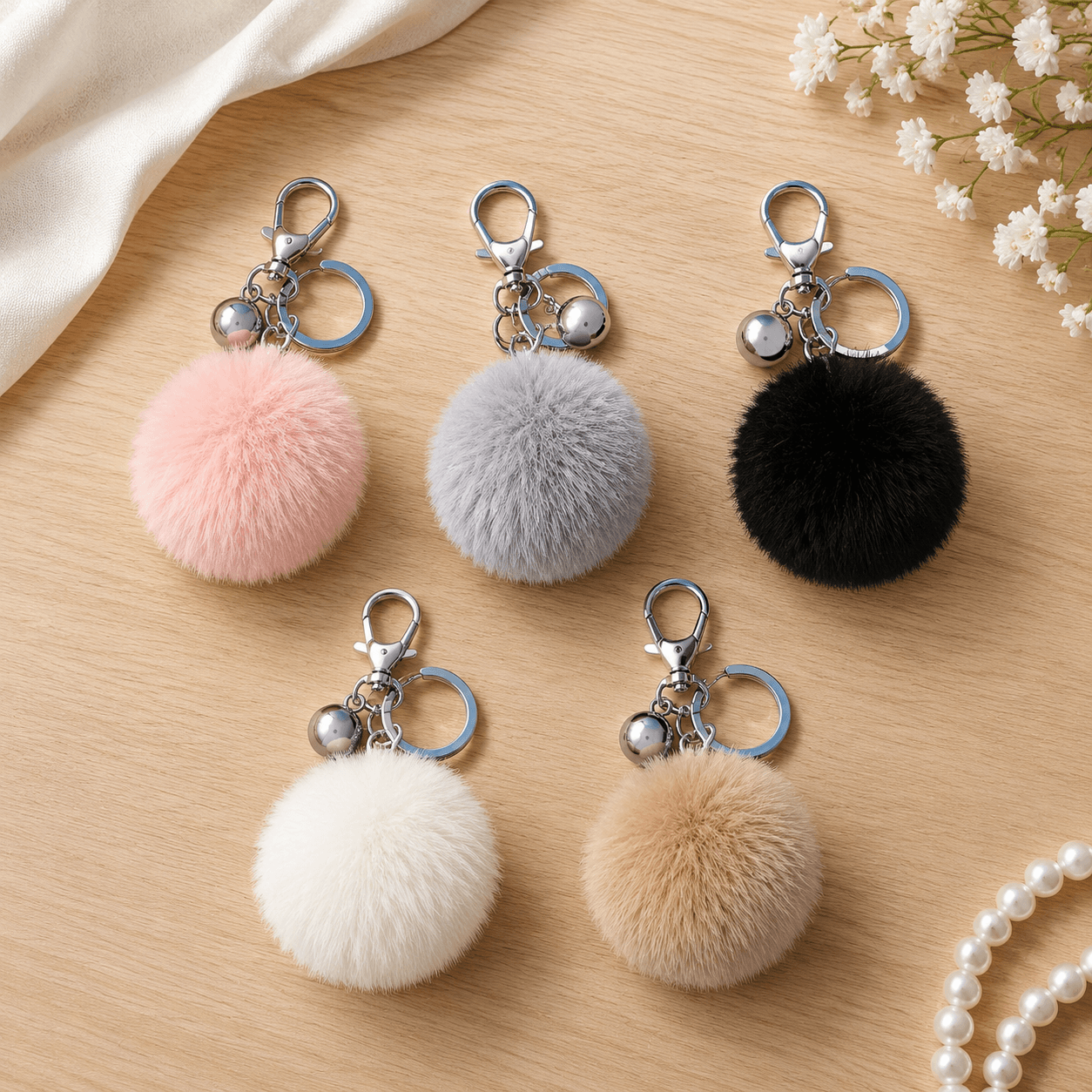
Choosing a stainless steel bag charm manufacturer involves more than comparing quotations, reviewing product photographs, or negotiating MOQ. For procurement teams serving the USA, UK, EU, Australia, and other international markets, supplier compliance must be evaluated before commercial production begins. Inadequate documentation, inconsistent plating processes, unclear product specifications, and unverified safety claims can create costly delays, rejected shipments, and reputational risks.
A reliable sourcing decision requires a structured evaluation of product safety, material traceability, testing documentation, manufacturing controls, and supplier accountability. This checklist explains how to assess a manufacturer, what evidence to request, and how to organize compliance verification before placing bulk charm orders. It also outlines the documentation and production capabilities that boutique brands and private-label buyers should expect from a qualified 316L stainless steel charms manufacturer.
Stainless Steel Bag Charm Sourcing: A Manufacturer Compliance Checklist
Bag charms are decorative accessories that may be handled frequently, attached to bags, and included in retail gift programs. Their components, surface treatments, decorative details, and attachment mechanisms should therefore be evaluated as part of the finished product rather than as isolated manufacturing operations.
Start with the following checklist when screening a potential stainless steel bag charm manufacturer. Request documentary evidence wherever possible instead of accepting general statements about factory quality or product safety.
1. Verify the manufacturer's business and production capabilities
- [ ] Confirm the supplier's legal business identity, registered business information, and actual manufacturing address.
- [ ] Determine whether the supplier operates its own production facility or relies primarily on external manufacturing partners.
- [ ] Review available manufacturing equipment, including CNC processing, laser cutting, laser marking, welding, and polishing capabilities.
- [ ] Confirm whether the supplier can manage OEM and ODM development, sampling, production planning, and private-label packaging.
- [ ] Request examples of production documentation, quality inspection records, and sample approval procedures.
- [ ] Identify the person responsible for technical questions, quality issues, and compliance documentation.
A capable stainless steel charms manufacturer should explain how each production stage is controlled. Procurement teams should understand who manages material purchasing, surface finishing, decorative processing, assembly, and final inspection. Clear responsibility reduces communication gaps when specifications change or quality issues arise.
2. Confirm the 316L stainless steel base material
- [ ] Obtain a written declaration identifying 316L stainless steel as the base material.
- [ ] Request supporting material identification records or appropriate material test documentation.
- [ ] Confirm that the declared material specification applies to the actual production batch.
- [ ] Check whether the manufacturer maintains material purchasing and batch traceability records.
- [ ] Ensure that decorative components and surface treatments are identified separately in the product specification.
- [ ] Confirm that approved samples and mass-production specifications use the same declared base material.
Material identification is a fundamental procurement control. A product description alone does not establish material composition. Buyers should connect the material declaration to traceable purchasing records and, where appropriate, independent testing. This is especially important when developing multiple bag charm designs under one private-label program.
3. Review RoHS and REACH documentation
- [ ] Request relevant RoHS testing reports or declarations where applicable to the product and its intended market.
- [ ] Request REACH-related documentation addressing applicable substance restrictions and reporting obligations.
- [ ] Check the report date, laboratory identity, sample description, and tested product identification.
- [ ] Verify that the tested sample represents the proposed production specification.
- [ ] Review whether decorative finishes, enamel, crystal inlay, and other relevant product components were included in the assessment.
- [ ] Ask how the manufacturer monitors regulatory updates and evaluates changes to applicable requirements.
RoHS and REACH serve different regulatory purposes. RoHS addresses restrictions on certain hazardous substances in electrical and electronic equipment within its applicable scope. REACH establishes a broader framework for chemical management and restrictions in the European market. Procurement teams should not assume that one document automatically demonstrates compliance with every requirement applicable to a decorative accessory.
For US and other international orders, determine which national, regional, and state-level requirements apply to the finished product, its components, and its intended use. A supplier should provide technical information that allows the buyer or its compliance adviser to assess those obligations.
4. Verify nickel release testing
- [ ] Request nickel release testing documentation referencing EN 1811 where relevant.
- [ ] Confirm the tested product configuration, including applicable surface treatments and contact areas.
- [ ] Check whether the report identifies the laboratory, testing date, method, and results.
- [ ] Confirm that the sample represents the current production specification.
- [ ] Ask whether changes to PVD plating, polishing, or other surface processes trigger additional evaluation.
- [ ] Establish a procedure for reviewing updated testing evidence when product specifications change.
Nickel release is an important consideration for products that may come into prolonged or repeated skin contact. However, the intended use of a bag charm must be evaluated carefully. A decorative bag accessory does not automatically fall into the same regulatory category as an item designed for direct skin contact.
EN 1811 is a recognized reference method for determining nickel release from relevant consumer articles. Buyers should assess the applicable requirements for the actual product category and intended use rather than treating a single test report as universal market approval. Where relevant, additional testing or product-specific assessment may be necessary.
5. Evaluate plating durability and corrosion resistance
- [ ] Request details of the PVD plating process and approved surface finish specifications.
- [ ] Review sample evaluation records for gold plated, silver finish, and rose gold plating options.
- [ ] Ask for documented adhesion, appearance, and surface consistency inspection criteria.
- [ ] Request salt spray testing evidence where relevant to the product specification.
- [ ] Confirm the reported testing duration, test method, sample configuration, and acceptance criteria.
- [ ] Define acceptable appearance standards for scratches, discoloration, uneven coverage, and surface defects.
Surface durability influences product presentation, customer satisfaction, and repeat purchasing. Salt spray testing can provide useful information about corrosion resistance under defined test conditions. However, a 240-hour result should not be interpreted as a guaranteed service life or automatic proof of compliance with every market requirement.
Ask the supplier to explain how testing conditions relate to the intended product application. For example, a bag charm may experience friction, handling, environmental exposure, and contact with other accessories. Production specifications should therefore include practical appearance and durability acceptance criteria in addition to laboratory testing.
6. Assess fair trade claims and supplier accountability
- [ ] Request written information about employment practices, workplace policies, and worker safety procedures.
- [ ] Ask whether independent workplace assessments or relevant third-party audit records are available.
- [ ] Review how working hours, compensation practices, and grievance procedures are documented.
- [ ] Establish whether production partners are subject to equivalent supplier accountability requirements.
- [ ] Confirm how the manufacturer handles reported workplace concerns and corrective actions.
- [ ] Avoid treating product safety certificates as evidence of fair labor practices.
Fair trade and responsible sourcing require a separate evaluation from product compliance. RoHS, REACH, and nickel release testing primarily address product-related requirements; they do not independently establish acceptable working conditions or ethical employment practices.
For procurement programs that include ethical sourcing commitments, buyers should define the applicable labor standards, request supporting evidence, and establish a clear audit process. Do not accept an unsupported fair trade statement as proof of certification. A transparent supplier should explain what has been independently assessed, which facilities were covered, when the assessment occurred, and whether corrective actions remain outstanding.
Why Supplier Compliance Matters for International Buyers
A documented supplier evaluation creates commercial value beyond regulatory risk management. It helps procurement teams make repeatable purchasing decisions, compare manufacturers objectively, and maintain consistent product standards across different collections and sales markets.
Key benefits of documented certifications and testing
More reliable market preparation: Relevant RoHS, REACH, and nickel release documentation gives buyers technical evidence to support product assessments. It also helps identify additional testing or regulatory work before products enter distribution.
Better material accountability: Material declarations and batch records connect product specifications to manufacturing inputs. This makes it easier to investigate inconsistencies and manage changes during repeat orders.
More consistent surface quality: Defined PVD plating specifications, polishing standards, and corrosion-resistance evaluations help maintain consistent appearance across wholesale stainless steel charms programs.
Lower procurement uncertainty: Reviewing supplier capabilities, testing evidence, and quality procedures before ordering helps reduce the likelihood of unexpected production problems and documentation delays.
Stronger private-label control: Buyers can establish approved specifications for logo engraving, enamel color filling, crystal inlay, packaging, and product identification before mass production begins.
Understanding the role of SGS documentation
SGS is an independent testing, inspection, and certification organization. Its reports can provide useful third-party evidence when the testing scope, product identification, methods, and results are relevant to the buyer's requirements.
Lancy Jewelry has SGS-supported documentation covering RoHS, REACH, Nickel Release EN1811, and Salt Spray 240H. These capabilities provide a starting point for technical supplier evaluation. Buyers should request the relevant reports and review the actual scope and sample identification rather than relying solely on a general certification statement.
Remember that a test report applies to the identified sample and testing conditions. It should not automatically be extended to every product design, finish, production batch, or market. Procurement teams remain responsible for confirming the requirements applicable to their finished products.
Detailed Guide: How to Evaluate a Stainless Steel Bag Charm Supplier
Step 1: Prepare a product-specific compliance brief
Before requesting quotations, prepare a specification sheet describing the intended bag charm program. Include dimensions, design drawings, attachment requirements, base material, surface finish, decorative details, logo requirements, packaging, and expected order quantities.
Identify the destination markets and intended product use. A product sold as a decorative bag accessory may have different assessment considerations from an accessory designed for direct and prolonged skin contact. Provide this information to the supplier so that the correct technical documentation can be identified.
Include the following information in your RFQ:
- Product dimensions and approved design drawings.
- 316L stainless steel base material declaration.
- Requested PVD plating and surface appearance.
- Enamel color or crystal inlay specifications, where applicable.
- Attachment mechanism and mechanical requirements.
- Required compliance documents and testing scope.
- Target MOQ, forecast quantities, and expected delivery schedule.
- Private-label packaging and logo engraving requirements.
Step 2: Request and verify technical documents
Organize supplier documents into a central compliance file. Record the document title, issuing organization, report number, issue date, product identification, tested specification, and review status. Confirm that the evidence corresponds to the proposed product rather than an unrelated sample.
When a document contains unclear information, request written clarification. Check whether the laboratory report includes the tested finish and decorative features. If a manufacturer cannot establish a connection between the report and the proposed product, classify the evidence as incomplete until the issue is resolved.
Step 3: Evaluate manufacturing and quality control
Factory evaluation should cover both production equipment and operating procedures. Modern CNC processing, laser cutting, laser marking, welding, and polishing capabilities can support precise product development, but equipment alone does not guarantee consistent output.
Ask how production specifications are transferred from approved samples to manufacturing instructions. Review inspection checkpoints for dimensions, surface finish, engraving accuracy, decorative details, attachment security, and packaging. Establish who authorizes production changes and how nonconforming products are isolated.
Where an onsite audit is not practical, request a structured remote factory review supported by relevant records, process photographs, and live discussions with responsible production personnel. Keep the review focused on verifiable evidence.
Step 4: Approve samples before bulk production
Sample development is an essential control point for custom stainless steel charms. A prototype allows the buyer to assess the actual dimensions, visual appearance, finish, engraving, decorative details, and attachment mechanism before committing to larger quantities.
Use a documented sample approval form. Record the approved reference sample, product drawing revision, surface finish, logo position, color specifications, and acceptable tolerances. If testing has been performed, identify the reports associated with the approved configuration.
Do not approve production based only on a digital rendering. Physical samples reveal manufacturing details that images cannot fully communicate. Any changes after approval should be documented and evaluated before implementation.
Step 5: Establish mass-production inspection criteria
Agree on inspection requirements before confirming the purchase order. Define critical, major, and minor defects according to product function and commercial expectations. For bag charms, critical issues may include unsafe or defective attachment mechanisms, while appearance-related issues may include visible surface defects, inaccurate engraving, or inconsistent color filling.
Specify the inspection stage, sampling approach, acceptance criteria, packaging requirements, and responsibility for corrective action. For larger bulk orders, consider independent pre-shipment inspection where appropriate. Retain approved samples and inspection records for comparison with future orders.
Step 6: Build a repeatable supplier monitoring system
Supplier qualification should continue after the first shipment. Monitor delivery performance, defect rates, document validity, communication quality, corrective-action completion, and consistency between approved samples and delivered products.
Review the compliance file whenever the design, surface treatment, manufacturing process, or applicable regulations change. A change to PVD plating or decorative processing may require additional technical review or testing. Maintain revision-controlled product specifications so that future orders follow the correct approved version.
Supplier Evaluation Scorecard: A Practical Procurement Tool
Use a weighted scorecard to compare shortlisted manufacturers using consistent criteria. Assign scores based on evidence rather than sales presentations or verbal assurances.
| Evaluation category | Suggested weight | Evidence to review |
|---|---|---|
| Material traceability | 20% | 316L stainless steel declarations and batch records |
| Product compliance | 25% | Relevant RoHS, REACH, and EN1811 documentation |
| Manufacturing capability | 15% | Production equipment and process controls |
| Quality management | 15% | Inspection standards and corrective-action records |
| Sample development | 10% | Prototype accuracy and approval procedures |
| Ethical sourcing | 10% | Workplace policies and available independent assessments |
| Commercial reliability | 5% | Quotation clarity and delivery communication |
These percentages are suggested internal procurement weights, not regulatory standards. Adjust them according to your company's risk policy and product requirements. Treat missing critical safety documentation as an unresolved qualification issue regardless of the supplier's overall score.
Frequently Asked Questions
1. What compliance documents should I request from a stainless steel bag charm manufacturer?
Start with a 316L stainless steel material declaration, relevant RoHS and REACH documentation, nickel release testing where applicable, and surface durability evidence. Also request product specifications, batch traceability records, and quality inspection procedures. The exact documentation depends on the product design, intended use, and destination market.
2. Does an SGS report guarantee that a bag charm meets every international requirement?
No. An SGS report provides evidence of the specific tests performed on an identified sample under defined conditions. It does not automatically establish compliance with every regulation or market requirement. Buyers should verify the report scope, sample configuration, applicable standards, and any additional assessment needed for the finished product.
3. Is EN1811 nickel release testing necessary for every bag charm?
Not necessarily. EN 1811 is relevant to assessing nickel release from applicable consumer articles, particularly products subject to skin-contact requirements. Whether testing is required depends on the product's construction, intended use, contact characteristics, and applicable market rules. Buyers should confirm the relevant requirements with a qualified compliance professional.
4. How can procurement teams verify fair trade and ethical sourcing claims?
Request documented workplace policies, information about employment practices, available independent audit records, and evidence of corrective actions. Confirm which facility and production activities were assessed. Product safety testing and fair labor assessments address different subjects, so they should be evaluated separately.
Partner With Lancy Jewelry for Documented OEM/ODM Manufacturing
Supplier compliance should be built into the sourcing process from the first RFQ through sample approval, production, and repeat orders. Lancy Jewelry supports boutique jewelry brands, charm bar retailers, gift companies, distributors, and private-label buyers seeking dependable 316L stainless steel charm manufacturing.
Our manufacturing capabilities include CNC processing, laser cutting, laser marking, welding, polishing, PVD plating, enamel color filling, crystal setting, logo engraving, and private-label packaging. We support OEM and ODM development, sample development, and low MOQ production planning for buyers building coordinated accessory collections.
Our SGS-supported documentation covers RoHS, REACH, Nickel Release EN1811, and Salt Spray 240H. Buyers can request relevant technical documents for review and discuss the testing scope applicable to their proposed products and destination markets.
Whether you are developing a new bag charm collection or expanding an established wholesale program, a clear product specification and documented approval process are the foundation of reliable sourcing.
Start your supplier evaluation with Lancy Jewelry:
- Explore our OEM/ODM manufacturing services for custom product development and private-label programs.
- Browse our stainless steel product range to review available product categories and design directions.
- Contact Lancy Jewelry to discuss material specifications, testing documentation, samples, and production requirements.
- Submit your RFQ with product drawings, target quantities, finish requirements, and destination markets.
Make compliance a purchasing requirement, not a last-minute inspection task. Partner with a manufacturer that understands material traceability, documented testing, production consistency, and the practical demands of international B2B sourcing.