Stamped vs Cast Stainless Steel Charms: Buyer Durability Guide
For jewelry designers and sourcing managers, the choice between stamped and cast 316L stainless steel charms shapes cost, design options, production speed, and long-term durability. Both processes can produce boutique-ready charms, but they are not interchangeable for every collection. This educational guide compares the two methods from a B2B buyer perspective, with practical checks for quality, testing, and supplier selection.
Stamped vs Cast Stainless Steel Charms: Process Basics
Understanding how each charm is formed helps you ask better questions during sample development and bulk orders. The base material should always be confirmed as 316L stainless steel, because the 316L grade supports corrosion resistance and consistent finishing.
How Stamped Charms Are Made
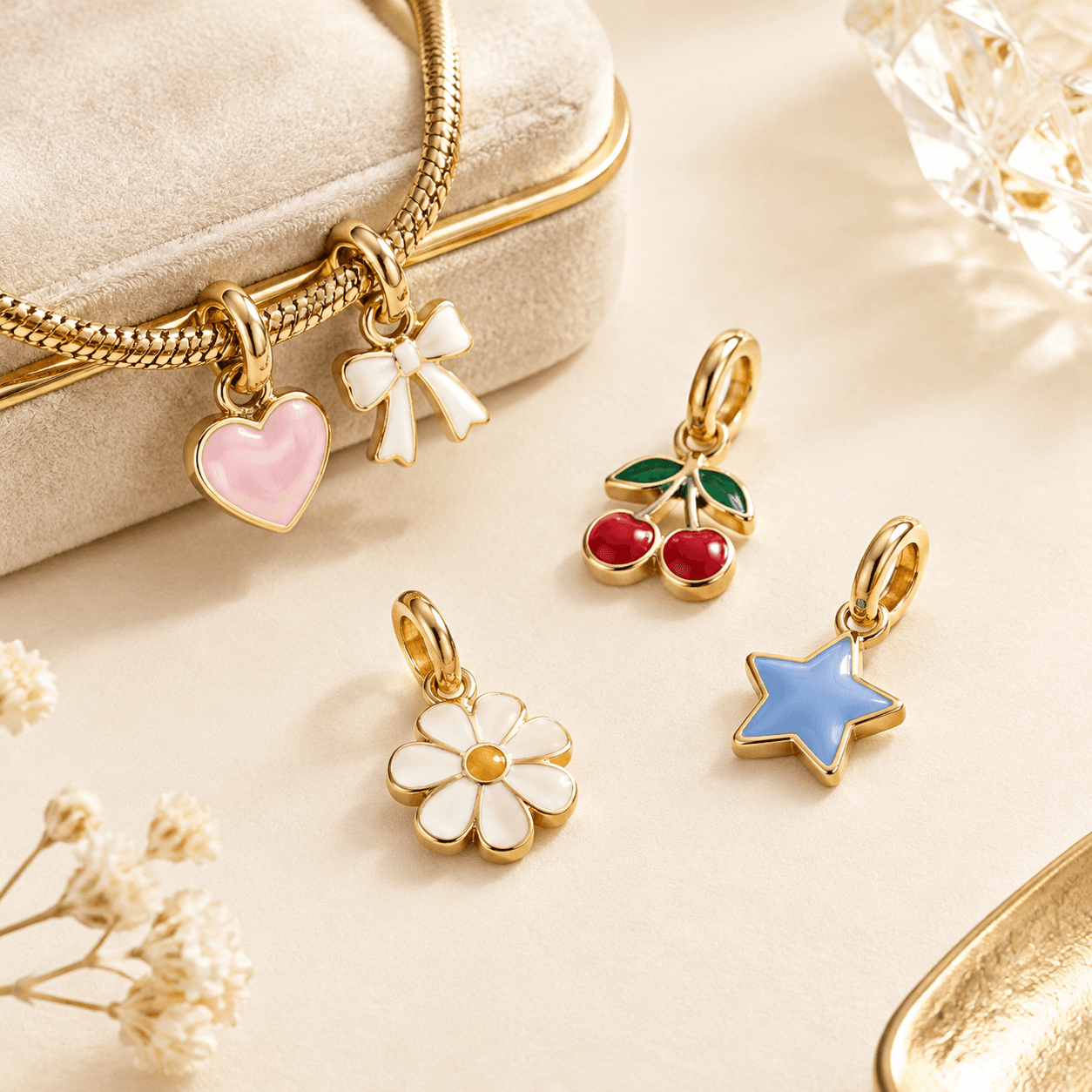
Stamped charms begin with 316L stainless steel sheet. A die cuts the outer shape, then a press forms the design, recesses, or raised areas. After trimming, the charm is polished, tumbled, and plated with PVD, gold plated, rose gold plating, or silver finish as required. Enamel color filling and crystal inlay can be added when the design has suitable recesses or settings.
Stamped production is efficient for flat or low-relief designs such as alphabet initial charms, zodiac symbols, hearts, crosses, and simple icons. It offers consistent thickness, good surface area for custom logo engraving or laser marking, and predictable unit costs at volume. Tooling is usually simpler than casting tooling, which can support low MOQ charm production and faster sample development.
How Cast Charms Are Made
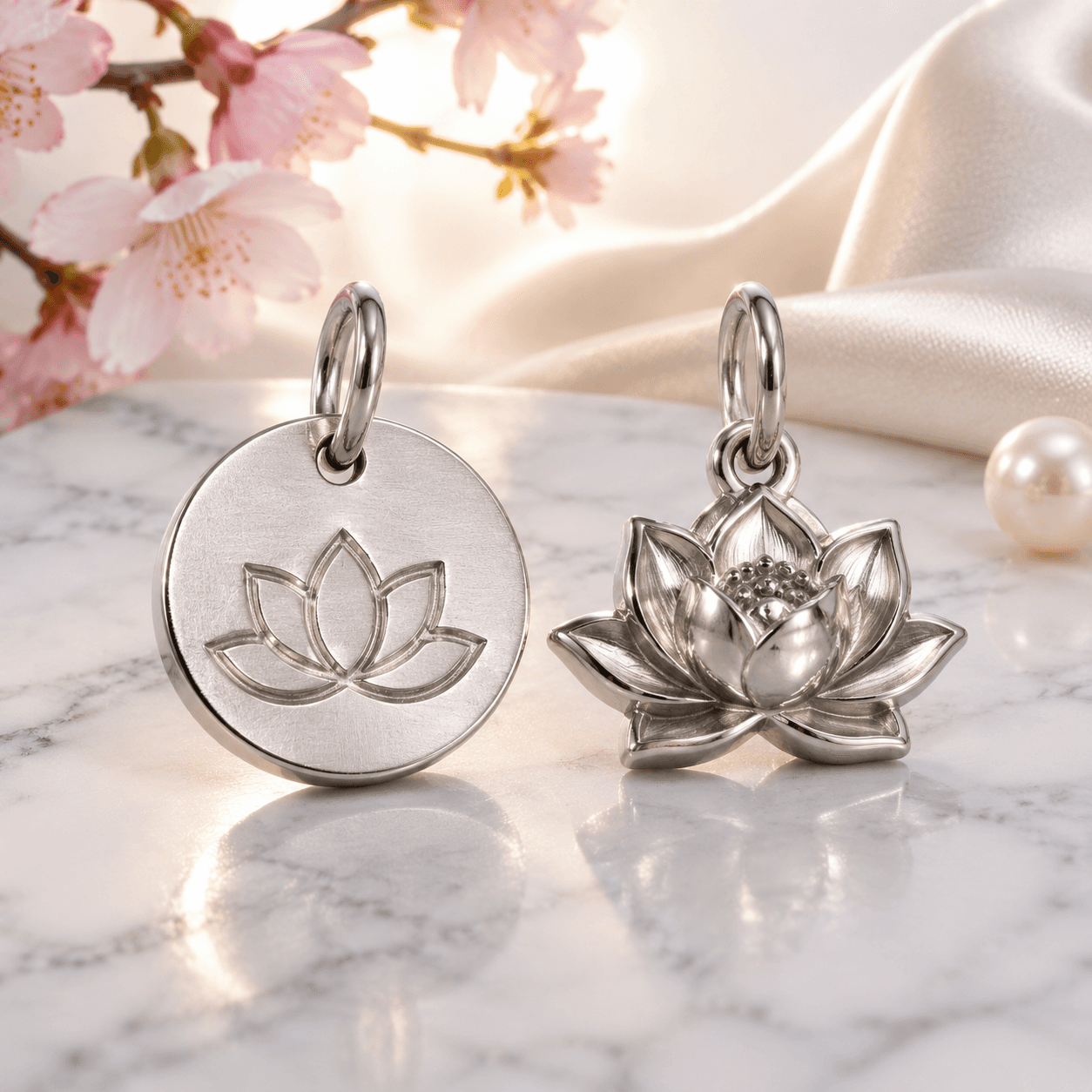
Cast charms are produced by filling a mold with molten 316L stainless steel, then cooling, de-molding, grinding, and polishing the piece. Investment casting is common for detailed three-dimensional shapes, including animal charms, ocean life designs, botanical motifs, and sculpted symbols. The process can capture deeper contours, undercuts, and more organic forms than stamping.
Because casting creates a solid, heavier charm, it can feel more substantial in hand. However, the buyer must verify mold quality, metal chemistry, and porosity control. A well-run charm factory will manage gates, shrinkage, and finishing so the final charm has a clean silhouette, a reliable bail or jump ring, and a surface ready for PVD plating, enamel, or crystal inlay.
Side-by-Side Comparison for B2B Buyers
Use this comparison as a starting point, not a rule. The best process depends on your design, target price, order quantity, and finishing plan.
| Criterion | Stamped 316L Stainless Steel Charms | Cast 316L Stainless Steel Charms |
|---|---|---|
| Design depth | Best for flat, low-relief, engraved, or enamel-filled designs | Best for 3D, sculpted, highly detailed, or organic shapes |
| Weight and feel | Lighter and consistent in thickness | Heavier and more solid; depends on mold design |
| Tooling cost | Generally lower for simple shapes | Generally higher due to mold complexity |
| Unit cost at volume | Cost-effective for high-volume flat charms | Cost-effective for detailed charms where casting saves assembly |
| Durability risk | Good when edges are deburred and thickness is controlled | Good when porosity is controlled and finishing is complete |
| Surface finish | Excellent for mirror polish, brushing, laser marking, and PVD | Excellent for sculpted highlights, but requires careful polishing |
| Enamel and crystal | Works well with recessed enamel cells and simple settings | Works well with deeper enamel channels and 3D crystal settings |
| Best-fit products | Alphabet, zodiac, symbols, hearts, crosses, flat charms | Animals, ocean life, botanical, sculpted symbols, statement charms |
| Sample development | Fast when dies and artwork are clear | Requires mold development and more sample review |
Durability and Quality Testing: What Actually Matters
Durability is not only about the forming method. It also depends on material grade, polishing, plating thickness, enamel adhesion, crystal setting, and the quality of the bail or jump ring. For B2B buyers, a supplier’s testing standards are as important as the process name.
Wear Resistance and Finish Longevity
PVD plated stainless steel charms generally offer strong wear resistance when the surface is properly prepared. A clean polish before plating, controlled bath chemistry, and suitable coating thickness help the finish resist daily contact with skin, clothing, and bags. For gold plated and rose gold plating finishes, buyers should request plating thickness and adhesion information, not just color samples.
Salt spray testing is a practical indicator for corrosion resistance. Lancy Jewelry uses SGS testing that includes Salt Spray 240H, alongside RoHS, REACH, and Nickel Release EN1811. These reports help designers and distributors confirm that 316L stainless steel charms are suitable for market requirements in the US, EU, UK, AU, CA, and other regions.
Structural Integrity and Porosity
Stamped charms are less likely to have internal porosity because they are formed from solid sheet. The main risks are sharp edges, thin walls, and distorted shapes after pressing. Cast charms can deliver excellent detail, but they require strict control of melting, pouring, and cooling to avoid porosity, shrinkage, and weak attachment points. A buyer should inspect samples under magnification and check the bail, jump ring, and solder or weld joints.
For both processes, ask for a production sample from the actual tooling, not only a hand-finished prototype. This is especially important for custom stainless steel charms with enamel or crystal inlay, because the recess depth and setting method affect long-term finish.
Attachment and Connector Durability
A charm is only as good as its connection point. The bail or jump ring must be fully closed, properly sized, and threaded through a real hole or loop. Stamped charms often have a formed or welded bail; cast charms may have an integrated loop. In both cases, the connection should be smooth, secure, and suitable for the intended chain or key ring. For charm bar programs, consistent opening size and finish color matter as much as the front design.
How to Choose the Right Process for Your Charm Line
Use a step-by-step review to match the process to your collection plan and sourcing targets.
1. Match the Process to Design Complexity
Choose stamping for flat shapes, letter charms, simple symbols, and designs that rely on engraving, enamel color filling, or laser marking. Choose casting for animal figures, ocean life, floral sculpture, and shapes with deep 3D detail. If a design sits between the two, ask for a process recommendation during RFQ and sample development.
2. Review Tooling, MOQ, and Total Cost
Tooling cost and MOQ affect your total program cost. Stamping often makes sense for low MOQ charm production and repeatable series such as alphabet or zodiac collections. Casting may require a higher tooling investment, but it can reduce finishing steps for highly detailed designs. Request a clear breakdown of tooling, unit cost, plating, packaging, and testing.
3. Plan Plating, Enamel, and Crystal Work
Confirm the finish before tooling is finalized. PVD plating, gold plated, rose gold plating, and silver finish all require different surface preparation. Enamel color filling needs clean recesses and controlled curing. Crystal inlay needs suitable settings and secure stone placement. A stainless steel charms manufacturer with in-house finishing can help you avoid mismatches between design and production.
4. Validate with Samples and Test Reports
Start with sample development that includes your actual artwork, finish, and attachment requirement. Test the sample for wear, plating adhesion, and connector strength. Then request the relevant SGS reports for RoHS, REACH, Nickel Release EN1811, and Salt Spray 240H. This step protects your brand and reduces the risk of bulk charm orders failing market checks.
Why Lancy Jewelry for 316L Stainless Steel Charms
Lancy Jewelry is a B2B OEM/ODM 316L stainless steel charms manufacturer for boutique brands and private-label buyers. Our modern facility includes CNC, laser cutting, laser marking, welding, and polishing, so we can support both stamped and cast charm programs with consistent finishing. We help jewelry designers and sourcing teams with custom stainless steel charms, logo engraving, PVD plating, enamel color filling, crystal setting, private-label packaging, and sample support.
Our value to buyers is practical: low MOQ support, consistent plating quality, boutique-ready series planning, and fast sample development. Whether you need alphabet charms, birthstone concepts, zodiac signs, ocean life, hearts, crosses, or custom decorative charms, we focus on 316L stainless steel as the base material. Visit our product catalog to review charm categories, or explore our OEM service for custom development.
FAQ: Stamped vs Cast Stainless Steel Charms
Are stamped or cast stainless steel charms more durable?
Both can be durable when made from 316L stainless steel and finished correctly. Stamped charms have consistent thickness and low porosity risk. Cast charms can be strong but require porosity control and careful polishing. The supplier’s quality process matters more than the process label alone.
Which process is better for enamel and crystal inlay?
Stamping works well for clean recessed enamel cells and flat crystal settings. Casting can provide deeper channels and sculpted settings for 3D designs. Review a production sample to confirm recess depth, stone security, and finish suitability.
Can I order low MOQ custom stainless steel charms?
Yes, low MOQ support depends on the design, tooling, and finish. Stamped designs often have an advantage for low MOQ series, while cast designs may need a higher tooling commitment. Share your artwork and target quantity through an RFQ for a practical recommendation.
What certifications should I request from a charm factory?
Request material and finish test reports such as RoHS, REACH, Nickel Release EN1811, and Salt Spray 240H. These help confirm compliance and corrosion performance for your target market. Ask whether the reports apply to the specific finish and production batch.
Partner With Lancy for Your Next Charm Collection
Ready to compare processes for your own line? Send your design brief, target quantity, finish requirement, and packaging plan to our team. We will recommend stamped or cast 316L stainless steel charms based on your budget, timeline, and detail level. Use our Request a Quote page to start an RFQ, or contact Lancy Jewelry for sample development and private-label support.