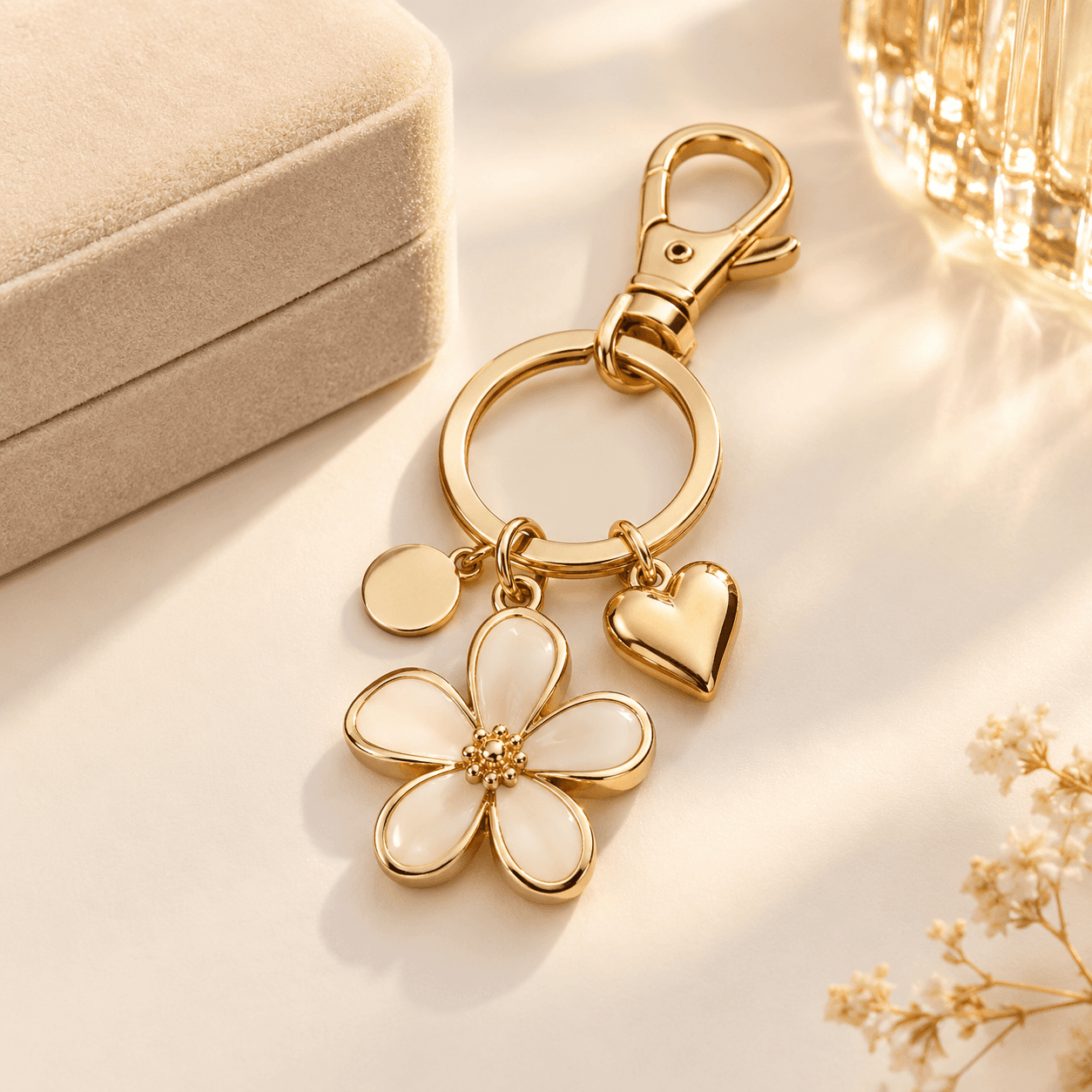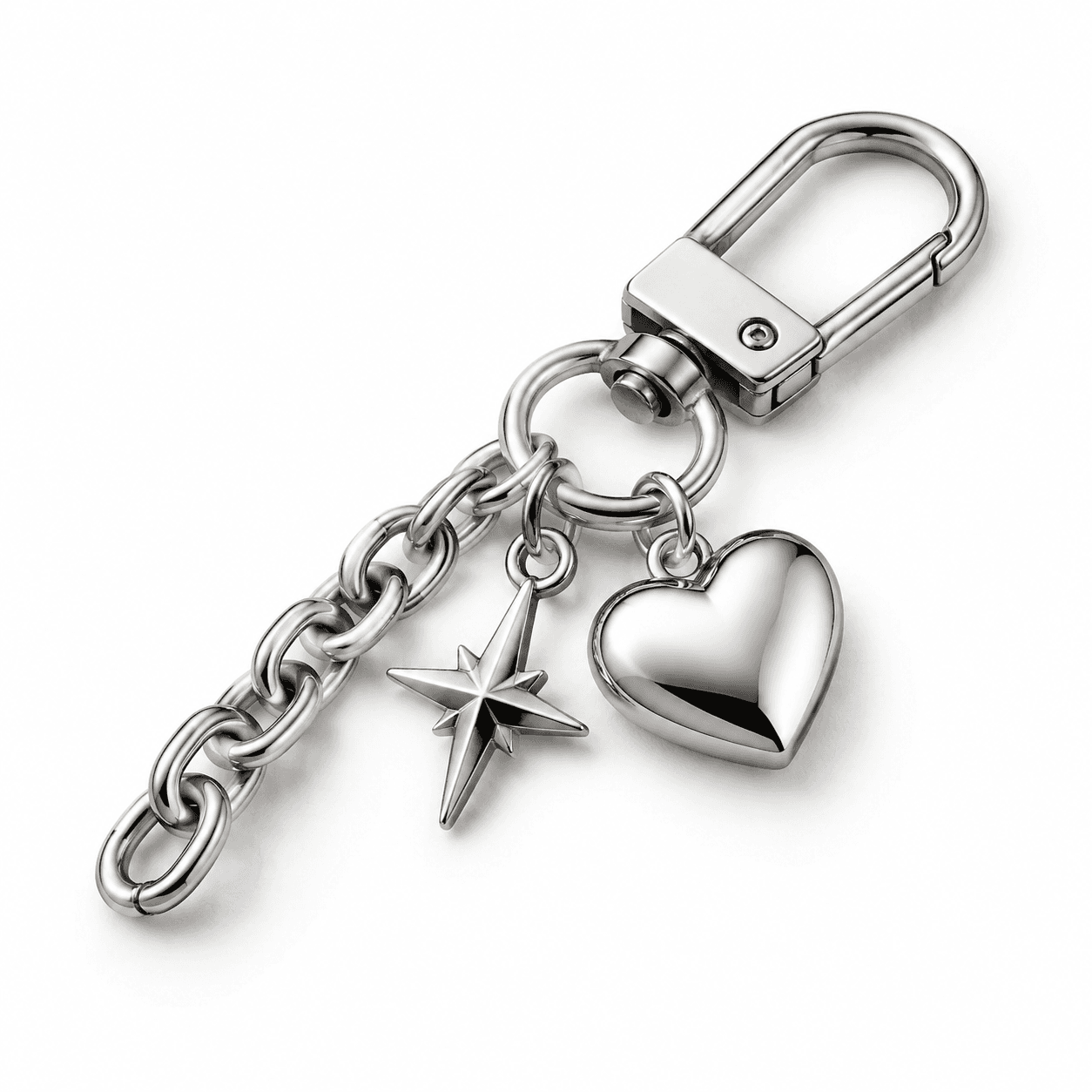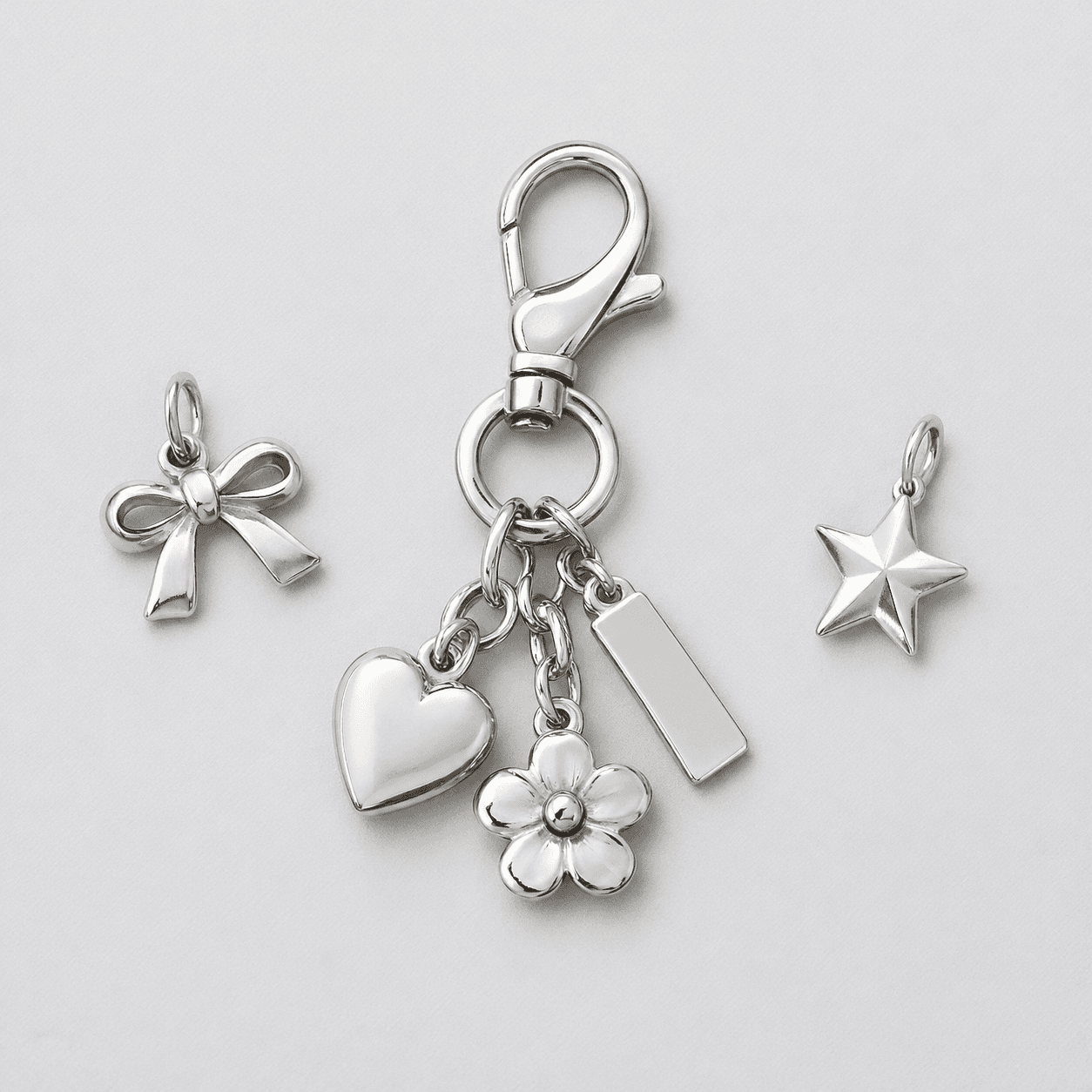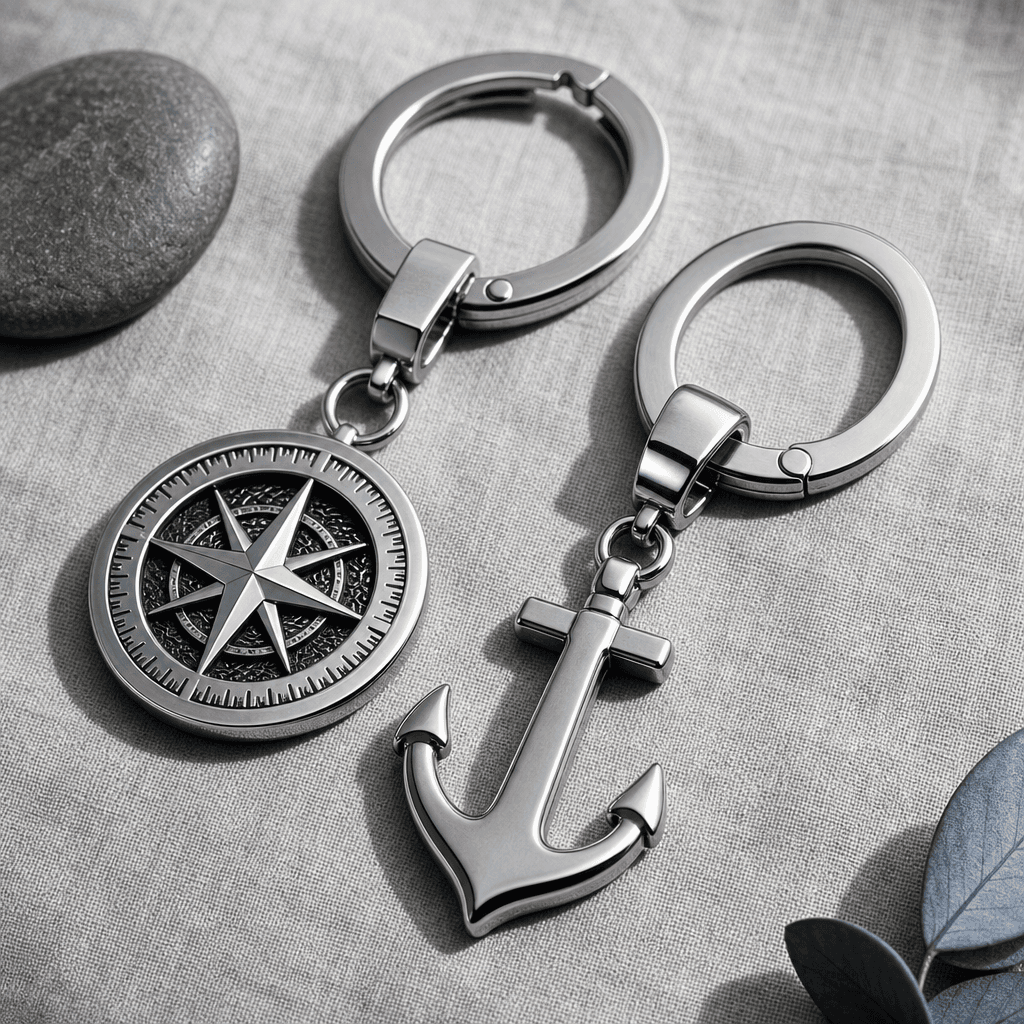
Keychain charms see more wear than most accessories: repeated handling, abrasion from hardware, moisture exposure, and ongoing contact with skin and everyday cleaners. For product teams launching new jewelry charm programs, material science is a practical reliability lever—not a marketing detail. Lancy Jewelry develops 316L stainless steel charms with disciplined factory control so samples translate into consistent, scalable output for boutique and private-label buyers.
The Science Behind Stainless Steel Keychain Charms: 316L
Why 316L is selected for dependable everyday performance
316L stainless steel is an austenitic grade chosen for strong corrosion resistance and stable behavior in demanding, real-world environments. The “L” indicates lower carbon content, which helps improve consistency after thermal steps and reduces performance variability during processing. For keychain charms—often exposed to humidity, sweat, and cleaning routines—this translates to better long-term stability and fewer finish-related surprises during qualification and scaling.
In production, the aim is stable performance across steps such as laser cutting, laser marking, polishing, and coating processes including PVD and decorative work (enamel color filling and crystal inlay where specified). 316L is widely used because its metallurgical stability supports predictable surface outcomes from batch to batch.
Surface passivation: the protective film that matters most
Stainless corrosion resistance is closely tied to passivation, a thin chromium-rich oxide film that forms on the surface and repairs itself when conditions allow. Manufacturing steps can temporarily disrupt this protective surface state through polishing, machining, or contamination. That is why pre-plating cleaning, handling discipline, and correct timing before finishing are critical for keychain charm durability.
Even when dimensions are correct, inconsistent after-abrasion results usually point to surface cleanliness and chemistry rather than the charm’s overall geometry.
Coating readiness for PVD plated stainless charm finishes
When a 316L stainless steel base is properly prepared, coating processes such as PVD can deliver uniform appearance and strong adhesion. Pre-treatment quality—controlled polishing, residue removal, and surface activation—helps reduce variability around high-stress regions like edges, attachment openings, and loop/bail contact zones.
For B2B buyers, this means fewer tolerance surprises and more repeatable outcomes across prototypes, charm bar assortments, and wholesale programs.
Benefits for OEM/ODM production and sourcing teams
What product developers gain from 316L-backed workflows
- Everyday corrosion resistance: Supports improved resistance to pitting and crevice corrosion in humid conditions and frequent moisture contact.
- Stable behavior through processing: Helps maintain predictable performance through common factory steps and thermal events where applicable.
- Finishing compatibility: Helps support consistent PVD gold plated stainless charm finishes, silver finish, rose gold plating looks, plus decorative options like enamel and crystal inlay when specified.
- Qualification-friendly QC approach: Production planning aligns with buyer testing expectations to reduce ramp-up risk.
- Scalable transition from sample to bulk orders: Repeatable surface prep and post-finish inspection improve consistency for bulk charm orders and private label charms.
Where science becomes practical cost control
Material behavior and surface preparation influence yield. If edge areas show uneven coating coverage or if color work varies across runs, the outcome often drives rework, sorting time, and longer lead times. Designing prototypes around 316L stainless steel as the base reduces uncertainty in downstream production and makes quality gates easier to manage.
Guide: from 316L chemistry to finished stainless steel keychain charms
1) Define design requirements with manufacturability in mind
Keychain charms typically experience:
- Edge abrasion: At the perimeter and near the attachment opening.
- Contact pressure: At loop/bail interfaces and hardware contact points.
- Moisture ingress risk: Around attachment zones and any recesses where residue can collect.
Mapping these zones early helps the charm factory tune polishing and surface prep so PVD plated stainless charm results stay consistent.
2) Validate the material during sample development
For custom stainless steel charms, sample development should confirm both performance and surface outcomes:
- Surface integrity after processing: Confirm passivation remains stable after machining and finishing steps.
- Surface finish suitability: Ensure polishing produces a consistent base for coating coverage.
- Thermal step confirmation (when applicable): Verify outcomes using controlled samples before scaling to bulk charm orders.
For B2B buyers, documented testing outcomes support qualification conversations and reduce time spent identifying root causes.
3) Laser and cutting considerations for consistent edges
Dimensional accuracy and edge quality start the coating story. With properly tuned processing, 316L supports clean feature definition and stable surfaces for finishing. Priority areas include:
- Clean feature definition: Smooth edges for predictable visual appearance.
- Dimensional control around openings: Attachment holes/loops should remain true so charm hardware performs reliably.
- Repeatable tolerances across production lots: Essential for charm bar accessories, private label programs, and coordinated series planning.
4) Logo engraving and surface planning
Logo engraving can be used for branded charm identity and decorative details. Engraving settings should align with your final finish plan because marked regions may respond differently during polishing and coating. Prototype checks should confirm:
- Visual uniformity: No unexpected contrast shifts after PVD deposition.
- Cleanliness and adhesion readiness: No residue that could reduce coating adhesion.
- Wear durability: Marked regions should not degrade faster than the surrounding metal.
5) Polishing and pre-treatment: where adhesion is won
For PVD plated stainless charm finishes, the main differentiator is surface science. Pre-treatment should remove contaminants and standardize surface condition to improve:
- Coating uniformity: Across different surface contours.
- Edge coverage: Including loop/bail contact and perimeter edges.
- Long-term wear: In high-friction contact points.
Lancy Jewelry supports a consistent pathway from CNC and laser cutting to polishing and finishing checks so your sample program can scale with fewer surprises.
6) PVD finishing and decorative options on 316L
Combining 316L stainless steel charms with PVD finishing and decoration (enamel color filling or crystal inlay where specified) depends on process coordination:
- Coating thickness consistency: Supports stable tone control for gold plated, silver finish, and rose gold plating variants.
- Decoration integration control: Ensures clean visual alignment and durable retention on the stainless base.
- Thermal process alignment: Decoration steps must not compromise passivation readiness.
For OEM charms manufacturer and ODM charm supplier engagements, this is where structured series planning and fast sample development can reduce iteration cycles and shorten lead time to qualified bulk charm orders.
7) Quality gates for confidence in global production
A buyer-ready QC plan should cover appearance and durability. Production supports qualification processes using testing outcomes aligned to buyer expectations, including:
- RoHS
- REACH
- Nickel Release EN1811
- Salt Spray 240H
These checkpoints help sourcing managers move from prototype approval to bulk charm orders with less uncertainty.
FAQ: Stainless Steel Keychain Charms and 316L
1) What makes 316L a strong choice for keychain charm durability?
316L stainless steel supports corrosion resistance and more consistent behavior after processing. For keychain charms exposed to moisture and abrasion, controlled finishing helps maintain passivation stability and consistent appearance.
2) How does PVD finishing relate to a 316L stainless steel base?
PVD performance depends on surface readiness. With correct polishing and cleaning, a 316L stainless steel base supports stable adhesion and more uniform coating coverage, including around high-wear attachment zones.
3) Why can prototypes fail even when measurements look correct?
Prototype issues often come from surface preparation, contamination, polishing micro-surface differences, or processing effects rather than from dimensions alone. Durability checks help pinpoint whether the problem is adhesion, coating coverage, or corrosion behavior.
4) Do you support low MOQ charm production and private label programs?
Yes. Lancy Jewelry supports OEM/ODM development, sample development, low MOQ charm production, and private-label packaging to help buyers prepare boutique-ready series planning and predictable bulk charm orders.
Partner With Lancy Jewelry
If your team is sourcing a stainless steel charms manufacturer for dependable finishes, Lancy Jewelry can support OEM and ODM development for custom stainless steel charms built on 316L stainless steel. Share your requirements for PVD plated stainless charm finishes, enamel stainless steel charms, or crystal inlay detailing, and we’ll align sample development timelines with your private label charms plan. Contact us to start your RFQ and prototype workflow.