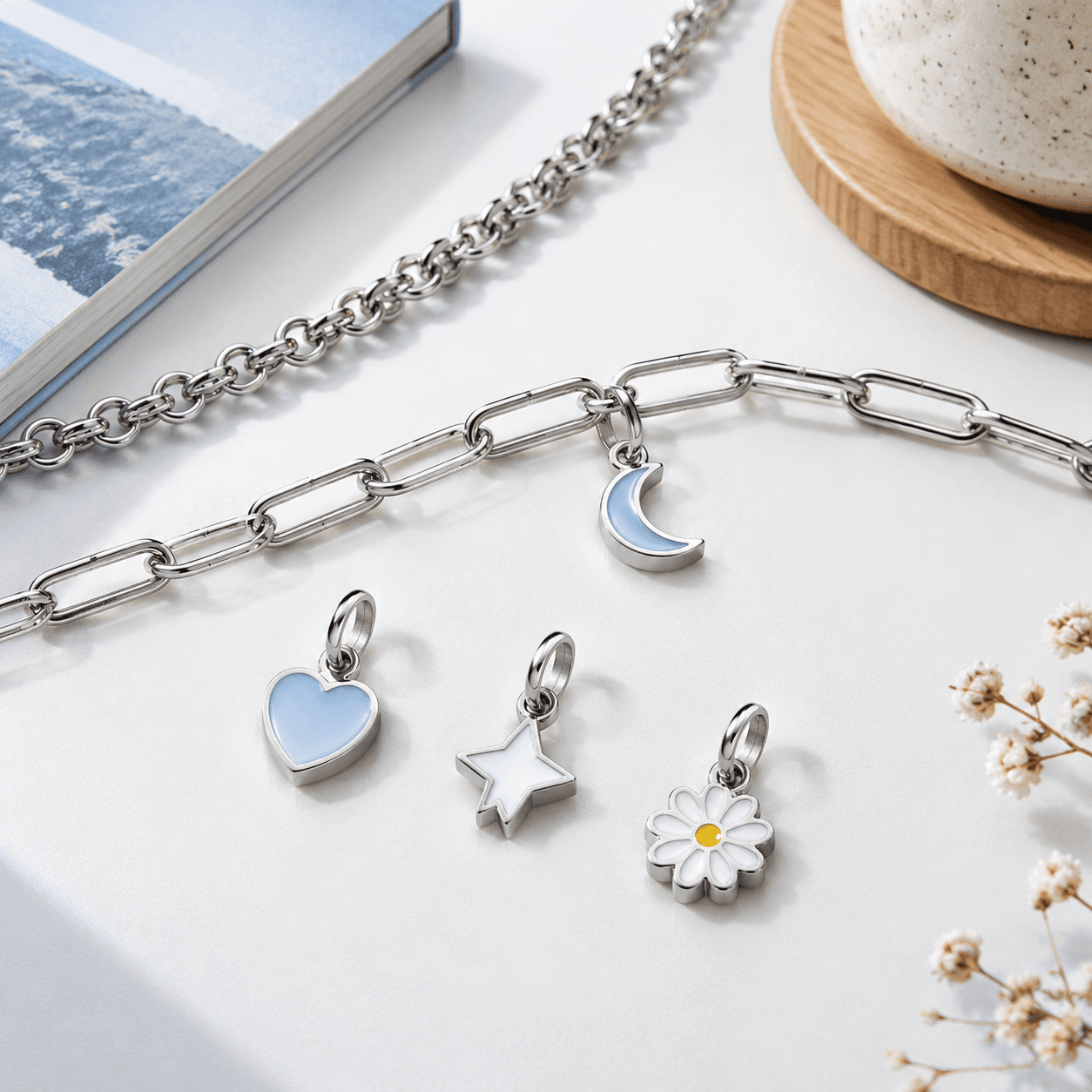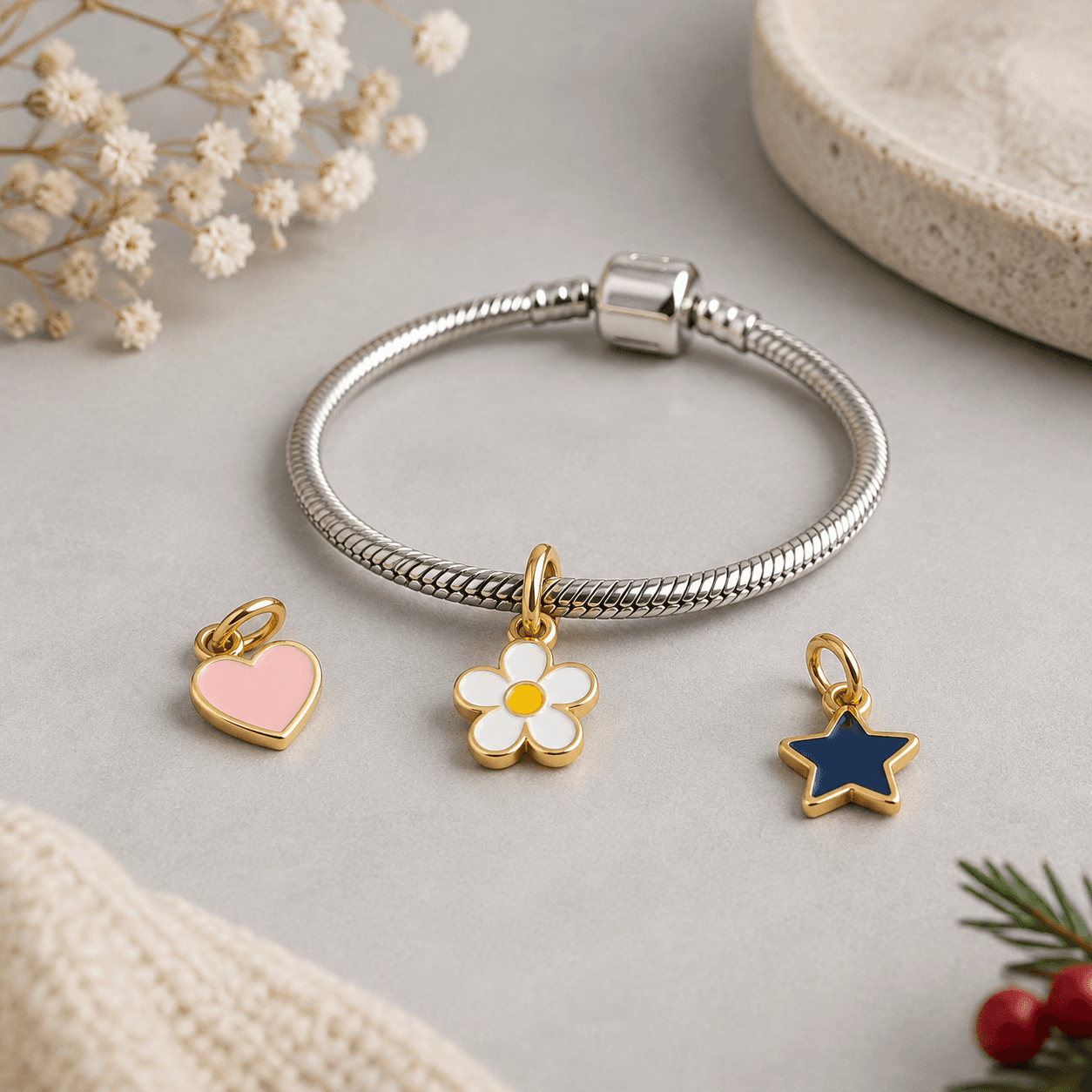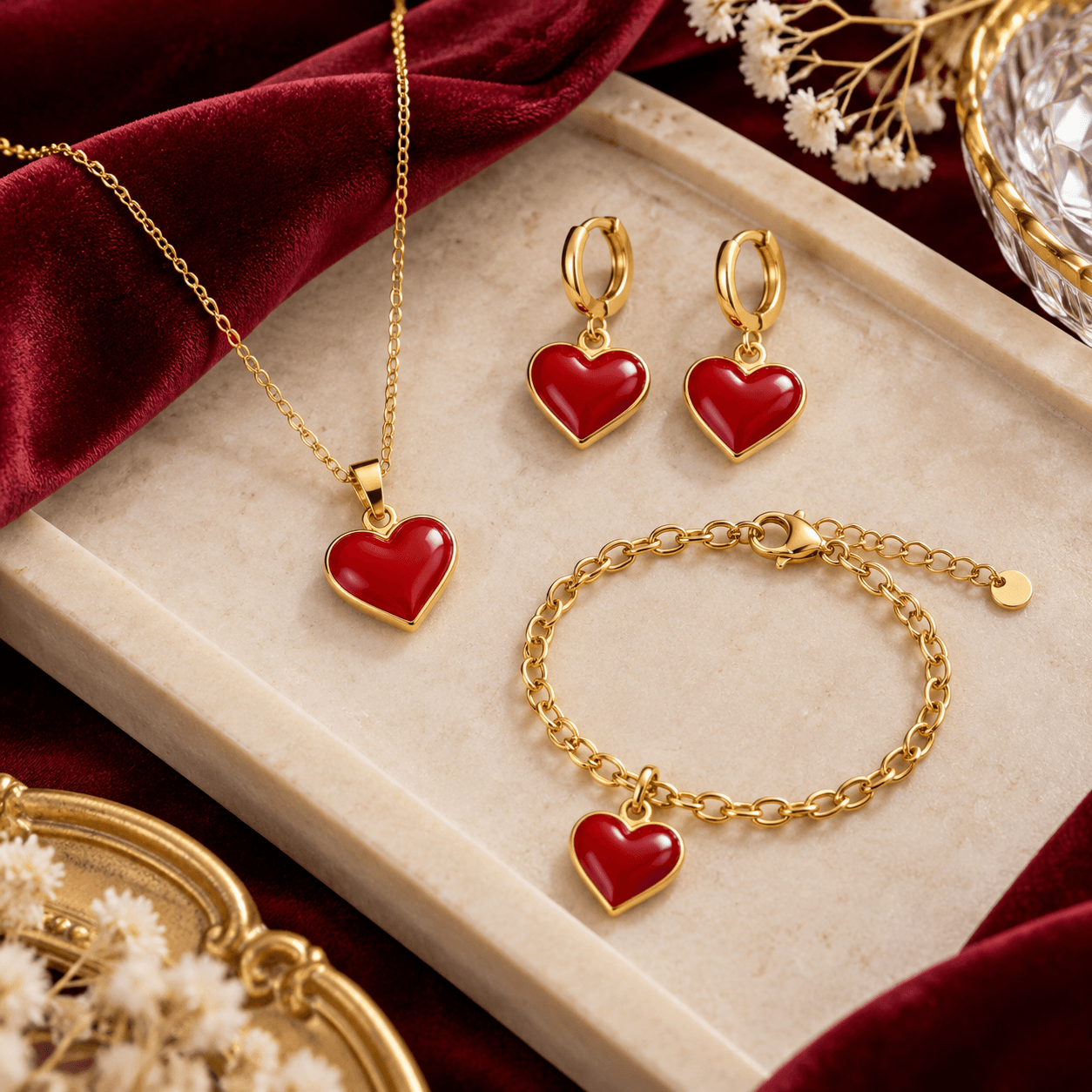
Wholesale enamel heart charms can look consistent during sampling yet reveal significant quality differences after production, distribution, and repeated consumer use. For procurement teams serving the US and Canadian markets, supplier qualification must go beyond visual inspection. Buyers need traceable material documentation, controlled enamel application, validated finish durability, repeatable dimensional specifications, and written procedures for handling nonconforming products. This checklist provides a structured framework for evaluating suppliers before approving samples or releasing bulk purchase orders. It also identifies the evidence purchasing managers should request, the tests worth reviewing, and the contractual safeguards that help protect product quality across repeat orders.
Stainless Steel Enamel Heart Charms Wholesale: Quality Checklist
When evaluating stainless steel enamel heart charms wholesale, treat the finished charm as a controlled manufactured component rather than a decorative item judged only by appearance. The assessment should cover five areas: base material identity, enamel integrity, surface finish, mechanical construction, and production consistency. A qualified stainless steel charms manufacturer should be able to explain how each requirement is specified, tested, documented, and monitored.
1. Verify the base material and product specification
- Confirm in writing that the base material is 316L stainless steel and that the specification applies to the actual production parts.
- Request material certificates or supplier declarations that identify the grade, heat or batch reference where applicable, and issuing organization.
- Check whether the documentation can be traced to incoming material records and the finished production lot.
- Record the charm's overall dimensions, thickness, weight tolerance, hole or loop geometry, and approved drawing revision.
- Define the acceptable surface condition, edge quality, enamel color, finish, and attachment dimensions in the purchase specification.
Material identification should not depend solely on a supplier's product description or a visual inspection. When risk, order value, or customer requirements justify additional verification, discuss appropriate material identification testing with a qualified laboratory. Confirm the method, sampling plan, limitations, and acceptance criteria before testing. Keep material identity separate from claims about corrosion resistance, skin contact, or coating durability: each addresses a different quality question.
2. Inspect enamel coverage and color consistency
- Approve a physical reference sample showing the exact heart shape, enamel color, finish, and surface texture.
- Inspect for pinholes, bubbles, cracks, exposed recesses, contamination, uneven filling, and visible overflow.
- Establish acceptable color variation using an agreed reference and, where appropriate, instrumental color measurement.
- Define inspection lighting, viewing distance, magnification where necessary, and defect classification.
- Check enamel boundaries at corners and narrow sections, where inconsistent filling may be more apparent.
Color acceptance should be based on a controlled reference rather than a description such as red, pink, or white alone. Where color measurement is suitable, agree on the instrument, measurement geometry, illuminant, observer setting, and acceptable color difference before the production run. Instrument readings support consistency but do not replace an agreed visual assessment of gloss, coverage, and workmanship.
3. Evaluate the complete attachment mechanism
- Confirm that the jump ring, bail, or integral loop is correctly sized and securely formed.
- Check that connecting hardware passes through a genuine hole or loop without obstructing movement.
- Inspect for sharp edges, burrs, incomplete joints, deformation, and loose components.
- Agree on an appropriate mechanical retention or pull-test method for the intended application.
- Confirm that the finished charm maintains its shape and attachment integrity under the agreed test conditions.
Attachment testing should reflect the actual product design and expected use. A result obtained from one connector design cannot automatically validate a different size, joint, or geometry. Record the test setup, applied force or load where relevant, duration, sample count, failure mode, and acceptance criteria. Avoid unsupported claims that a charm is indestructible or suitable for every application.
Why Supplier Qualification Matters
Consistency across bulk and repeat orders
A successful sample proves that a supplier can produce an acceptable specimen; it does not, by itself, establish that every production lot will meet the same requirements. Procurement teams should look for documented process controls covering material receipt, cutting, laser marking, welding where applicable, polishing, enamel filling, finish application, assembly, and final inspection. Each operation should have defined acceptance criteria and a process for identifying and correcting defects.
For wholesale stainless steel charms, consistent specifications reduce the risk of mismatched replenishment stock, inconsistent display presentation, avoidable returns, and disputes between purchasing and quality teams. Require written change control for any modification to material grade, dimensions, enamel formulation, color reference, surface treatment, production location, or subcontracted process. A supplier should not substitute an unapproved specification simply because the alternative appears visually similar.
Compliance documentation for North American buyers
US and Canadian requirements depend on the intended product, marketing claims, consumer population, distribution channel, and applicable jurisdiction. Procurement teams should identify the relevant obligations before approving production and should not assume that one certificate covers every regulatory requirement.
- Request current, relevant test reports for the actual product or a clearly justified representative product.
- Verify the laboratory identity, report number, issue date, sample description, test method, and stated results.
- Confirm that any tested sample matches the intended 316L stainless steel grade, finish, enamel configuration, and manufacturing specification.
- Establish whether reports need renewal following a material, supplier, process, or design change.
- Maintain a controlled compliance file containing approved specifications, reports, declarations, and corrective-action records.
FDA considerations require particular care. The US Food and Drug Administration regulates products and claims within its statutory scope; it is not a general-purpose jewelry certification body. Ordinary decorative jewelry should not be described as FDA approved merely because a supplier provides material or laboratory documentation. If a product has a specialized intended use that could bring it within FDA jurisdiction, obtain product-specific regulatory advice. For general jewelry sourcing, assess the applicable consumer product, chemical restriction, labeling, and state-level requirements separately.
For Canadian distribution, buyers should likewise confirm applicable federal and provincial requirements, including relevant restrictions on hazardous substances and consumer product obligations. Requirements can differ by product category and intended user. Obtain qualified compliance advice where the product specification or target population creates additional risk.
Certifications and test evidence: what to check
Lancy Jewelry reports SGS-related testing covering RoHS, REACH, Nickel Release EN1811, and salt spray testing to 240 hours. These records can support a supplier assessment, but procurement teams should inspect the underlying documents rather than treating a list of standards as a blanket guarantee.
- RoHS: Verify the exact scope, analytes, applicable limits, sample identification, and relevance to the product and destination market.
- REACH: Confirm which substances or restrictions were assessed, the applicable legal provisions, and whether the evidence addresses the current product configuration.
- Nickel Release EN1811: Check the test method edition, reported results, sample finish, and applicability to the intended skin-contact use.
- Salt spray, 240 hours: Review the test method, specimen preparation, exposure conditions, evaluation criteria, and observed degradation.
These forms of evidence are not interchangeable. Chemical screening does not establish enamel adhesion, and a salt spray result does not establish nickel release performance. A report also does not automatically prove compliance for every variation in color, finish, geometry, or manufacturing process. Verify that each report is authentic, current enough for the applicable requirement, and relevant to the parts being purchased.
Detailed Supplier Evaluation and Durability Guide
4. Build a documented wear-resistance testing plan
Durability should be evaluated against the risks of the intended use. A charm used frequently in a charm bar program may experience repeated handling, friction, incidental impacts, and exposure to perspiration or cosmetic products. A gift accessory may face different packaging, storage, and transport conditions. The buyer and supplier should agree on tests that reproduce the meaningful risks without claiming that accelerated laboratory exposure predicts an exact number of years in service.
Enamel adhesion and surface integrity
- Select an adhesion or coating-integrity method appropriate to the enamel system and charm geometry.
- Define the inspection method for cracking, chipping, lifting, flaking, and exposed substrate.
- Establish acceptance criteria before testing and photograph the specimen before and after exposure.
- Document the test method, conditioning, sample count, deviations, and failure location.
Do not apply a generic cross-cut or tape test automatically to every curved or recessed charm. Small features and irregular surfaces can make standard procedures unsuitable. Have the laboratory or quality engineer select a technically appropriate method and document any adaptation. A pass should mean that the specimen met the agreed criteria, not that enamel can never be damaged under other conditions.
Abrasion and repeated handling
- Define a repeatable abrasion or rubbing procedure representative of expected handling.
- Inspect color change, gloss loss, exposed base material, scratches, and enamel edge damage.
- Set a minimum performance threshold and a documented failure classification.
- Compare results with the approved reference sample and retain the test record.
For PVD or other decorative finishes used on a product variant, assess the complete finish system separately. Abrasion performance may vary with surface preparation, geometry, process conditions, and the interaction between the finish and enamel. A test on an uncoated sample should not be used to substantiate the durability of a finished variant.
Corrosion and environmental exposure
- Review the available 240-hour salt spray report and confirm the test method and specimen configuration.
- Define visible corrosion, staining, discoloration, and finish damage acceptance criteria.
- Consider additional exposure testing where the intended application or buyer specification warrants it.
- Document storage, handling, and packaging conditions that may influence surface condition.
Salt spray testing is a controlled comparative or specification-based assessment. It does not translate directly into a guaranteed service life, and passing a 240-hour test does not mean a charm will remain unchanged in every environment. Request the full report and interpret the result in the context of the finish, specimen preparation, and agreed acceptance criteria.
5. Audit the manufacturer's quality system
Supplier audits should examine how the factory prevents defects, not merely how it sorts them at final inspection. For OEM and ODM programs, the following controls are particularly important.
- Incoming inspection: Confirm documented checks for material identity, dimensions, supplier lot, and incoming condition.
- Process controls: Review work instructions, equipment settings, operator training, and inspection checkpoints for cutting, marking, welding where applicable, polishing, and enamel filling.
- Calibration and maintenance: Verify that critical measurement tools and relevant test equipment are maintained and suitable for use.
- Traceability: Check whether production records connect finished goods to material lots, process batches, inspection results, and shipment records.
- Nonconformance management: Request evidence of root-cause analysis, corrective action, effectiveness checks, and segregation of rejected stock.
- Change management: Confirm that the buyer is notified of changes requiring approval before implementation.
- Final inspection: Review the sampling plan, defect classifications, inspection reports, and release authorization.
During an audit, select a completed order and trace it backward from finished goods to the approved drawing, material records, process records, and test results. Then select an incoming material lot and trace it forward to the finished products that used it. This two-way exercise reveals whether traceability is operational or merely stated in a procedure. Where confidentiality prevents disclosure of another customer's records, the supplier should be able to demonstrate the process using appropriately anonymized evidence.
6. Qualify samples before bulk production
Sample development should be treated as a formal approval gate. Before paying for or authorizing production samples, provide the supplier with a clear brief that specifies the heart silhouette, dimensions, thickness, attachment geometry, enamel colors, surface finish, logo requirements where applicable, packaging, and intended use.
- Approve a dated drawing and a physical reference sample.
- Record all requested revisions and identify the final approved version.
- Test the production-representative sample using the agreed quality plan.
- Confirm that the bulk production process and materials will match the approved sample.
- Establish written rules for approving deviations and reworking or rejecting failed samples.
For low MOQ programs, retain the same specification discipline used for larger orders. Smaller quantities do not eliminate variation in polishing, enamel coverage, or finishing. The sampling plan can be proportionate to risk and order size, but acceptance criteria must remain clear. If the factory changes a critical process after sample approval, determine whether a revised sample or additional verification is necessary.
7. Define measurable acceptance criteria in the purchase order
A purchase order should convert broad quality expectations into verifiable requirements. Avoid vague terms such as premium quality, flawless finish, or long-lasting color unless they are supported by defined inspection criteria.
- Identify the material grade, drawing revision, finish, enamel color references, and packaging specification.
- Define critical, major, and minor defect categories, with examples relevant to the product.
- State the agreed inspection sampling method and acceptance limits for each defect class.
- Specify the required laboratory reports, certificates, and shipment documentation.
- Establish the process for independent inspection, shipment hold, rejection, corrective action, and replacement or credit.
- Document the warranty scope, exclusions, claim period, evidence requirements, and remedy for confirmed manufacturing defects.
Sampling plans should be selected according to lot size, defect severity, process history, and customer risk. An acceptance sampling plan does not guarantee that every item in a lot is defect-free. Critical safety or compliance concerns may require separate controls rather than reliance on ordinary visual sampling. Agree on inspection procedures and remedies before shipment, when corrective action is still practical.
8. Assess supplier communication and commercial readiness
A reliable ODM charm supplier should communicate clearly about feasibility, lead times, technical limitations, documentation, and revision control. Procurement teams should assess how the supplier handles difficult questions, not just how quickly a quotation arrives.
- Request an itemized quotation covering tooling or setup charges where applicable, sample costs, unit pricing, packaging, and shipping assumptions.
- Confirm MOQ by design, color, finish, and packaging configuration.
- Obtain a realistic sample schedule and production lead-time estimate.
- Ask how color references, approved artwork, technical drawings, and revision histories are controlled.
- Agree on response times for quality incidents and a named escalation contact.
- Review the supplier's capacity for repeat orders and documented process continuity.
Price should be evaluated alongside quality risk, defect handling, documentation readiness, and repeatability. A lower initial quotation may not provide the best total purchasing outcome if specifications are incomplete or claims are difficult to resolve. Compare suppliers against the same technical brief and commercial assumptions to avoid misleading price comparisons.
North American Market Considerations
Support retail presentation and buyer expectations
US and Canadian boutique buyers often need compact, coordinated product ranges that are straightforward to merchandise, replenish, and package for gifting. Heart charms may be developed in several enamel colors or surface finishes, but each variation creates additional control requirements. Procurement teams should identify whether each color or finish requires separate sample approval, testing, labeling review, or documentation.
For private-label charms, packaging and product identification should be specified early. Confirm the approved logo artwork, placement, packaging material, label content, barcode requirements where applicable, and the party responsible for reviewing market-specific claims. Do not assume that a decorative product automatically meets every requirement simply because it includes a supplier test report. Confirm legal obligations for the actual product and sales channel.
Require credible longevity commitments
Longevity guarantees should be expressed as contractual commitments supported by defined evidence and remedies. Avoid accepting unqualified promises that enamel will never chip or that a finish will never change. Instead, establish the conditions covered by the warranty, the claim period, reasonable exclusions, required documentation, and the process for investigating recurring defects.
For example, a supplier agreement can require investigation of repeated enamel adhesion failures within an agreed warranty period and define the corrective-action response and remedy when a manufacturing defect is confirmed. The contract should also clarify how misuse, abnormal impact, unauthorized modification, and environmental exposure outside the agreed test conditions are assessed. A written warranty complements testing and quality controls; it does not replace them.
Frequently Asked Questions
What documents should buyers request from a wholesale enamel heart charm supplier?
Request the approved product specification, material identification records, relevant laboratory reports, inspection results, traceability records, and written defect-handling procedures. Depending on the product and destination market, request applicable RoHS, REACH, nickel release, or other compliance evidence. Verify the scope and product relevance of each report rather than relying on certificate titles alone.
Does a 240-hour salt spray test guarantee long-term durability?
No. A 240-hour salt spray result describes performance under the stated test conditions and evaluation criteria. It does not establish an exact service life or guarantee unchanged appearance in every environment. Buyers should review the full report and combine it with appropriate finish, abrasion, enamel-integrity, and inspection controls.
How can procurement teams verify enamel quality before placing bulk orders?
Approve a reference sample, define color and surface acceptance criteria, inspect for coverage defects, and arrange suitable adhesion or integrity testing. Require production-representative samples and documented change control. Confirm that the factory will use the approved materials, process, and specifications for the bulk order.
What should a private-label buyer include in a quality agreement?
Specify material grade, drawings, finish, enamel colors, defect classifications, sampling rules, required documents, change approval, traceability, warranty terms, and remedies for confirmed nonconformities. Include procedures for inspection, shipment holds, corrective action, and replacement or credit so responsibilities are clear before production begins.
Partner With Lancy Jewelry
Lancy Jewelry supports boutique brands, charm bar retailers, gift companies, distributors, and private-label buyers seeking dependable 316L stainless steel charms manufacturing. Our OEM/ODM capabilities include product development, laser marking, polishing, enamel color filling, PVD plating, crystal setting, and private-label packaging. Our modern facility uses CNC processing, laser cutting, laser marking, welding, and polishing to support controlled product development and production requirements.
For sourcing teams, the objective is straightforward: establish the specification, validate the sample, confirm the evidence, and document the acceptance criteria before releasing the purchase order. Our reported SGS-related testing includes RoHS, REACH, Nickel Release EN1811, and 240-hour salt spray testing; relevant reports should be reviewed for the exact product and application.
Explore our product catalog to review available product categories, learn more about our OEM and ODM services, or submit your requirements through our RFQ and quote request page. Include target quantities, design drawings or references, preferred enamel colors, finish requirements, packaging needs, destination market, and required compliance documents. Our team can assess feasibility, clarify MOQ, and discuss sample development before bulk production.
Use this checklist as a supplier qualification record and revisit it whenever a design, material specification, finish, or production process changes. A documented sourcing decision helps procurement teams reduce preventable quality disputes, protect retail consistency, and build a more reliable long-term supply program.