For UK retail store owners, wholesale enamel charms must do more than attract attention in a display. They need consistent colour, dependable construction, documented quality controls and enough durability to support repeat purchases without creating excessive returns. A low unit price is valuable only when the finished product meets customer expectations and leaves sufficient room for retail margin.
This buyer guide compares the quality factors that matter when sourcing enamel stainless steel charms, explains how to assess wear resistance, and outlines the commercial considerations of purchasing from an overseas manufacturer after Brexit. The objective is straightforward: help retailers select products that perform reliably, sell through efficiently and support a profitable, repeatable assortment.
Stainless Steel Wholesale Enamel Charms UK: What Buyers Should Compare
When evaluating stainless steel wholesale enamel charms for the UK market, assess the complete product rather than relying on photographs or a quoted unit price. Base material, enamel application, surface finishing, attachment design, testing records and order terms all influence the final buying decision.
Comparison of Key Quality Factors
| Evaluation factor | What a strong supplier should demonstrate | Retail impact |
|---|---|---|
| Base material | Clearly specified 316L stainless steel with traceable product documentation | Supports consistent product positioning and buyer confidence |
| Enamel finish | Even colour coverage, clean boundaries and no visible gaps or contamination | Improves shelf appeal and perceived value |
| Surface finishing | Smooth edges, consistent polishing and no obvious burrs | Reduces handling complaints and presentation defects |
| Plating quality | Documented process controls and suitable wear-resistance testing for the specified finish | Helps protect appearance and manage returns |
| Attachment mechanism | A correctly formed, closed and securely connected bail or jump ring | Reduces the risk of detachment during ordinary use |
| Compliance evidence | Relevant reports, clear product identification and agreed testing scope | Supports responsible sourcing and product documentation |
| Commercial consistency | Approved reference samples, defined specifications and batch inspection | Helps maintain repeat-order quality |
For most boutique retailers, the best purchasing decision balances appearance, construction, compliance evidence and total landed cost. No single certificate or inspection can replace a complete assessment of the finished product.
Compare Product Quality Before Comparing Quotes
Ask shortlisted suppliers to quote against the same specification. Define charm dimensions, thickness, enamel colours, finish, attachment details, logo requirements, packaging and order quantity. Without these details, apparently comparable quotations may cover different products or quality-control requirements.
A qualified stainless steel charms manufacturer should be able to explain how these specifications are translated into production controls and how approved samples are used to maintain consistency.
Benefits of Choosing Quality-Controlled Enamel Charms
1. Better Display Appeal and Customer Confidence
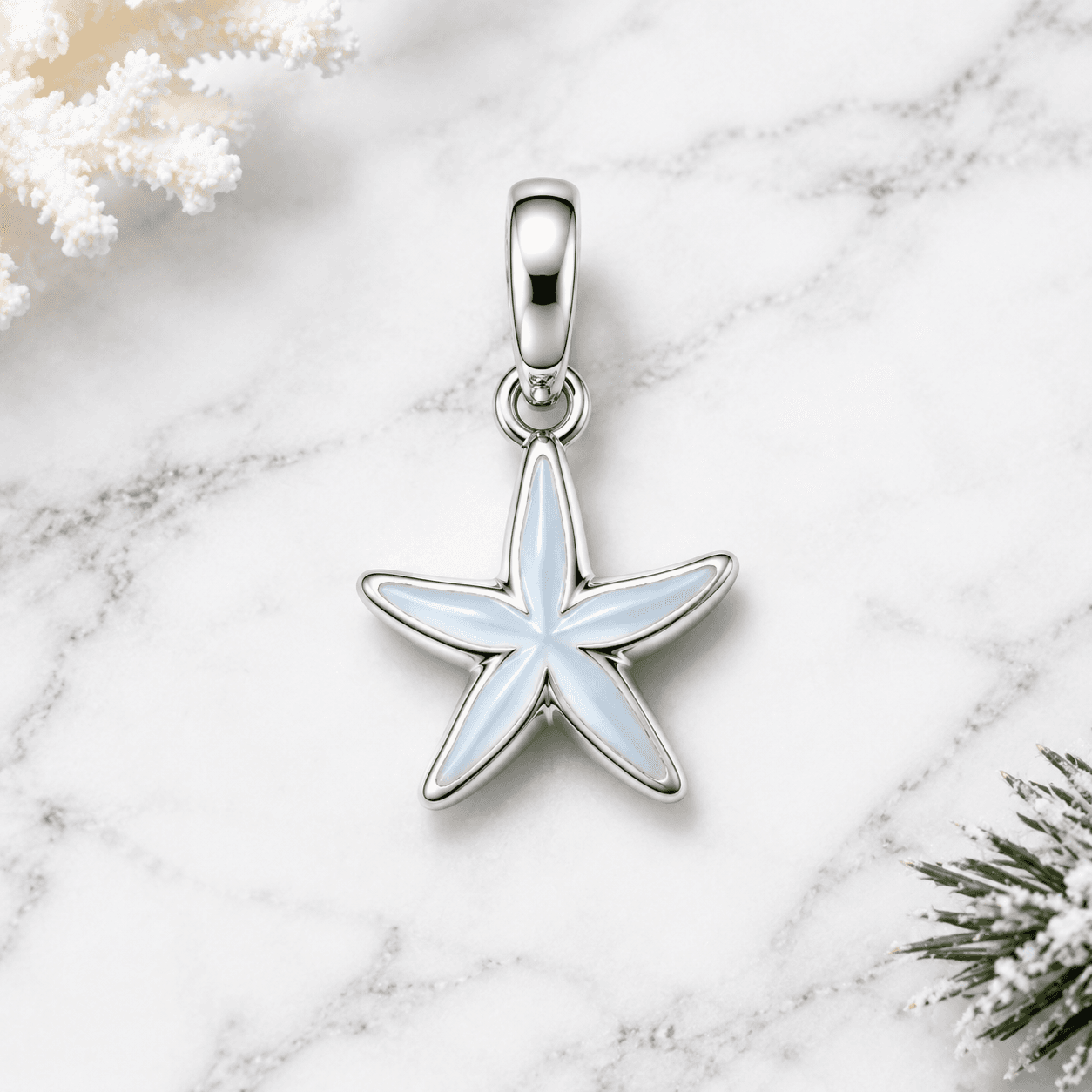
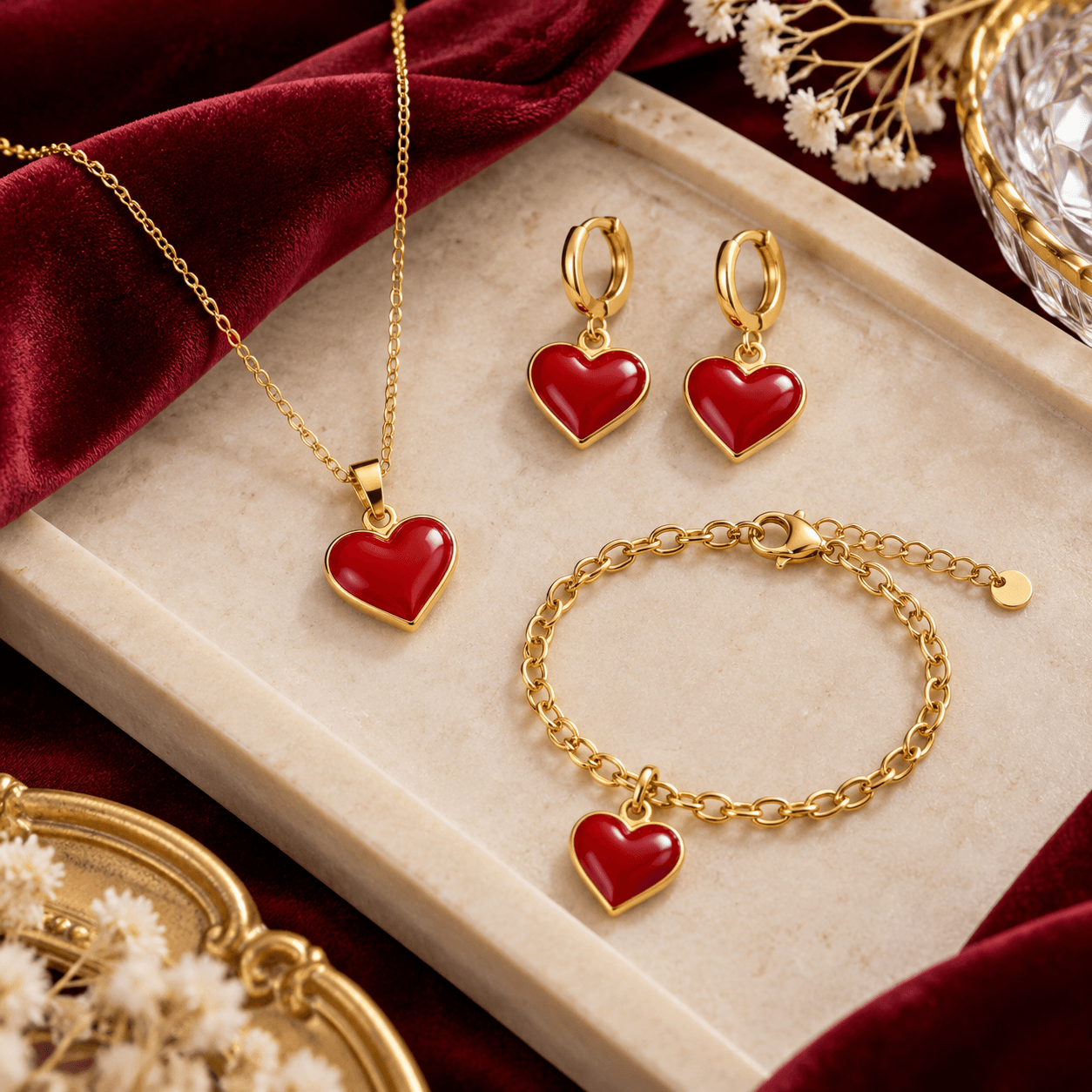
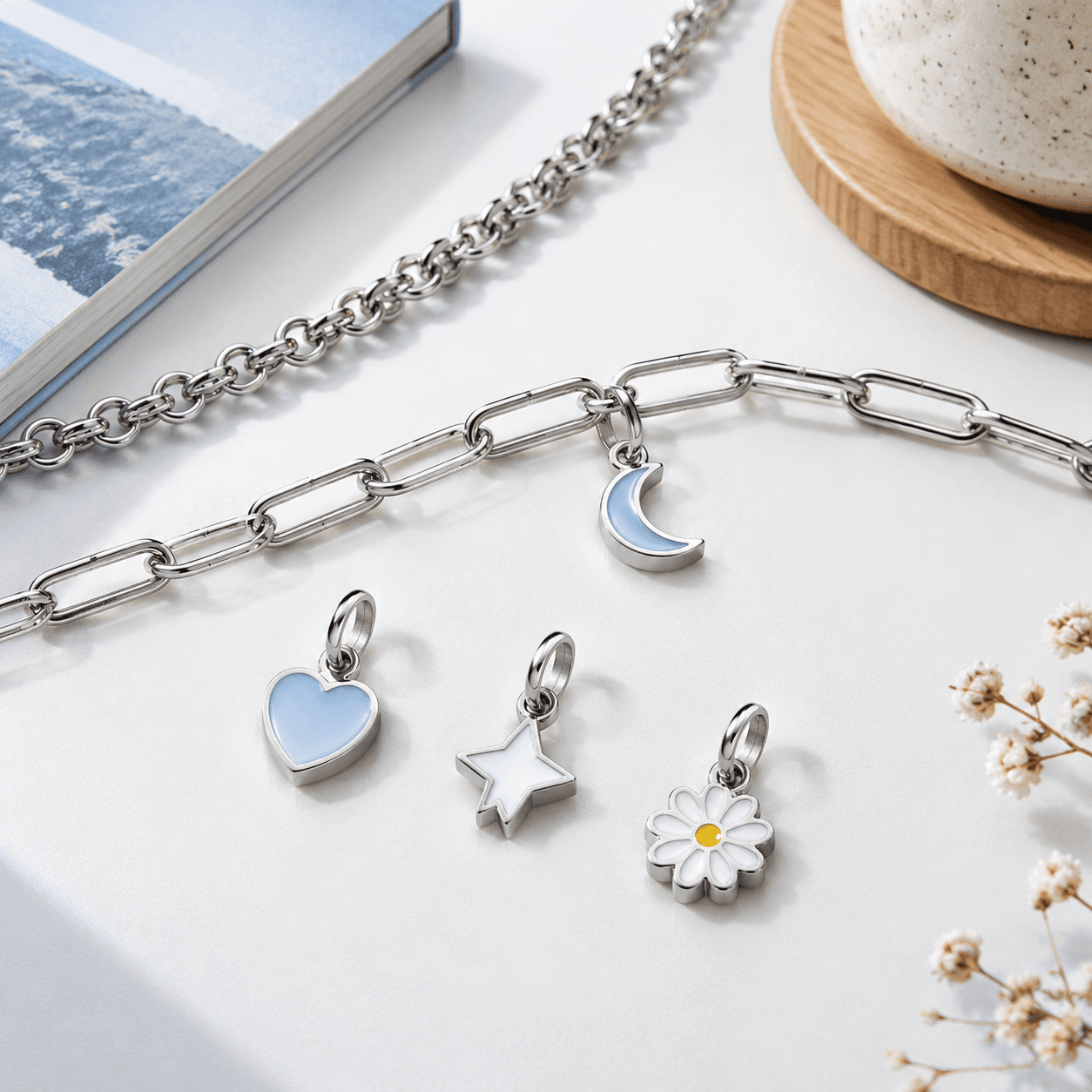
Enamel provides a practical way to introduce colour into a charm assortment. Coordinated shades, recognisable motifs and clean finishing make it easier to create organised displays for gift shopping, seasonal promotions and charm bar experiences.
Colour consistency matters when customers compare several designs side by side. Variations in coverage, visible surface defects or uneven borders can make a coordinated collection appear less professional. Retailers should therefore evaluate multiple samples, not just one attractive prototype.
2. More Predictable Wear Resistance
316L stainless steel provides a consistent base for charm production, while the enamel and any decorative surface finish require their own quality checks. Durability depends on the finished construction, processing conditions, design geometry and how the product is used and maintained.
Request evidence that reflects the actual product configuration. A test performed on an uncoated component does not automatically establish the performance of an enamelled, gold plated or rose gold plating finished product. Similarly, one successful sample does not establish the quality of every production batch.
3. Documented Compliance and Responsible Purchasing
Lancy Jewelry reports SGS certification and testing coverage for RoHS, REACH, nickel release under EN 1811 and 240-hour salt spray testing. These are useful starting points when reviewing a potential supplier, but buyers should request the applicable reports and confirm the tested product, finish, standard, test conditions and validity of the documentation.
EN 1811 is relevant to assessing nickel release under specified test conditions. Salt spray testing provides information about corrosion performance under a defined test method; it does not translate directly into a guaranteed number of years of everyday use. RoHS and REACH address different regulatory requirements, so one document should not be treated as proof of compliance with every requirement applicable to a finished consumer product.
For UK sales, establish which legal requirements apply to the particular product and its intended use. Ask the supplier for accurate supporting documents rather than relying on a general claim that all products are certified.
4. Stronger Control Over Returns and Margins
A product with fewer defects can protect profit in several ways: less time spent handling complaints, fewer replacements, fewer refunds and less disruption to stock availability. These benefits depend on actual performance, so monitor return reasons and defect rates after launch rather than assuming a premium-looking sample guarantees success.
Detailed Buying Guide: How to Evaluate Wholesale Enamel Charms
Step 1: Specify the Product Before Requesting a Quote
Prepare a written specification for every design. Include the following details:
- Base material: 316L stainless steel.
- Finished dimensions, thickness and target weight where relevant.
- Enamel colours, coverage areas and acceptable colour variation.
- Surface finish, including PVD gold plating, rose gold plating or silver finish where required.
- Logo engraving, crystal inlay and other approved decorative details.
- Bail or jump ring dimensions, opening requirements and attachment construction.
- Packaging type, barcode requirements and private-label presentation.
- Quantity per design, delivery destination and required delivery window.
Clear specifications reduce ambiguity during sampling and help suppliers calculate realistic production costs. They also provide the reference needed to inspect bulk orders against the approved sample.
Step 2: Inspect Enamel Application and Construction
Examine each sample under consistent lighting. Look for smooth colour boundaries, even coverage, clean recesses and the absence of visible chips, bubbles, pits or contamination. Compare matching colours across multiple units and check that decorative details remain aligned.
Inspect edges and attachment points carefully. A charm should have a complete outer silhouette, a properly formed connection and no obvious sharp burrs. Check that the bail or jump ring passes through the intended hole or loop and closes correctly where applicable. Do not accept an attachment that looks secure in a photograph but cannot be inspected physically.
For larger programmes, agree on an inspection checklist and acceptable defect categories before mass production. Separate critical functional defects from cosmetic deviations, and define how nonconforming units will be handled.
Step 3: Compare Wear-Resistance Evidence
Use a test plan that reflects the finish and intended use. The following comparison helps buyers determine which questions to ask.
| Test or inspection | What it can assess | What it cannot establish alone |
|---|---|---|
| Visual enamel inspection | Coverage, colour uniformity and visible surface defects | Long-term resistance to chipping or impact |
| Adhesion assessment | Whether the specified decorative layer remains attached under the selected method | Performance under every real-world condition |
| Salt spray testing | Corrosion-related performance under defined test conditions | A direct service-life guarantee |
| Nickel release testing | Nickel release under the applicable test conditions | Proof of all product safety requirements |
| Plating wear assessment | Changes to the specified surface finish under an agreed test method | Identical results across different designs or usage patterns |
| Production batch inspection | Conformity to agreed appearance and construction criteria | Elimination of every possible future defect |
Ask for the test method, acceptance criteria, sample identification and results. Where no applicable test report exists, agree on a reasonable pre-production verification plan. A supplier should explain what has actually been tested rather than offering an unsupported durability claim.
Step 4: Evaluate Suppliers Side by Side
| Supplier assessment | Basic purchasing approach | Preferred B2B approach |
|---|---|---|
| Sampling | Approves from photographs | Reviews physical samples and records approved specifications |
| Quality assurance | Relies on a general quality claim | Uses documented checks and agreed acceptance criteria |
| Customisation | Discusses design changes informally | Confirms drawings, colours, tolerances and production feasibility |
| Repeat orders | Assumes later batches will match | Retains reference samples and verifies production consistency |
| Commercial terms | Compares unit prices only | Compares MOQ, tooling, packaging, freight, duties and defect remedies |
| Communication | Receives broad assurances | Gets clear milestones, written specifications and accountable contacts |
For boutique brands and independent retailers, a reliable ODM charm supplier can help develop coordinated designs, while an OEM arrangement may be more appropriate when the buyer already has established drawings or detailed product requirements. Confirm the exact service scope with the supplier because terminology can vary.
Step 5: Assess MOQ, Sample Development and Inventory Turnover
Inventory planning is particularly important for small UK retailers. An attractive design can still become an expensive mistake if the minimum order requires more stock than the store can sell within a reasonable period.
Ask about low MOQ options, sample development charges, setup costs and quantity breaks. Where possible, test a focused assortment before committing to a broad collection. Select complementary motifs and colours that can be displayed together, then review sales data before reordering or expanding the range.
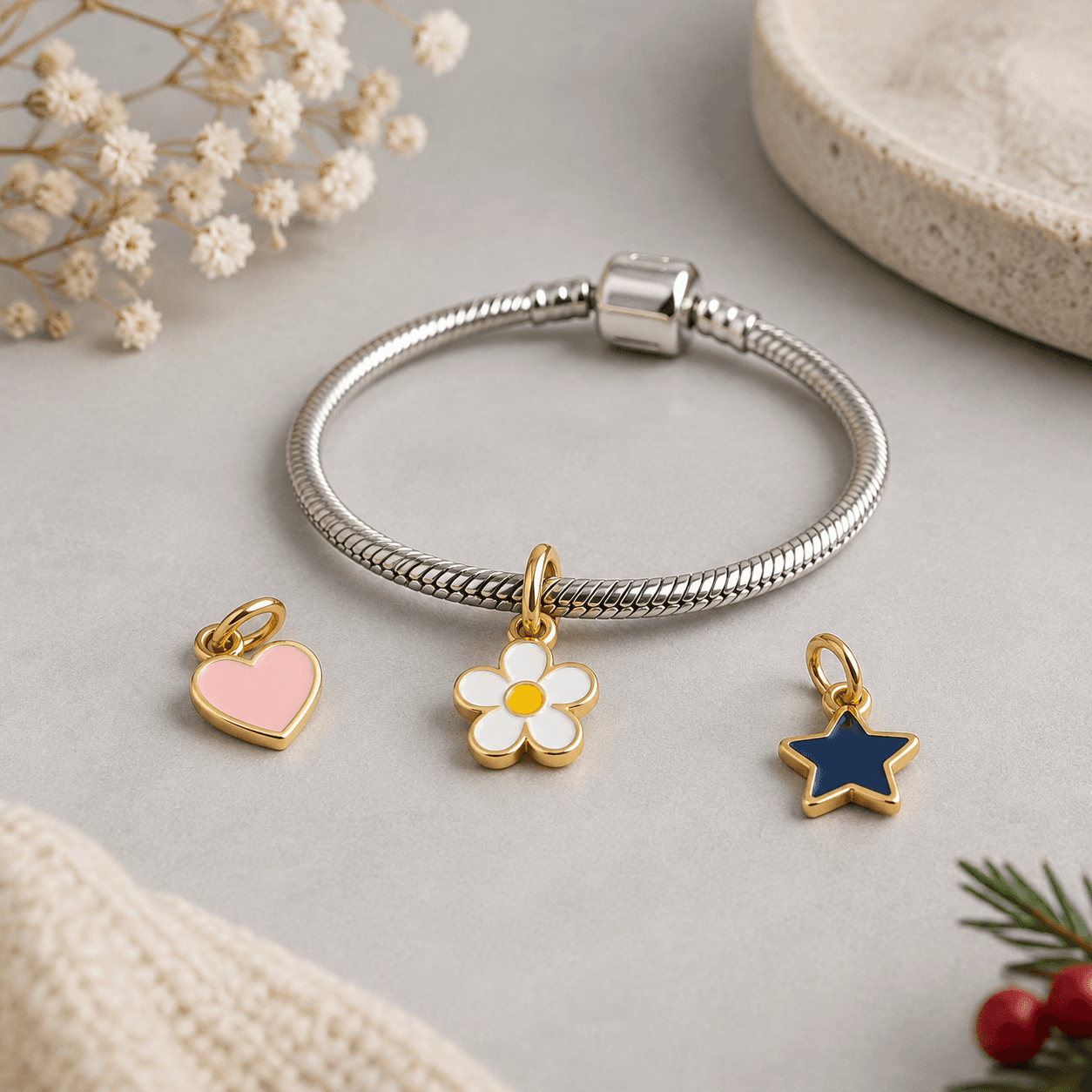
For example, a retailer might trial a compact selection of floral, heart and initial motifs rather than purchasing deep stock in every available colour. The objective is not simply to minimise the opening order; it is to generate useful sales information while limiting slow-moving inventory.
Step 6: Calculate the True Landed Cost for the UK
After Brexit, buying from an overseas supplier requires careful planning for import documentation, customs procedures and applicable taxes. The treatment depends on the origin of the goods, the import route, the product classification and the buyer's circumstances.
Build a landed-cost calculation that includes the following:
- Quoted unit price and total merchandise value.
- Sampling, tooling or custom development charges.
- Packaging, freight and cargo insurance where applicable.
- Customs duty, based on the correct commodity classification and applicable origin rules.
- Import VAT and any relevant cash-flow or recovery implications for the business.
- Customs clearance, handling and domestic delivery charges.
- An allowance for inspection, defects, returns and slow-moving inventory.
Do not assume that a supplier's dispatch country establishes the preferential origin of the goods. Confirm the appropriate commodity code, origin evidence, importer responsibilities and current HMRC requirements before finalising the order. Seek advice from a customs professional where the treatment is uncertain.
Compare suppliers using the same delivery terms and quantity assumptions. A lower factory price may not produce the lower landed cost once freight, duty, handling and quality risks are considered.
Step 7: Confirm Production and Delivery Commitments
Before placing a bulk order, obtain written confirmation of the approved specification, production quantity, inspection arrangements, packaging, dispatch deadline and payment milestones. Ask how the supplier handles shortages, visible defects and products that do not match the approved sample.
Do not rely on a general promise of fast production. Request a schedule covering sample approval, material preparation, production, finishing, quality inspection and shipment. Allow extra time for international transit and customs processing, particularly before seasonal retail peaks.
How to Protect Retail Margins and Improve Sell-Through
Choose an Assortment That Supports Repeat Purchases
A coordinated collection makes merchandising easier and gives customers a clear reason to explore multiple designs. Group charms by colour, theme or gifting occasion, and maintain enough visual consistency for the display to feel intentional without making every item indistinguishable.
Review sell-through by design and colour. Identify fast-moving items, slow sellers and products that frequently generate questions or complaints. Reorder proven designs selectively rather than automatically replenishing every SKU.
Calculate Margin Using Landed Cost
Gross margin should be calculated using the selling price and the full unit cost relevant to the retailer's accounting method. For a simplified illustration, if the selling price excluding applicable sales tax is £8.00 and the landed unit cost is £2.40, the gross profit is £5.60 and the gross margin is 70%.
This illustration excludes operating expenses, payment fees, marketing, markdowns and returns. Use actual figures when setting retail prices, and do not confuse gross margin with markup. A clear cost model helps retailers evaluate whether a supplier's proposed price leaves adequate room for profitable trading.
Use Private-Label Presentation to Strengthen Your Offer
Packaging, clear product descriptions and consistent collection planning help independent retailers create a recognisable store experience. Discuss packaging dimensions, logo placement, barcode needs and replenishment options during sampling rather than after production has started.
Lancy Jewelry supports private label charms, logo engraving, PVD finishing, enamel colour filling, crystal setting and packaging development, subject to design feasibility and confirmed specifications. These capabilities can help buyers build a coordinated assortment without compromising the importance of a documented quality-control process.
Frequently Asked Questions
What should UK buyers look for in wholesale enamel charms?
Prioritise a clearly specified 316L stainless steel base, even enamel coverage, smooth finishing, secure attachment points, relevant test documentation and repeatable quality controls. Compare landed cost and written order terms alongside appearance and unit price.
Does a 240-hour salt spray test guarantee long-term durability?
No. It indicates performance under the particular salt spray method and test conditions used. Actual service life depends on product construction, finish, use and care. Request the relevant report and agree on any additional tests needed for the finished product.
Can Lancy Jewelry support low MOQ and private-label orders?
Lancy Jewelry offers low MOQ support, OEM and ODM development, sample support, logo engraving and private-label packaging. The minimum quantity and development schedule depend on the design, finish, customisation requirements and packaging specification. Confirm the terms for each RFQ.
What should retailers confirm before importing charms into the UK?
Confirm the commodity classification, origin documentation, customs arrangements, applicable duty and VAT treatment, importer responsibilities, delivery terms and supporting product compliance records. Check current HMRC guidance or consult a qualified customs professional where needed.
Partner With Lancy Jewelry for Wholesale Enamel Charms
Choosing the right manufacturing partner means securing more than an appealing sample. Retailers need clear specifications, dependable production controls, transparent commercial terms and a practical route from product development to repeat orders.
Lancy Jewelry is a B2B 316L stainless steel charms manufacturer supporting boutique brands, charm bar retailers, gift companies, distributors and private-label buyers. Its modern manufacturing facility uses CNC machining, laser cutting, laser marking, welding and polishing to support defined product requirements. Available services include OEM and ODM development, enamel colour filling, PVD plating, crystal setting, logo engraving and private-label packaging.
For buyers planning wholesale stainless steel charms or a customised retail collection, begin with a focused brief. Specify your preferred motifs, dimensions, colours, finishes, target quantities, packaging and delivery market. Request sample development and the relevant quality documentation before committing to bulk production.
Explore the Lancy Jewelry product catalogue to review available product directions, visit the OEM and ODM manufacturing service page to discuss custom requirements, or submit an RFQ and quote request with your sourcing specifications.
Make quality measurable, calculate landed costs accurately and approve samples against written standards. A disciplined sourcing process gives your store a stronger foundation for customer confidence, healthier inventory turnover and sustainable margins.