Choosing a wholesale supplier for silver finish enamel charms requires more than reviewing product photographs, unit prices, and sample appearance. Procurement teams need verifiable material specifications, documented production controls, repeatable finishing quality, and evidence that decorative surfaces can withstand the intended conditions of use. A supplier that cannot connect these requirements to measurable acceptance criteria creates avoidable risks, including inconsistent shipments, customer complaints, regulatory delays, and costly rework.
This sourcing checklist explains how to evaluate suppliers of 316L stainless steel charms for North American retail programs. It covers material verification, enamel adhesion, finish durability, compliance documentation, factory audits, sampling, and bulk-order controls. Use it during initial vendor qualification, sample approval, and pre-shipment inspection to establish a consistent, auditable purchasing standard.
Stainless Steel Silver Enamel Charms Wholesale: The Procurement Quality Checklist
1. Verify the base material and product specification
Begin by confirming that the supplier manufactures the charm using the specified 316L stainless steel base material. A general statement that a product is stainless steel is not sufficient for a controlled sourcing program. The purchase specification should identify the material grade, product dimensions, thickness where applicable, construction details, surface finish, enamel colors, and attachment geometry.
- [ ] Obtain a written specification identifying 316L stainless steel as the base material.
- [ ] Request material declarations and supporting test documentation appropriate to the supplied product.
- [ ] Confirm that the approved sample, production drawing, purchase order, and inspection plan use the same specification revision.
- [ ] Record the charm dimensions, critical tolerances, weight where commercially relevant, and acceptable cosmetic variation.
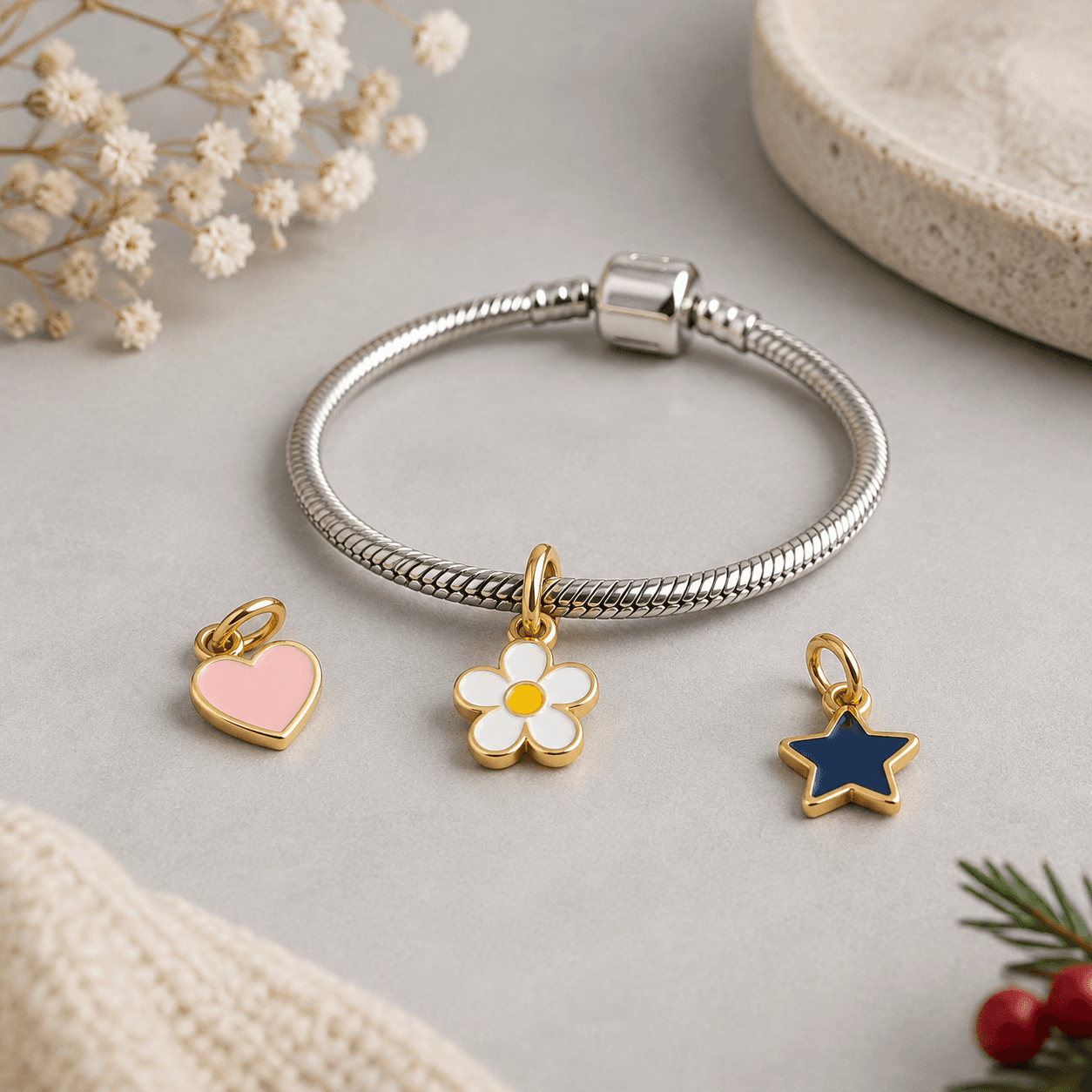
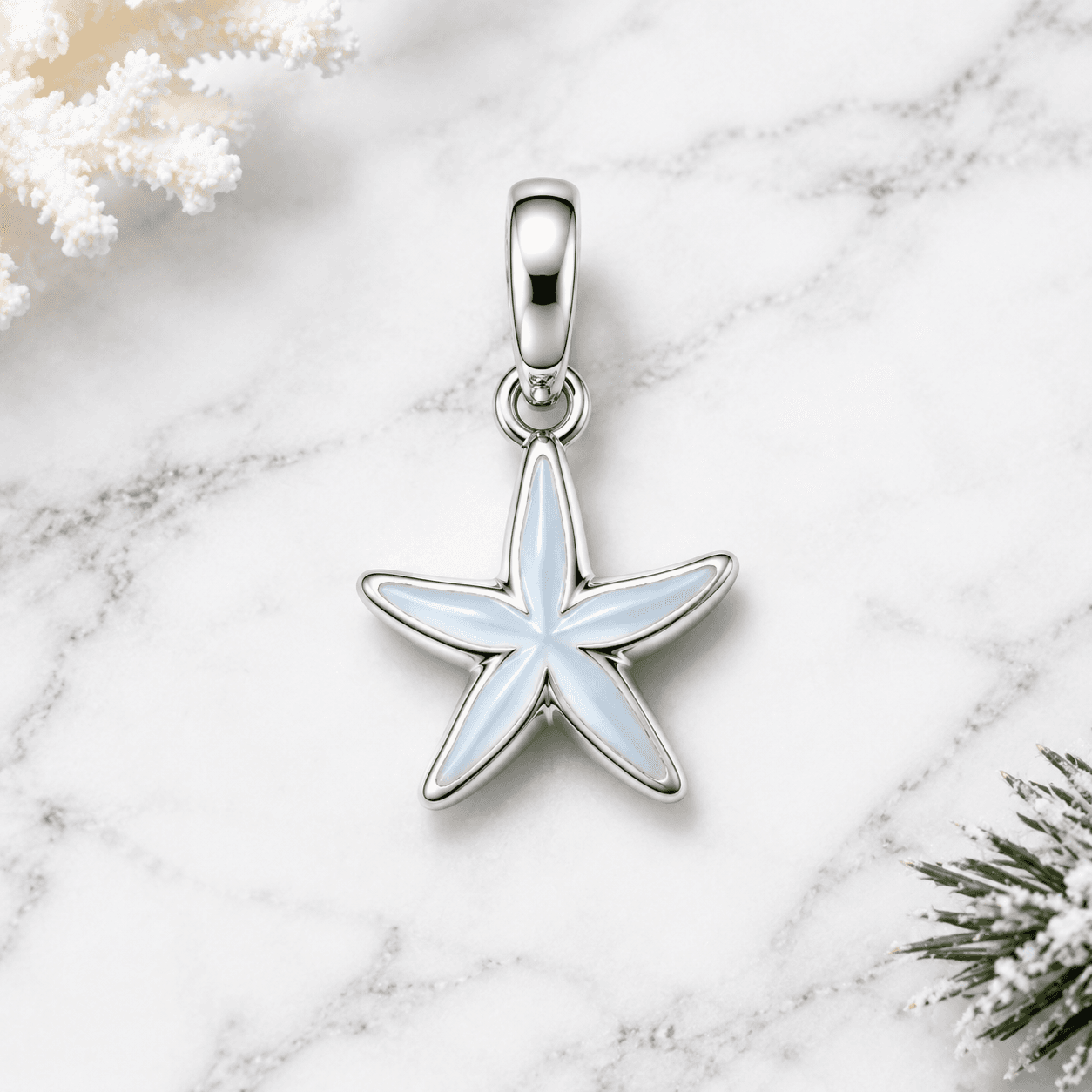
- [ ] Inspect the bail or jump ring opening to verify that the attachment is complete, mechanically plausible, and free from sharp edges or obstructed openings.
- [ ] Confirm that any surface finish and enamel application are defined separately from the base material.
For higher-risk programs, establish a material-verification procedure that identifies when documentary review is sufficient and when independent analytical testing is required. Handheld screening can help identify inconsistencies, but not every instrument can reliably distinguish all stainless steel grades. Select a method appropriate to the material claim and retain the resulting records against the supplier and product code.
2. Define silver finish and enamel acceptance criteria
The term silver finish describes an appearance rather than a complete technical specification. Buyers should establish how the finish is produced, how the surface should look, and which defects trigger rejection. Enamel requires its own controls because color consistency, filling quality, edge definition, and adhesion affect both presentation and durability.
- [ ] Define the required silver finish, including color, reflectivity, polish level, and acceptable surface texture.
- [ ] Specify enamel colors using approved physical samples and, where practical, recorded color references.
- [ ] Establish acceptable limits for bubbles, pinholes, incomplete filling, visible contamination, uneven borders, and color migration.
- [ ] Require consistent enamel coverage across recessed areas and clearly defined decorative boundaries.
- [ ] Inspect edges, recesses, holes, and attachment points for finishing residue or defects that could affect assembly.
- [ ] Approve a reference sample under consistent lighting before authorizing production.
Do not rely on digital images alone for color approval. Screen displays, photography, and lighting can make the same enamel appear different. Use a physical master sample, document the inspection lighting, and establish a practical tolerance for acceptable production variation. If a program includes several colors, evaluate each color independently rather than assuming that one approved color validates the entire range.
3. Evaluate the supplier's quality management evidence
A credible stainless steel charms manufacturer should explain how specifications move from product development into controlled production. Procurement teams should look for evidence of defined inspection stages, traceable production records, corrective-action procedures, and documented release criteria.
- [ ] Request the supplier's quality-control plan for incoming materials, in-process inspection, and final inspection.
- [ ] Confirm that inspection criteria are written, measurable, and available to relevant production personnel.
- [ ] Review examples of nonconformance reports and corrective-action records with commercially sensitive details appropriately redacted.
- [ ] Ask how production lots, approved samples, finish specifications, and test reports are linked.
- [ ] Verify how the supplier controls specification changes, outsourced processes, and replacement components.
- [ ] Confirm that final inspection results are retained and can be associated with the shipment.
During a factory audit, follow one representative order from its material declaration through machining, surface preparation, enamel application, finishing, final inspection, and packing. The objective is to establish whether the documented process reflects actual factory practice. A polished presentation or a single successful sample does not prove that production controls are repeatable.
Why Compliance and Durability Matter for North American Buyers
Reduce regulatory and documentation risk
US and Canadian buyers may face different product-safety obligations depending on the item, intended user, distribution channel, and claims made about the product. A compliance file should therefore be assembled around the actual product and its intended market rather than treated as a generic certificate folder.
Lancy Jewelry reports SGS certification or testing documentation covering RoHS, REACH, nickel release under EN1811, and a 240-hour salt spray test. Procurement teams should request the relevant reports and verify the issuing organization, report number, tested sample description, test method, date, and applicable result. Confirm that the tested product and finish correspond to the specification being purchased. The availability of a report does not automatically establish that every product in a supplier's catalog has been tested or certified.
- [ ] Obtain the relevant RoHS and REACH documentation and establish its scope and applicability.
- [ ] Review nickel-release results under EN1811 when relevant to the intended product and market requirements.
- [ ] Verify the salt spray report's exposure conditions, evaluation criteria, sample details, and result.
- [ ] Check whether reports cover the complete finished product or only a particular material or component.
- [ ] Record document expiry or review dates where applicable and request updated evidence when specifications change.
- [ ] Maintain a product-specific technical file containing approved specifications, test evidence, declarations, and corrective actions.
RoHS and REACH serve different regulatory purposes, and a test report should not be treated as universal approval for all North American requirements. US buyers should determine whether the product's intended use triggers relevant federal or state requirements. Canadian buyers should confirm applicable federal and provincial obligations. Regulatory review should be proportionate to the product, sales claims, customer age group, and distribution channel.
Understand the role of FDA considerations
The US Food and Drug Administration is not a universal certifying authority for decorative jewelry charms. FDA requirements may become relevant when a product falls within an FDA-regulated category or makes claims that bring it within the agency's jurisdiction. For ordinary decorative jewelry, buyers should not request an FDA certificate as a substitute for product-specific material, chemical, and market-compliance evidence.
For products intended for children, assess applicable children's product requirements separately, including relevant testing, certification, labeling, and lead or other restricted-substance obligations where applicable. Do not assume that documentation covering a material or surface finish alone establishes compliance for the finished article. When product classification is uncertain, consult qualified regulatory counsel or the appropriate authority before commercial release.
Translate durability claims into measurable evidence
Longevity claims should be supported by defined test conditions and clear acceptance criteria. A salt spray result, for example, provides evidence about corrosion performance under the specified test conditions. It does not independently establish resistance to every combination of sweat, cleaning products, abrasion, humidity, or daily handling.
- [ ] Review the 240-hour salt spray test report and identify the exact test method and acceptance criteria used.
- [ ] Request a documented assessment of surface condition after testing, including discoloration, corrosion, pitting, and finish deterioration where applicable.
- [ ] Establish a suitable abrasion or rubbing test for the actual silver finish and expected use conditions.
- [ ] Assess enamel adhesion and resistance to chipping or cracking using an agreed method suitable for the product geometry.
- [ ] Evaluate exposure to perspiration or cleaning agents when supported by a relevant risk assessment and intended-use specification.
- [ ] Inspect the attachment area for deformation, burrs, or damage after handling and relevant mechanical testing.
- [ ] Record initial and post-test photographs, results, deviations, and the decision to accept or reject the sample.
Ask the supplier to distinguish validated test results from general experience or marketing language. Avoid treating a single accelerated test as proof of a particular number of years of consumer use. Real-world performance depends on exposure, handling, maintenance, and product construction. Where a buyer requires a durability warranty, its duration, covered defects, exclusions, evidence requirements, and remedy should be stated in the purchase agreement.
Detailed Supplier Evaluation: From Sampling to Bulk Release
4. Qualify sample development before placing a production order
Sample development should be a controlled technical milestone, not simply a visual preview. An OEM charms manufacturer should be able to translate the buyer's drawing, dimensions, finish requirements, enamel references, and logo artwork into an approved sample with traceable revisions.
- [ ] Submit a written product brief defining the base material, dimensions, finish, enamel, attachment design, and packaging needs.
- [ ] Confirm the sample schedule, development charges, revision limits, and approval responsibilities.
- [ ] Inspect the sample against the specification rather than accepting it solely because it looks attractive.
- [ ] Conduct relevant dimensional, finish, attachment, and durability checks before approval.
- [ ] Sign off the physical master sample and retain clear photographs and specification records.
- [ ] Require written approval before any deviation from the approved design or process is introduced.
For custom stainless steel charms, a sample approval record should identify the exact version accepted. If a later revision changes the enamel color, surface preparation, geometry, or attachment dimensions, assess whether additional verification is necessary. This prevents an approved prototype from becoming an unreliable reference for subsequent production.
5. Audit process capability and repeatability
Lancy Jewelry uses CNC processing, laser cutting, laser marking, welding, and polishing in its manufacturing facility. These processes can support controlled geometry and detailed product development, but equipment availability alone is not proof of process capability. Buyers should evaluate the controls surrounding each operation and the inspection evidence generated by the process.
- [ ] Review dimensional checks for critical features and confirm that measurement equipment is appropriate for the tolerances specified.
- [ ] Ask how laser marking and logo engraving are checked for legibility, placement, and consistency.
- [ ] Examine polishing controls and determine how the factory prevents visible surface defects and inconsistent reflectivity.
- [ ] Review process controls for any welding or joining operation used in the approved design.
- [ ] Confirm that enamel application and curing parameters, where applicable, are defined and monitored.
- [ ] Check how production staff identify defective pieces and prevent rejected items from returning to accepted stock.
- [ ] Establish change-control requirements for material sources, process settings, and subcontracted work.
For a factory audit, record observations, supporting evidence, corrective-action owners, and completion dates. Prioritize findings according to their impact on safety, regulatory compliance, product function, and commercial quality. A supplier should demonstrate not only that defects can be identified but also that their causes are investigated and recurring failures are prevented.
6. Establish a written inspection and sampling plan
Before bulk production begins, agree on the inspection method, sampling frequency, defect classification, and disposition rules. Acceptance quality limits, where used, must be selected according to the buyer's risk tolerance and a suitable sampling standard. An AQL plan is a sampling-based acceptance method; it does not guarantee that a shipment contains no defects.
- [ ] Define critical, major, and minor defects in the product specification or inspection standard.
- [ ] Identify the applicable sampling standard, inspection level, sample size, and acceptance and rejection numbers.
- [ ] Specify whether inspection is performed by the factory, an independent inspection provider, or both.
- [ ] Require checks for dimensions, finish uniformity, enamel defects, attachment integrity, workmanship, and packaging.
- [ ] Define the response to a failed inspection, including containment, rework, reinspection, replacement, or rejection.
- [ ] Require written authorization for any deviation or concession before shipment.
Critical defects should receive particular attention when they create a potential safety or regulatory issue. Major and minor classifications should be agreed in advance rather than negotiated after inspection. For repeat orders, review defect trends and adjust process controls when data indicate a recurring weakness.
7. Verify packaging, traceability, and shipment documentation
Private-label programs depend on consistent product identification and packing execution. Packaging errors can undermine an otherwise conforming shipment, particularly when buyers manage multiple colors, designs, or retail assortments.
- [ ] Approve the packaging specification, including protective materials, product separation, labels, and carton identification.
- [ ] Confirm that each SKU, color, and finish can be identified without relying on visual inspection alone.
- [ ] Require production-lot or batch references that connect the goods to inspection and compliance records.
- [ ] Verify quantities, carton markings, packing lists, and the final approved product version.
- [ ] Define controls for mixed-SKU cartons and prevention of scratches or enamel damage during transport.
- [ ] Retain shipment inspection records and agreed reference samples for future claims or repeat orders.
For US and Canadian distribution, confirm applicable country-of-origin, importer, labeling, and customs requirements with the responsible compliance or logistics team. Packaging statements must be accurate, and product claims should be supported by evidence. A supplier's packing capability does not transfer the importer's legal responsibilities to the factory.
8. Assess commercial controls before approving bulk orders
Price should be evaluated alongside specification stability, defect exposure, lead-time reliability, and the cost of resolving quality failures. A lower quoted unit price can become more expensive if production requires repeated inspection, sorting, replacement, or retail-channel remediation.
- [ ] Obtain a written quotation that identifies the approved specification, unit price, order quantity, and any tooling or development charges.
- [ ] Confirm MOQ requirements, sample charges, payment milestones, and production lead times.
- [ ] Agree on the inspection and approval points that must be completed before shipment authorization.
- [ ] Document acceptable defect limits, corrective-action timelines, and remedies for nonconforming goods.
- [ ] Clarify who pays for independent testing, failed inspections, rework, replacement, and return freight under agreed circumstances.
- [ ] Confirm procedures for repeat orders and notification of any change that may affect quality or compliance.
Low MOQ support can help buyers test demand before expanding a product range, but a smaller initial order should not bypass quality controls. Apply the same essential material, finish, and documentation requirements to pilot orders and larger production runs. As order volumes increase, use defect data and supplier performance reviews to decide whether additional process audits or independent inspections are warranted.
Build a Practical Supplier Scorecard
Use a weighted scorecard to compare qualified suppliers on consistent evidence rather than sales presentations. The following example is a starting point; adjust the weights to match your risk profile and internal purchasing policy.
| Evaluation area | Suggested weight | Evidence required |
|---|---|---|
| Material verification and specification control | 20% | Material declaration, product drawing, verification records |
| Compliance documentation | 20% | Relevant test reports, report scope, traceable product identification |
| Finish and enamel durability | 20% | Approved sample, test results, written acceptance criteria |
| Process control and audit readiness | 15% | Inspection plans, production controls, corrective-action evidence |
| Sampling and production consistency | 10% | Revision control, sample approval, lot inspection results |
| Traceability and packaging | 5% | Batch identification, packing specifications, shipment records |
| Commercial reliability and corrective action | 10% | Quotation clarity, lead-time commitments, documented remedies |
Score each area against predefined evidence levels. For example, award a high score only when the supplier provides current, relevant documentation and demonstrates the associated control in practice. Missing evidence should remain an open qualification item rather than being treated as a pass. Regardless of the total score, material discrepancies, unresolved regulatory concerns, or serious safety-related findings should prevent approval until resolved.
Use supplier performance reviews after initial production and at planned intervals. Track on-time delivery, first-pass acceptance, defect rates, corrective-action closure, and repeat-order consistency. This creates a measurable basis for supplier development and makes future sourcing decisions easier to defend internally.
Frequently Asked Questions
What documents should buyers request from a wholesale silver enamel charms supplier?
Request a product specification, 316L stainless steel material declaration, applicable compliance reports, approved sample records, quality-control plan, inspection results, and traceability documentation. Review RoHS, REACH, EN1811 nickel-release, and salt spray evidence when relevant to the product and intended market. Confirm each report's scope, tested sample, method, date, and result before relying on it.
Does a 240-hour salt spray report guarantee long-term finish durability?
No. A 240-hour result applies to the specific sample and test conditions described in the report. It does not guarantee a fixed service life or establish resistance to every real-world exposure. Combine salt spray evidence with suitable finish, abrasion, enamel adhesion, and use-condition assessments, and define any commercial warranty separately in writing.
Do US buyers need FDA certification for decorative stainless steel charms?
Not as a universal requirement for ordinary decorative jewelry charms. FDA obligations depend on the product classification, intended use, and applicable claims. Buyers should determine the requirements that apply to the finished product and separately assess relevant federal, state, or Canadian requirements. For products intended for children, review applicable children's product safety, testing, certification, and labeling obligations.
How can procurement teams reduce quality variation in repeat wholesale orders?
Approve a controlled master sample, maintain a fixed specification revision, establish measurable acceptance criteria, require lot-level inspection records, and prohibit unapproved process changes. Track defects and corrective actions across orders. Use the same core quality requirements for initial MOQ orders and subsequent bulk production, adjusting inspection intensity according to documented risk.
Partner With Lancy Jewelry for Controlled OEM/ODM Production
Reliable sourcing begins with a supplier that treats material specifications, surface finishing, testing evidence, and production traceability as connected quality controls. Lancy Jewelry supports B2B buyers with 316L stainless steel charms, OEM/ODM development, logo engraving, PVD plating, enamel color filling, crystal setting, sample development, and private-label packaging. Our manufacturing capabilities include CNC processing, laser cutting, laser marking, welding, and polishing.
For boutique jewelry brands, charm bar retailers, gift companies, and private-label buyers, the goal is to build a repeatable assortment that meets agreed specifications and supports dependable replenishment. Begin by defining the required design, dimensions, finish, enamel colors, compliance evidence, inspection criteria, and packaging. Review the relevant documentation before approving production, and establish clear acceptance and corrective-action terms in the purchase agreement.
Explore our product catalog to review available product categories, learn more about our OEM/ODM manufacturing services, or submit your requirements through our RFQ and quotation request page. Provide your target quantity, product specifications, finish requirements, testing expectations, and preferred delivery schedule so our team can assess the project requirements and recommend the next steps.
A documented sourcing process helps protect product consistency, control commercial risk, and support long-term supplier performance. Use this checklist before sample approval, before bulk release, and during repeat-order reviews to make quality a verifiable purchasing requirement rather than an assumption.