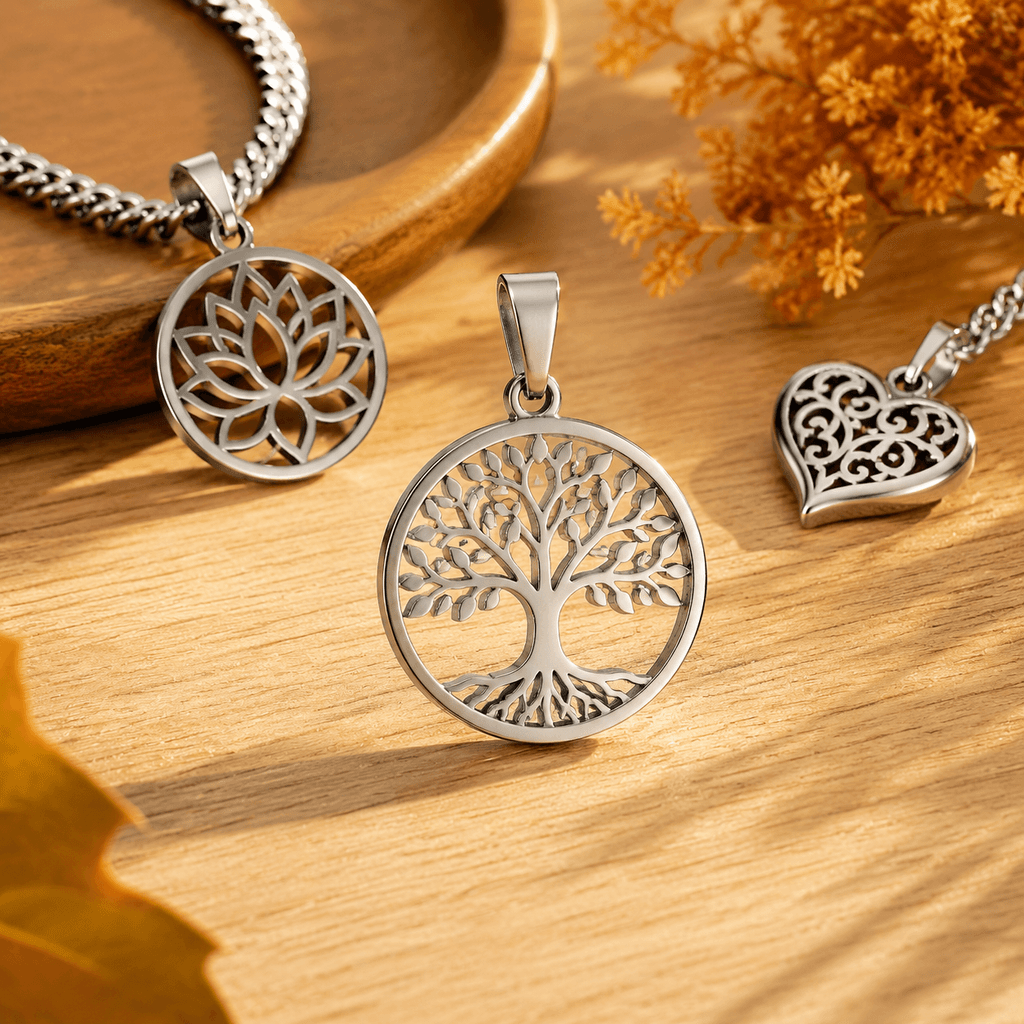
MIM technology stainless steel charms precision
In the realm of boutique charm programs and private-label initiatives, achieving consistent precision across high-volume runs is non-negotiable. MIM (metal injection molding) has emerged as a strategic capability for 316L stainless steel charms, enabling fine details, tight tolerances, and repeatable results at scale. At Lancy Jewelry, our modern facility leverages CNC, laser cutting, laser marking, welding, and polishing to complement MIM with finishing and final fabrication steps. We are SGS-certified (RoHS, REACH, Nickel Release EN1811, Salt Spray 240H), and we offer OEM/ODM development, logo engraving, PVD plating, enamel filling, crystal inlay, private-label packaging, and fast sample development. This deep-dive explains how MIM delivers precision for stainless steel charms and how product developers can apply it across global markets.
Understanding MIM for 316L stainless steel charms
MIM combines metal powder feedstock with binder systems to form complex geometries that are difficult or costly with traditional machining. For 316L stainless steel charms, the process relies on a carefully controlled alloy chemistry and powder characteristics (particle size distribution, flowability, and binder formulation) to produce green parts that sinter into dense, corrosion-resistant components. 316L stainless steel is noted for its low carbon content, good corrosion resistance, and excellent mechanical properties, making it an ideal base material for complex shapes, enamel fills, and PVD finishes that boutique brands demand.
Key to precision in MIM are two interdependent domains: material science and process controls. The chemistry of 316L influences shrinkage, microstructure, and surface finish after debinding and sintering. Process controls—gate location, injection parameters, binder removal rates, and sintering atmosphere—determine tolerances, warpage, and dimensional stability. When designers at boutique brands specify intricate cutouts, fine lettering, or tiny features like micro-hooks for clasps, MIM’s capability to replicate those details hinge on both powder characteristics and robust post-processing pipelines—areas where Lancy excels with CNC polishing, laser engraving, and precise finishing workflows.
Material chemistry and alloy composition
316L stainless steel used in MIM charms is engineered for a balance of formability, strength, and corrosion resistance. Typical composition emphasizes chromium (Cr), nickel (Ni), molybdenum (Mo), and a low carbon content (C). This combination provides the ability to accept high-quality PVD plating (gold, rose gold, silver finishes) and enamel fills without compromising integrity during debinding and sintering. For product developers, a clear understanding of the alloy’s behavior under binders and sintering atmospheres helps predict shrinkage tolerances and final density. In practice, controlled composition and consistent feedstock specifications translate to more repeatable features—critical when drafting private-label programs or OEM/ODM projects where uniformity across batches matters for multi-brand portfolios.
Process control for tolerances
Precision in MIM is federated through a closed-loop approach: precise feedstock characterization, rigorous part design for manufacturability, and strict process monitoring. Key process variables include gate sizing, part ejection, debinding ramp rates, sintering temperature uniformity, and atmosphere control. Lancy’s facility uses advanced metrology to verify features such as thin enamel channels, letterforms, and micro-holes required for bail attachments or jump rings. When combined with post-processing options—laser engraving for logos, CNC polishing for mirror finishes, and PVD plating for consistent color and hardness—the result is a reliable, scalable path from prototype to private-label production with tight tolerances and repeatable surface quality. For teams evaluating MIM, it’s essential to align CAD tolerances with expected shrinkage values and to validate these against sample runs before committing to large private-label or wholesale orders.
Benefits/Why it matters
Key benefits
- Precision and repeatability: MIM enables intricate geometries and consistent tolerances across large lots, essential for multiple private-label brands.
- Surface finish compatibility: Post-processing options—polishing, PVD plating, enamel filling, and crystal inlay—are synergistic with MIM-part densities and surface quality.
- Design freedom with manufacturability: Complex internal channels, fine lettering, and tiny attachment points can be molded rather than machined, reducing lead times for large-volume runs.
- Private-label packaging and branding: The combination of MIM with finishing services supports boutique-brand packaging needs and branding elements on the charm surface or packaging card.
- Quality assurance and certifications: SGS-certified processes validate RoHS, REACH, Nickel Release EN1811, and salt spray performance, reinforcing compliance for global markets.
From a commercial perspective, MIM supports OEM and ODM strategies by enabling consistent results across private-label programs, while maintaining the ability to tailor features per collection. For wholesale customers and bulk orders, MIM’s consistency reduces variance across large orders, delivering predictable production costs and delivery timelines. Lancy’s integrated approach—starting from 316L stainless steel base, through MIM, to finishing and packaging—facilitates a seamless supply chain for global buyers.
Detailed analysis/Guide
Step 1: Align design with manufacturability in MIM
Begin with design-for-MIM principles: avoid ultra-thin walls, tiny radii that trap binder, and features that cannot be reliably debinded. For 316L charms, consider feature sizes that accommodate the typical gate and parting line locations and ensure that bail holes or attachment loops are dimensionally robust. Early collaboration with the OEM/ODM team helps translate artistic intent into geometry that maintains the intended aesthetic while preserving manufacturability. At Lancy, our design reviews consider mask-and-gate placement, wall thickness consistency, and the impact of enamel and crystal inserts on final tolerances.
Step 2: Material selection and composition specifics
Choose 316L stainless steel with consistent powder characteristics and low contaminants to minimize variation in density after sintering. The alloy’s carbon content, along with chromium, nickel, and molybdenum levels, influences corrosion resistance and biocompatibility—important for gift programs and private-label lines. We emphasize stable feedstock lots and supplier transparency to ensure that alloy chemistry remains within spec across production campaigns. The net effect is a predictable baseline from which plating and enamel processes can deliver uniform color and adhesion.
Step 3: Powder feedstock and binder system
Powder particle size distribution and flowability govern fill uniformity and shrinkage control. A well-controlled binder system aids in debinding without leaving residues that could affect surface finish or enamel adherence. For 316L charms, selecting a binder system that optimizes debinding kinetics helps protect fine details during the transition to dense sintered parts. In practice, this reduces the risk of dimensional drift between prototype and mass production.
Step 4: Injection molding, debinding, and sintering
Process parameters—temperature profiles, injection pressure, and cooling rates—are tuned to minimize distortions and ensure consistent density. Debinding removes binder holistically, and sintering consolidates the part with controlled grain structure. The outcome is a dense, near-net-shape charm ready for finishing. The ability to maintain uniform shrinkage across features like small letters, delicate cutouts, or bail openings is critical for OEM/ODM projects that span multiple product lines.
Step 5: Post-processing and surface finishing
Post-processing bridges MIM with the finish your customers expect. After sintering, we perform precision CNC polishing to achieve a smooth, uniform surface that accepts PVD plating, enamel fills, or crystal inlays. Laser marking or engraving can add logos or custom characters with high fidelity. For color finishes, PVD plating delivers durable gold, rose gold, or silver tones with excellent adhesion on 316L substrates. Enamel color filling is employed for vibrant accents, while crystal inlay adds premium sparkle where desired. Each finishing step is validated to ensure plating thickness and adhesion meet global market standards.
Step 6: Quality control and measurement
Quality control spans dimensional checks, surface finish assessment, and functional tests (e.g., bail hole integrity, jump-ring compatibility, and attachment strength). SGS testing protocols provide third-party verification for chemical compliance, nickel release, and corrosion resistance, which reassures buyers across the US, EU, UK, AU, CA, DE, FR, ES, NE, and RU markets. Our QC procedures aim for high repeatability, a cornerstone of successful private-label programs and reliable wholesale partnerships.
Step 7: Finishing and assembly integration
Enamel and crystal inlays require clean interfaces with the metal substrate. The MIM part’s surface roughness and cleanliness influence enamel bonding and crystal seating. Our process chain ensures enamel channels and crystal seats are dimensionally accurate before filling, reducing the risk of cracking or detachment in later use. The subsequent PVD plating not only delivers the desired color but also adds a protective layer against wear, preserving the charm’s appearance in gift programs and charm-bar displays.
Step 8: Private-label packaging and branding considerations
For private-label programs, packaging design and brand alignment are essential. We offer private-label packaging options and can incorporate branding elements on packaging cards while maintaining the charm’s aesthetic. The assembly line can accommodate multiple SKUs per shift, enabling efficient rollout of seasonal collections with consistent quality across all units. When planning large private-label initiatives or wholesale programs, a clear MOQ (minimum order quantity) and lead-time projection help align production with retail calendars.
Step 9: Supply chain synchronization and global reach
Global market reach requires robust logistics and compliance. With SGS-certified processes and a focus on 316L stainless steel, Lancy supports cross-market deployment in US, EU, UK, AU, CA, DE, FR, ES, NE, RU. Our OEM/ODM services are designed to provide a single-source solution from prototyping to bulk orders, including sample development and private-label packaging. To explore partnership options, please review our OEM service page and start with an RFQ to align on specs, lead times, and pricing: OEM service. If you need a quick quote, you can initiate a request at Request a Quote or contact us directly at Contact for tailored guidance. To browse our current catalog, visit All Products for reference on 316L stainless steel charms and related accessories.
FAQ
1. What tolerances can MIM achieve for 316L stainless steel charms?
Typical tolerances in MIM for 316L charms range from +/- 0.05 to 0.2 mm depending on geometry, wall thickness, and feature complexity. Complex internal cavities or fine lettering may require tighter QC and, in some cases, secondary finishing to ensure the final dimensions meet spec. At Lancy, design-for-manufacturability reviews and precise post-processing culminate in consistent results across batches, making us a reliable partner for OEM/ODM and private-label projects.
2. How do SGS certifications apply to our charm program?
SGS certification covers RoHS and REACH compliance, nickel release testing (EN1811), and salt spray corrosion resistance (240 hours). These validations confirm that the materials and processes used for 316L stainless steel charms meet global safety and durability expectations, reducing risk for cross-border distribution and private-label branding. This certification support is particularly valuable for gift companies and boutique brands seeking a compliant, scalable supply chain.
3. How does sampling and sample development work for MIM charms?
Sample development is a critical early step in OEM/ODM engagements. We provide rapid prototyping cycles, enabling designers to test geometry, fit, and finish before committing to bulk orders. This phase includes prototype parts, surface finish checks, and preliminary plating or enamel tests. Leveraging our established processes, we can shorten lead times for samples while maintaining fidelity to the final mass-production geometry and finish. This approach supports private-label and wholesale programs by reducing risk and accelerating time-to-market.
4. How should a brand start an OEM/ODM project with Lancy?
Beginning with an RFQ is the typical path. Share your design intent, target volumes, recommended finishes (PVD colors, enamel shades), and any branding requirements. We’ll align on MOQ, lead times, tooling needs, and packaging. Our private-label packaging capabilities support brand differentiation, while our sample development service ensures your concepts translate accurately to production. For direct inquiries, visit OEM service, or contact us through Contact to discuss your timeline and budget. To view our product ecosystem,explore All Products as a reference for 316L stainless steel charms and related accessories.
Call to action
Ready to unlock precision with MIM for stainless steel charms? Partner with Lancy Jewelry—your dedicated OEM/ODM partner for 316L stainless steel charms with private-label packaging, fast sample development, and scalable production. Our team combines material science expertise, finishing capabilities (PVD plating, enamel, crystal inlay), and strict quality control to deliver reliable results across global markets. Start with an RFQ today to define your private-label program or bulk orders, and let us tailor a solution that aligns with your design intent and distribution strategy. Explore our OEM service, request a quote, or contact our sales team to discuss your next collection. OEM service | Request a Quote | Contact | All Products.