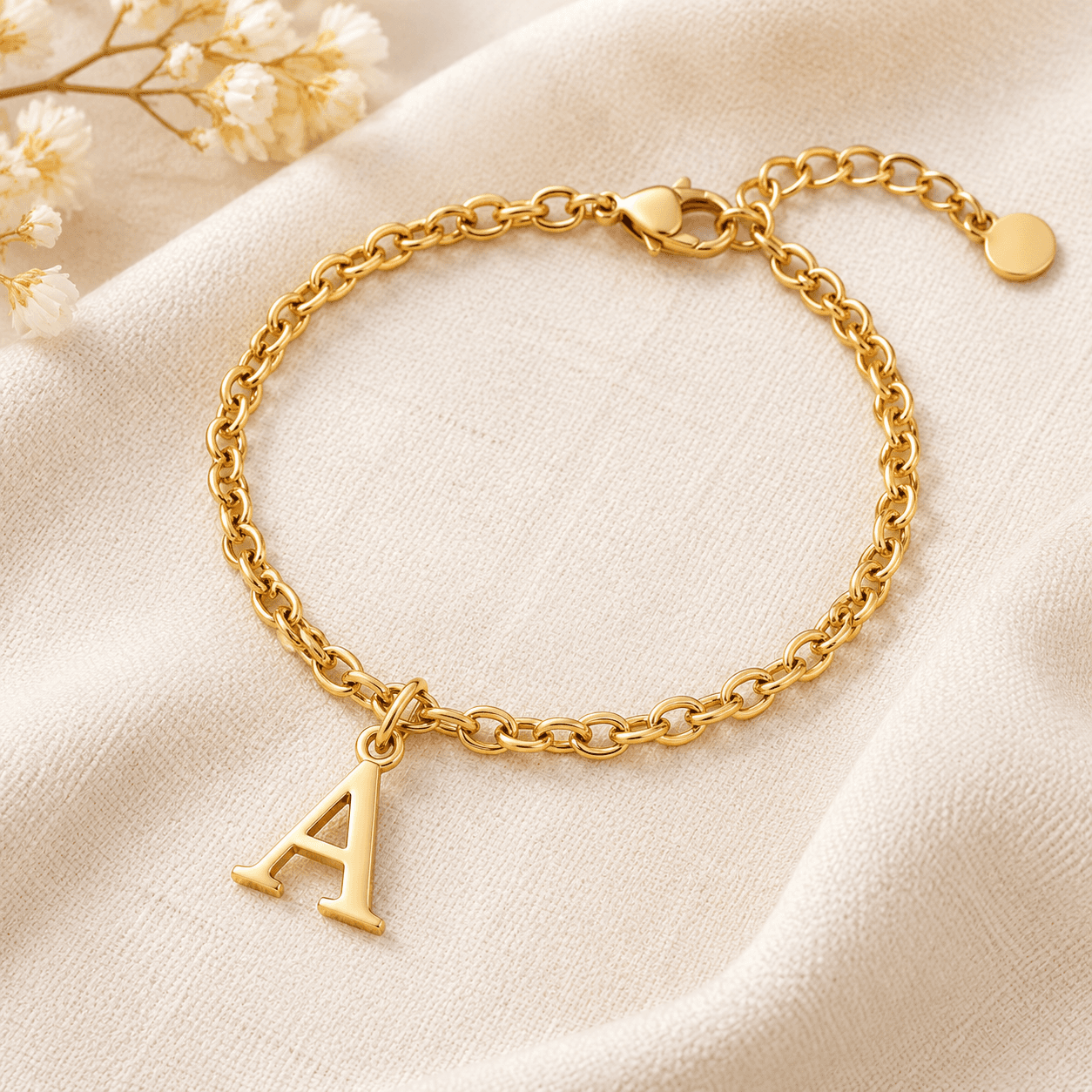
A letter A charm bracelet offers a versatile way to create personalized jewelry with initials, meaningful details, and carefully coordinated decorative elements. For jewelry designers, boutique brands, and charm bar retailers, the letter A provides a strong starting point for developing collections that balance individual expression with consistent visual design. From polished silver finish to gold plated surfaces and crystal inlay accents, a well-designed letter A charm can become the focal point of a coordinated bracelet concept.
This visual styling guide explores how to combine letter A charms with celestial symbols, hearts, stars, and other decorative details while considering proportions, attachment hardware, surface finishes, and manufacturing requirements. Lancy Jewelry specializes in 316L stainless steel charms and supports OEM and ODM development, helping buyers translate creative concepts into production-ready designs. Whether planning a small boutique collection or wholesale stainless steel charms, understanding the relationship between charm dimensions, finish coordination, and physical construction makes the design process more predictable.
Letter A Charm Bracelet Styling: Start With a Balanced Design
A successful letter A charm bracelet begins with a clear visual hierarchy. The initial should communicate the personalized meaning of the design, while additional decorative elements should support rather than compete with it. Begin by selecting one letter A charm as the primary focal point. Consider a medium charm proportion of approximately 10–16 mm for bracelet applications, adjusting the dimensions according to the letter's shape, thickness, and attachment requirements. The final visual size should remain balanced with the bracelet's individual links and other decorative components.
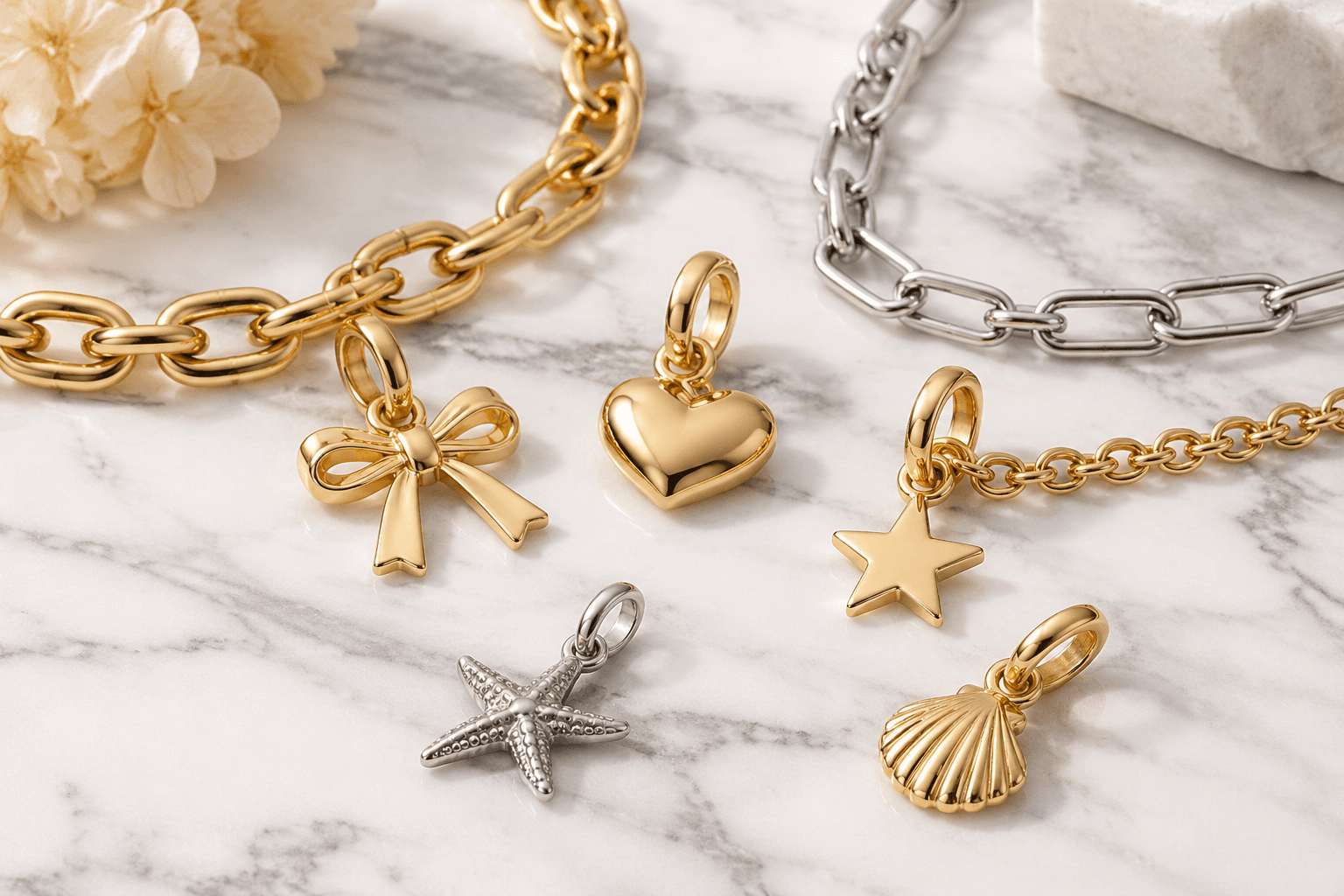
Next, select one or two complementary motifs. A small star can introduce a celestial detail, a heart can communicate a personal message, and a moon can create a softer decorative theme. For a more contemporary composition, combine an initial with a geometric symbol and a single crystal inlay accent. Avoid placing several similarly sized elements next to each other because this can reduce the prominence of the initial. A useful design principle is to establish one dominant charm, one supporting motif, and one optional accent.
For designers developing a coordinated series, create a simple visual specification before prototyping. Record the initial's height and width, material thickness, surface finish, jump ring dimensions, and expected attachment orientation. A professional stainless steel charms manufacturer should be able to review these details before sample development. Lancy uses 316L stainless steel as the exclusive charm base material, with options including PVD gold plating, silver finish, rose gold plating, enamel, and crystal inlay. Explore the Alphabet Series for initial charm design references and the complete product catalog for additional decorative concepts.
Visual Gallery: Five Letter A Charm Bracelet Design Directions
1. Minimal Initial Styling. Place a single letter A charm at the center of the bracelet and keep the surrounding design restrained. A polished silver finish creates a clean appearance, while a gold plated finish provides a warmer visual effect. This arrangement works particularly well for everyday personalized jewelry programs. Designers should pay attention to the initial's stroke width and edge definition so that the letter remains recognizable at a compact size.
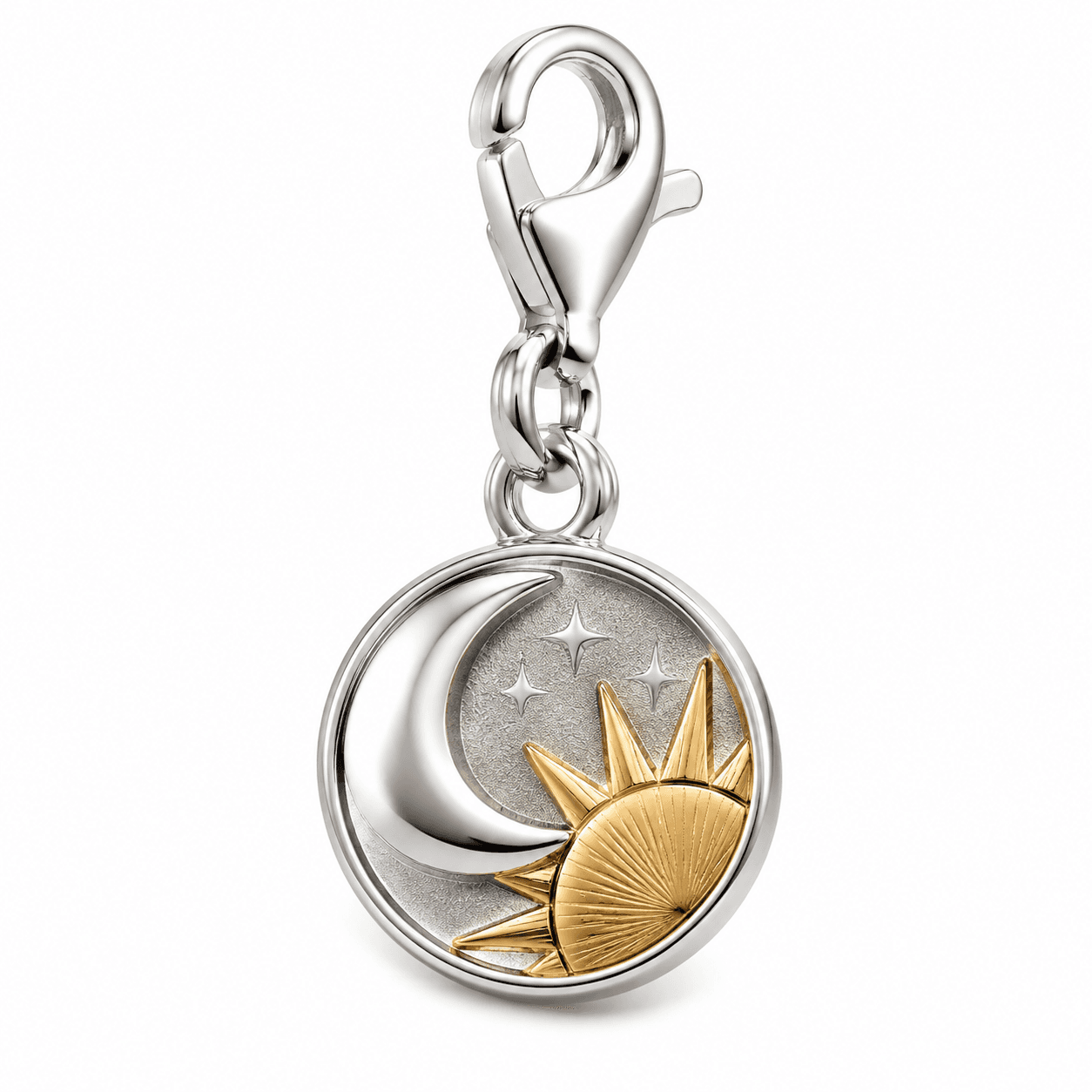
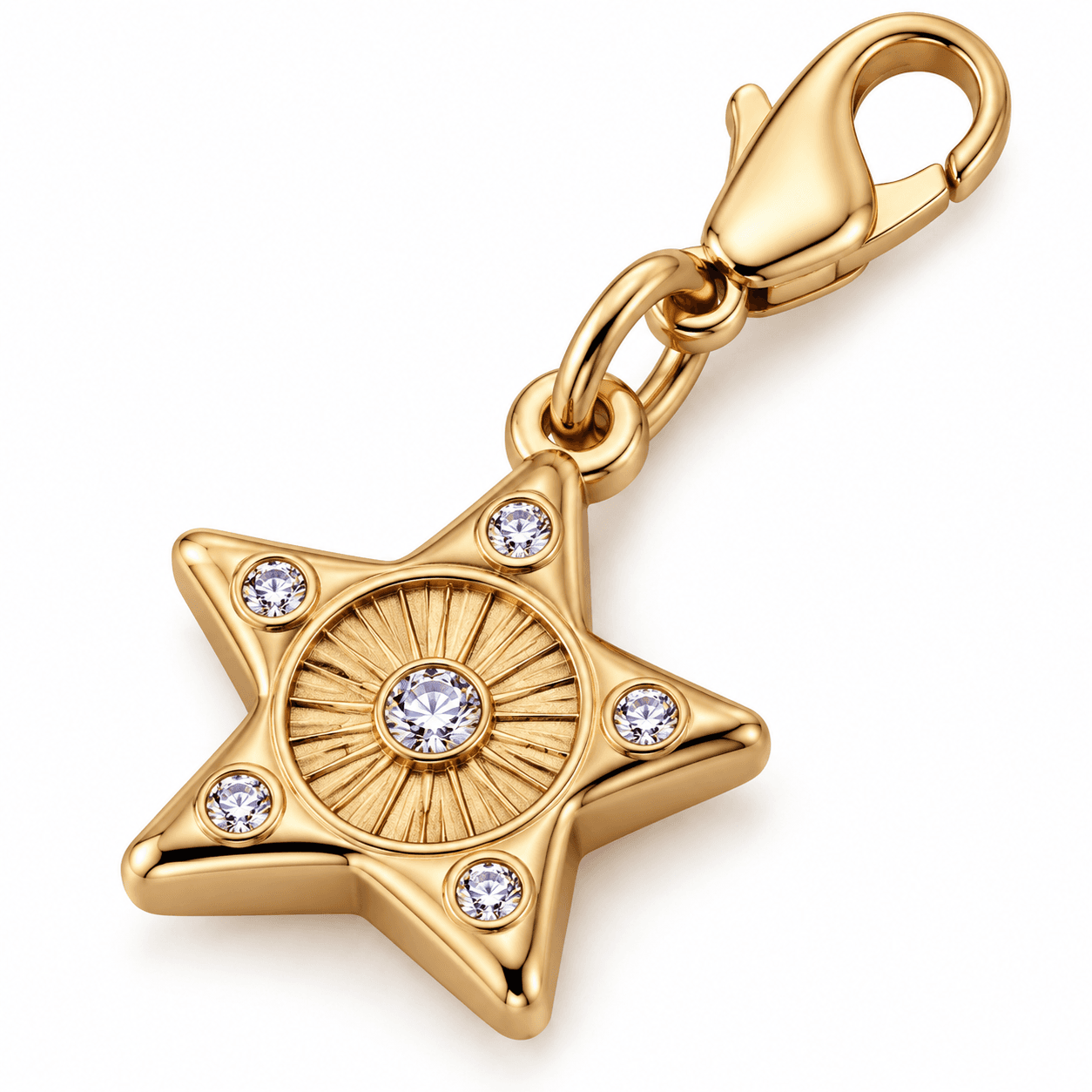
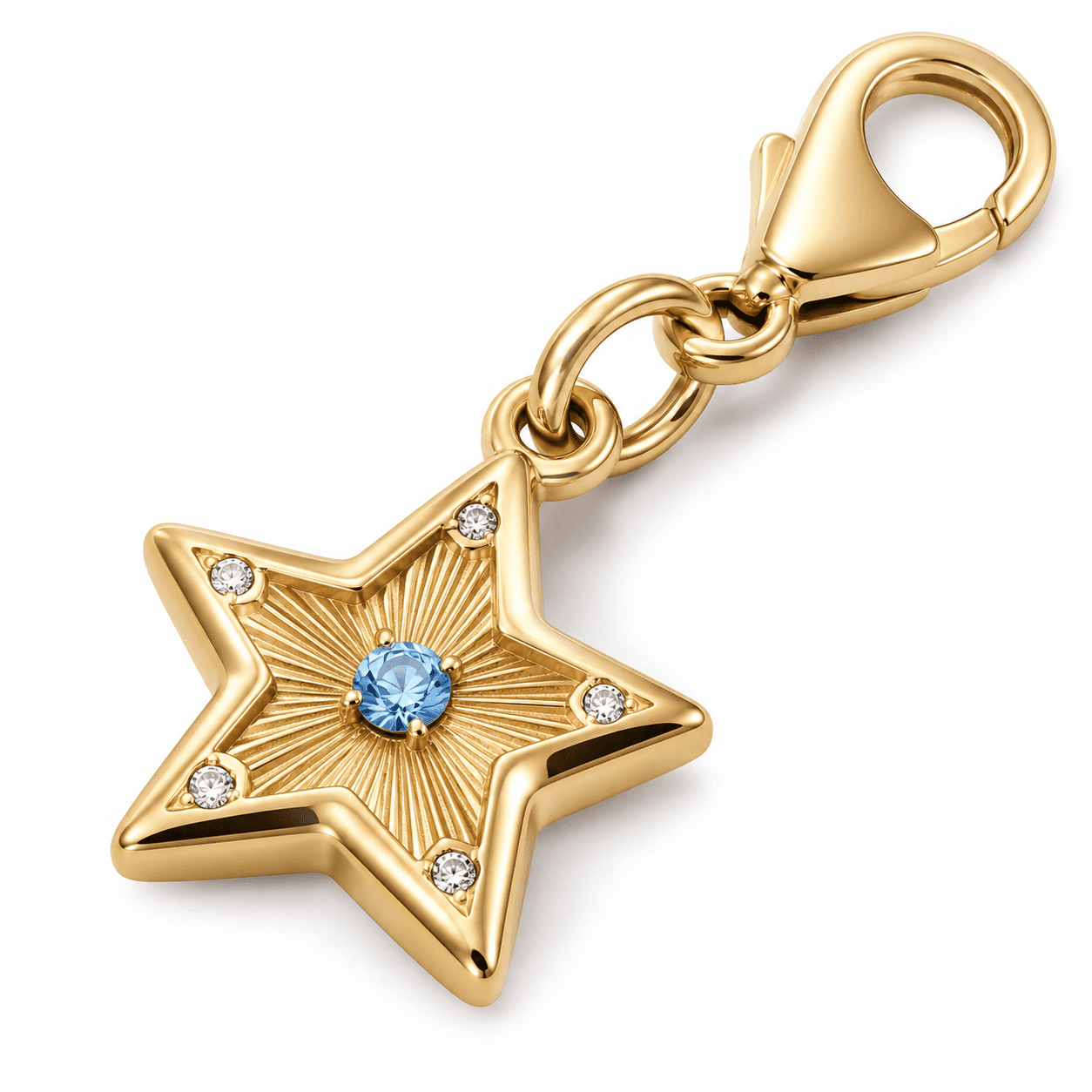
2. Celestial Initial Styling. Combine the letter A with a moon or six-point star motif. The Solstice Eclipse Two-Tone Sun Moon 316L Stainless Steel Charm and Celestial Drift Moonflash Six-Point Star 316L Stainless Steel Charm offer useful decorative directions for exploring this concept. A restrained combination of dark enamel, polished surfaces, and contrasting PVD finishes can create depth without making the bracelet visually crowded. Keep the initial slightly larger than the supporting celestial elements.
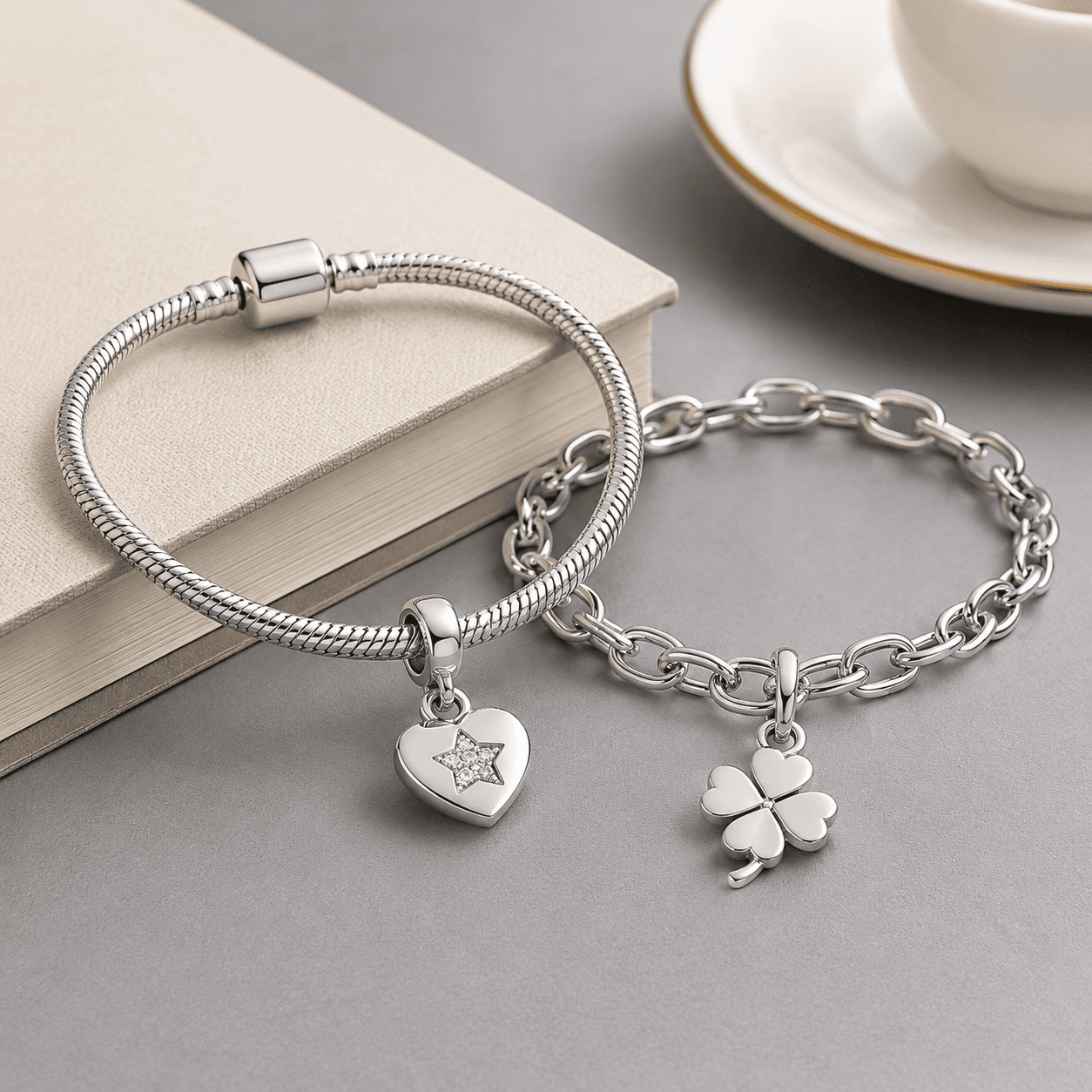
3. Romantic Initial Styling. Pair the initial with a heart-shaped decorative charm for a personalized gift concept. Use consistent finish selection across the main components, or introduce one carefully controlled accent finish to establish contrast. Crystal inlay can add a focal detail, provided the setting dimensions and retention requirements are reviewed during prototyping.
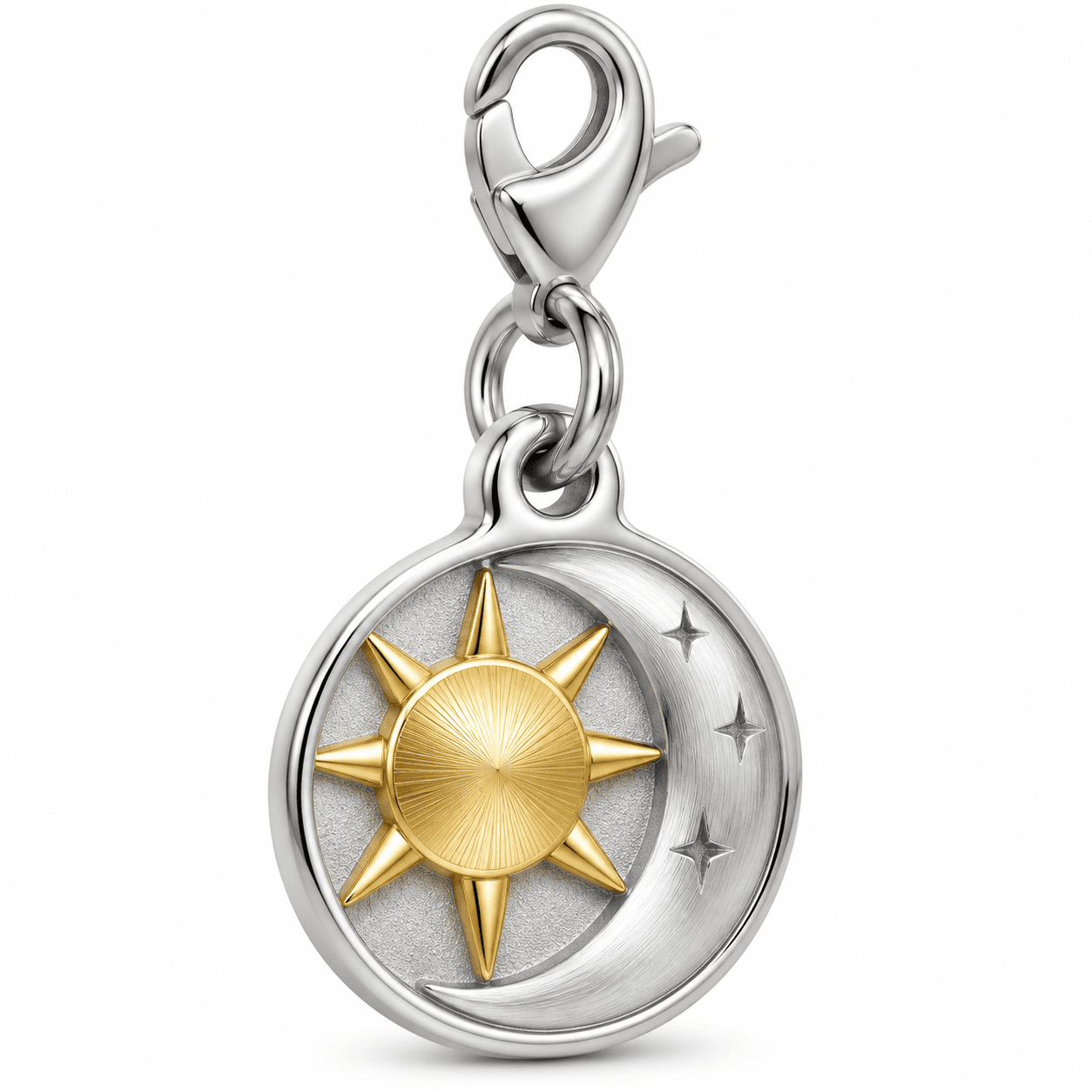
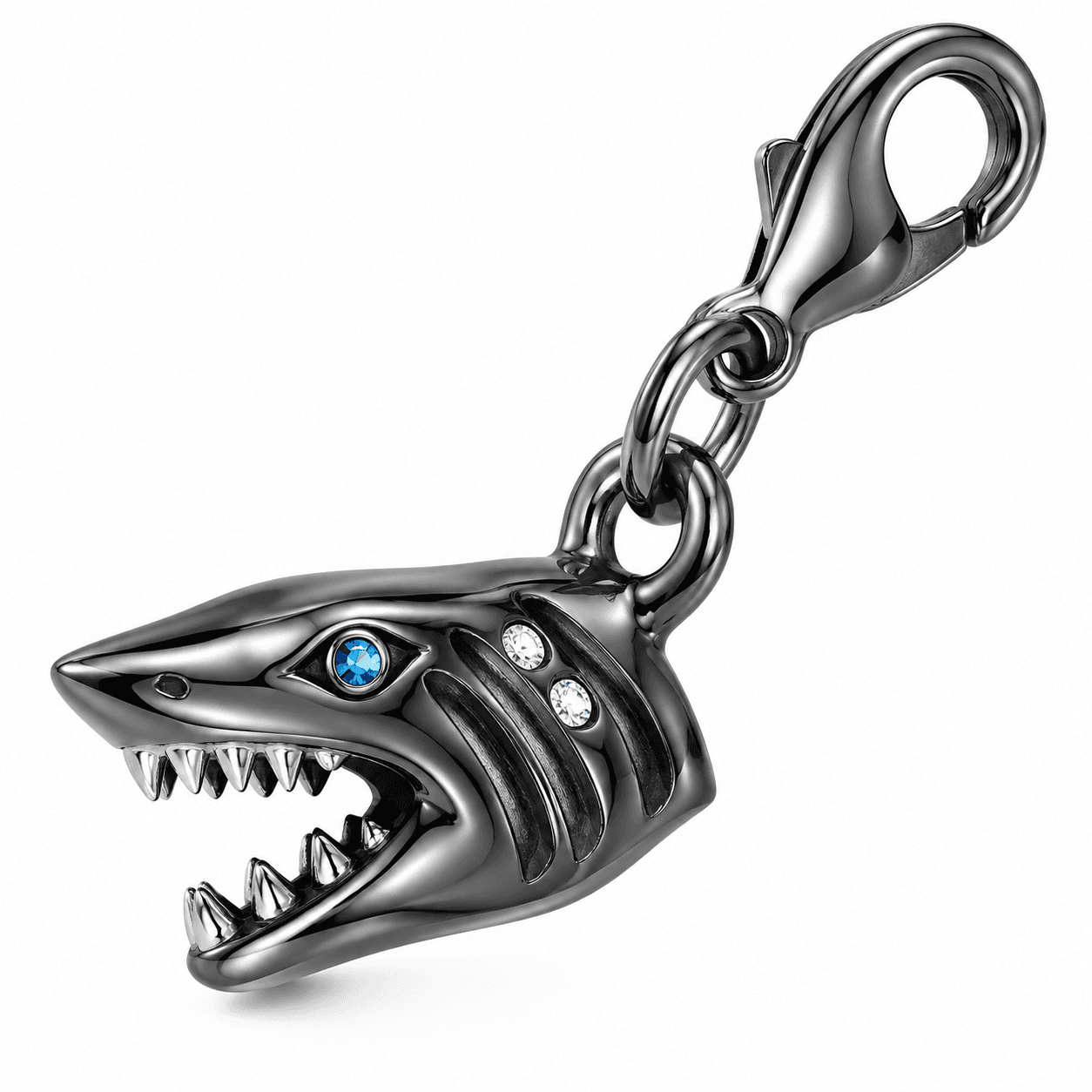
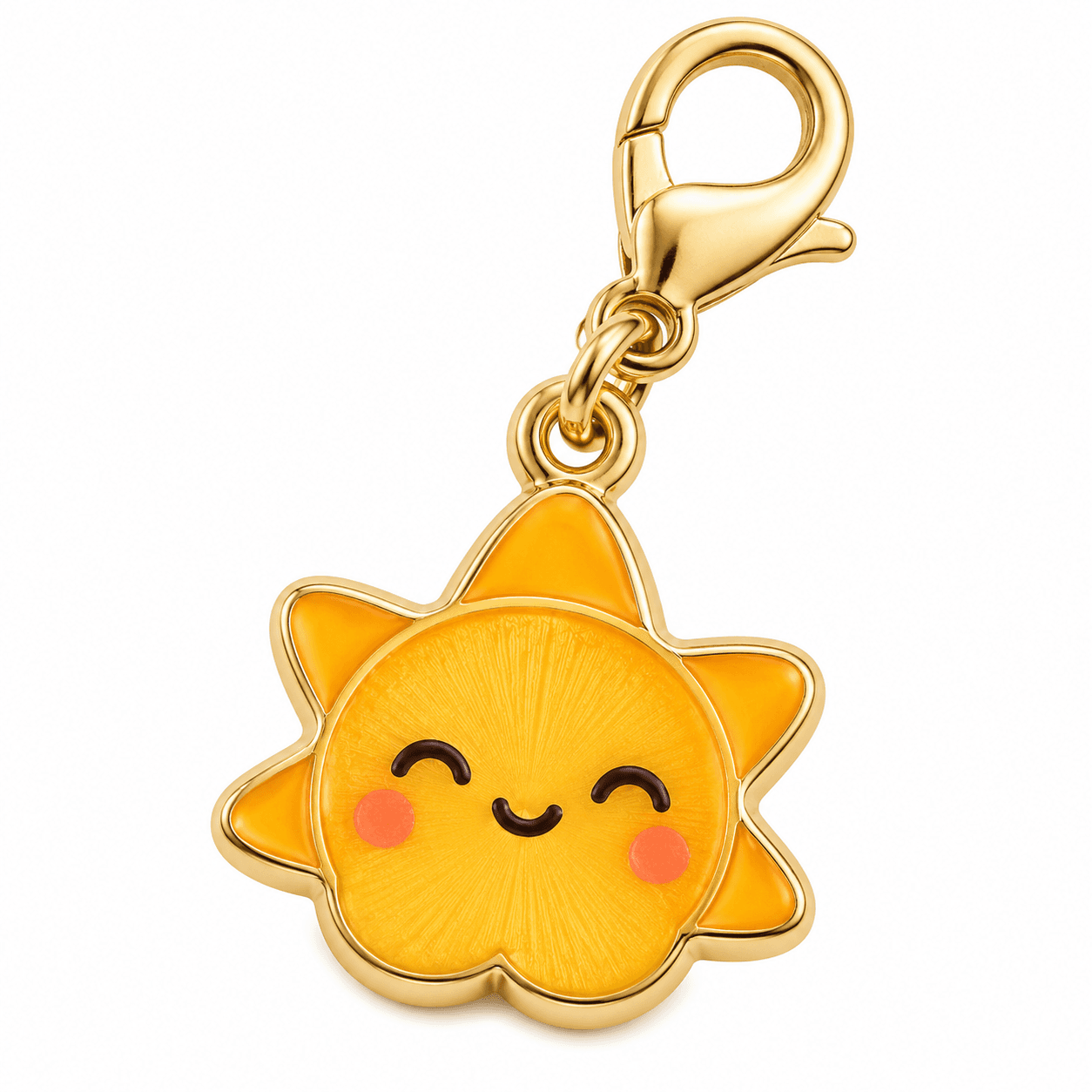
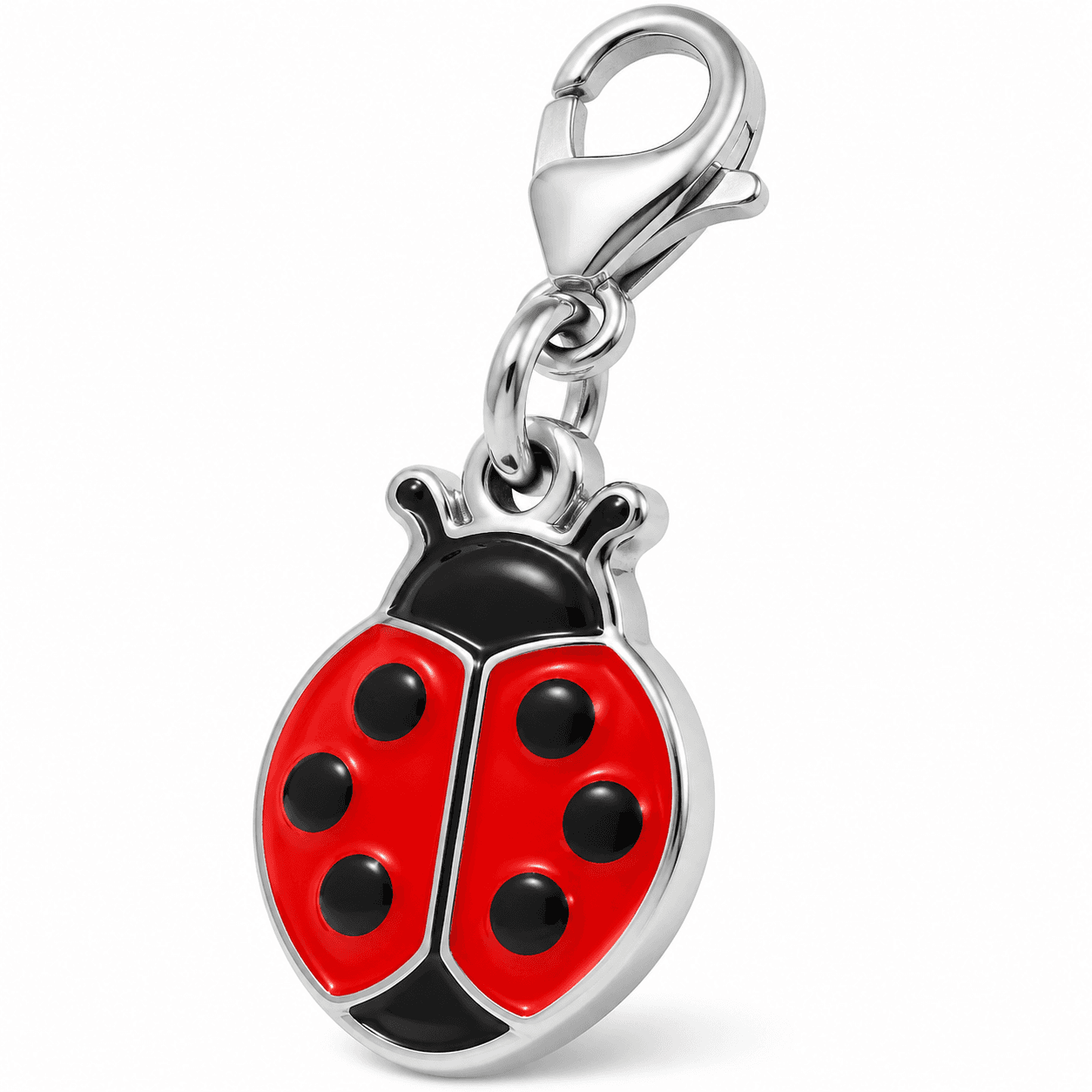
4. Color-Accent Initial Styling. Enamel color filling creates opportunities for seasonal and coordinated boutique collections. Designers can test a single accent color against silver finish or PVD gold plated surfaces. Color placement should be documented in a design drawing, including the enamel area, border definition, and required color reference. 5. Contemporary Statement Styling. Combine an initial with a distinctive decorative motif, such as a sun, star, or abstract symbol. The Celestial Eclipse Blue Moon Sun Charm provides a celestial design reference, while the Abyss Fang 316L Blackout Shark Tooth Charm demonstrates how a more directional decorative concept can influence a coordinated series. These examples should remain supporting design references rather than replace the letter A as the bracelet's central element.
316L Stainless Steel Properties, Finishes, and Craftsmanship
Material selection affects the appearance, performance, and repeatability of a letter A charm bracelet. Lancy Jewelry uses 316L stainless steel as the base material for its charms. This grade is valued in jewelry manufacturing for its corrosion resistance, strength, and suitability for detailed decorative components. Its chromium-containing passive surface layer helps resist corrosion under normal use conditions. Material selection alone, however, does not establish the performance of a finished product. Surface preparation, finishing processes, component geometry, and quality control also influence the result.
Finish selection should follow the intended visual identity of the collection. PVD gold plating provides a warm metallic appearance, while silver finish supports a clean and versatile aesthetic. Rose gold plating creates a softer color direction. Enamel color filling introduces controlled color areas, and crystal inlay provides a decorative focal point. For consistent production, designers should specify finish references, color samples, coating coverage, surface requirements, and acceptable variation before approving a production sample. PVD process control should include attention to surface cleanliness, coating consistency, and inspection of edges and recessed areas.
Attachment construction is equally important. The bail or jump ring must pass through an actual hole or closed loop in the charm, with sufficient clearance for the intended bracelet connection. A visually attractive initial can still create practical problems if its attachment point is too narrow, poorly positioned, or structurally weak. During prototyping, evaluate the charm's orientation, edge finishing, thickness, weight, and movement when connected to the intended bracelet hardware. Lancy supports OEM charms manufacturer requirements through custom development, logo engraving, PVD plating, enamel color filling, crystal setting, and sample support. Buyers can also review 316L stainless steel clasps when planning a complete attachment system.
From Creative Concept to Sample Development and Production
Turning a letter A charm bracelet concept into a repeatable commercial product requires a structured development process. Start with a design brief that identifies the target customer, bracelet theme, preferred initial style, charm dimensions, decorative details, and expected retail presentation. Include front, side, and rear views wherever possible. The drawings should indicate the location and dimensions of attachment holes, jump rings, and other functional features. If the charm includes enamel or crystal inlay, provide close-up details showing the intended decorative boundaries and setting arrangement.
During the next stage, confirm technical specifications with the manufacturing team. Important points include 316L stainless steel material confirmation, component thickness, edge treatment, finish selection, color references, logo placement, and assembly requirements. Request sample development before approving a larger order. A physical sample allows designers to assess visual proportions, surface appearance, attachment movement, weight, and finish consistency. Any revisions should be documented in an updated specification so that approved details remain consistent across subsequent production batches.
For B2B projects, MOQ planning should account for design complexity, production setup, finish variations, and the number of SKUs in the proposed collection. A low MOQ charm production request may be evaluated differently depending on whether the design uses an established form or requires new tooling and development. Lancy supports low MOQ discussions, custom stainless steel charms, private label charms, and bulk charm orders. For a coordinated collection, consider developing several initial variations around a consistent specification while controlling the number of finishes and decorative options. Visit OEM and ODM manufacturing services to explore customization capabilities and development support.
Quality Standards, Compliance Documentation, and Collection Planning
Quality evaluation should begin with a defined inspection plan rather than relying exclusively on a finished product photograph. For letter A charms, inspect the accuracy of the letter shape, surface smoothness, edge finishing, attachment-hole position, and dimensional consistency. Decorative finishes require additional checks. PVD surfaces should be assessed for uniform appearance and visible defects, enamel areas should be checked for filling consistency, and crystal settings should be inspected for secure retention and alignment. Production samples should be compared against the approved reference sample before bulk manufacturing proceeds.
For international B2B sourcing, buyers may request relevant SGS testing documentation and review reports covering RoHS, REACH, EN1811, and Salt Spray testing where applicable to the product and destination-market requirements. These references address different evaluation areas: RoHS concerns restricted hazardous substances in applicable products, REACH relates to chemical substance obligations, EN1811 provides a nickel-release test method for products intended for direct and prolonged skin contact, and Salt Spray testing evaluates corrosion behavior under specified laboratory conditions. A test report must be interpreted according to its scope, tested sample, method, date, and applicable regulatory requirements. Do not assume that one report automatically certifies every design, finish, component, or shipment.
Collection planning should also include packaging, labeling, SKU identification, and repeat-order controls. Private-label packaging can help a boutique brand present a consistent product range, while documented specifications support more reliable replenishment. Before confirming a wholesale stainless steel charms program, establish inspection criteria, approved finish references, packaging requirements, acceptable tolerances, and the documentation needed for the target market. Lancy can coordinate sample development, production specifications, and private-label packaging as part of an OEM or ODM project. These controls help transform an attractive letter A charm bracelet concept into a practical, scalable collection.
Frequently Asked Questions About Letter A Charm Bracelets
Develop Your Custom Letter A Charm Collection With Lancy
Ready to turn your letter A charm bracelet styling concept into a production-ready jewelry collection? Lancy Jewelry supports boutique brands, charm bar retailers, gift companies, distributors, and private-label buyers with 316L stainless steel charms manufacturing and OEM/ODM development. From initial artwork review to sample evaluation and bulk production planning, the team can help coordinate practical specifications for personalized charm programs.
For an accurate RFQ, prepare your letter A artwork or vector file, preferred charm dimensions, material requirement, finish selection, enamel or crystal inlay details, attachment specifications, estimated quantity per design, target market, and packaging requirements. Include logo engraving instructions and reference images where relevant. If you are developing several initial variations, identify shared specifications and differences between SKUs. This makes MOQ assessment and sample planning more efficient.
Explore the Alphabet Series for design direction, review OEM and ODM services for customization capabilities, or browse all products for additional collection ideas. When your specifications are ready, request a quote and submit your RFQ or contact Lancy Jewelry to discuss sample development, finish requirements, and private-label production. Build a distinctive initial charm collection around consistent materials, thoughtful styling, and reliable manufacturing specifications.
Related resources
Related resources
- Custom Stainless Steel Charm Bracelet Tutorial: A Buyer’s Guide to Quality
- Stainless Steel Custom Car Charms: A Buyer’s Quality Checklist
- How to Choose a Stainless Steel Custom Enamel Bracelet Charms Supplier
- 316L Steel Guide to Custom Enamel Charms Manufacturing for Buyers
- How to Source Minimalist Stainless Steel Charms: Finishing Guide
- Custom OEM/ODM Guide to Stainless Steel African Jewelry Charms Wholesale
- Stainless Steel Custom Enamel Charms: A Buyer’s Quality Guide
- How to Evaluate 316L Stainless Steel Zodiac Bracelet Charms Wholesale Suppliers
- How to Choose Durable Stainless Steel Charms for Cross-Border E-Commerce
- 316L Steel Secrets: Sourcing Convertible Car Jewelry Bulk Charms