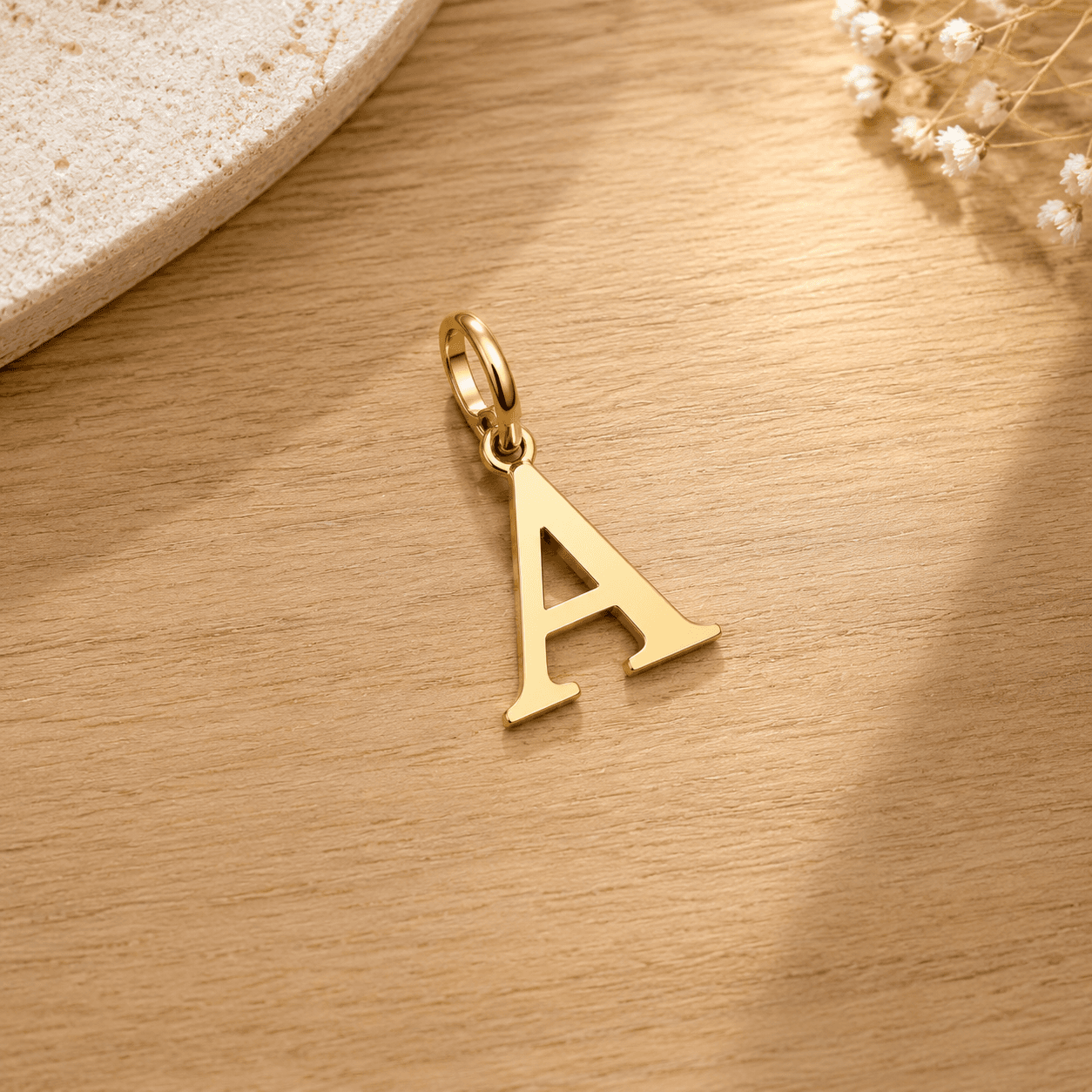
Alphabet letter charms offer jewelry designers a versatile way to create personalized collections for boutiques, charm bars, gift programs, and private-label ranges. From clean geometric initials to rounded bubble lettering, delicate script forms, and framed monograms, alphabet letter charms can communicate individuality while maintaining a consistent visual identity across an entire product assortment. Understanding proportion, typography, surface finish, attachment design, and production tolerances helps designers develop collections that look intentional rather than assembled from unrelated components.
Lancy Jewelry develops 316L stainless steel charms for B2B customers seeking dependable materials, flexible customization, and coordinated collection planning. Available design directions include PVD gold plated finishes, silver finish, rose gold plating, enamel accents, and crystal inlay, subject to the selected design and manufacturing feasibility. As a stainless steel charms manufacturer, Lancy supports OEM and ODM development, logo engraving, sample development, and private-label packaging for boutique jewelry brands and sourcing teams.
This visual style guide explains how to select letterforms, coordinate finishes, establish practical design specifications, and evaluate prototypes before wholesale production. Use the collection ideas below as a framework for developing distinctive alphabet ranges, then explore the alphabet initial stainless steel charms collection, review the OEM manufacturing service, or browse all products for additional collection-planning options.
Alphabet Letter Charms: Build a Visual Style From the Letterform Up
Start With Typography, Not Decoration
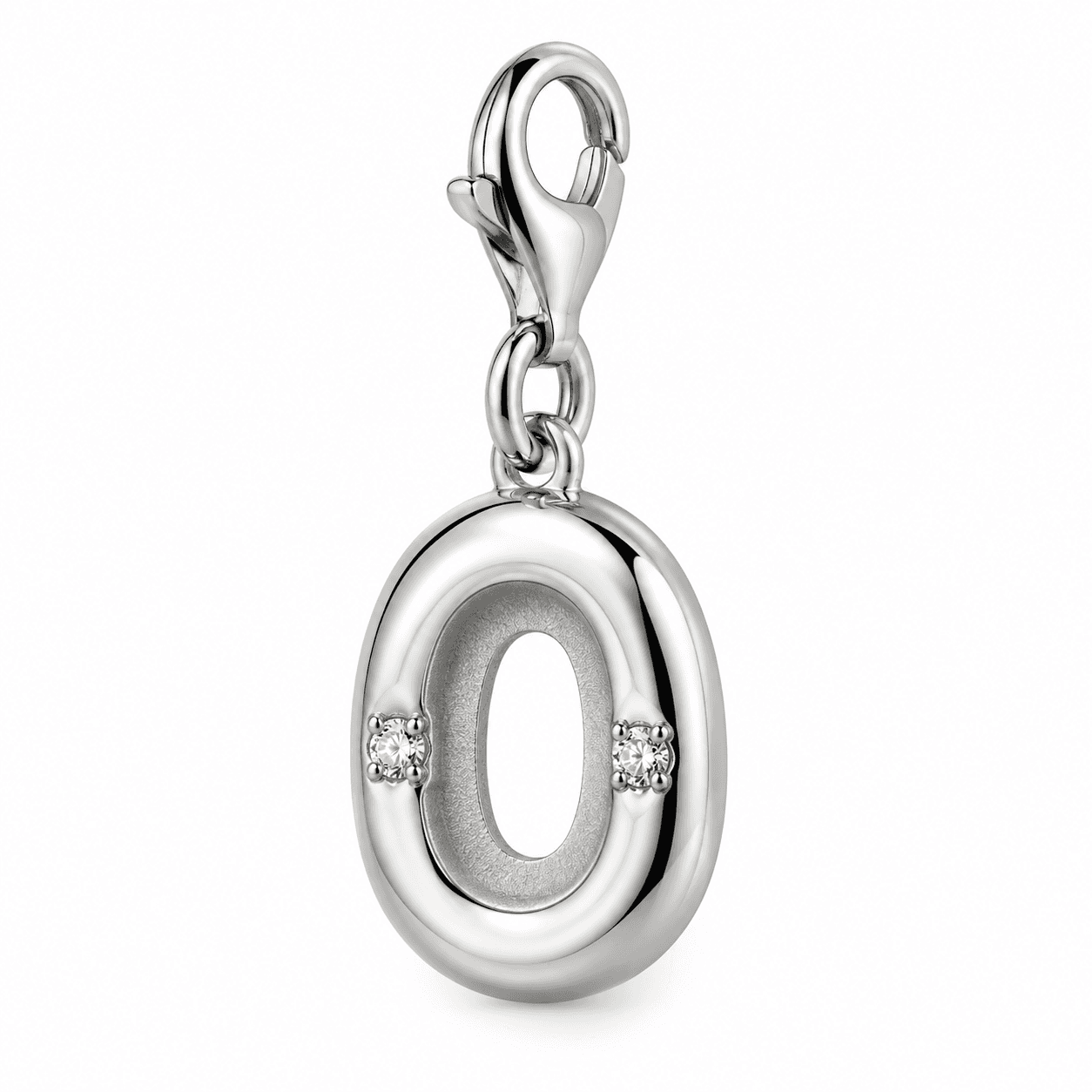
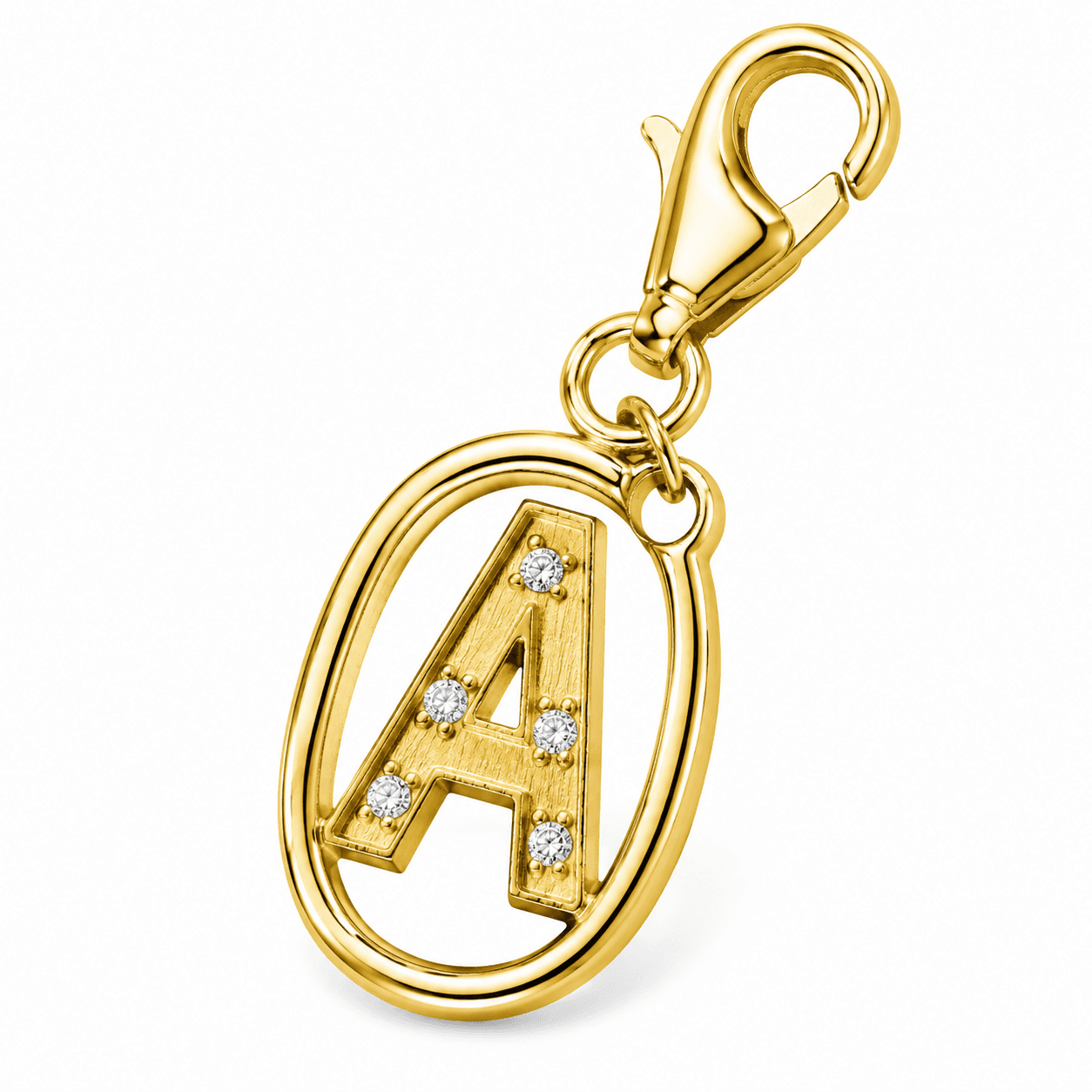
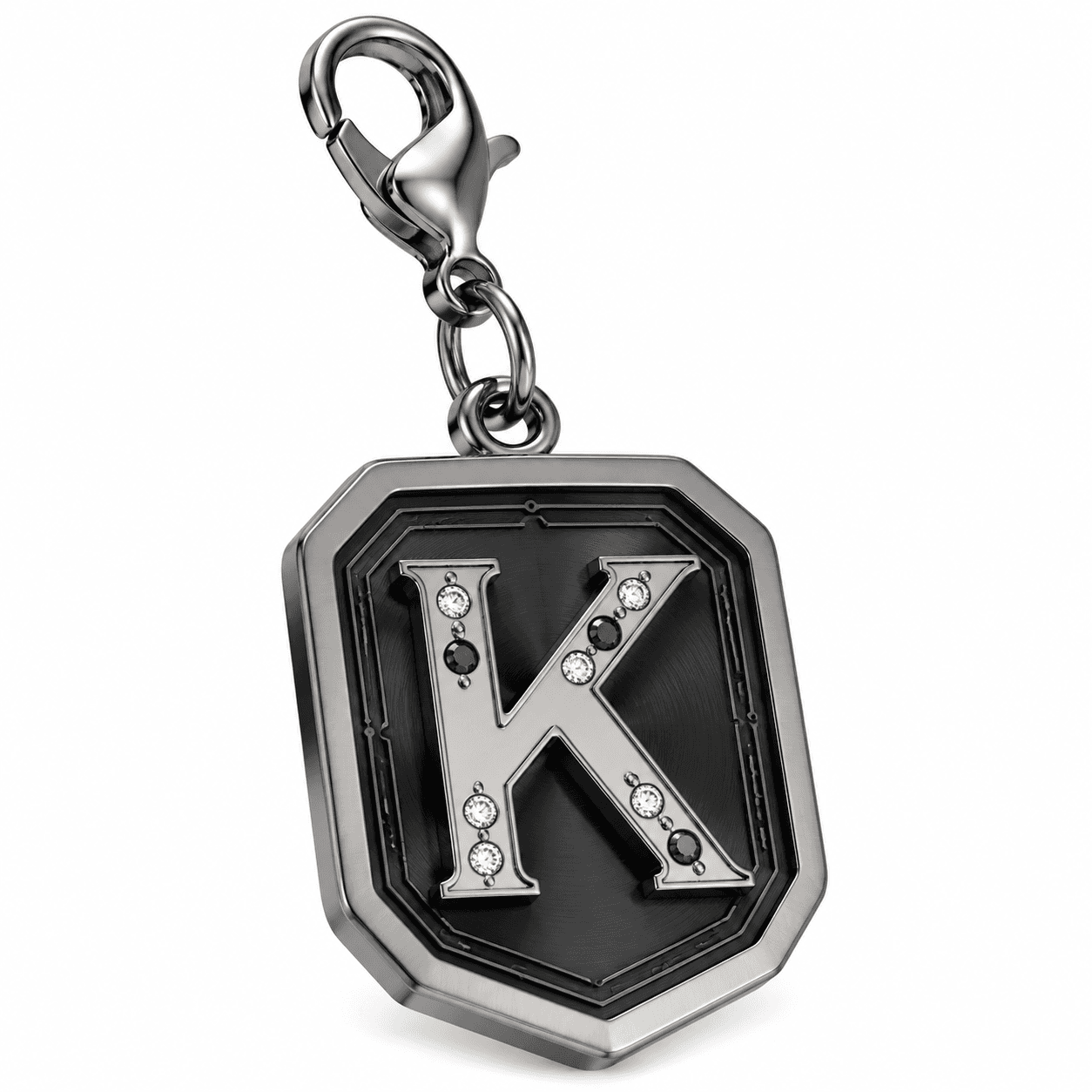
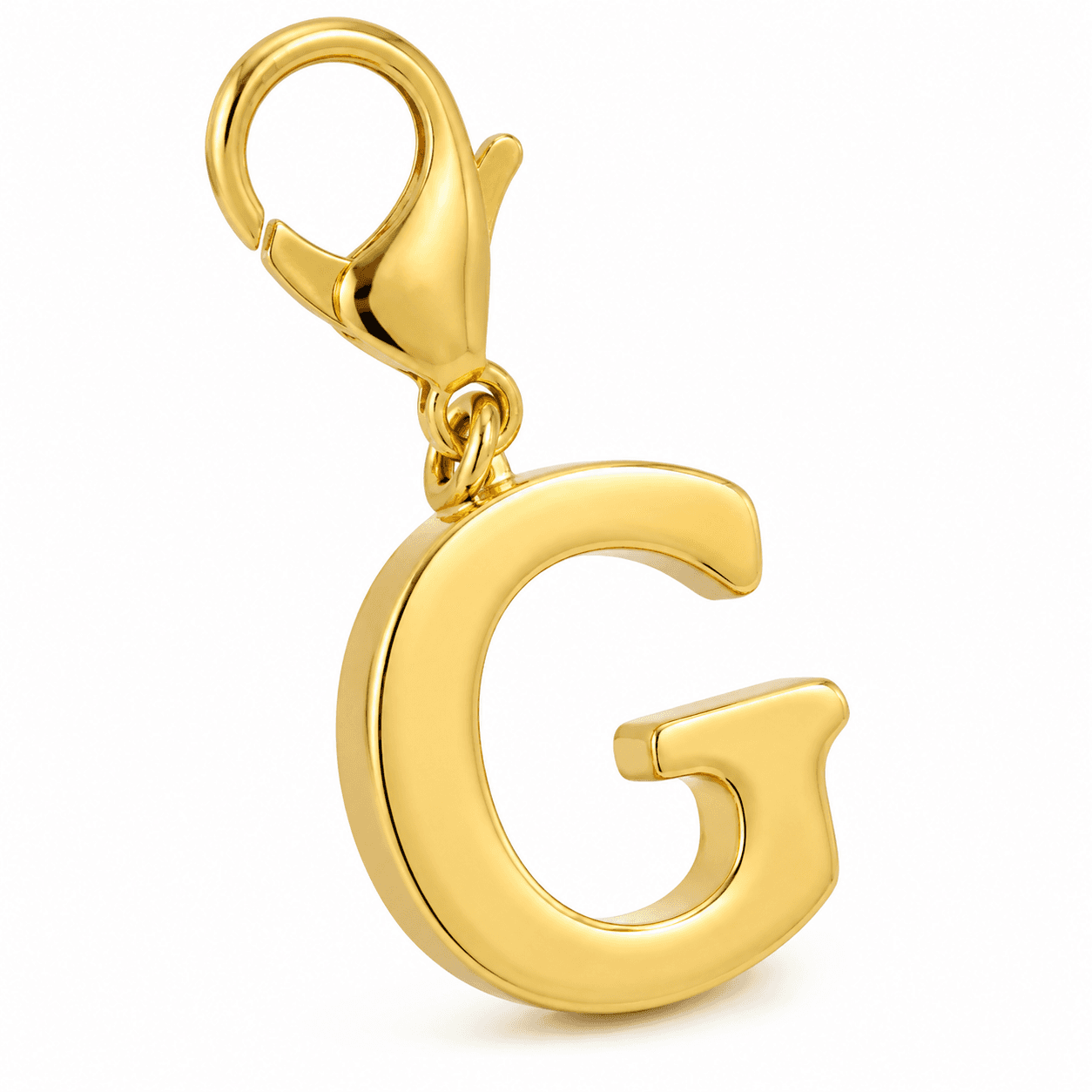
The most successful alphabet letter charms begin with a recognizable letter silhouette. Typography establishes personality before plating, color, or embellishment is introduced. Rounded bubble letters communicate a playful, approachable mood; narrow geometric capitals create a precise, contemporary appearance; and flowing script forms introduce a softer, more personal character. Framed letters provide a structured look, while open-outline designs emphasize negative space. When developing a collection, select two or three complementary design directions and define the role of each before expanding the alphabet.
For a visual gallery, organize reference images into clear groups: bold initials, minimal monograms, script letters, and decorative letterforms. Photograph each charm from the front and at a slight angle to reveal its silhouette, edge treatment, and attachment point. Keep lighting, scale, and background consistent across the gallery so customers can compare designs accurately. A reference board should identify the intended letter, approximate dimensions, finish, optional decorative elements, and target application. This approach gives designers and manufacturing teams a shared specification rather than relying on subjective descriptions.
Match the Letterform to the Collection Concept
For everyday jewelry charms, compact letters with clear outlines can support versatile assortment planning. Gift accessories may benefit from a more expressive initial, a subtle decorative border, or a carefully positioned crystal inlay. Charm bar retailers can prioritize a complete alphabet with consistent height, thickness, and attachment geometry, making it easier to display a broad selection together. Consider how narrow strokes, enclosed counters, and delicate terminals will appear at the intended size. Small openings can become difficult to finish uniformly, while overly intricate details may lose clarity during production. A custom stainless steel charms brief should therefore balance visual originality with manufacturability.
Lancy Jewelry can review proposed letter artwork during OEM development and advise on practical adjustments to proportions, outlines, and detailing. The objective is not to make every letter identical in shape, but to establish consistent visual rules across the alphabet. Explore the alphabet series to evaluate suitable design directions, and record preferred silhouettes before moving into sampling.
Create a Cohesive Palette With 316L Stainless Steel Charms
Coordinate Finish, Contrast, and Surface Detail
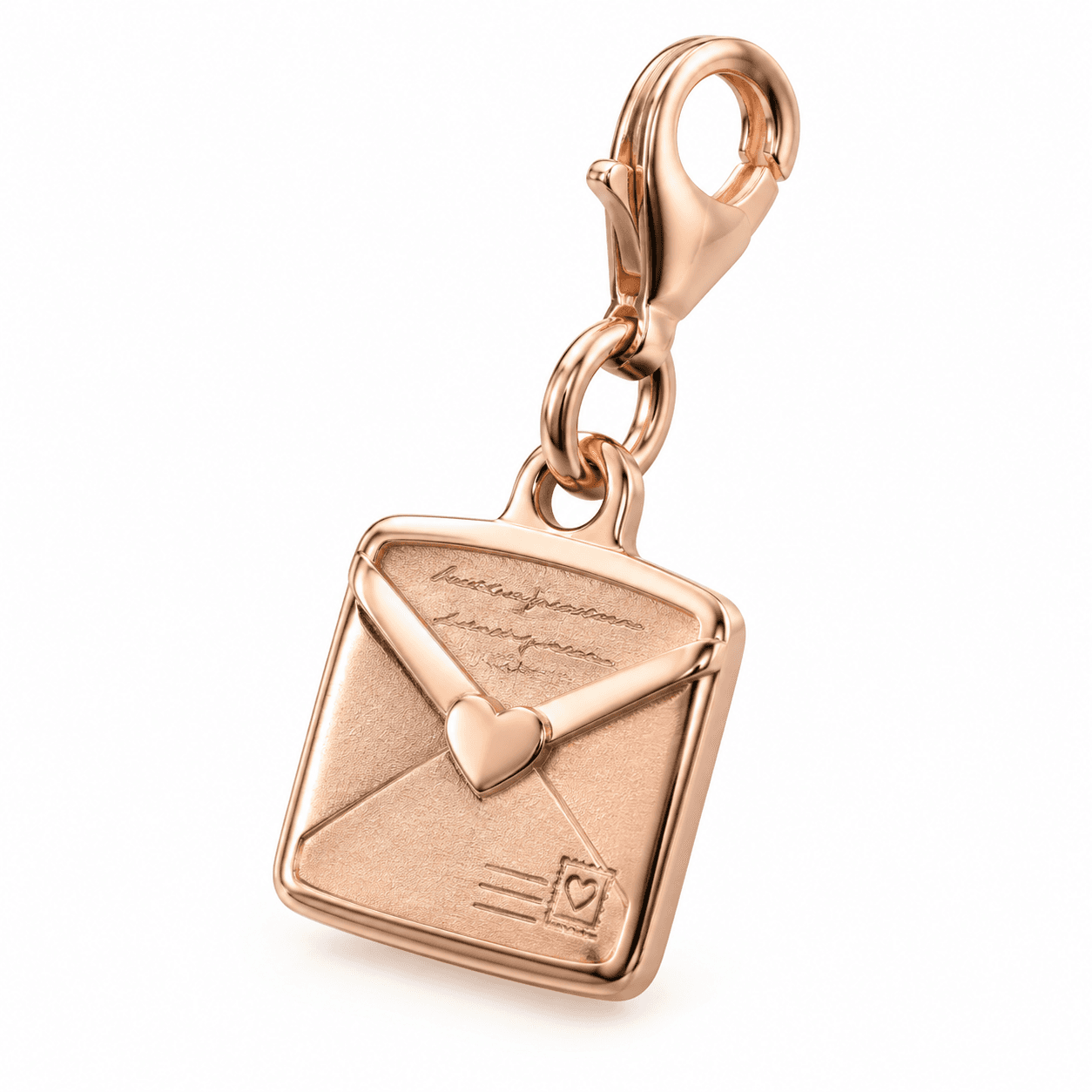
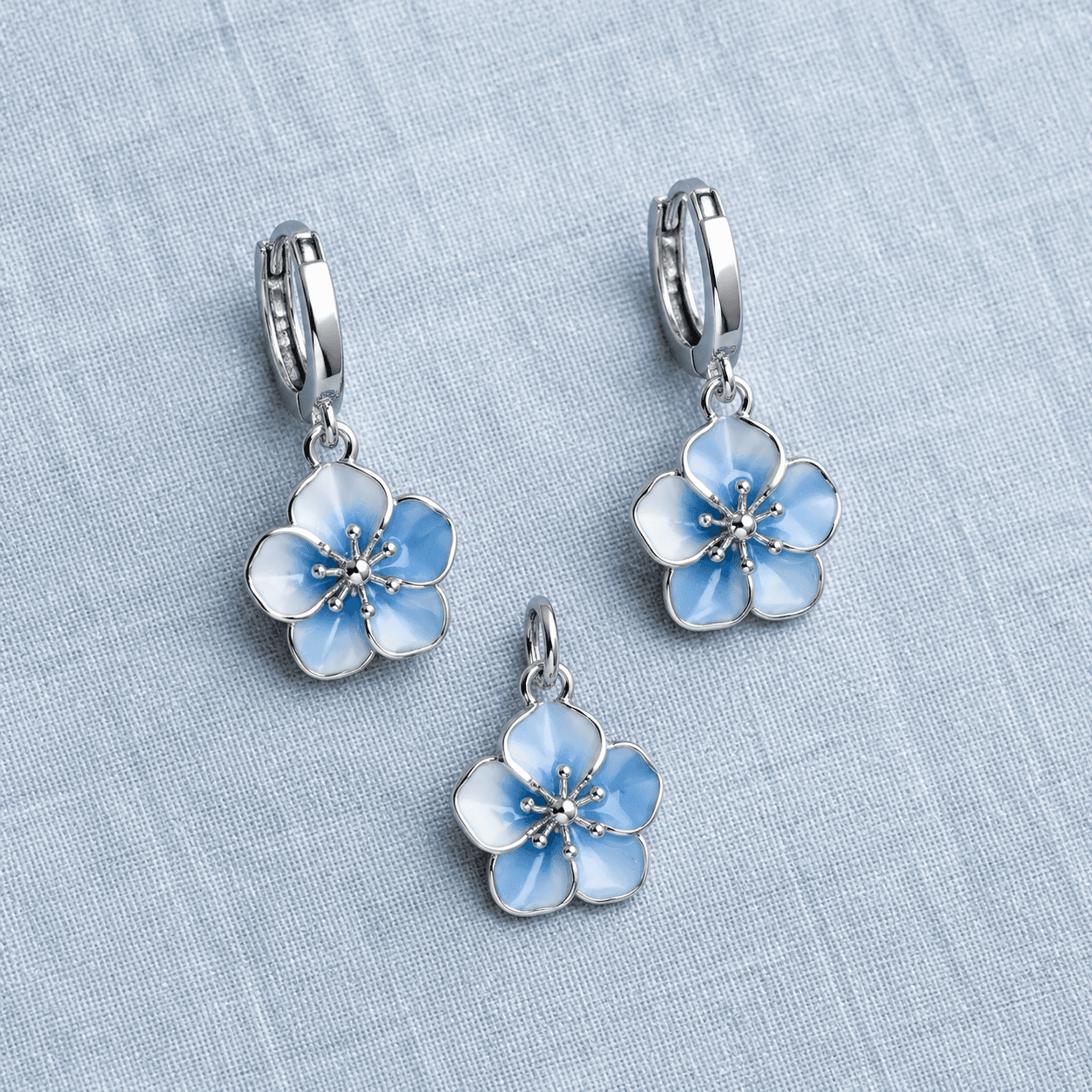
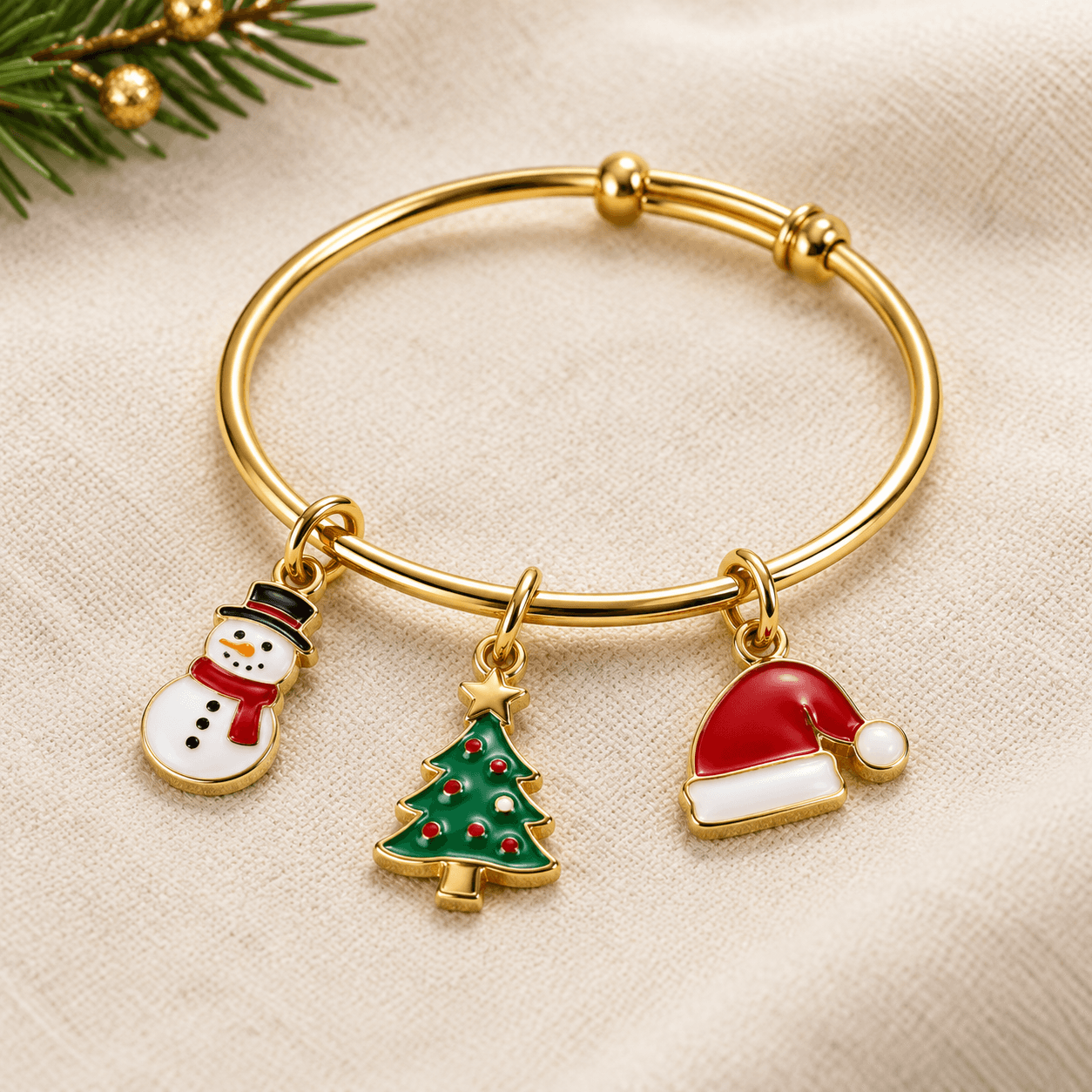
Finish selection changes how an alphabet collection reads visually, even when the underlying letterform remains unchanged. A silver finish emphasizes crisp contours and restrained styling. PVD gold plating creates a warmer appearance, while rose gold plating introduces a softer tonal variation. Enamel can add controlled areas of color, and crystal inlay can provide a concentrated point of light when the design permits secure setting. Because these options have different visual effects and process requirements, choose a primary finish first and introduce secondary finishes only when they serve a clear collection purpose.
For an image-driven style guide, show the same representative initial in separate finish studies wherever production feasibility allows. Use a consistent camera angle, neutral background, and lighting setup to make tonal differences easier to assess. Avoid comparing samples photographed under different light sources, as reflections and white balance can make similar finishes appear substantially different. Include close-up images of polished edges, engraved details, enamel boundaries, and any crystal setting. A visual reference set becomes much more useful when each image is paired with the finish specification and approved sample reference.
Understand the Base Material and Surface Process
Lancy uses 316L stainless steel as the charm base material. This grade is an austenitic stainless steel containing chromium, nickel, and molybdenum, with composition and performance governed by applicable material specifications. Its corrosion resistance is associated with a protective chromium-rich passive film, while molybdenum contributes to resistance in certain corrosive environments. Actual performance depends on alloy conformity, surface condition, fabrication, exposure, and maintenance. Material selection should therefore be supported by appropriate documentation and product-specific evaluation rather than broad claims that any stainless steel item is indestructible or completely tarnish-proof.
PVD is a surface-deposition process used to apply decorative coatings; it does not change the identity of the underlying 316L stainless steel base. Coating appearance and durability depend on the deposition process, preparation, coating system, geometry, and service conditions. Enamel color filling also requires attention to recess depth, edge definition, curing conditions, and color consistency. For wholesale stainless steel charms, specify the base material, intended finish, decorative process, and acceptance criteria separately. This makes the design easier to evaluate and supports more consistent production across repeat orders.
Discuss finish combinations and sample requirements through the OEM service. Final color, coating performance, and decorative detailing should be confirmed against approved physical samples and the agreed technical specification before bulk production.
Design Letter Charms for Proportion, Attachment, and Everyday Use
Use Dimensions to Preserve Readability
Alphabet letter charms must remain recognizable at their intended scale. A practical starting point for many small jewelry charms is approximately 8–18 mm, with the final dimensions determined by the application, typography, and attachment hardware. Compact initials may need simplified strokes, while larger statement letters can accommodate additional detailing. Measure the overall height and width, body thickness, hole diameter, and distance between the hole and the outer edge. Specify whether dimensions include a bail or jump ring, and define any dimensional tolerances that affect assembly or display consistency.
Attachment geometry deserves the same attention as the decorative face. A bail or jump ring should pass through a real hole or closed loop, sit securely, and allow the charm to move without obstructing the letter. The connector must be proportionate to the charm and suitable for the intended use. If a hole is placed too close to an edge, the surrounding material may be insufficient for the intended construction. If it is positioned too far from the visual center, the charm may hang at an unintended angle. Review the front, side, and rear views of the prototype to identify these issues before approval.
Evaluate Craft Details During Sample Development
Inspect edge smoothness, silhouette accuracy, hole placement, surface uniformity, and the legibility of engraved details. For enamel versions, check the color boundary, fill level, visible gaps, and consistency between repeated pieces. For crystal inlay, confirm that the setting is secure, aligned, and appropriate to the design. On PVD finishes, examine visible surfaces under consistent lighting for uneven color, scratches, or obvious coating defects. These checks should follow written acceptance criteria rather than an undefined preference for a premium appearance.
As an ODM charm supplier, Lancy can support design refinement, prototype review, and production planning based on the approved brief. A sample should be treated as a technical checkpoint: confirm the artwork, dimensions, base material, finish, attachment construction, and packaging presentation before authorizing a bulk charm order. Retain an approved reference sample and documented revision history so later production runs can be assessed against the same expectations.
For designers creating a full alphabet, review several representative letters during early development. Include a wide letter, a narrow letter, a rounded letter, and a letter with a small enclosed area. These forms expose different manufacturing challenges and help establish rules that can be applied to the remaining designs. Once the approach is validated, the production team can work from the agreed design system instead of resolving every detail independently.
Plan a Boutique-Ready Alphabet Collection and Visual Gallery
Build an Assortment Customers Can Navigate
A complete alphabet is useful only when the assortment is easy to browse, replenish, and merchandise. Begin by defining the collection architecture: a core initial range, a limited group of decorative variants, and optional finish or color extensions. Establish shared dimensions, attachment standards, finish names, SKU conventions, and image requirements. This structure makes individual letters feel like parts of a coordinated range while leaving room for expressive variations. For charm bar retailers, prioritize the complete alphabet and make letter identification prominent in both product photography and inventory records.
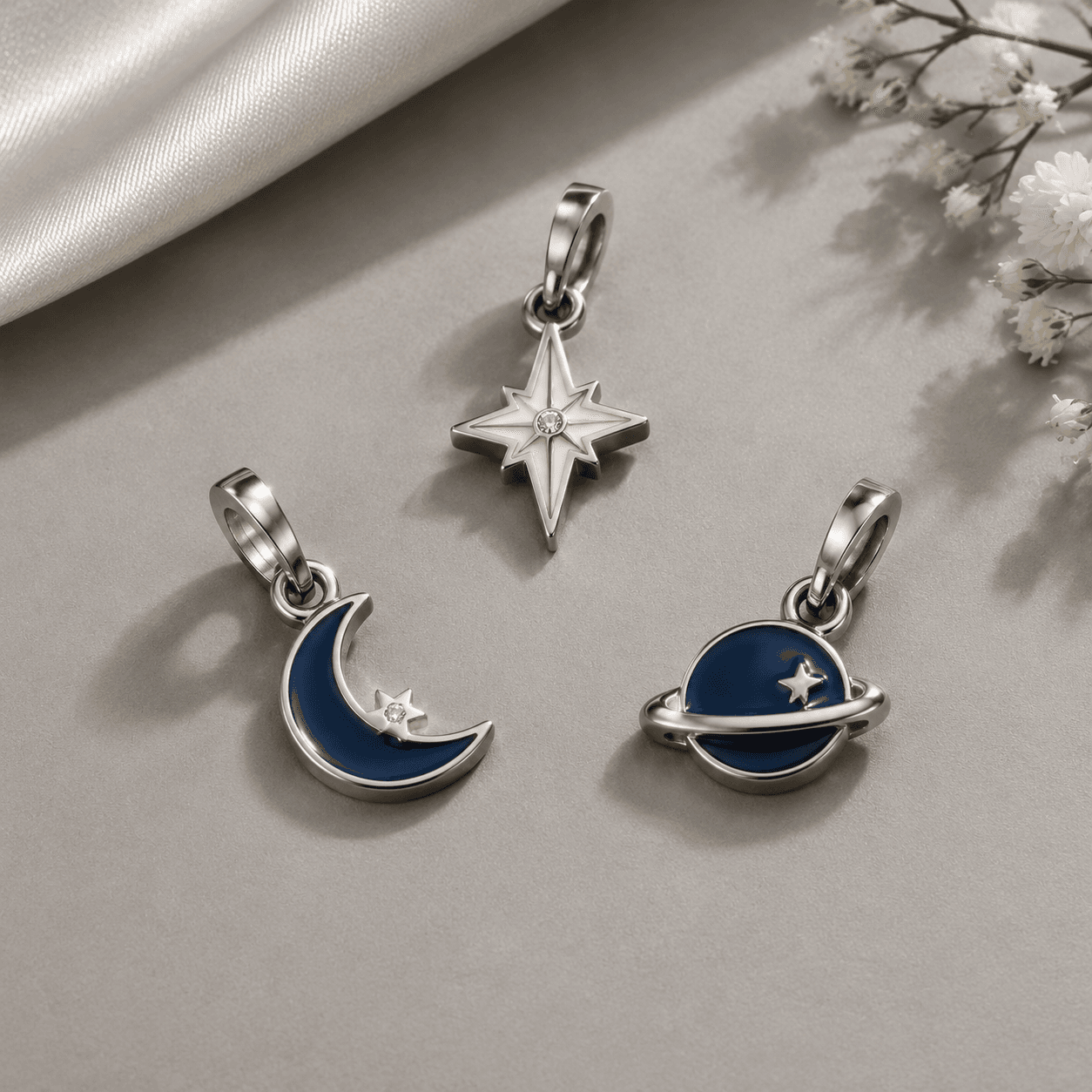
A Pinterest-style visual gallery can be organized into four image groups. The first shows isolated front views against a pure white background. The second uses macro photography to highlight surface finish, engraving, enamel boundaries, or crystal settings. The third presents a tidy display tray or packaging card to communicate scale and assortment organization. The fourth shows a coordinated selection of no more than three charms in a restrained editorial composition. Keep each product fully visible, include clear margins, and ensure every connector is physically attached through a real hole or loop. Avoid cluttered layouts that make it difficult to compare individual letters.
Translate Creative Concepts Into a Production Brief
For every design, provide a vector artwork file where available, the intended letterform, finished dimensions, thickness, attachment details, surface finish, and optional decorative treatment. Identify whether the letter is engraved, raised, outlined, color-filled, or set with crystal inlay. State the intended retail application, target assortment size, estimated order quantity, packaging requirements, and expected sample timeline. If color is important, include a defined color reference and request confirmation against a physical sample. A clear brief helps a stainless steel charms manufacturer assess feasibility before committing to tooling, sampling, or a production schedule.
MOQ should be discussed for the actual project rather than assumed to be identical across every design. The practical minimum may depend on the number of unique letters, finish combinations, decorative processes, packaging configurations, and setup requirements. Low MOQ support can be especially relevant when a boutique wants to test a limited initial assortment before expanding. Ask how sample charges, production quantities, repeat orders, and packaging minimums are calculated so the commercial proposal reflects the complete collection.
Lancy Jewelry supports OEM and ODM development, logo engraving, PVD plating, enamel color filling, crystal setting, and private-label packaging, subject to project specifications and feasibility review. Explore the product catalog for broader assortment planning, or use the contact page to discuss a proposed collection. A documented design system makes artwork review, photography, inventory control, and subsequent replenishment more manageable for international buyers.
Verify Material Quality, Finish Performance, and Documentation
Use Evidence-Based Quality Criteria
Technical quality should be evaluated through traceable material documentation, defined inspection criteria, and testing that matches the intended product and market. For 316L stainless steel charms, request documentation that identifies the material grade and relevant test methods, and confirm that the evidence applies to the product or material batch being supplied. A material certificate, laboratory report, and finished-product inspection record serve different purposes. None should be treated as interchangeable, and a general statement about the material does not establish that every finished charm has passed every applicable test.
SGS is an independent testing, inspection, and certification organization. Depending on the product, destination market, and buyer specification, relevant reports may include RoHS screening for restricted substances in applicable scope, REACH-related chemical compliance assessment, EN 1811 nickel-release testing for relevant articles intended for direct and prolonged skin contact, and salt spray testing to evaluate corrosion behavior under defined laboratory conditions. These references must be interpreted accurately: RoHS and REACH have distinct scopes, EN 1811 addresses nickel release under its specified method, and salt spray results do not guarantee a fixed service life. A report should identify the tested sample, method, conditions, result, and limitations.
Agree on Inspection Before Production
Define incoming material verification, visual inspection, dimensional checks, finish appearance, decorative-detail inspection, and attachment security according to the design. For PVD finishes, establish agreed visual standards and, when appropriate, a defined coating or durability test protocol. For enamel, specify acceptable color variation, fill coverage, and visible defects. For crystal inlay, set criteria for alignment and retention. Salt spray results should be interpreted according to the selected method and acceptance requirement, not as a universal pass or fail threshold independent of the product specification.
Ask whether requested testing is available for the specific charm, finish, and production configuration, and whether the buyer or supplier is responsible for arranging it. If a test report is provided, verify the issuing laboratory, report number, sample description, test date, and applicable scope. Do not describe a product as certified to a particular standard unless supporting documentation substantiates that statement. Lancy can discuss material requirements, sample evaluation, and quality expectations during OEM development so the parties can agree on appropriate evidence before bulk production.
Documenting these checks protects collection consistency and makes supplier evaluation more objective. For repeat orders, retain the approved sample, artwork revision, finish reference, inspection criteria, and relevant test records. These controls are particularly useful when an alphabet collection contains many individual SKUs that need to maintain a consistent appearance across replenishment cycles.
Frequently Asked Questions About Alphabet Letter Charms
Develop Your Alphabet Collection With Lancy Jewelry
Turn Your Lettering Concept Into a Production-Ready Brief
Whether you are building a complete initial assortment, introducing a limited boutique collection, or planning a private-label gift program, Lancy Jewelry can help evaluate your 316L stainless steel charm concept from artwork review through sample approval. Share your preferred letterforms, finish palette, decorative details, and intended retail application so the team can assess a practical OEM or ODM development route.
To request an RFQ or sample development proposal, prepare the following information: (1) the letters or alphabet range required; (2) vector artwork or clear design references; (3) target dimensions, thickness, and attachment requirements; (4) preferred PVD gold plated finish, silver finish, rose gold plating, enamel, or crystal inlay options; (5) estimated quantities and acceptable MOQ; (6) target market and relevant testing requirements; (7) private-label packaging specifications; and (8) requested sample and delivery schedule. Identify any required material documentation or inspection standards so they can be reviewed before the quotation is finalized.
Use the OEM service page to explore custom manufacturing, visit all products to review the wider catalog, or submit your inquiry through Request a Quote. You can also reach the team through Contact. With a clear brief, defined acceptance criteria, and an approved physical sample, your alphabet letter charms collection can move from a visual concept toward controlled, repeatable wholesale production.
Related resources
Related resources
- Lancy Charms Bar
- OEM / ODM Services
- The Ultimate ODM stamped 316L stainless steel angel charm customization Buying Guide
- Custom Stainless Steel Charm Bracelet Tutorial: A Buyer’s Guide to Quality
- How to Evaluate 316L Stainless Steel Zodiac Bracelet Charms Wholesale Suppliers
- 316L Stainless Steel Chinese Zodiac Charms Wholesale: A Finishing Guide
- How to Choose Durable Stainless Steel Charms for Cross-Border E-Commerce
- How to Source Minimalist Stainless Steel Charms: Finishing Guide
- Stainless Steel Animal Jewelry Charms Wholesale: Quality Guide
- Guide to Stainless Steel Lucky Charm Inspirational Jewelry Wholesale