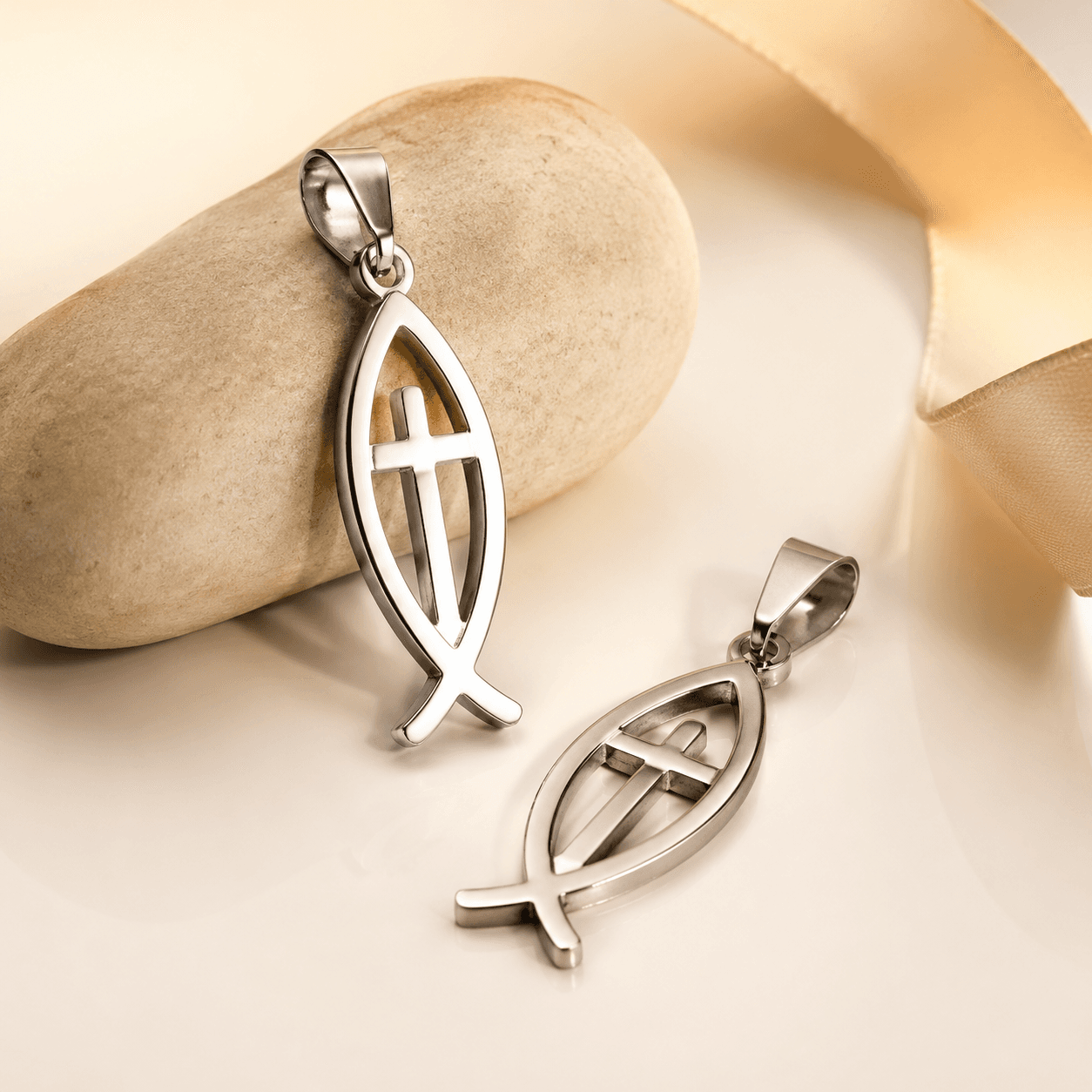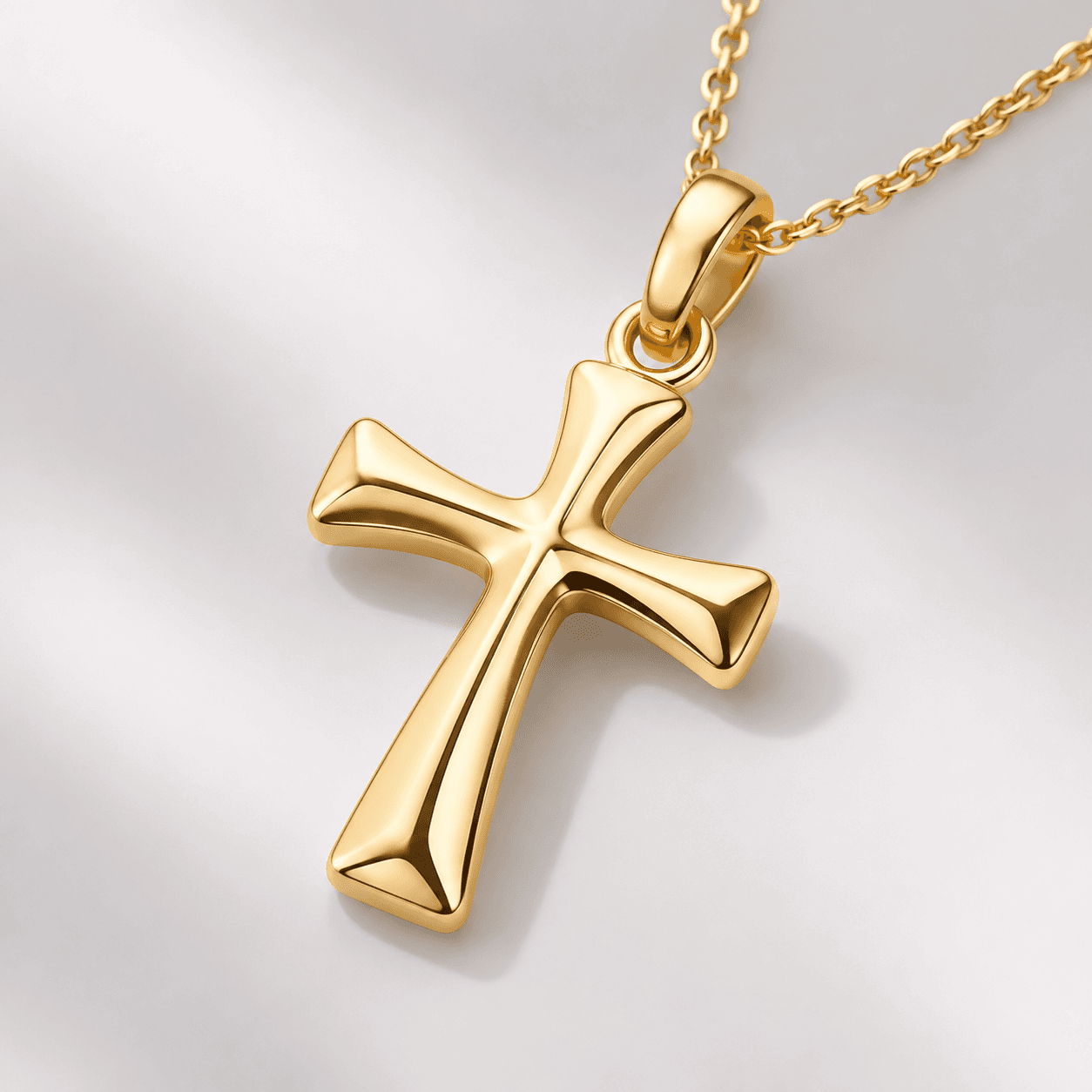
Charming cross designs offer jewelry designers a versatile way to create meaningful, visually distinctive collections. From minimalist silhouettes and rope-twist detailing to crystal inlay, enamel accents and contrasting surface finishes, cross charms can communicate different aesthetics while maintaining a recognizable central form. Understanding proportion, surface treatment, attachment structure and finish coordination helps designers develop cohesive jewelry collections for boutiques, charm bars and private-label programs.
This visual styling guide explores how to select, combine and customize cross charms made from 316L stainless steel. It covers design proportions, PVD gold plated finishes, silver finish options, rose gold plating, decorative details, prototyping and production considerations. As a stainless steel charms manufacturer, Lancy Jewelry supports OEM and ODM development, custom logo engraving, enamel color filling, crystal setting and private-label packaging. Buyers can use these principles to plan wholesale stainless steel charms collections with consistent design language and practical production specifications.
Understanding Charming Cross Design and Styling Principles
Build a visual language around the cross silhouette
A successful charming cross design starts with its silhouette. Designers should consider the relationship between the vertical and horizontal arms, the thickness of the central intersection, the edge profile and the overall visual weight. A narrow, elongated cross can create an elegant and understated impression, while a wider silhouette communicates a stronger decorative presence. Rounded edges produce a softer appearance, whereas defined edges create a more architectural result. These choices influence how a charm looks individually and how it interacts with other decorative elements in a coordinated jewelry collection.
For initial design planning, establish a reference size before selecting surface treatments. A practical starting range is 10–16 mm, depending on the intended application and the amount of visible detail. Smaller designs generally benefit from simplified contours and restrained decoration. Larger designs can accommodate more pronounced rope-twist borders, engraved lines or crystal inlay. Always evaluate the complete charm silhouette rather than judging the front artwork alone. The bail or jump ring must remain proportionate to the charm and must be physically connected through a real hole or loop.
Five visual directions for cross charms
- Minimalist cross: Clean contours, balanced proportions and a smooth surface create a versatile everyday design.
- Rope-twist cross: Twisted detailing adds dimensional texture and creates interesting highlights across the silhouette.
- Halo cross: A defined border around the central form introduces visual depth and creates opportunities for contrasting finishes.
- Geometric cross: Straight edges and controlled symmetry establish a contemporary decorative appearance.
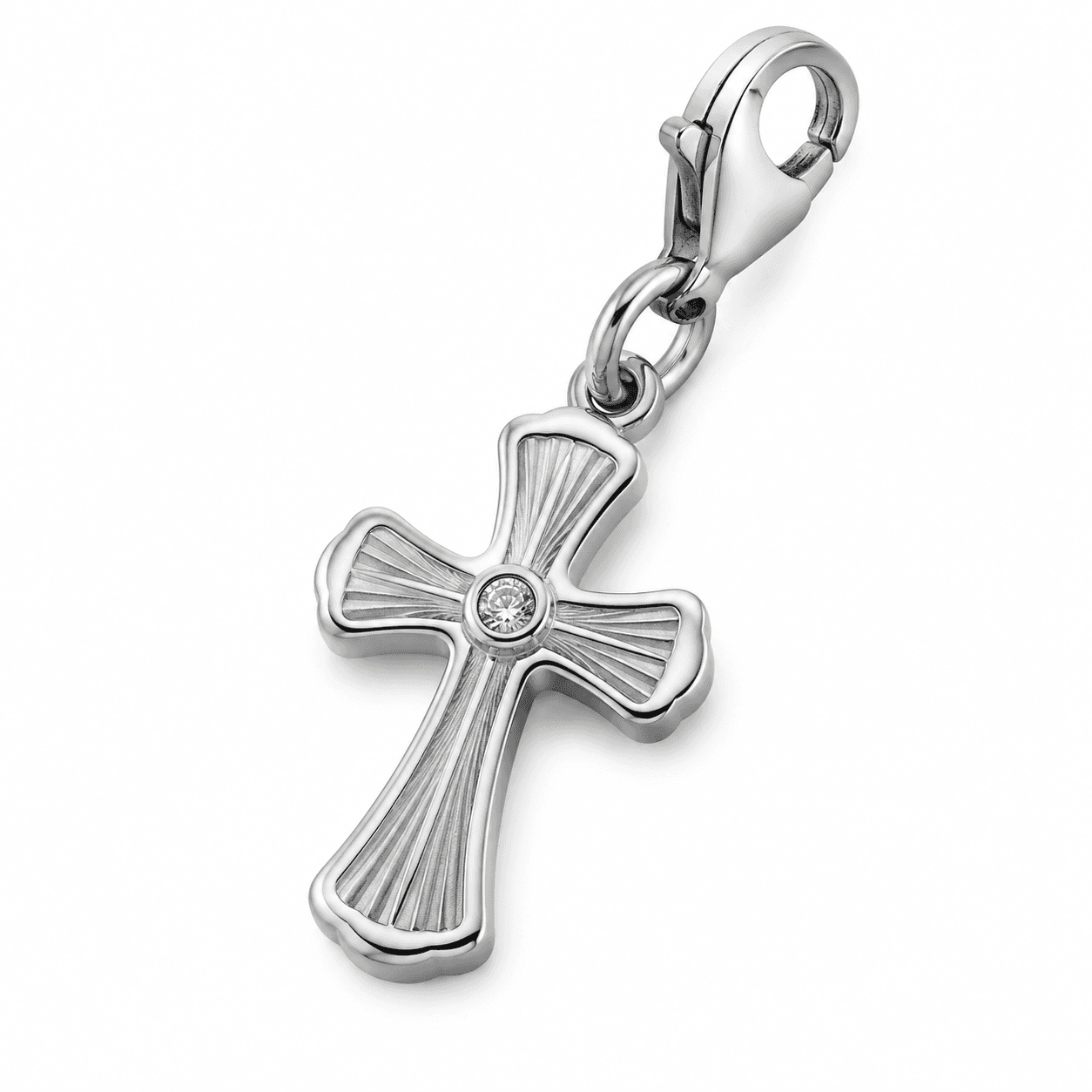
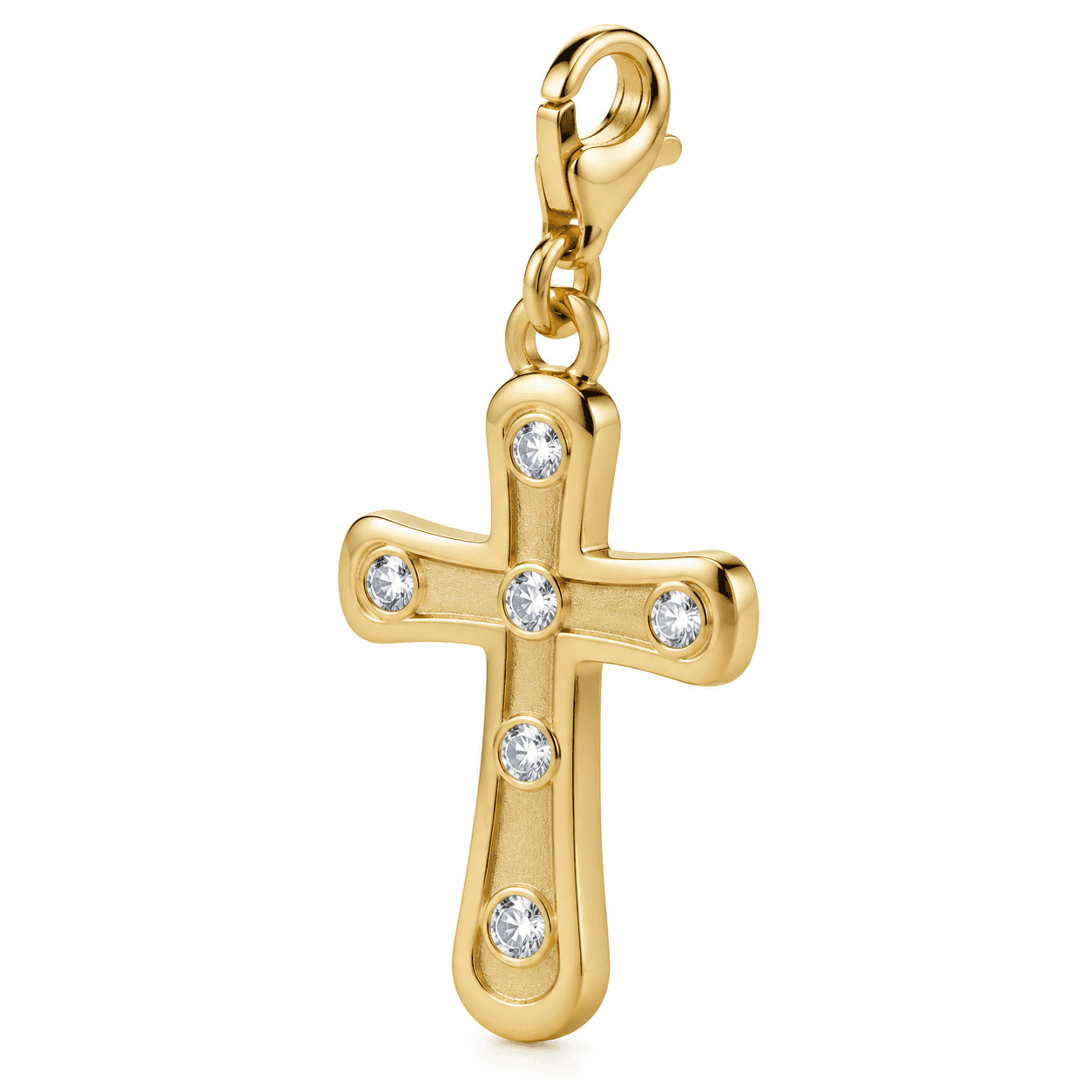
- Embellished cross: Crystal inlay, enamel color filling or micro-pavé detailing creates a more decorative focal point.
When preparing a visual gallery, photograph each direction against a consistent neutral background. Include a straight-on product view, an angled detail view and a scale reference. This makes the collection easier for jewelry designers and sourcing teams to evaluate. Explore the 316L stainless steel Cross Collection to review design directions that can inform a coordinated OEM development brief.
How to Coordinate Finishes, Texture and Decorative Details
Create contrast without losing collection consistency
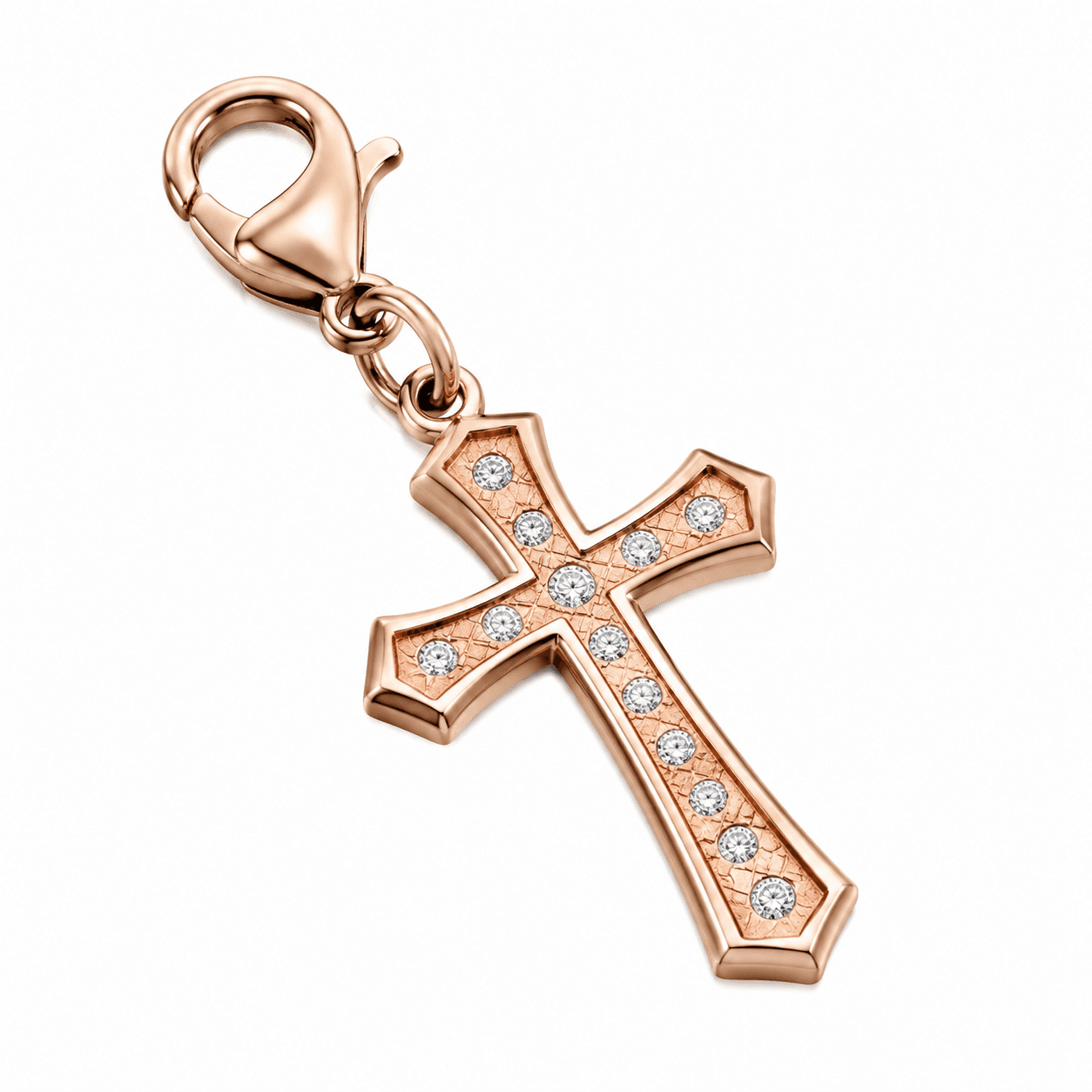
Finish selection has a major influence on the appearance of a charming cross. The same silhouette can communicate different design intentions when produced with a silver finish, PVD gold plating or rose gold plating. A silver finish emphasizes a clean metallic appearance and works well with crisp geometric details. PVD gold plated surfaces introduce warmth and a polished boutique aesthetic. Rose gold plating offers a softer tonal direction that can complement romantic and gift-oriented collections. Designers should select a primary finish first, then decide whether additional decorative treatments support the intended visual hierarchy.
PVD coating is a physical vapor deposition process in which material is deposited onto a prepared surface under controlled vacuum conditions. Coating appearance and performance depend on substrate preparation, process parameters, coating composition and final inspection. For 316L stainless steel charms, consistent surface preparation is particularly important because scratches, contamination and uneven polishing can affect the final appearance. A professional development brief should identify the target color, surface gloss, coating coverage and acceptable visual variation rather than simply requesting a gold finish.
Match decorative techniques to the design
- Crystal inlay: Introduces controlled points of reflection. Specify stone placement, size, setting depth and spacing to avoid overcrowding a small silhouette.
- Micro-pavé detailing: Creates a continuous decorative effect, but requires careful planning of setting positions and sufficient structural support.
- Enamel color filling: Adds defined color blocks. Provide color references, fill boundaries and the intended finish around each enamel area.
- Logo engraving: Provides private-label identification through discreet placement on an available flat surface or reverse side.
- Rope-twist texture: Creates dimensional highlights through repeated surface geometry and requires careful polishing around detailed contours.
For a coordinated collection, limit the number of primary finishes and repeat selected details across several silhouettes. For example, a designer might develop a silver finish minimalist cross, a PVD gold plated rope-twist cross and a rose gold plated halo design using a consistent attachment structure. This creates variety while keeping the visual identity organized. View other coordinated shapes in the Special Symbols Collection when planning complementary decorative accessories.
For the visual gallery, use close-up photographs to show the distinction between smooth surfaces, textured borders and decorative settings. Avoid relying on color alone: lighting angle, surface reflection and macro photography should make the actual construction visible. This helps buyers assess whether the intended visual effect can be reproduced consistently during sample development and bulk production.
Five Cross Charm Styling Compositions for Jewelry Designers
Visual gallery: five practical design combinations
A visual styling guide is most useful when each composition has a clear design purpose. Rather than combining unrelated decorative details, establish one dominant feature and one supporting feature for each design. The following combinations provide a practical starting point for boutique collections, charm bar assortments and seasonal gift programs. All concepts can be developed around a 316L stainless steel charm base, with the attachment hardware designed as an integral part of the product specification.
01. Aurora rope-twist and crystal composition
Start with an elongated cross silhouette and use a rope-twist border to create movement around the central form. A restrained crystal inlay arrangement can add visual emphasis without obscuring the twisted surface. A 10–16 mm size range is a useful initial development reference. Specify the number of setting positions, crystal dimensions, surface polish and bail opening. This composition works well as a decorative focal charm in a coordinated jewelry assortment.
02. Nebula dark-tone contrast composition
Use a defined cross outline with a dark visual center and carefully controlled metallic borders. The design objective is to create contrast between the center and the outer structure while preserving a clearly recognizable cross silhouette. Confirm the precise decorative process and achievable color appearance during prototyping. Request front, reverse and side views to evaluate border definition, surface transitions and attachment proportions.
03. Fragment halo gold composition
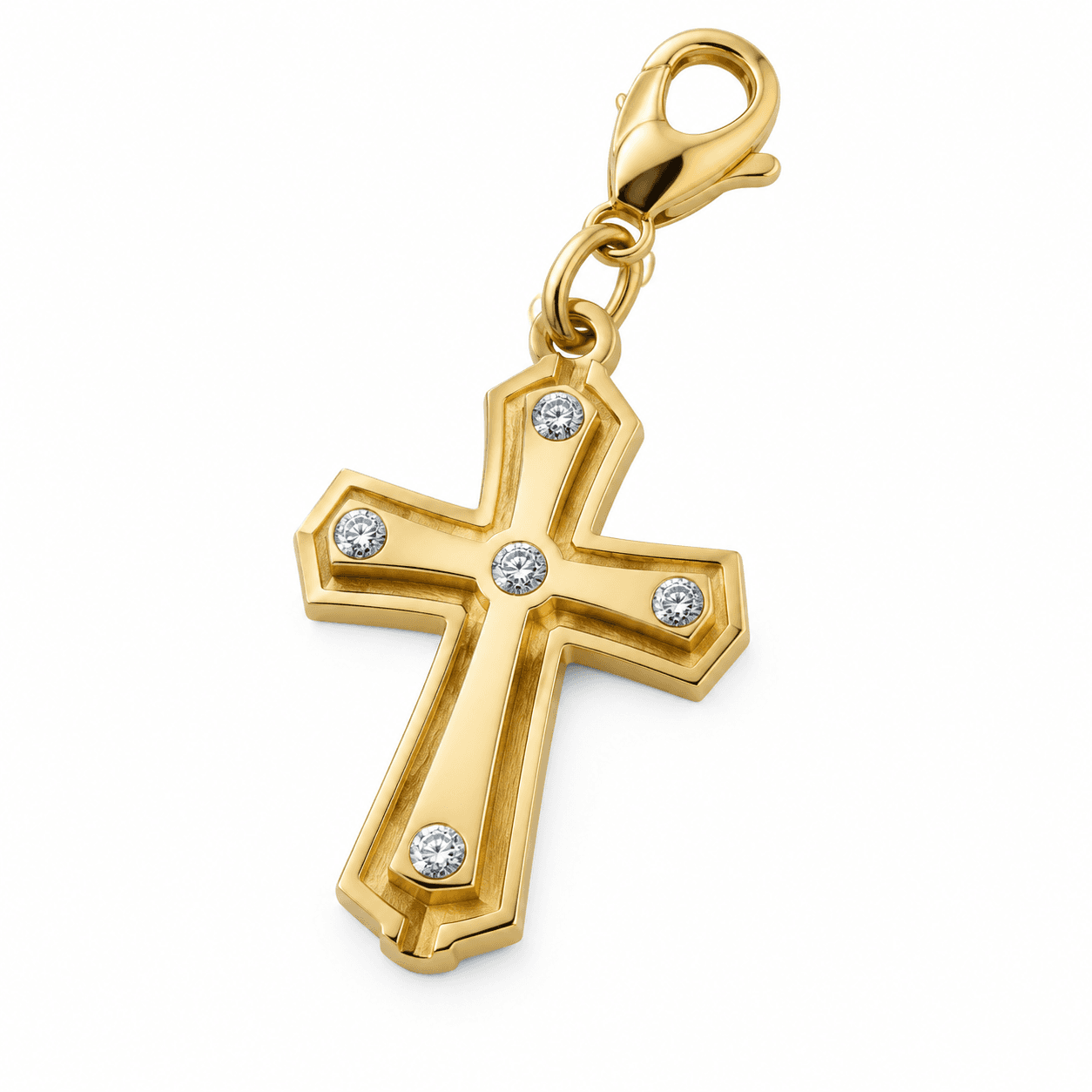
Develop a structured cross with a surrounding halo and a PVD gold plated finish. The halo should remain visually separated from the central form, with enough definition to be recognizable at the selected charm size. Designers can explore polished and textured surface combinations, but should avoid unnecessary detailing that makes the silhouette visually crowded. Include plating coverage, color reference, edge treatment and logo location in the technical drawing.
04. Obsidian architectural composition
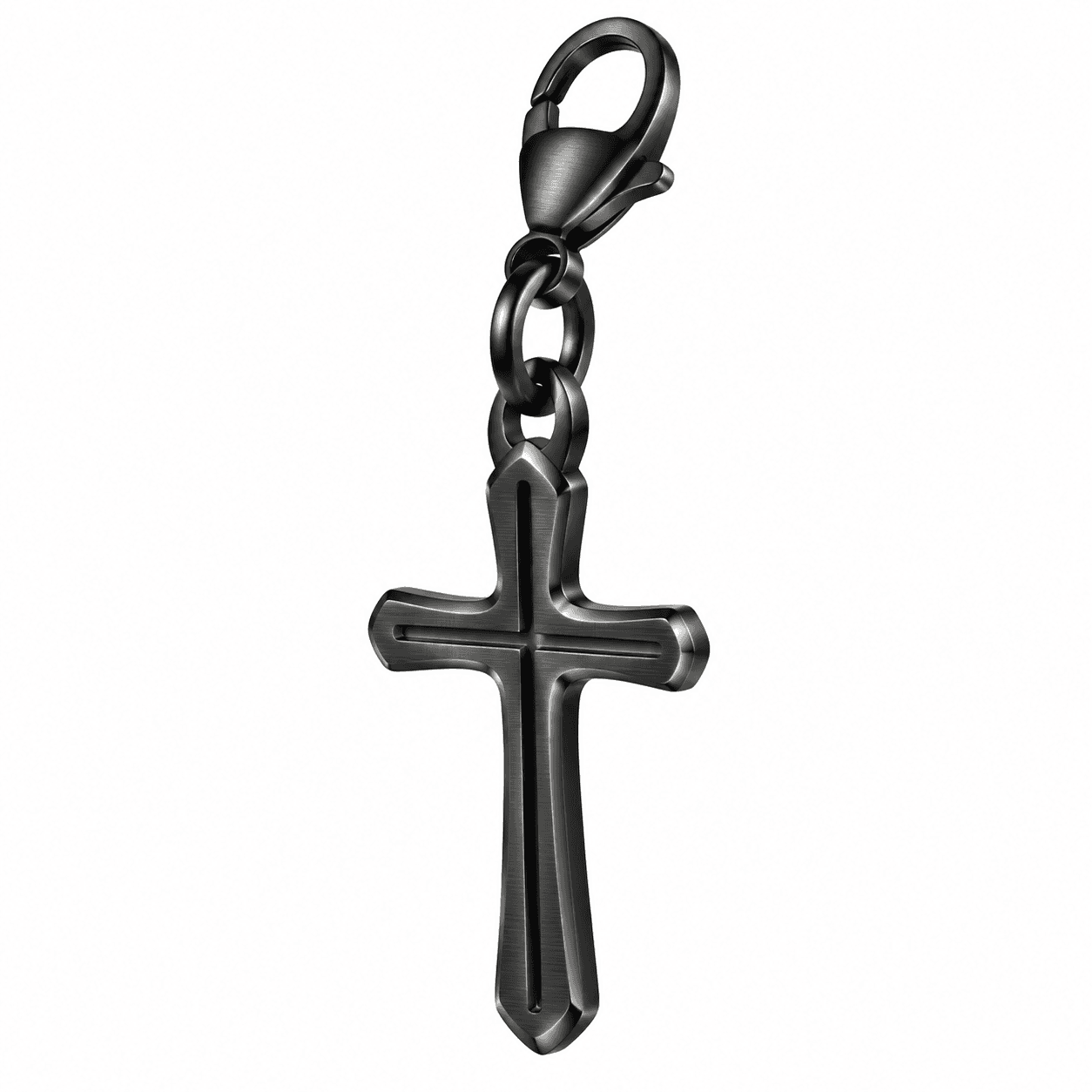
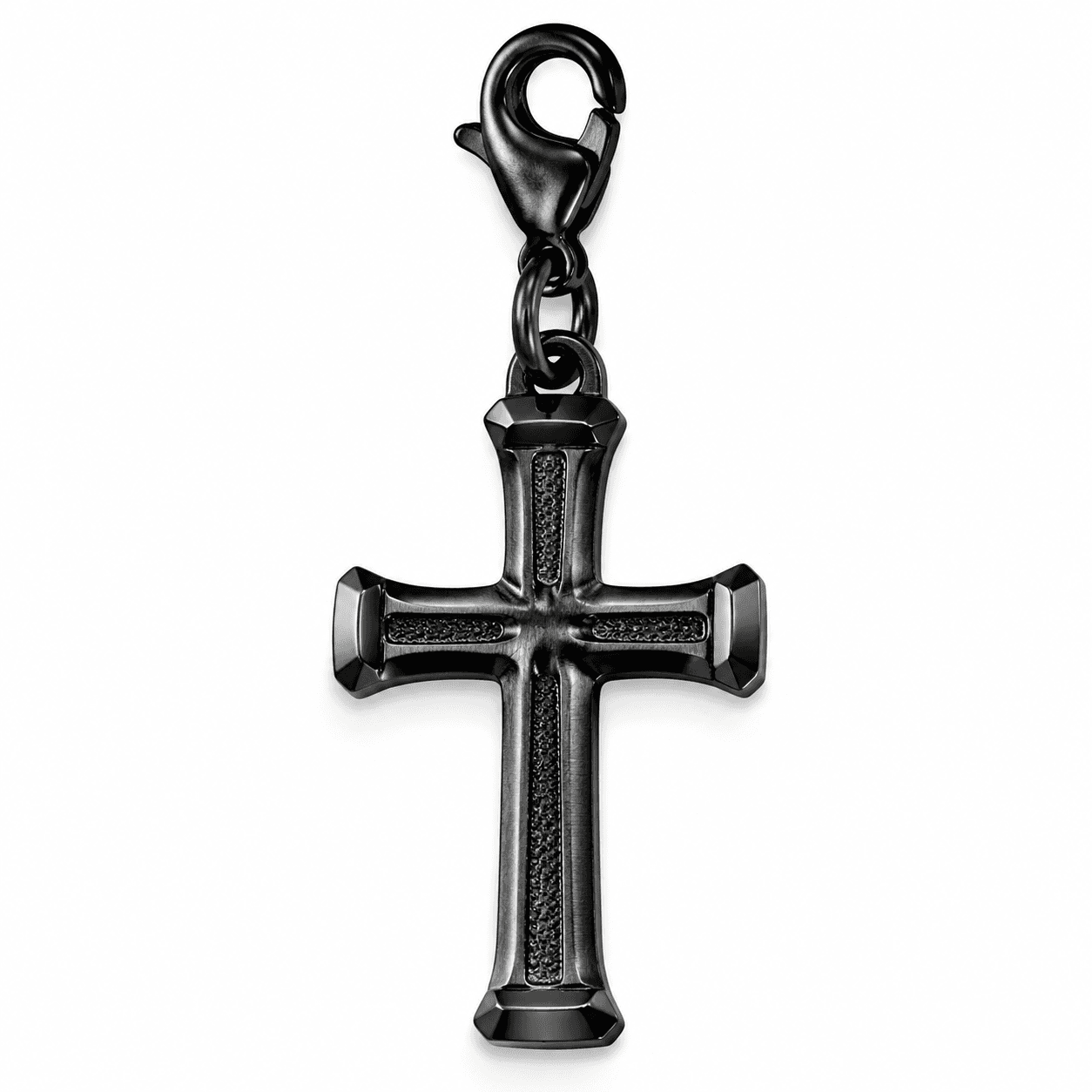
Focus on a bold, restrained cross shape with a strong outer contour and minimal decorative interruption. This direction prioritizes geometry, thickness and surface quality over embellishment. It is suitable for collections that need a clean visual statement. Confirm the finished thickness, corner radii, polishing access and hardware clearance before approving the production sample.
05. Midnight halo and micro-pavé composition
Combine a dark central visual area with a defined outer border and carefully positioned micro-pavé detailing. This design requires particular attention to setting depth, decorative spacing and the structural strength of the surrounding 316L stainless steel. Review the sample under different lighting conditions to ensure that the central treatment and reflective details remain visually distinct.
For every composition, prepare three consistent images: a centered front view, a macro detail photograph and a scale reference showing the charm beside a packaging card or display tray. The main charm should remain fully visible, with a realistic bail or jump ring and no disconnected hardware. These images can become the foundation of a product development gallery and help teams compare design variations before selecting samples.
Designers developing larger coordinated assortments can also review the Birthstone Collection and Special Symbols Collection for additional visual directions. Keeping the same photography standards across collections makes catalog planning and product evaluation more efficient.
316L Stainless Steel Properties, Quality Control and Prototyping
Translate visual concepts into manufacturable specifications
Material selection must support both the intended appearance and the practical requirements of the finished charm. Lancy Jewelry focuses on 316L stainless steel charms as its base-material offering. This grade is an austenitic stainless steel containing chromium, nickel and molybdenum. Its alloy composition contributes to corrosion resistance, while its mechanical properties provide a useful foundation for small decorative components. Actual product performance depends on the material specification, fabrication quality, surface preparation, coating process and conditions of use.
Cross charms often contain small details that require particular attention during manufacturing. The intersection of the two arms should maintain sufficient structural thickness, while narrow borders and decorative openings need to be evaluated for strength and finishing access. Designers should specify overall dimensions, thickness, corner radii, hole positions and attachment requirements in the initial drawing. For crystal inlay and micro-pavé versions, the technical design should also define setting locations, decorative spacing and minimum structural support around each setting.
Recommended sample development workflow
- Concept definition: Supply reference sketches, target dimensions, finish preferences and the intended application.
- Technical review: Review the silhouette, thickness, attachment geometry, decorative details and manufacturing feasibility.
- Prototype preparation: Develop a physical sample to assess proportions, surface quality, hardware connection and visual accuracy.
- Finish evaluation: Review polishing, PVD color, enamel filling and crystal setting where applicable.
- Sample approval: Confirm dimensions, finish appearance, tolerances, artwork and packaging requirements before production.
- Production inspection: Apply agreed inspection criteria to material identity, appearance, attachment security and order consistency.
Understanding certifications and test reports
Buyers may request SGS testing or supporting documentation covering RoHS, REACH, EN1811 and salt spray performance. These references address different compliance or performance questions and should not be treated as interchangeable quality guarantees. RoHS relates to restrictions on specified hazardous substances in applicable product categories. REACH concerns chemical substances and relevant obligations in the European market. EN1811 is a reference method for measuring nickel release from products intended for direct and prolonged skin contact, where applicable. Salt spray testing evaluates corrosion behavior under specified laboratory conditions and does not automatically predict every real-world wearing environment.
When reviewing SGS reports, check the tested sample description, material identification, test method, report date, measured results and scope of application. A report for one finish or construction should not automatically be assumed to cover every variation in a collection. Buyers should request documentation relevant to the exact product configuration and destination-market requirements. Lancy can coordinate manufacturing specifications and supporting quality documentation according to the agreed project scope.
Factory quality controls should cover incoming 316L stainless steel verification, dimensional inspection, surface preparation, plating consistency, decorative setting quality and final appearance. For repeat orders, establish approved reference samples and documented acceptance criteria. This creates a practical basis for consistent production across multiple cross designs and bulk orders.
Plan a Boutique Cross Collection for Wholesale and Private Label
Turn individual designs into a coherent product assortment
A successful boutique assortment should offer enough variety to support customer choice without making sourcing and inventory management unnecessarily complicated. Begin by defining a collection theme, such as minimalist faith-inspired designs, geometric decorative forms or embellished gift accessories. Then organize designs into groups based on silhouette, finish and decorative technique. A balanced collection might include two minimalist crosses, two textured designs and one embellished statement charm. This approach provides visible variety while keeping the technical development process manageable.
For wholesale stainless steel charms programs, establish a clear product specification for every SKU. Record the finished dimensions, thickness, weight, 316L stainless steel base, surface finish, attachment configuration, decorative treatment and packaging format. If the same silhouette is offered in multiple finishes, treat each finish as a controlled product variation. Keep artwork files, color references and approved samples linked to the relevant SKU to reduce confusion during repeat production.
Practical collection planning framework
- Core designs: Select simple silhouettes that can form the foundation of the collection.
- Signature designs: Introduce distinctive borders, geometric detailing or decorative inlay to create visual differentiation.
- Finish variations: Select a limited group of silver finish, PVD gold plated and rose gold plating options based on the intended assortment.
- Personalization: Consider custom logo engraving, reverse-side details and private-label packaging.
- Complementary products: Plan matching decorative forms and suitable hardware for jewelry, charm bar and gift accessory applications.
As an OEM charms manufacturer, Lancy Jewelry supports OEM/ODM development, sample development, logo engraving, PVD plating, enamel color filling, crystal setting and private-label packaging. Buyers can discuss low MOQ support during project planning, with actual MOQ depending on the design complexity, finish, tooling requirements and packaging specifications. For a new assortment, it is useful to separate prototype requirements from the planned commercial order quantity so that sampling and production expectations remain clear.
Before requesting a quotation, prepare a design brief containing drawings or reference images, target dimensions, estimated quantities per design, finish selection, decoration details and packaging needs. Include the destination market and any relevant testing or documentation requirements. For multiple designs, a SKU matrix helps the factory review shared production processes and identify opportunities to coordinate development efficiently.
To explore additional products and development options, visit All Products or learn more about Lancy OEM Services. A clearly organized brief gives the production team a stronger basis for technical feedback, accurate sample planning and a practical RFQ response.
Frequently Asked Questions About Charming Cross Designs
Start Your Custom Cross Charm Collection With Lancy
Turn your cross design concept into a production-ready sample
Whether you are developing a minimalist cross assortment, an embellished boutique collection or a private-label gift program, Lancy Jewelry can support the process from design review to sample development and production planning. Our factory capabilities include 316L stainless steel charm manufacturing, OEM/ODM development, PVD plating, logo engraving, enamel color filling, crystal setting and private-label packaging. Low MOQ support can be discussed according to the design and production requirements.
For an efficient RFQ, send the following information:
- Design references: Sketches, technical drawings or clear product reference images showing the intended cross silhouette.
- Dimensions: Target width, height, thickness and preferred charm size.
- Material: Confirmation of 316L stainless steel as the required base material.
- Finish: Preferred silver finish, PVD gold plating or rose gold plating.
- Decoration: Crystal inlay, micro-pavé, enamel color filling, rope-twist detailing or logo engraving requirements.
- Hardware: Bail or jump ring dimensions, opening requirements and intended attachment application.
- Commercial details: Estimated quantity per design, target MOQ and expected repeat-order volume.
- Packaging and compliance: Private-label packaging specifications, destination market and relevant testing or certification requirements.
Our team can review your information, clarify technical details and discuss the next sample development steps. For custom manufacturing, visit OEM Services. To submit your RFQ, use the Request a Quote page or contact the team through Contact Lancy Jewelry. Start with a clear design brief and build a coordinated cross charm collection around your brand's own creative direction.
Related resources
Related resources
- 316L Stainless Steel Chinese Zodiac Charms Wholesale: A Finishing Guide
- OEM / ODM Services
- 316L Stainless Steel Custom Enamel Sterling Charms: A Buyer’s Guide
- The Ultimate ODM stamped 316L stainless steel angel charm customization Buying Guide
- Custom Stainless Steel Charm Bracelet Tutorial: A Buyer’s Guide to Quality
- Stainless Steel Animal Jewelry Charms Wholesale: Quality Guide
- Antique Distressed Finish on Stainless Steel Charms: A Buyer’s Guide to Durability
- How to Source Minimalist Stainless Steel Charms: Finishing Guide
- Custom OEM/ODM Guide to Stainless Steel African Jewelry Charms Wholesale
- Guide: Stainless Steel Evil Eye Charm Jewelry Wholesale OEM Tips