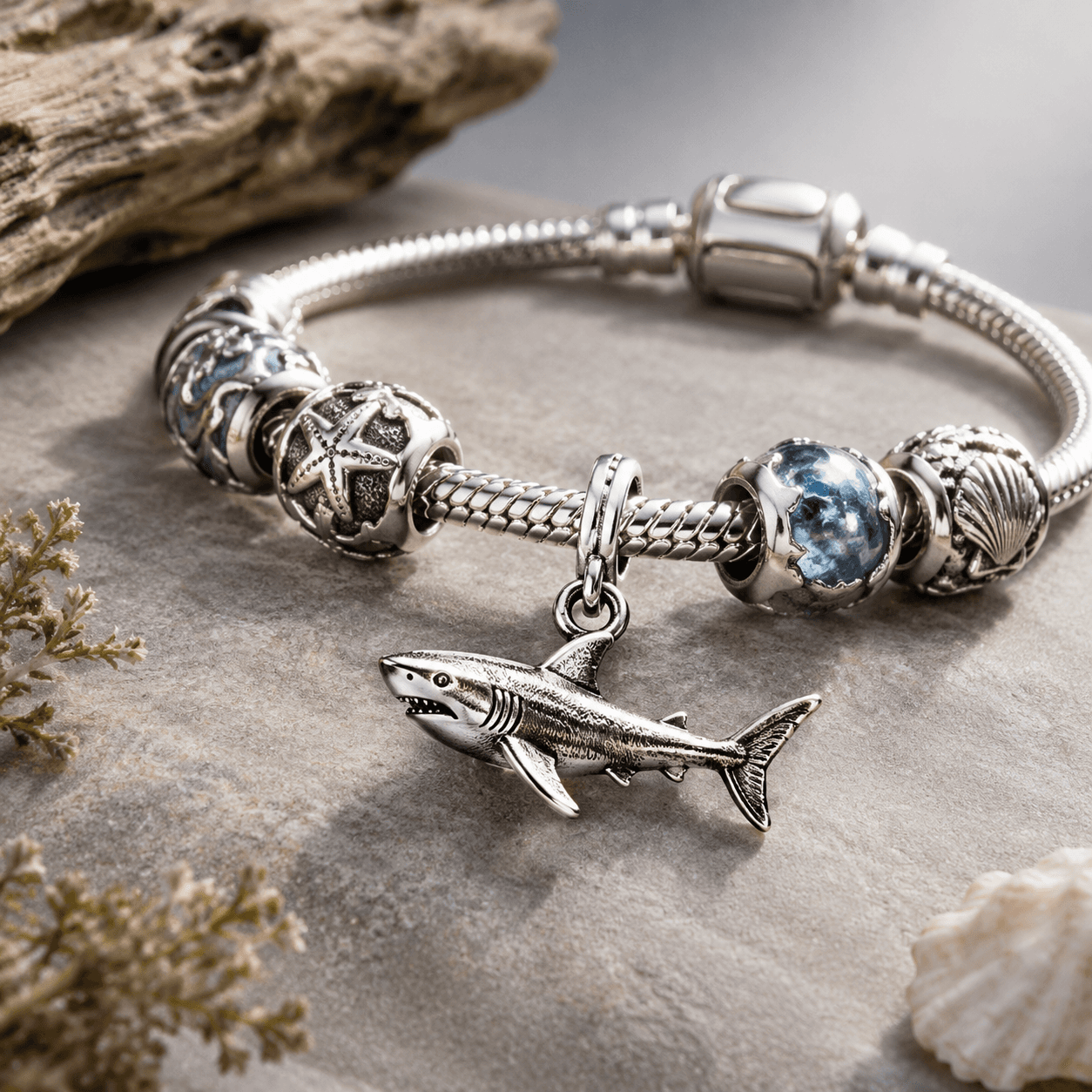
A shark charm bracelet combines marine-inspired design with precise component engineering. For jewelry designers developing a distinctive collection, understanding the material, dimensions, surface finish, attachment geometry, and production tolerances is essential to creating a product that looks refined and performs consistently. A well-developed shark charm starts with a clear design specification, followed by material selection, three-dimensional form development, prototype evaluation, and repeatable manufacturing controls.
Lancy Jewelry specializes in 316L stainless steel charms for boutique jewelry brands, charm bar retailers, gift companies, and private-label buyers. This material-focused guide explains how 316L stainless steel influences shark charm bracelet development, how PVD gold plating, silver finish, rose gold plating, enamel, and crystal inlay expand creative possibilities, and how designers can prepare specifications for efficient sample development and bulk production. As a stainless steel charms manufacturer, Lancy supports OEM and ODM projects with logo engraving, surface finishing, color filling, crystal setting, and private-label packaging.
Whether you are developing a compact ocean-themed charm or planning a coordinated bracelet assortment, a structured design process helps connect creative direction with measurable manufacturing requirements. The following sections provide practical guidance for material assessment, prototyping, quality verification, and sourcing a shark charm bracelet collection for international markets.
Understanding 316L Stainless Steel for Shark Charm Bracelet Design
Why Material Selection Matters
A shark charm bracelet begins with a small component that must communicate a recognizable silhouette while maintaining practical dimensions, controlled surface quality, and reliable attachment geometry. The base material influences the component's forming and finishing requirements, the achievable level of detail, and the inspection methods needed before shipment. Lancy Jewelry uses 316L stainless steel as the base material for its charms, providing designers with a consistent material specification for developing coordinated collections.
316L stainless steel is an austenitic stainless steel grade characterized by chromium, nickel, and molybdenum content, with a low carbon specification. Chromium supports the formation of a passive surface film, while molybdenum contributes to resistance against localized corrosion in appropriate environments. These characteristics make the grade useful for jewelry components that may encounter perspiration and routine handling. Actual performance still depends on the material specification, manufacturing condition, surface quality, finishing process, and exposure conditions. Designers should not treat the material designation alone as proof of universal corrosion resistance or suitability for every wearer.
Translate Material Properties into Design Decisions
For a shark charm bracelet, begin by defining the intended wearing environment, target dimensions, visual finish, and expected retail positioning. A compact charm intended for a daily-wear bracelet may need a smooth reverse, rounded external edges, and a carefully proportioned opening. A statement charm may accommodate deeper relief or more pronounced fin details, but increasing its size can change its weight, visual balance, and attachment requirements. Material and geometry must therefore be assessed together rather than as separate design decisions.
For technical consistency, request the applicable material specification and traceability documents for the production lot. Where chemical composition is relevant, identify whether the evidence is a material certificate, supplier declaration, or independent test report. These documents serve different purposes. A material certificate addresses the specified material, while a finished-product assessment can address requirements associated with the completed component. This distinction is particularly important for private-label buyers who need evidence suitable for internal quality review and market-specific compliance procedures.
Shark Charm Geometry, Attachment Design, and Functional Details
Design the Silhouette Before Refining Surface Details
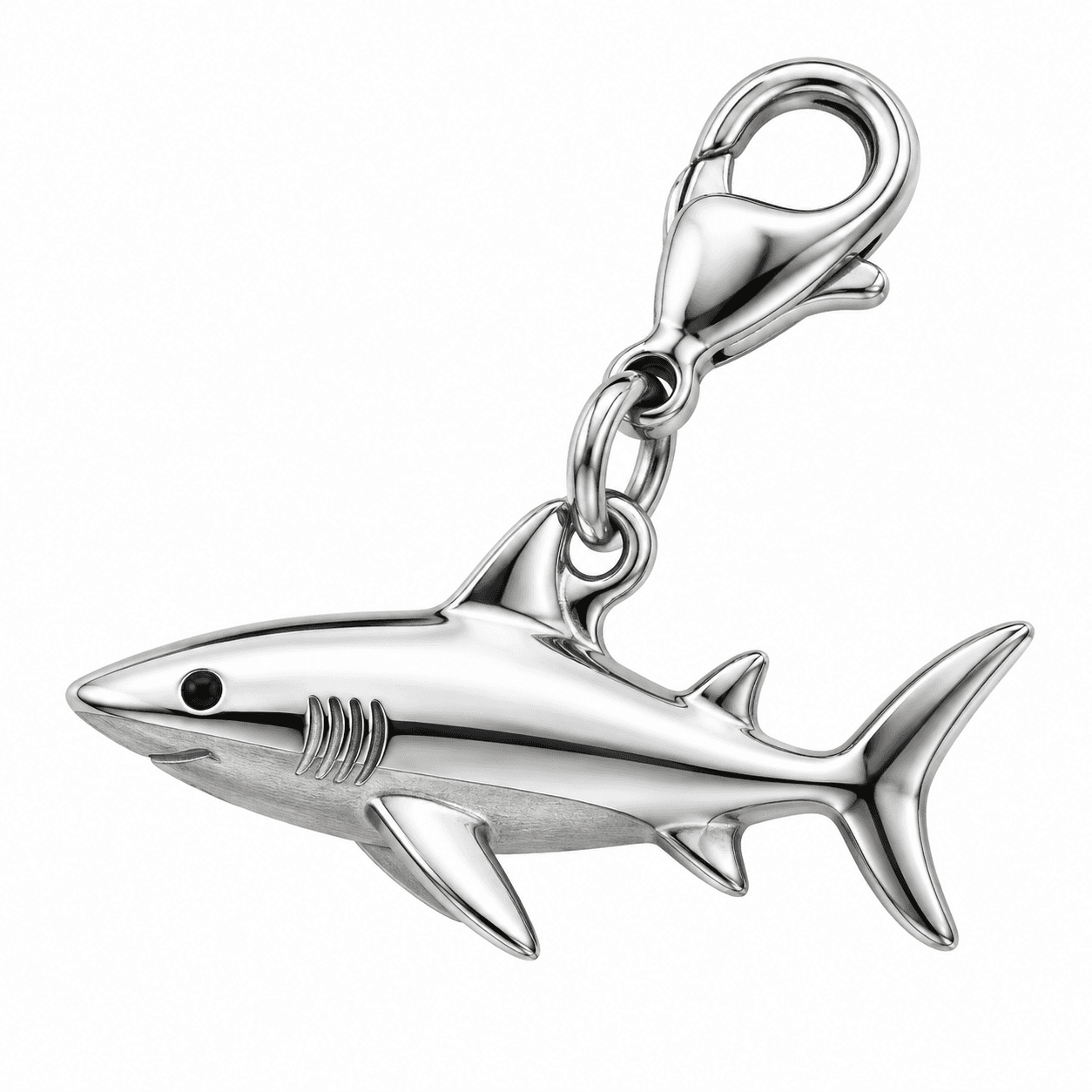
The recognizable features of a shark charm include its dorsal fin, tapered body, tail, head profile, and optional gill markings. These features should remain legible at the intended finished size. For many bracelet applications, a charm in the approximate 10–16 mm range is a useful starting point for concept development, although the final dimensions should follow the artwork, attachment system, and target styling. A smaller silhouette may require simplified gill lines and broader transitions, while a larger design can support more pronounced relief or carefully placed enamel areas.
During digital development, examine the front, back, side profile, and attachment opening. A drawing that looks convincing from the front can conceal a weak connection area, an excessively thin tail, or a hole positioned too close to the edge. Define the overall length, width, thickness, opening diameter, and distance between the opening and the charm's outer profile. These dimensions provide a common reference for designers, prototype reviewers, production teams, and quality inspectors.
Make the Connection Mechanically Plausible
The bail or jump ring must pass through a real, appropriately sized hole or closed loop. It should not overlap the charm in a way that prevents movement or creates a false connection. The attachment opening needs enough clearance for the intended connector while preserving adequate material around the hole. Its position also affects how the shark hangs, whether the nose or tail tilts downward, and how the charm moves during wear.
Prototype evaluation should include connector clearance, orientation, freedom of movement, and inspection of the opening edges. Review whether the charm rotates naturally and whether adjacent components could catch against its fins or tail. Where a design uses a closed jump ring, verify the closure and joint quality according to the project's acceptance criteria. Lancy can support custom stainless steel charms development through design review and sample development, helping teams assess practical geometry before authorizing a bulk order.
Specify the Back Surface and Edge Treatment
The reverse side deserves the same attention as the visible face. A flat back may suit a clean, lightweight design, whereas shallow relief can add dimensional interest without requiring a complicated silhouette. Avoid decorative recesses that are difficult to clean or inspect. Specify acceptable edge smoothness, surface uniformity, and visible finishing marks, then apply the same criteria to approved samples and production inspections.
PVD Gold Plating, Silver Finish, Enamel, and Crystal Inlay Options
Build a Finish Specification Around the Design Intent
Surface finishing changes how a shark charm bracelet communicates its design. A silver finish can emphasize a crisp marine silhouette, while gold plated and rose gold plating options create warmer visual directions. PVD is a physical vapor deposition process used to apply a thin functional or decorative coating under controlled vacuum conditions. The resulting performance depends on the coating system, preparation of the substrate, process parameters, geometry, and intended use. PVD should not be described as completely scratchproof, permanently unchanged, or immune to wear.
For consistent production, define the desired color, sheen, visual uniformity, and acceptable variation using an approved reference sample. Record the finish for each component in a coordinated collection and identify which surfaces must remain visually consistent across repeated orders. Recesses, edges, holes, and raised details may respond differently during finishing because of their geometry. Inspect the entire charm under consistent lighting instead of evaluating only the broad front surface.
Use Enamel and Crystal Inlay Selectively
Enamel color filling can distinguish selected details, such as the shark's eye, gill accents, or a small ocean-color element. Designers should specify color references, filled-area boundaries, and acceptable variation between cavities. Narrow lines and tiny recessed areas can be more difficult to fill consistently than broader, clearly defined sections. The artwork should therefore be reviewed at actual production size before final approval. Where multiple colors are required, identify each area separately and provide a clear color map.
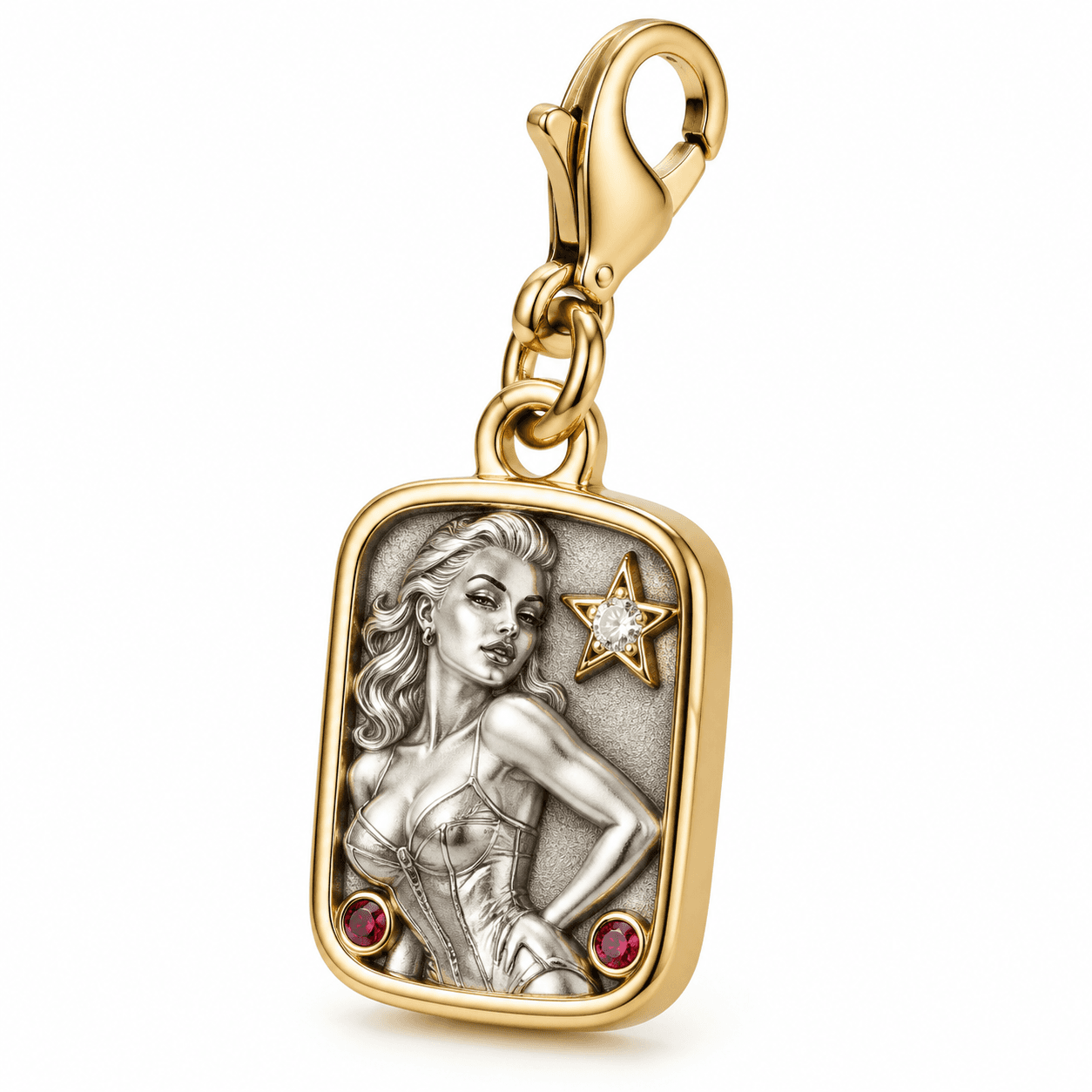
Crystal inlay offers another way to introduce a controlled point of contrast. Its placement should respect the shark silhouette and avoid weakening narrow structural sections. The setting geometry must hold the inlay securely, and the sample should be inspected for alignment, consistent seating, visible gaps, and sharp surrounding edges. Crystal retention should be evaluated through an agreed inspection or test protocol appropriate to the design rather than assumed from appearance alone.
Create a Repeatable Finish Approval Process
For OEM or ODM projects, approve a finished physical sample before mass production. Record the selected finish, color references, surface appearance, and any agreed inspection limits. If the product combines PVD with enamel or crystal inlay, review the completed assembly because the combined result can differ from individual component samples. A controlled approval reference helps buyers compare subsequent production against the intended appearance and investigate any meaningful variation.
Designers can browse the Lancy product catalog to review product directions, then use the OEM manufacturing service to discuss custom finishes, logo engraving, enamel color filling, crystal setting, and private-label requirements for a shark charm bracelet program.
Prototype Development and Sampling for a Shark Charm Bracelet
Move from Artwork to a Verifiable Physical Sample
Sample development connects a design concept to the practical constraints of production. Begin with a design brief that identifies the shark profile, intended dimensions, thickness, attachment position, finish, optional enamel or crystal inlay, logo requirements, and expected application. Include dimensioned drawings when available, but also provide front and reverse artwork. Vector artwork is useful for clean outlines, while three-dimensional files can help communicate relief, depth, and side-profile requirements. If a digital model is unavailable, a dimensioned sketch and annotated reference images can still establish the initial design intent.
The next step is design-for-manufacturing review. Examine whether narrow fins, pointed tails, recessed markings, and attachment holes can be produced with sufficient definition at the requested size. Identify any features that may require adjustment before sample production. Agree on the key dimensions and visual characteristics that will determine sample acceptance. This prevents feedback from becoming subjective or shifting between the design, purchasing, and quality teams.
Evaluate the Sample in a Defined Sequence
First, check overall dimensions, silhouette accuracy, thickness, and hole placement. Second, inspect edge smoothness, reverse-side finish, and surface details. Third, assess the selected coating, color, enamel filling, or crystal setting under consistent lighting. Fourth, test the intended attachment with the actual connector configuration, checking closure, clearance, orientation, and movement. Finally, review the sample in the intended retail presentation to confirm that its visual scale and finish match the collection concept.
For projects with several related designs, establish a master sample and document approved variations. A shark charm and a coordinating star or ocean symbol may share a finish standard while requiring different dimensional tolerances because their shapes differ. Record the approved sample version, date, finish, artwork revision, and outstanding changes. Any subsequent revision should be reviewed against the original approval record so that a late design adjustment does not silently alter a previously accepted specification.
Plan MOQ and Lead-Time Expectations Early
Low MOQ support depends on the design, finishing requirements, packaging configuration, production setup, and component complexity. It should be confirmed for the specific project rather than assumed to apply equally to every custom item. Ask the stainless steel charms manufacturer to distinguish sample charges, tooling or setup costs where applicable, minimum quantities per design, finish-specific quantity requirements, and estimated production lead time. A clear quotation should also state what constitutes an approved sample and whether any changes after approval affect cost or schedule.
For a coordinated shark charm bracelet collection, grouping designs by finish and packaging format can simplify purchasing and quality control. However, buyers should confirm whether minimum quantities apply to each individual SKU or to the overall order. Lancy supports sample development and project-specific production discussions so that designers can establish a workable path from prototype review to repeatable bulk orders.
Quality Standards, Corrosion Testing, and Compliance Documentation
Define Quality Before Production Begins
A reliable shark charm bracelet program needs measurable acceptance criteria covering dimensions, surface finish, attachment geometry, appearance, and packaging. Incoming material verification, in-process checks, and final inspection address different risks. Incoming checks confirm that the specified material and documentation are present. In-process checks can identify forming, polishing, finishing, or setting issues before the product reaches final assembly. Final inspection verifies the completed charm against the approved sample and purchase specification.
For dimension control, identify critical measurements rather than relying on an overall visual impression. These may include total length, maximum width, thickness, hole diameter, hole position, and connector clearance. For cosmetic control, specify acceptable variation in finish, visible marks, color consistency, enamel coverage, and crystal alignment. The inspection plan should define the sampling approach and acceptance criteria agreed by the buyer and manufacturer. A written standard makes quality review more repeatable across production lots and replenishment orders.
Interpret SGS Reports and Regulatory References Correctly
Buyers may request testing or documentation associated with SGS, RoHS, REACH, EN1811, and salt spray testing. These references do not all address the same question. RoHS concerns restrictions on certain hazardous substances within its applicable scope, while REACH includes substance-related obligations and restrictions that depend on the product and applicable legal requirements. EN1811 is a reference method for determining nickel release from relevant articles intended for direct and prolonged skin contact. Salt spray testing evaluates corrosion behavior under specified laboratory conditions and should be interpreted according to the test method and exposure duration used.
An SGS report identifies testing or inspection performed by the named organization, but the existence of a report does not automatically establish that every Lancy product is certified or compliant with every destination market requirement. Buyers should request the actual report or certificate, check its issue date and scope, verify the tested sample description, and determine whether the result applies to the finished item being purchased. A report for an uncoated material may not establish the performance of a finished PVD surface, and a test on one design may not represent every variation in a collection.
Match Evidence to the Finished Product
For a shark charm bracelet intended for international distribution, the compliance plan should identify the destination market, product construction, skin-contact conditions, relevant chemical restrictions, and required documentation before mass production. Nickel release testing, where applicable, should be considered in relation to the finished article and the relevant standard or regulatory requirements. Salt spray results should be read alongside the specified exposure conditions and evaluation criteria; they do not directly predict every real-world wear condition.
Lancy can discuss available material information, factory quality checks, finishing specifications, and project-specific testing documentation during the quotation process. Buyers should explicitly list the evidence required for approval instead of relying on general statements such as tested, compliant, or certified. This approach gives procurement teams a clearer basis for supplier evaluation and helps ensure that the technical documents match the actual product configuration.
Planning Wholesale and Private-Label Shark Charm Collections
Turn a Single Design into a Cohesive Assortment
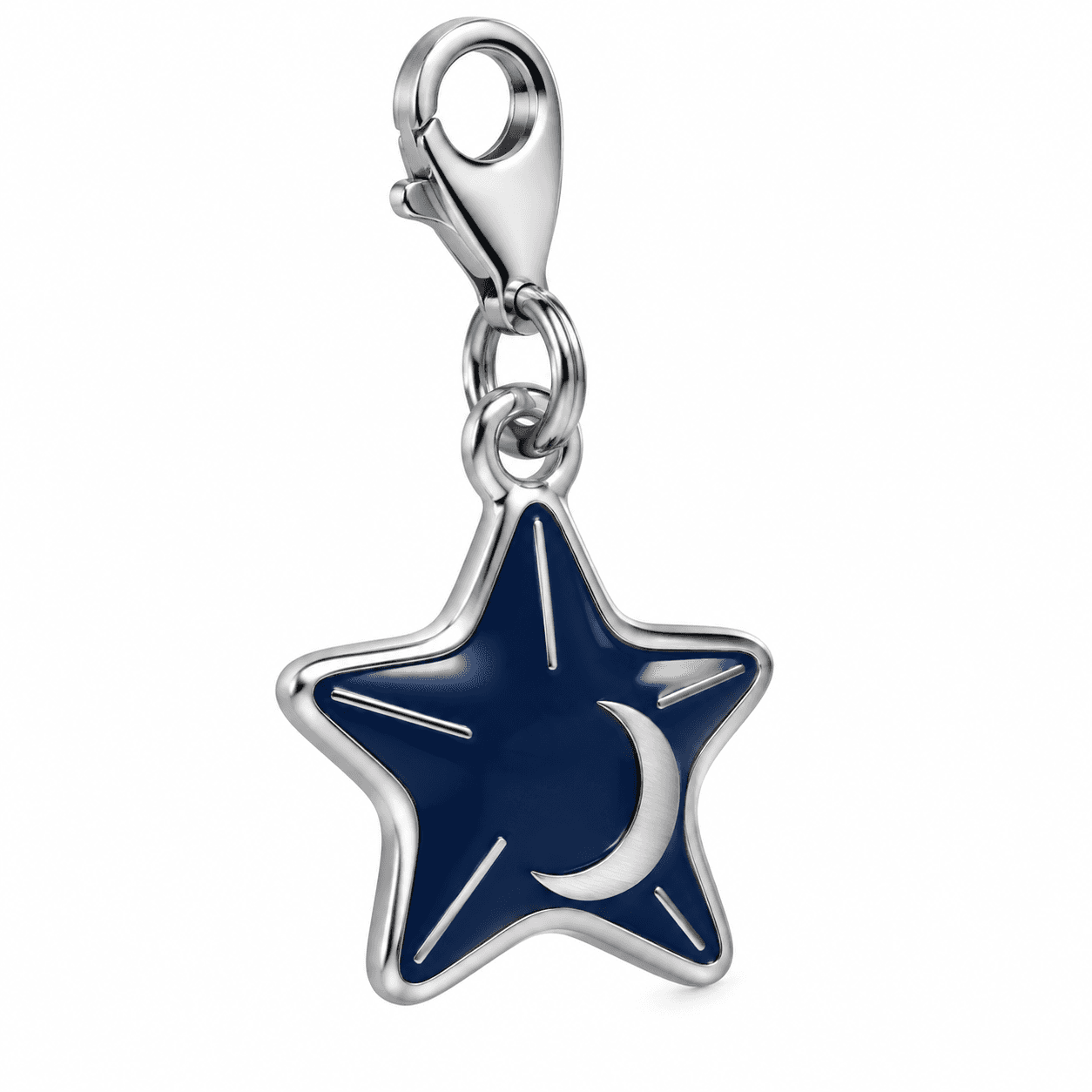
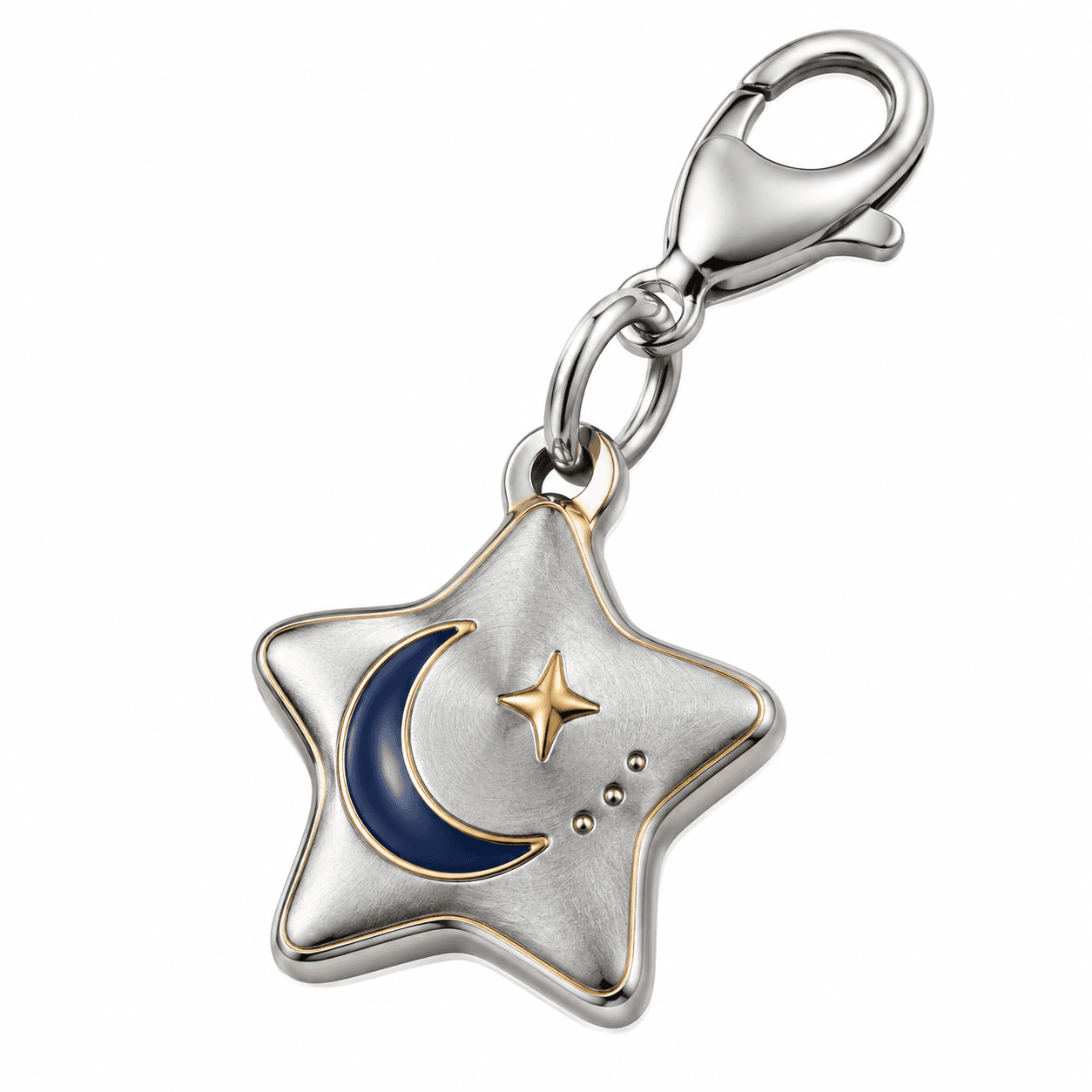
A shark charm can serve as the central motif in a broader ocean-themed collection, but successful assortment planning requires more than adding multiple designs. Consider the balance between recognizable marine motifs, neutral symbols, and contrasting accent pieces. A coordinated range might combine the shark silhouette with a star, a moon, or a simple decorative symbol while keeping dimensions, finish options, and packaging consistent. The goal is to provide retailers with clear merchandising choices without making the collection difficult to manage at the SKU level.
Establish a product matrix showing each design, SKU reference, dimensions, base material, finish, decoration, packaging option, and approved sample status. Separate standard designs from customized variants so buyers can understand which products are available for repeat ordering and which require additional development. If a design is offered in silver finish, PVD gold plating, and rose gold plating, specify whether all finishes are available at the same MOQ and whether each requires a separate sample approval.
Prepare a Practical RFQ
A useful RFQ identifies the product concept, quantity per design, target finish, estimated annual demand if known, destination market, packaging needs, and requested delivery window. Include artwork, dimensional requirements, logo placement, and any relevant compliance documentation. If the project includes enamel or crystal inlay, provide color references and clear placement details. Buyers should also indicate whether they need a single prototype, a pre-production sample, or a sample that represents the intended finished production specification.
When comparing quotations, evaluate the complete commercial scope rather than unit price alone. Confirm whether the price includes sample development, finishing, decoration, individual packaging, quality inspection, and export packing. Clarify how revisions are priced, whether packaging artwork requires separate approval, and what happens if the approved specification changes. These details help purchasing teams compare suppliers on a consistent basis and avoid unexpected costs after design approval.
Build a Repeatable Replenishment Process
Private-label charms benefit from documented production references. Retain approved artwork, sample photographs, dimensional specifications, finish references, packaging files, and inspection criteria with the purchase order. When placing a repeat order, reference the same specification and identify any requested change separately. This allows the supplier to distinguish replenishment from a new development project and gives the buyer a clearer method for reviewing consistency.
For boutique brands and charm bar retailers, low MOQ charm production can be valuable when testing a new motif or planning a limited initial assortment. Actual minimums remain project-dependent and should be confirmed with Lancy. Explore the product catalog for collection planning, review OEM and ODM services for customization options, or use the contact page to discuss a private-label program with the sourcing team.
Design Checklist for a Production-Ready Shark Charm Bracelet
Use a Structured Specification Before Requesting Samples
Before requesting a prototype, consolidate the decisions that determine the appearance and functionality of the shark charm bracelet. The design specification should state the 316L stainless steel base material, intended finished dimensions, thickness, attachment-hole geometry, surface finish, and any decorative treatment. Define whether the shark is a flat silhouette or a dimensional design, and identify the details that must remain legible at the selected scale. Specify the visible front and the expected reverse-side finish so that the sample can be evaluated as a complete component.
Next, define the appearance and inspection criteria. For PVD gold plating or rose gold plating, provide an approved color reference and identify the surfaces requiring consistent coverage. For silver finish, clarify the expected visual appearance and sheen. For enamel, map each color area and state acceptable filling boundaries. For crystal inlay, specify the intended position, size, alignment, and retention assessment. Document the attachment dimensions and the intended connector so the finished charm can be checked for proper movement and mechanical fit.
Document Commercial and Compliance Requirements
Record the target order quantity, quantity per design, packaging configuration, logo requirements, delivery destination, and requested schedule. State whether the request covers a standard design, a modified existing concept, or a fully custom OEM or ODM development project. Confirm MOQ, sample cost, production lead time, payment terms, and freight arrangements through the quotation process. If a specific launch date matters, work backward from the required delivery date and allow time for sample review, revisions, packaging approval, and any applicable testing.
Finally, identify the documentation needed for the intended market. Request applicable material specifications and traceability information, along with any relevant SGS test reports or other supporting documents that have been agreed for the project. Check the scope of each report against the actual finished design and intended use. A clear document list helps the manufacturer prepare appropriate evidence and allows the buyer's compliance team to determine whether additional testing is needed.
Approve the Sample as the Production Reference
The approved sample should represent the agreed material, shape, finish, decorative elements, attachment geometry, and packaging configuration. Record its approval date and specification revision. If the design changes after approval, document the change and determine whether another sample or additional testing is necessary. For recurring wholesale stainless steel charms orders, this controlled reference helps reduce ambiguity between purchasing, design, production, and final inspection.
Use the checklist as a practical handover document rather than a substitute for engineering review or market-specific regulatory advice. Lancy Jewelry can review the design brief, clarify manufacturing feasibility, and discuss sample development for custom stainless steel charms. Providing complete specifications at the beginning makes it easier to evaluate the concept, establish realistic costs, and plan a consistent production process.
Frequently Asked Questions About Shark Charm Bracelet Manufacturing
Start Your Shark Charm Bracelet Development With Lancy
Turn your shark charm bracelet concept into a defined manufacturing project with Lancy Jewelry. Our team supports OEM and ODM development for 316L stainless steel charms, including design review, logo engraving, PVD finishing, enamel color filling, crystal setting, sample support, and private-label packaging. Whether you are testing a new boutique concept or preparing wholesale stainless steel charms for repeat distribution, a clear technical brief helps establish realistic production requirements.
What to Include in Your RFQ
- Design files: Provide vector artwork, dimensioned drawings, three-dimensional files if available, or annotated reference images showing the shark silhouette and reverse side.
- Product specification: Identify the required 316L stainless steel base material, finished dimensions, thickness, attachment-hole position, and any special edge or surface requirements.
- Finish and decoration: State whether you need PVD gold plating, silver finish, rose gold plating, enamel, crystal inlay, or a defined combination. Include color references and decoration placement.
- Commercial quantities: Specify the estimated quantity per design, expected repeat-order potential if known, and any low MOQ requirements. Ask the team to confirm MOQ for each SKU and finish.
- Sampling and timing: Indicate the number of samples required, requested review milestones, target delivery date, and any design revisions that must be completed before approval.
- Compliance and packaging: List the destination markets, requested material documentation, relevant SGS reports or test requirements, logo artwork, individual packaging specifications, and labeling needs.
After receiving your brief, the project can be assessed for design feasibility, sample development, finishing requirements, quality verification, and production planning. Confirm quotation details, applicable testing, minimum quantities, and lead times before committing to a launch schedule.
Ready to discuss your project? Submit your requirements through the Request a Quote page, review customization options at OEM services, or contact the team through Lancy Jewelry contact. A complete RFQ is the most effective starting point for developing a consistent, commercially practical shark charm bracelet collection.
Related resources
Related resources
- Materials & Finishes
- Lancy Charms Bar
- Stainless Steel Animal Jewelry Charms Wholesale: Quality Guide
- Custom Stainless Steel Charm Bracelet Tutorial: A Buyer’s Guide to Quality
- Custom OEM/ODM Guide to Stainless Steel African Jewelry Charms Wholesale
- How to Evaluate 316L Stainless Steel Zodiac Bracelet Charms Wholesale Suppliers
- 316L Stainless Steel Chinese Zodiac Charms Wholesale: A Finishing Guide
- Antique Distressed Finish on Stainless Steel Charms: A Buyer’s Guide to Durability
- OEM / ODM Services
- Guide to Stainless Steel Wholesale Fish Jewelry Charms 316L