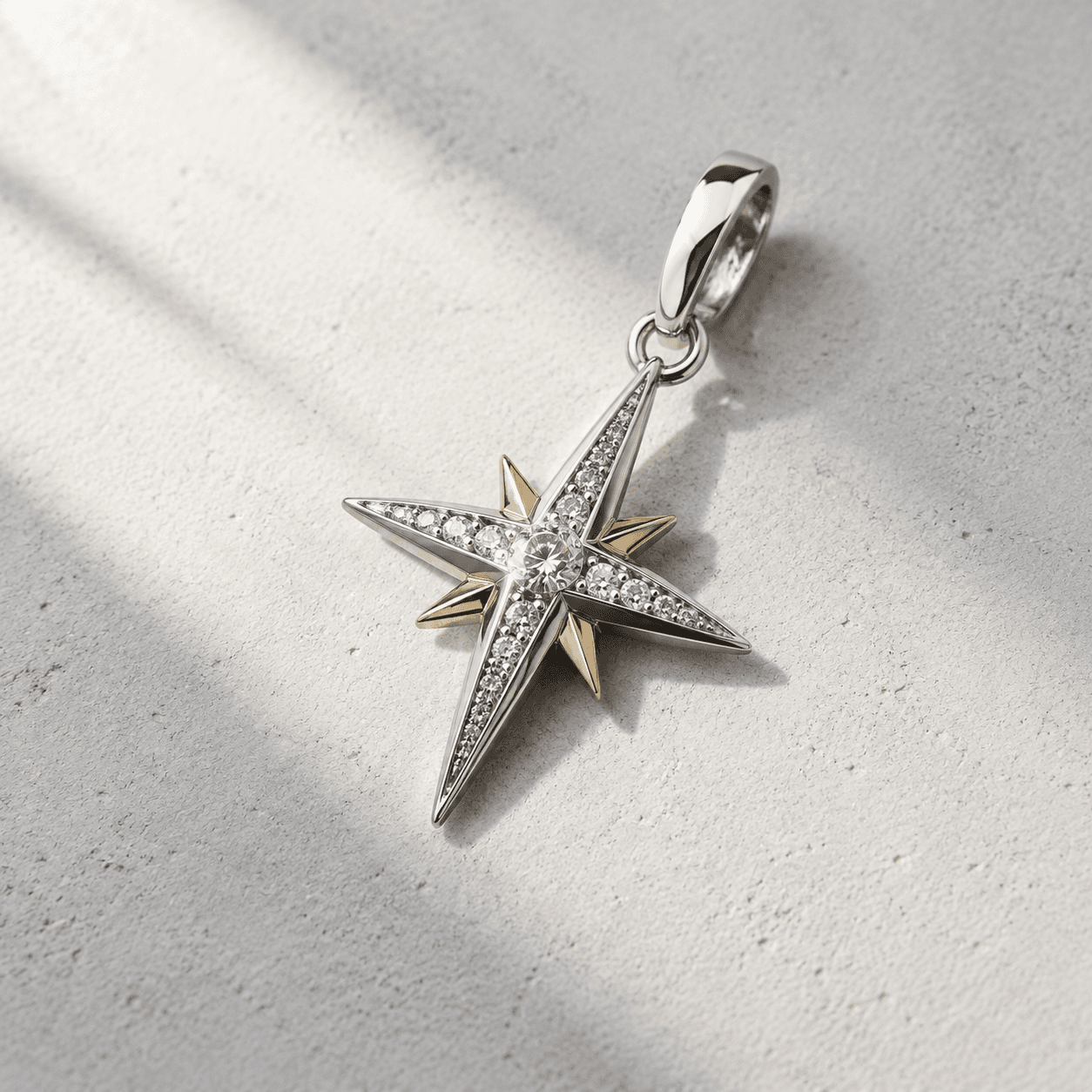
A well-designed charm star can become a focal point in a jewelry collection, adding movement, symbolism, and visual balance without overwhelming the overall design. For jewelry designers, the key is to evaluate more than the star silhouette: proportion, edge definition, surface finish, attachment geometry, and decorative detailing all influence how the finished charm looks and performs in a retail setting. This visual styling guide explores how to develop charm star concepts using 316L stainless steel charms, from initial sketches and finish selection to sample development and coordinated product series.
Lancy Jewelry supports boutique brands, charm bar retailers, gift companies, and private-label buyers with custom stainless steel charms, OEM and ODM development, logo engraving, PVD plating, enamel color filling, crystal inlay, and private-label packaging. By understanding the relationship between shape, color, scale, and manufacturing tolerances, designers can translate a creative concept into a practical product specification. Explore the visual principles below to plan a distinctive star charm assortment, prepare more useful prototypes, and evaluate wholesale stainless steel charms for your next collection.
Charm Star Design Fundamentals: Shape, Scale, and Visual Balance
Start with the silhouette
A successful charm star design begins with a clearly defined silhouette. Six-point stars create a different visual rhythm from five-point stars, rounded starbursts, or narrow geometric forms. Longer points can create a more directional appearance, while shorter points and softly rounded tips generally produce a gentler impression. Before adding decorative details, sketch the outer contour in a front-facing view and establish the relationship between the star's width, height, and central area. This simple exercise helps identify whether the design should communicate minimalism, celestial symbolism, playful color, or a more refined boutique aesthetic. For a charm intended for a coordinated series, the silhouette should remain recognizable when viewed beside other shapes.
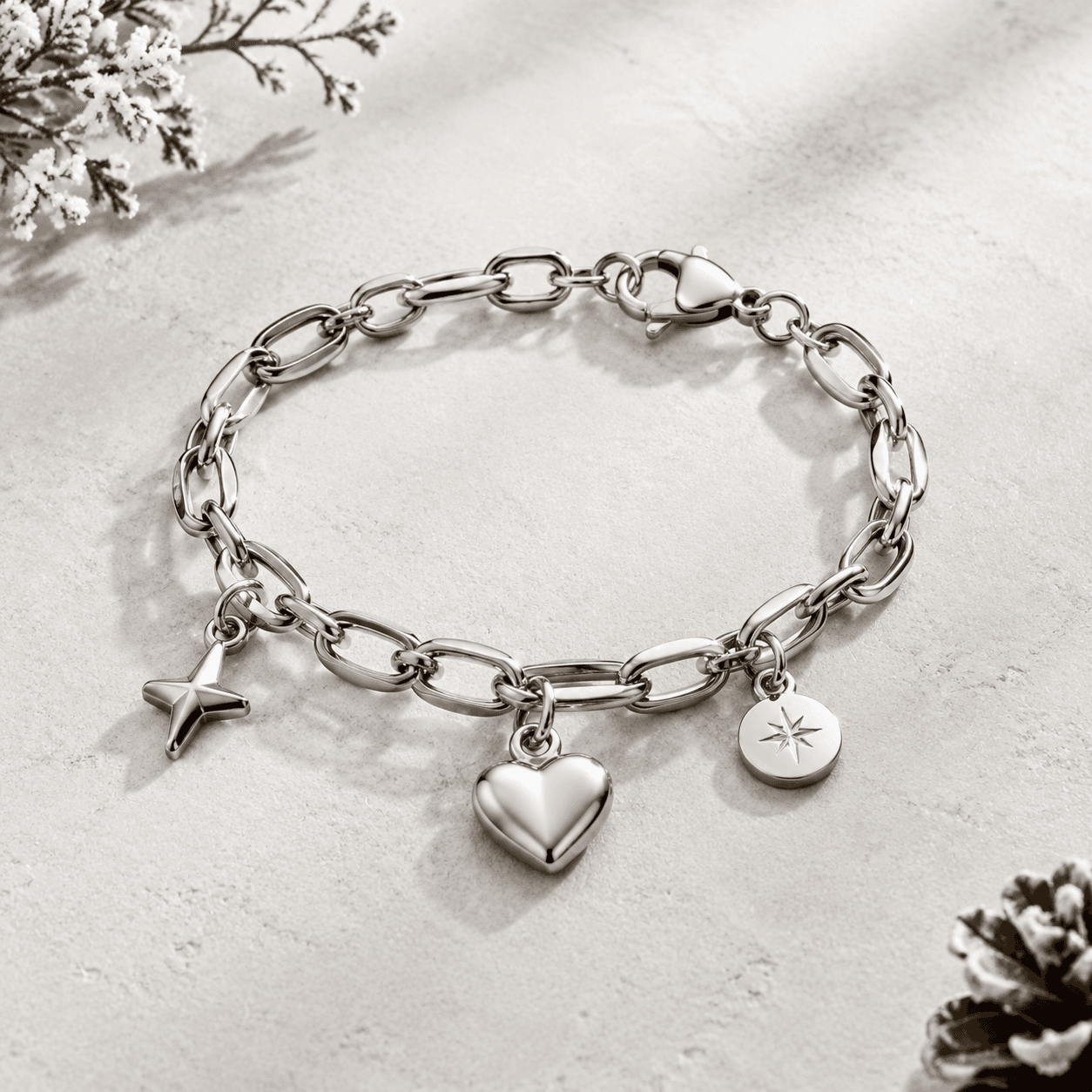
Step 1: Define the proportions. Establish a target finished size before approving artwork. A charm measuring approximately 8–18 mm can suit many jewelry applications, although the final dimensions should reflect the intended placement, visual weight, and attachment hardware. Step 2: Review the negative space. Leave sufficient room between points, inset details, and the attachment loop so that the silhouette remains legible at a small scale. Step 3: Check the edge geometry. Sharp-looking points can be part of the visual concept, but exposed edges and tips still need suitable finishing for the intended application. A technically sound design balances the appearance of precision with practical handling requirements.
Step 4: Validate the attachment. Specify the location and internal diameter of the hole or loop, the intended jump ring dimensions, and the direction in which the charm should hang. The connector must pass through a real opening and remain clear of the decorative face. For OEM development, a dimensioned drawing with front, side, and attachment views is more useful than a front-view inspiration image alone. These details give the stainless steel charms manufacturer a practical starting point for estimating feasibility, preparing a prototype, and identifying adjustments before production.
Explore the Special Symbols collection to review the broader design language of symbolic shapes, or browse all products when planning a coordinated assortment. Use these references to develop original proportions and a consistent design system rather than treating any single visual example as a complete manufacturing specification.
Visual Gallery: Five Charm Star Styling Directions
Build a visual reference board with a clear design purpose
A visual gallery is most useful when every reference demonstrates a specific design decision. Instead of collecting unrelated star images, group references by silhouette, surface treatment, color balance, and intended retail role. Keep the main charm visible against a neutral background, use consistent viewing angles, and include a close-up of any surface detail that affects production. For a Pinterest-style reference board, use short labels such as geometric silhouette, midnight finish, teal enamel, crystal focal point, and coordinated star trio. These labels help designers and sourcing teams discuss individual attributes without confusing a visual concept with an approved technical specification.
Gallery direction 1: Midnight Orbit
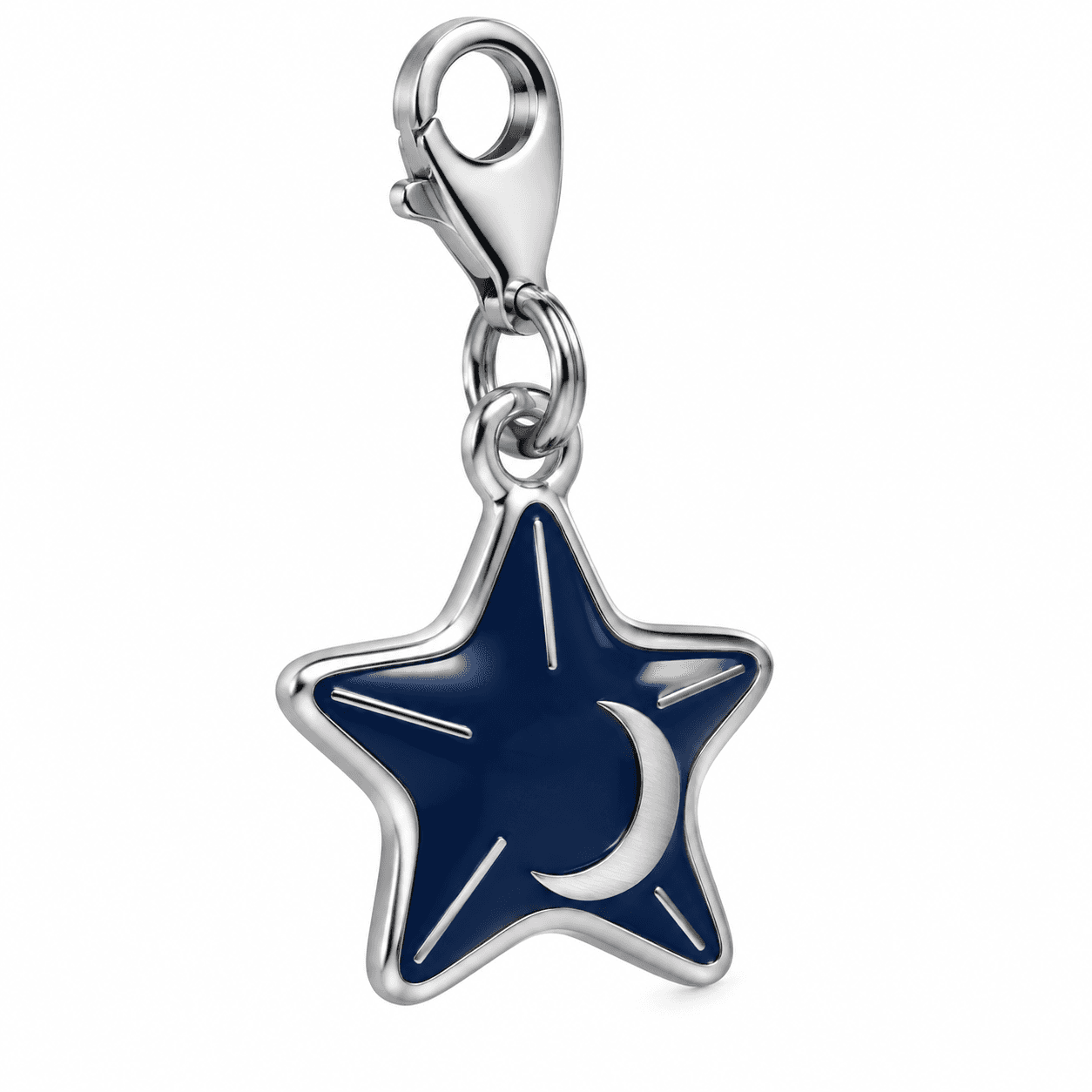
Develop a six-point star with a defined outer contour and a restrained dark-toned visual treatment. The creative emphasis is silhouette clarity and contrast, rather than excessive ornament. Review whether the central face remains visually balanced and whether the finish changes the perceived width of the points. A dark appearance should be specified through the intended surface treatment and sample reference, with PVD options evaluated against the approved production requirements.
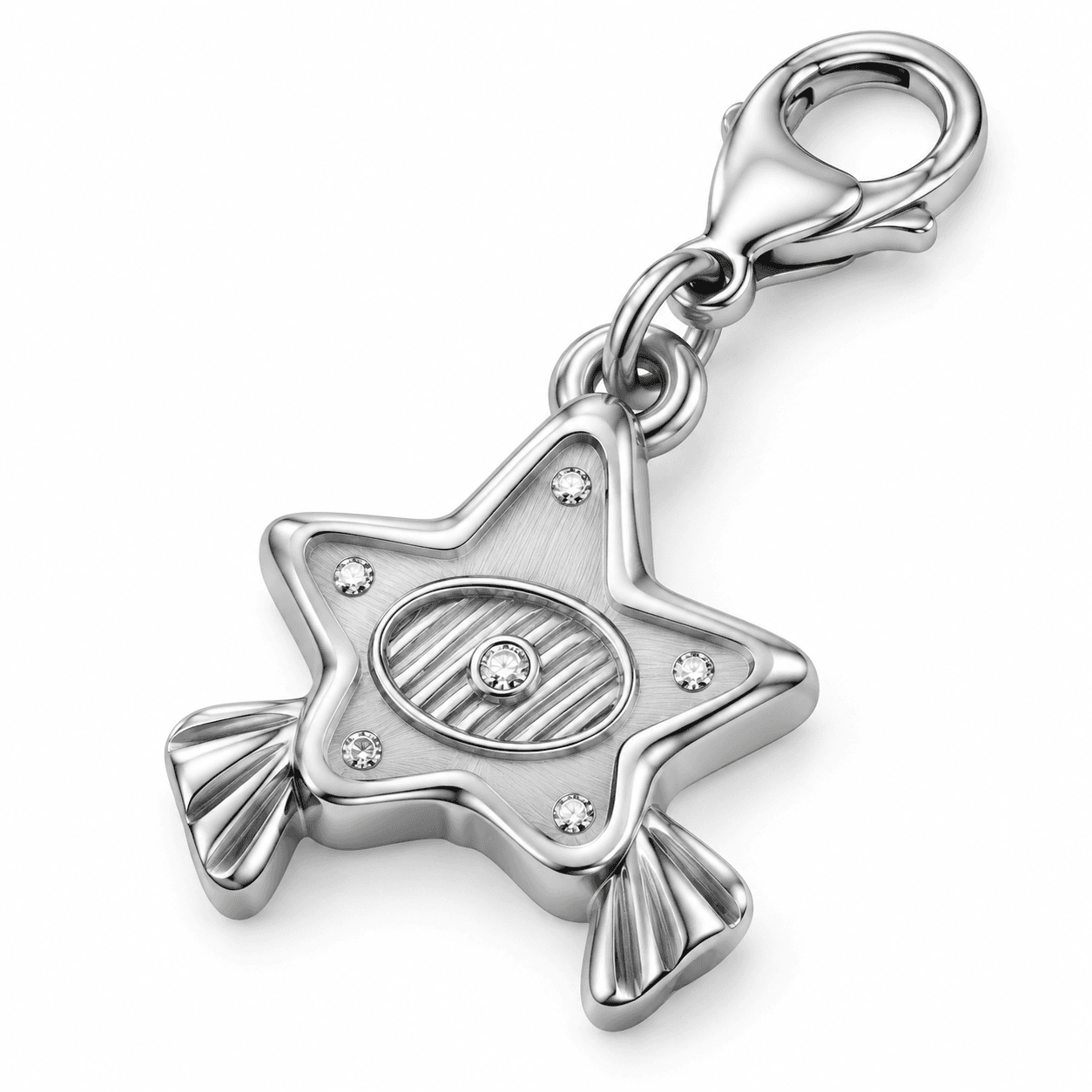
Gallery direction 2: Iridescent Accent
Explore an iridescent-looking finish or a carefully planned decorative accent while retaining the star as the primary visual element. For a crystal inlay concept, define the number, placement, dimensions, and color of the decorative elements. Assess spacing around the tips and center so the pattern does not visually merge into one bright area. Sample review should include the face-on view, a slight angle, and a close-up of the inlay boundary.
Gallery direction 3: Teal Starburst
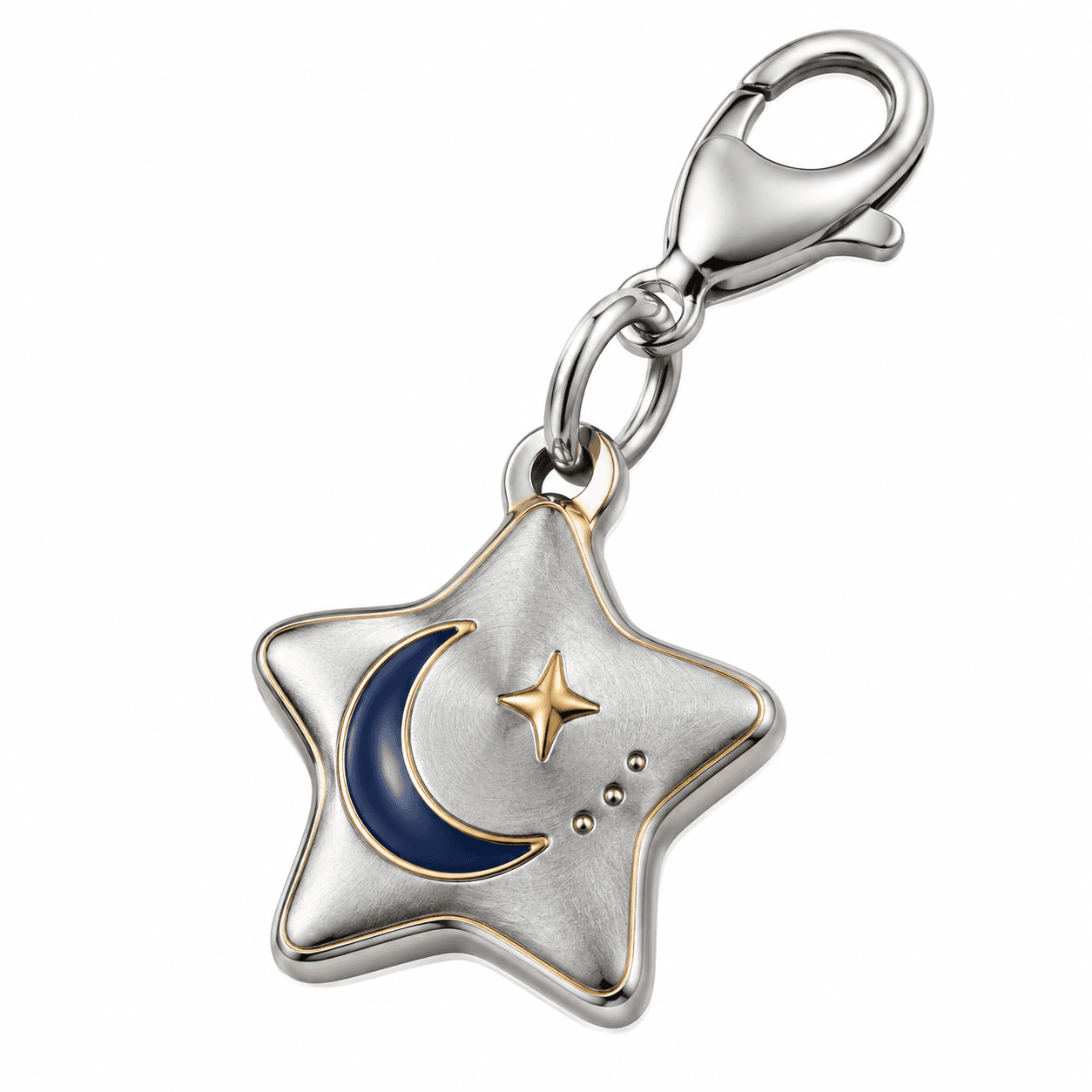
Use teal enamel as a controlled accent within a starburst design. Prepare a color reference, identify which recesses receive color, and define whether the surrounding face should remain a silver finish or use a specified PVD treatment. Color boundaries, recess depth, and the width of the surrounding metal outline all affect the finished appearance. The goal is to maintain clean separation between color and metal while ensuring that small details remain visible at the final product size.
Gallery direction 4: Aurora Crystal Star
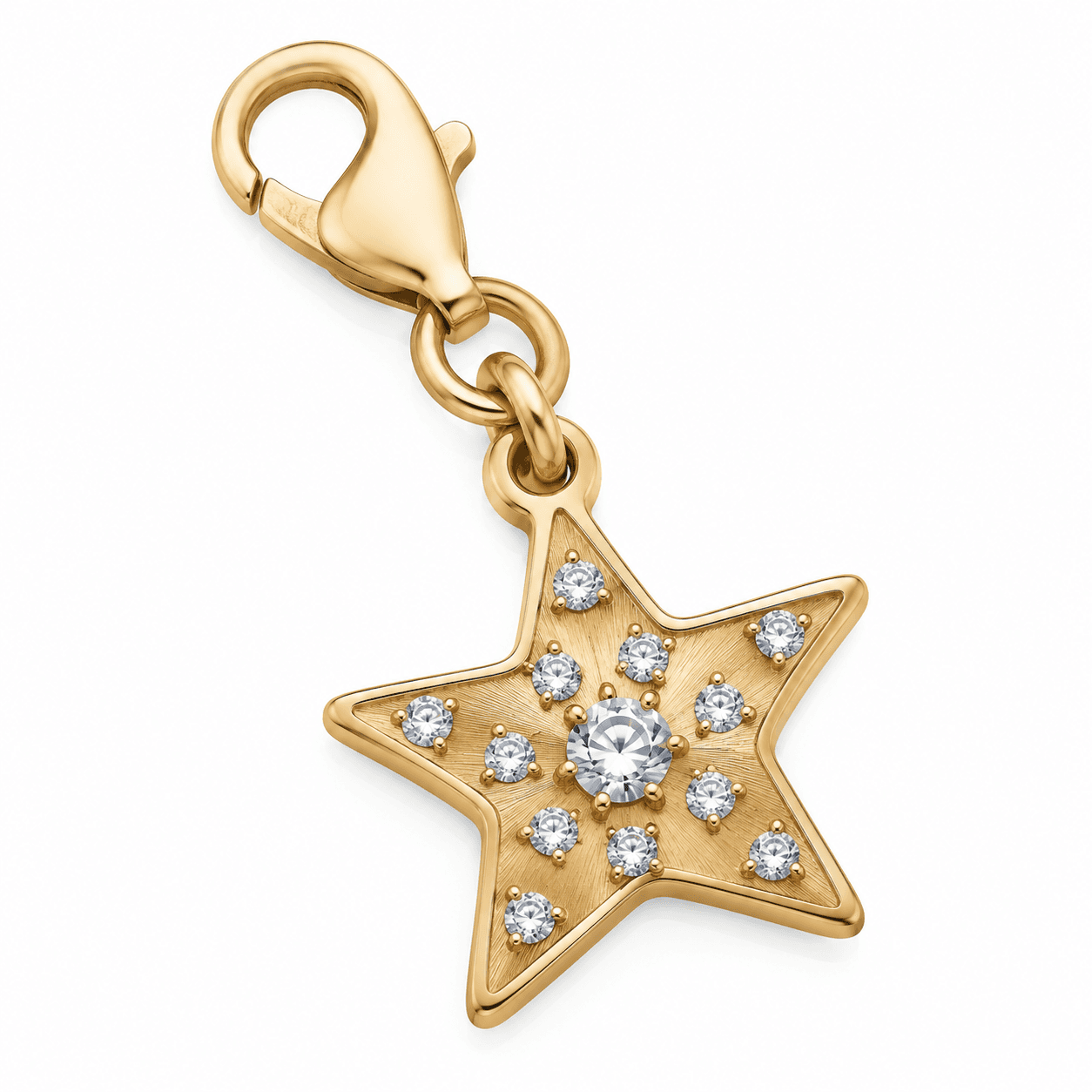
For a crystal-focused star, determine whether the stones sit at the center, follow the points, or form a restrained border. Crystal inlay can increase visual sparkle, but it also introduces additional setting and inspection requirements. Specify the desired stone appearance, setting method for factory review, and acceptable alignment variation. Confirm that decorative elements are securely retained and that no setting interferes with the connector or creates an unintended sharp edge.
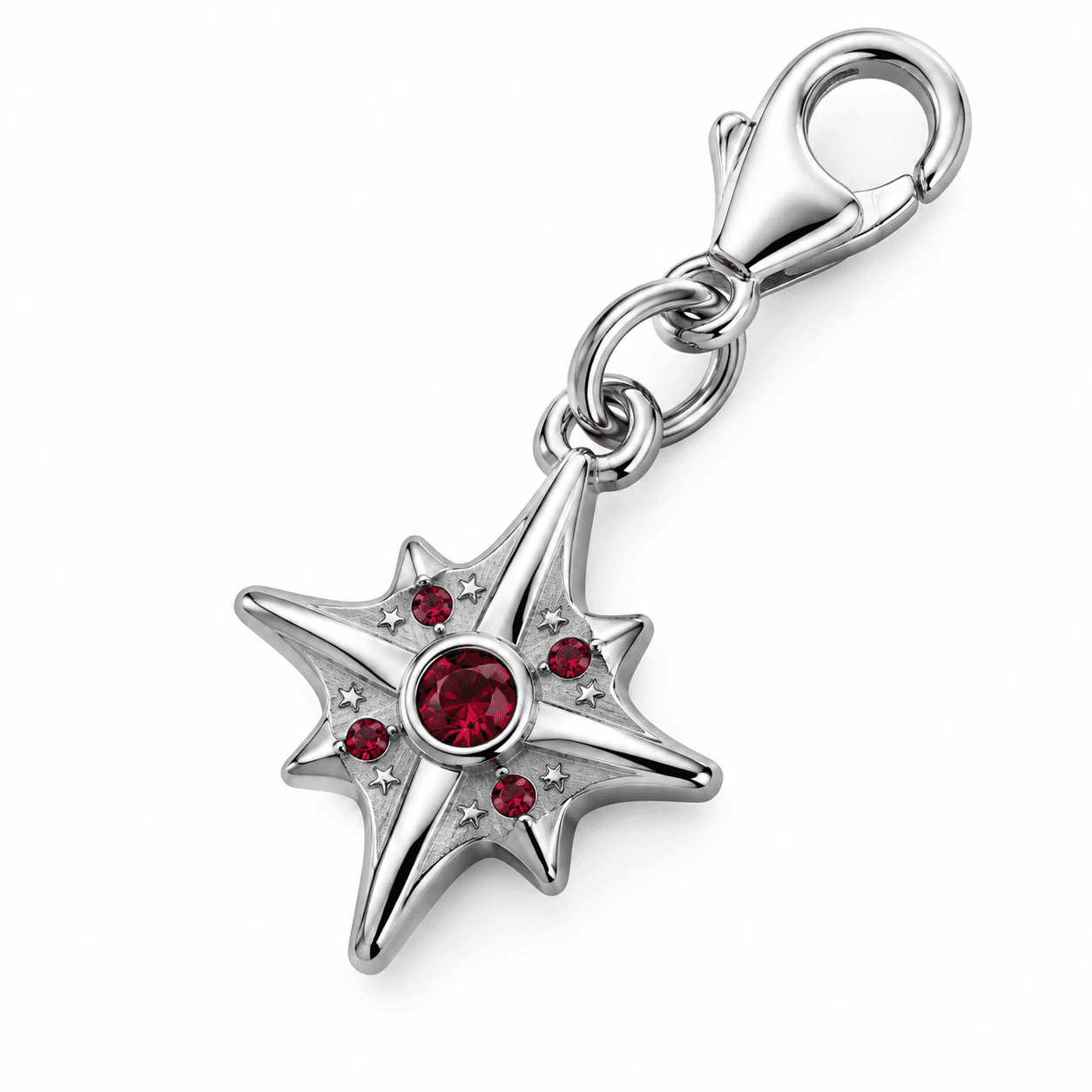
Gallery direction 5: Ruby Orbit Trio
A coordinated trio can demonstrate how one silhouette supports several merchandising options. Keep the star geometry consistent while varying approved colors, decorative placement, or finish. The trio should read as one family through shared proportions, attachment dimensions, and surface quality. If the designs are intended for separate SKUs, prepare individual specifications and photographs rather than relying on a single group image to communicate every detail.
For all five directions, treat the named concepts as visual planning references rather than promises of a particular stock configuration. Confirm current availability, dimensions, finish options, and customization scope with Lancy Jewelry before finalizing an assortment. The same disciplined reference process helps an ODM charm supplier distinguish creative intent from production-critical requirements.
Choose 316L Stainless Steel Finishes for the Intended Design
Match the surface treatment to the visual objective
316L stainless steel provides a practical base for charm designs that require defined geometry, repeatable detailing, and a consistent metallic appearance. Its corrosion resistance is associated with its chromium-rich passive surface, while molybdenum contributes to resistance in many chloride-containing environments. Actual performance depends on material composition, surface condition, exposure, and maintenance. The material designation alone does not establish that every finished charm will resist every chemical, perspiration condition, or wear scenario. Designers should therefore specify the base material, surface preparation, finishing process, and intended use together when developing a product.
Silver finish: A bright or brushed silver finish can emphasize the star's outline and geometric facets. Gold plated through PVD: PVD finishing can create a gold-toned appearance with an appropriate process specification and controlled preparation. Rose gold plating: A rose-toned treatment can introduce warmth and help distinguish a seasonal or gift-oriented series. Enamel: Color filling can emphasize selected recesses or divide the face into distinct visual zones. Crystal inlay: Crystal detailing introduces highlights and texture, making placement and retention important parts of the design brief. These treatments should be evaluated as finished-surface options on a 316L stainless steel base, not as alternative base materials.
Step 1: Select one dominant finish. Establish a principal finish for the series before adding contrasting accents. Step 2: Define the contrast. Record whether the star's face, edges, recesses, and reverse should share the same treatment. Step 3: Confirm color references. Supply a physical reference where possible, or document the target color and viewing conditions for sample evaluation. Step 4: Inspect under consistent lighting. Compare samples against a neutral background to distinguish actual finish variation from changes caused by lighting and photography.
Designers should also specify which surfaces must remain free from scratches, pits, visible color pooling, or uneven coverage. For PVD finishes, ask the factory to clarify the proposed process, target appearance, inspection method, and any agreed coating-performance criteria. For enamel, discuss fill uniformity, color boundaries, surface cleanliness, and curing requirements. For crystal inlay, define acceptable alignment and retention criteria. A written finish standard makes feedback more objective and supports more consistent repeat orders. Lancy Jewelry can assess these details during custom stainless steel charms development and sample review.
For a broader production plan, visit the OEM service page to explore customization options. Buyers planning several finish variations should request a clear specification for each version so that artwork, samples, approval records, and bulk production instructions remain aligned.
From Sketch to Sample: Customization and Prototyping Workflow
Turn a visual concept into a manufacturable charm
Effective sample development begins with a brief that communicates the design's purpose and measurable requirements. Prepare a front-view drawing, finished dimensions, thickness target, attachment-hole or loop measurements, preferred finish, and any enamel or crystal details. Include the intended application, such as a bracelet charm, necklace accent, charm bar option, keychain charm, or gift accessory. These use cases can have different expectations for visual scale and hardware strength, so the intended application should be agreed before the sample is made. If a reference photograph is supplied, annotate the features that are essential and identify which aspects remain open to factory recommendations.
Stage 1: Design review. The factory evaluates the silhouette, geometry, attachment arrangement, decorative details, and proposed surface treatment. Very narrow points, small recesses, tight internal corners, and densely arranged inlay details may need adjustment to suit the intended size and finishing process. Stage 2: Technical confirmation. Review the material specification, drawing revision, color references, hardware dimensions, and proposed quality checks. Stage 3: Sample development. Approve a representative sample before treating the design as production-ready. Depending on the requested design, sample timing and cost may vary with tooling, finish complexity, decoration, and the amount of engineering clarification required.
Stage 4: Structured feedback. Review the sample using a written checklist rather than general comments. Record actual dimensions, silhouette definition, surface appearance, attachment movement, enamel coverage, and crystal alignment where relevant. Photograph the sample under consistent lighting, include a scale reference, and mark each requested change. Stage 5: Final approval. Confirm the approved sample or master reference, artwork version, finish specification, packaging requirements, and inspection criteria before bulk production. Retaining this approval record reduces the risk of misunderstandings when repeat orders or additional colors are introduced.
OEM projects are appropriate when a buyer has a defined design or specification that requires custom manufacturing. ODM projects can support buyers who want to develop a concept with factory input on design feasibility and production details. In either case, ask for confirmation of the production scope, tooling responsibility, sample charges, lead-time assumptions, and revision process before committing to an order. Lancy supports OEM/ODM development, logo engraving, PVD finishing, enamel color filling, crystal setting, private-label packaging, and sample support for 316L stainless steel charms.
Low MOQ support can help a boutique buyer assess a new concept without immediately committing to a large assortment, but the minimum order quantity may differ by design, finish, decoration, and packaging. Request MOQ details for each proposed SKU and ask whether related designs can be planned together. This makes it easier to compare the cost and practicality of a small test launch with the requirements of future bulk charm orders.
Quality Assurance, Testing, and Certification Interpretation
Translate quality expectations into verifiable checks
Quality planning should cover the base material, finished dimensions, surface appearance, attachment integrity, and any decorative processes. Begin by defining acceptance criteria for the charm's silhouette, thickness, hole position, edge condition, finish uniformity, and reverse side. For a decorated star, add requirements for enamel coverage, color separation, crystal alignment, setting retention, and the absence of visible residue. Establish which characteristics are critical to safety or function and which are primarily cosmetic. A written inspection plan helps a manufacturer and buyer evaluate the same features using consistent methods rather than subjective descriptions such as perfect finish or premium quality.
Material verification and finished-product testing answer different questions. A material report may support identification of the specified 316L stainless steel, while finished-product tests examine particular properties or potential risks under stated test conditions. Ask which production lot, sample, or finished configuration was tested, who issued the report, when testing took place, and whether the documented results apply to the product and target market being purchased. A report for one material grade or finish should not automatically be treated as proof for every SKU or subsequent production lot.
SGS-issued reports or test documentation may be relevant when evaluating RoHS, REACH, EN1811, or salt spray requirements, depending on the product and market. These terms do not mean the same thing. RoHS addresses restrictions on specified hazardous substances in covered electrical and electronic equipment; its relevance to a charm depends on the applicable product scope and legal assessment. REACH is the European Union chemicals framework, and relevant obligations may include substance restrictions or communication requirements for articles. EN1811 is a test method associated with nickel release from articles intended for direct and prolonged skin contact, where applicable. Salt spray testing evaluates corrosion behaviour under specified laboratory conditions and does not independently establish universal corrosion resistance or legal compliance.
When requesting documentation, specify the intended destination market, product construction, surface treatment, and required test standard or regulatory assessment. Ask whether reports are current, traceable to the offered configuration, and issued by the named laboratory or responsible conformity-assessment provider. Do not assume that the presence of an SGS logo, a reference to a test, or a report for a related product establishes compliance for the exact charm being purchased. Regulatory applicability and documentation requirements should be confirmed for the product, claim, and jurisdiction in question.
For repeat orders, use a defined quality plan that connects the approved sample to incoming material checks, in-process finishing controls, final visual inspection, and batch records. Buyers can request a documented sampling approach, defect classification, agreed tolerances, and procedures for handling nonconforming items. Lancy Jewelry can discuss the applicable material and finish specifications, available test documentation, and practical quality checkpoints during RFQ review. For additional technical planning, see OEM manufacturing services and contact the team through the contact page.
Create a Coordinated Charm Star Collection for Boutique Retail
Build a product family instead of isolated designs
A coordinated charm star collection can support more merchandising options when its products share a clear visual system. Define a core silhouette, a small number of approved finishes, and a deliberate hierarchy of decorative detail. For example, one design may use a clean silver finish, a second may introduce teal enamel, and a third may use a restrained crystal inlay. The designs should remain recognizable as members of the same family through shared proportions, similar attachment geometry, and consistent surface standards. This approach gives boutique retailers visual variety without requiring every SKU to introduce a completely different production process.
Step 1: Establish the assortment role. Decide whether the star is a core year-round charm, a seasonal accent, a personalized gift option, or a focal item within a wider symbolic range. Step 2: Limit initial variations. Begin with a manageable set of silhouettes and finishes so that sampling and inspection remain practical. Step 3: Standardize shared specifications. Where feasible, maintain common attachment dimensions, drawing conventions, and quality checkpoints across the family. Step 4: Identify meaningful differences. Record which details change between SKUs, including finish, enamel color, crystal placement, engraving, or packaging. This SKU-level clarity is particularly valuable when a design is offered in several colorways.
For charm bar retailers, clear product differentiation and consistent hardware dimensions can make an assortment easier to present and replenish. Gift companies may prioritize a recognizable theme, attractive packaging, and reliable repeatability across planned campaigns. Private-label buyers may need logo engraving, branded packaging artwork, barcode placement, or specific carton and labelling requirements. These are separate specification items and should be confirmed independently rather than assumed to be included in a standard charm quotation.
Plan commercial requirements alongside creative development. Ask for pricing at relevant quantity breaks, MOQ by design and finish, sample charges, production lead-time estimates, packaging options, and the conditions that apply to repeat orders. A low MOQ can be helpful for market testing, but splitting an order across many intricate designs or finish variations may change tooling, setup, and unit-cost calculations. An experienced stainless steel charms manufacturer can help identify which variations share production steps and which require separate handling or inspection.
Browse Special Symbols for broader symbolic design references and the complete product catalogue for assortment planning. When a star concept is ready for evaluation, provide its drawing and intended commercial role through an RFQ. Clear inputs help Lancy Jewelry assess feasibility, recommend a sampling path, and align the proposed product family with the buyer's quality, quantity, and packaging requirements.
Frequently Asked Questions About Charm Star Design and Sourcing
Start Your Custom Charm Star Project With Lancy Jewelry
Prepare a clear brief for sampling and quotation
Ready to develop an original charm star for a boutique assortment, charm bar, gift program, or private-label collection? Share your design concept with Lancy Jewelry to discuss a practical route from visual reference to a production-ready 316L stainless steel charm. Your inquiry does not need to include finished engineering drawings if the concept is still at an early stage; annotated images, sketches, and clearly stated design priorities can provide a useful starting point for an OEM/ODM feasibility review.
For a more accurate RFQ, include the intended star silhouette, approximate finished dimensions, thickness target, attachment-hole or loop details, desired silver finish or PVD color, and any enamel, crystal inlay, or logo engraving requirements. Identify the number of SKUs, preferred sample quantity, expected bulk order quantity, destination market, packaging needs, and target delivery schedule. If you require quality or regulatory documentation, name the specific requirements and market so the relevant reports and testing scope can be discussed. Include a reference image or color standard when appearance is critical, and identify any design features that must not change.
Lancy Jewelry can review the proposed specifications, discuss sample development, clarify low MOQ options, and outline the finishing, quality-control, and private-label packaging requirements applicable to your project. Request confirmation of sample fees, tooling charges where relevant, estimated timelines, quantity-based pricing, and approval milestones before proceeding. To begin, visit OEM services, review all products, or send your requirements through the RFQ and quote request page. For project-specific questions, use contact Lancy Jewelry and include the details needed to evaluate your custom charm star concept.
Related resources
Related resources
- Lancy Charms Bar
- Stainless Steel Animal Jewelry Charms Wholesale: Quality Guide
- How to Source Minimalist Stainless Steel Charms: Finishing Guide
- Custom OEM/ODM Guide to Stainless Steel African Jewelry Charms Wholesale
- How to Evaluate 316L Stainless Steel Zodiac Bracelet Charms Wholesale Suppliers
- How to Choose Durable Stainless Steel Charms for Cross-Border E-Commerce
- Custom Stainless Steel Charm Bracelet Tutorial: A Buyer’s Guide to Quality
- OEM / ODM Services
- 316L Guide to Stainless Steel Best Wholesale Charms for Jewelry
- Antique Distressed Finish on Stainless Steel Charms: A Buyer’s Guide to Durability