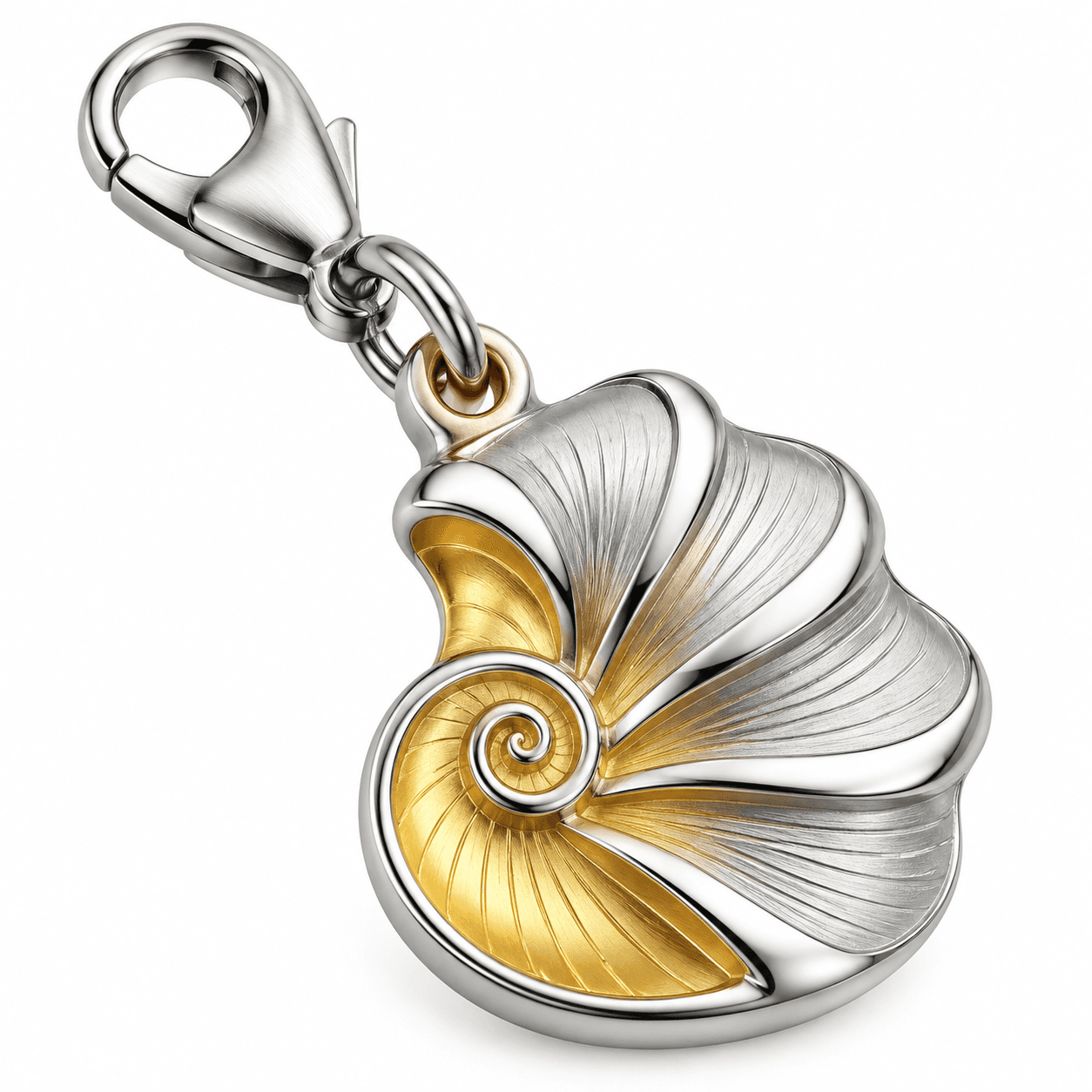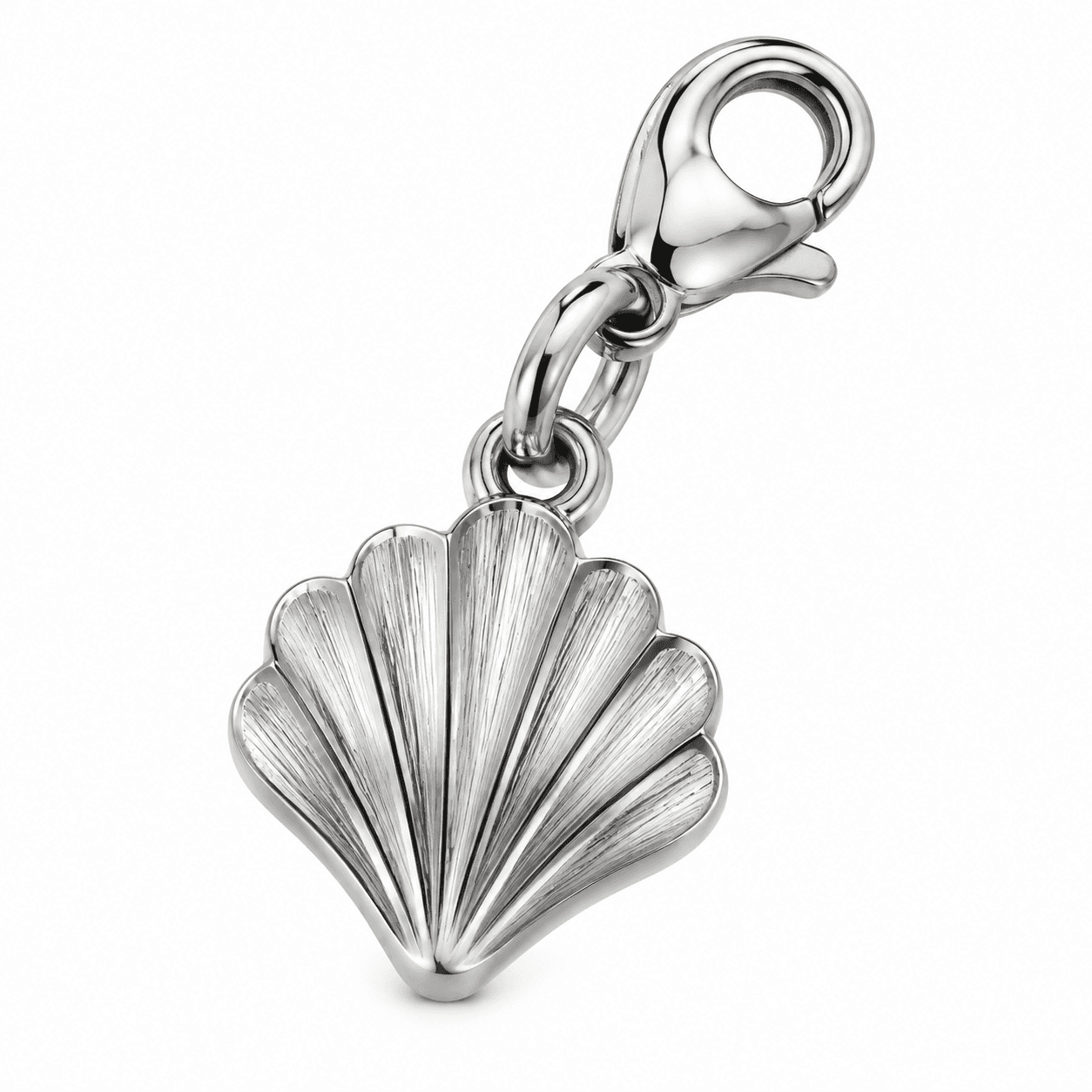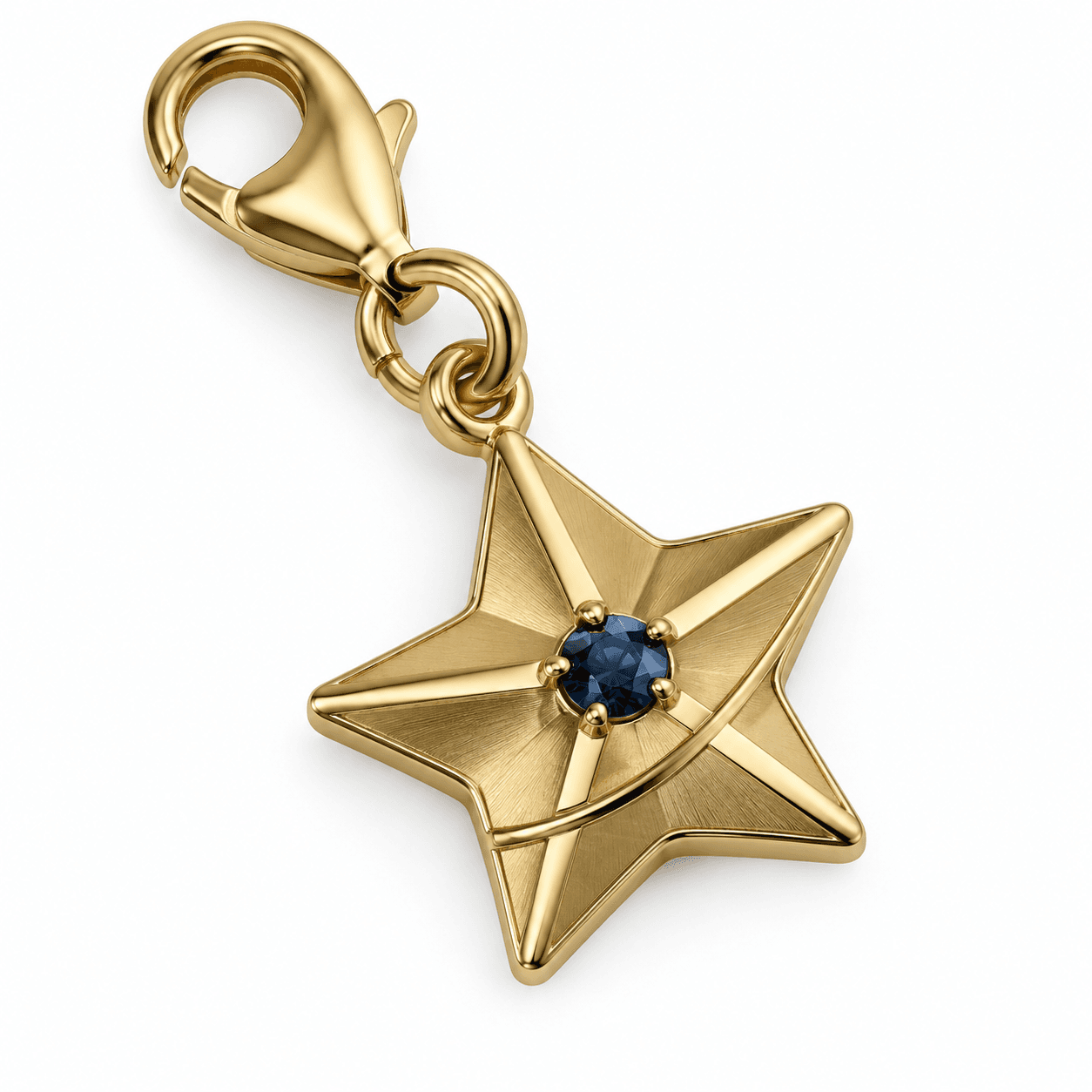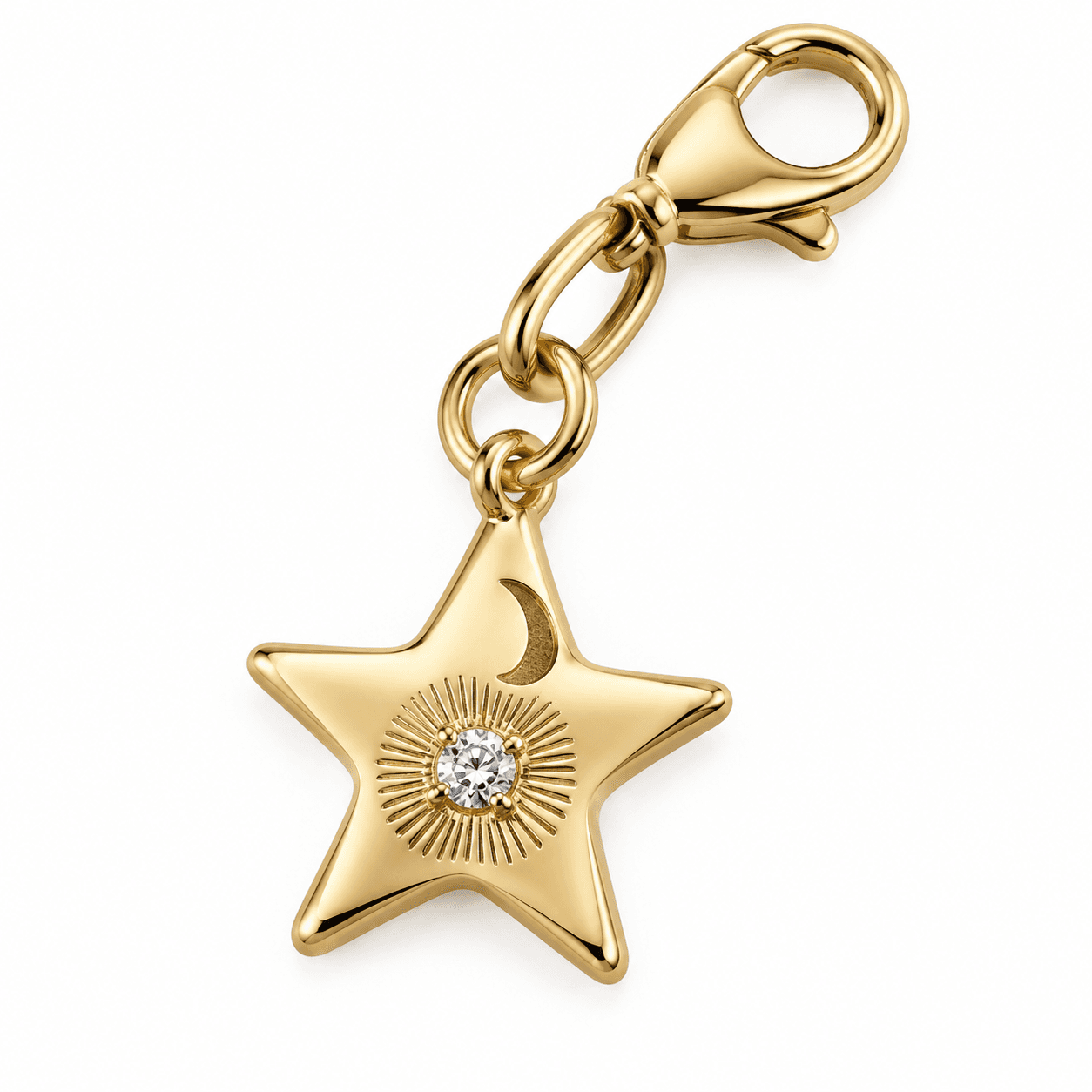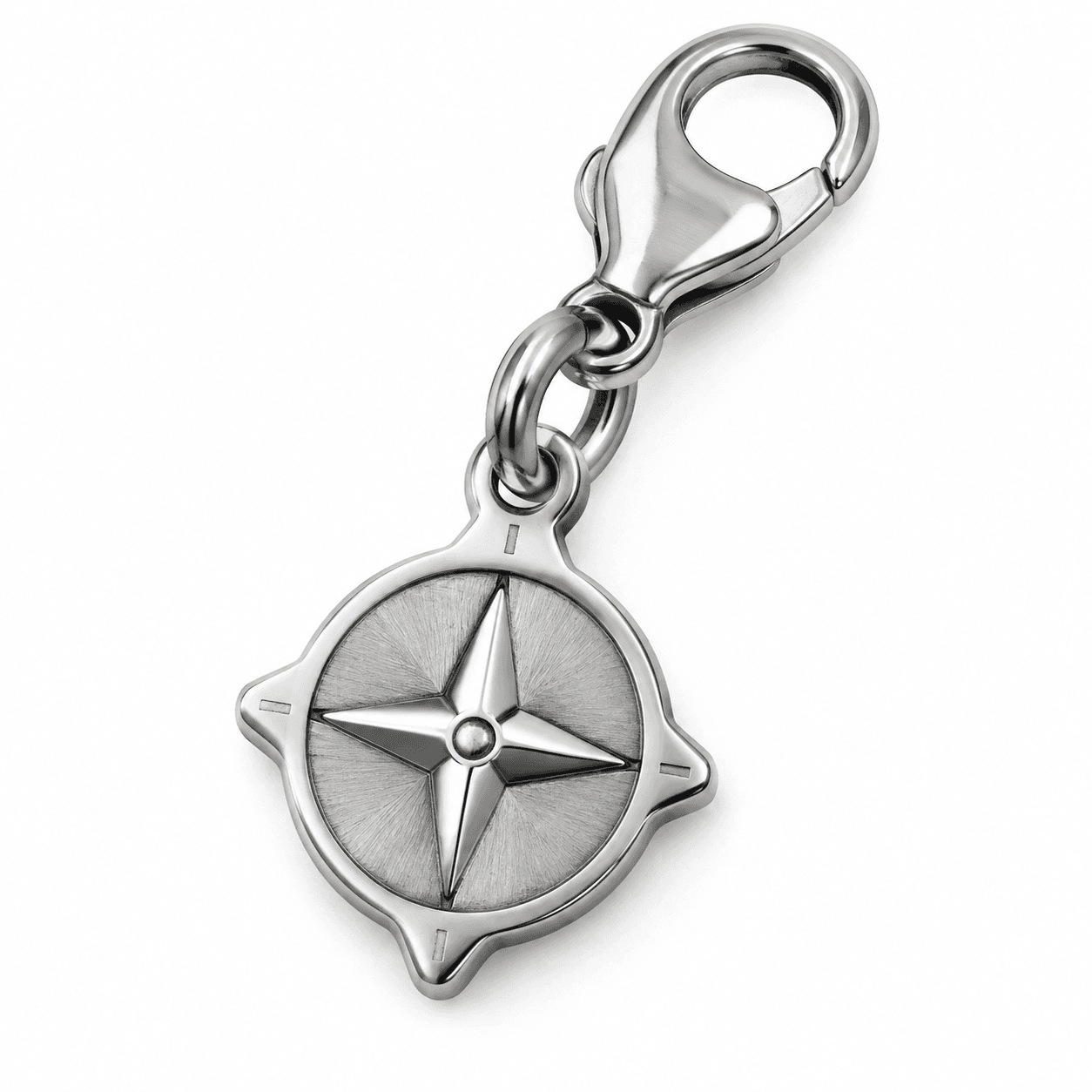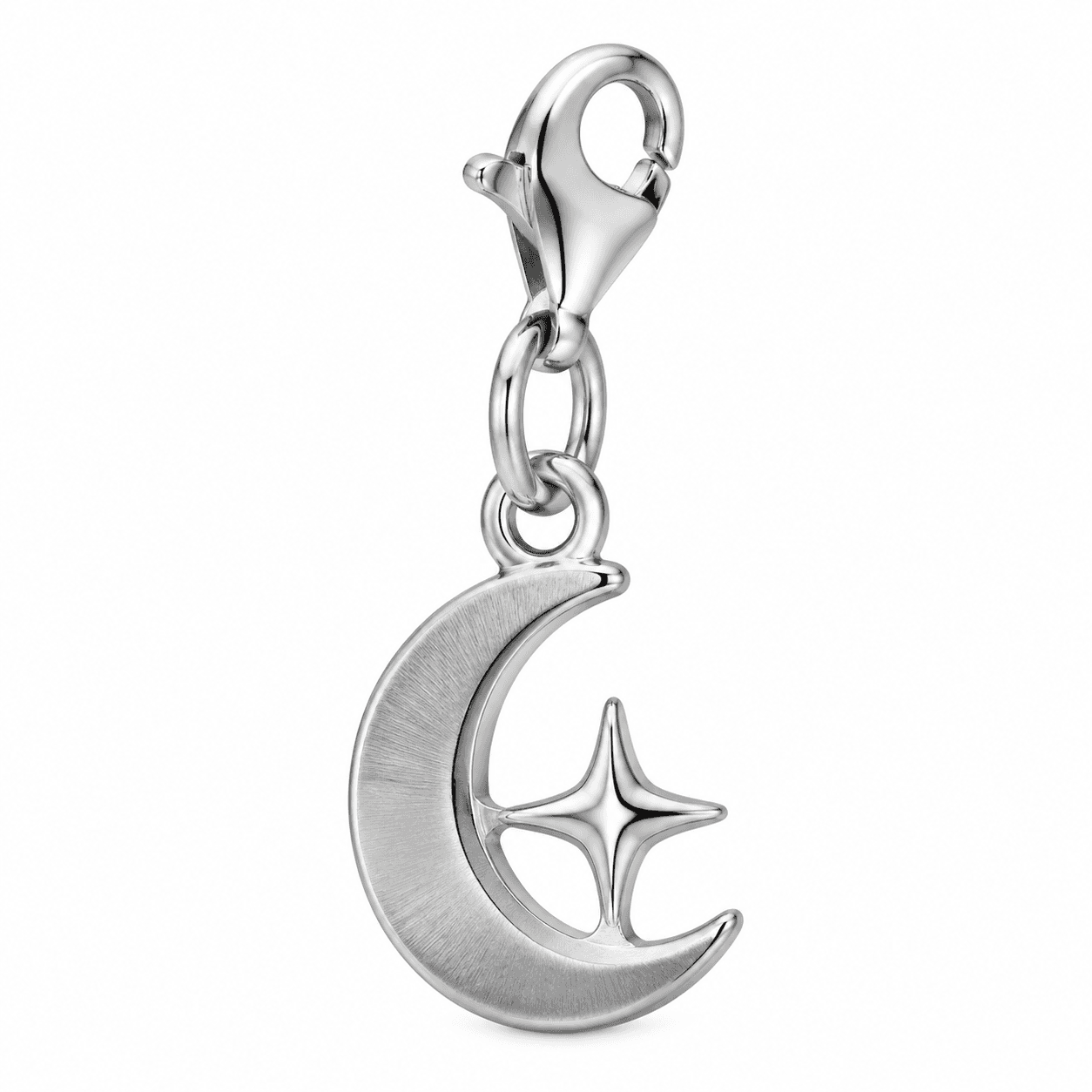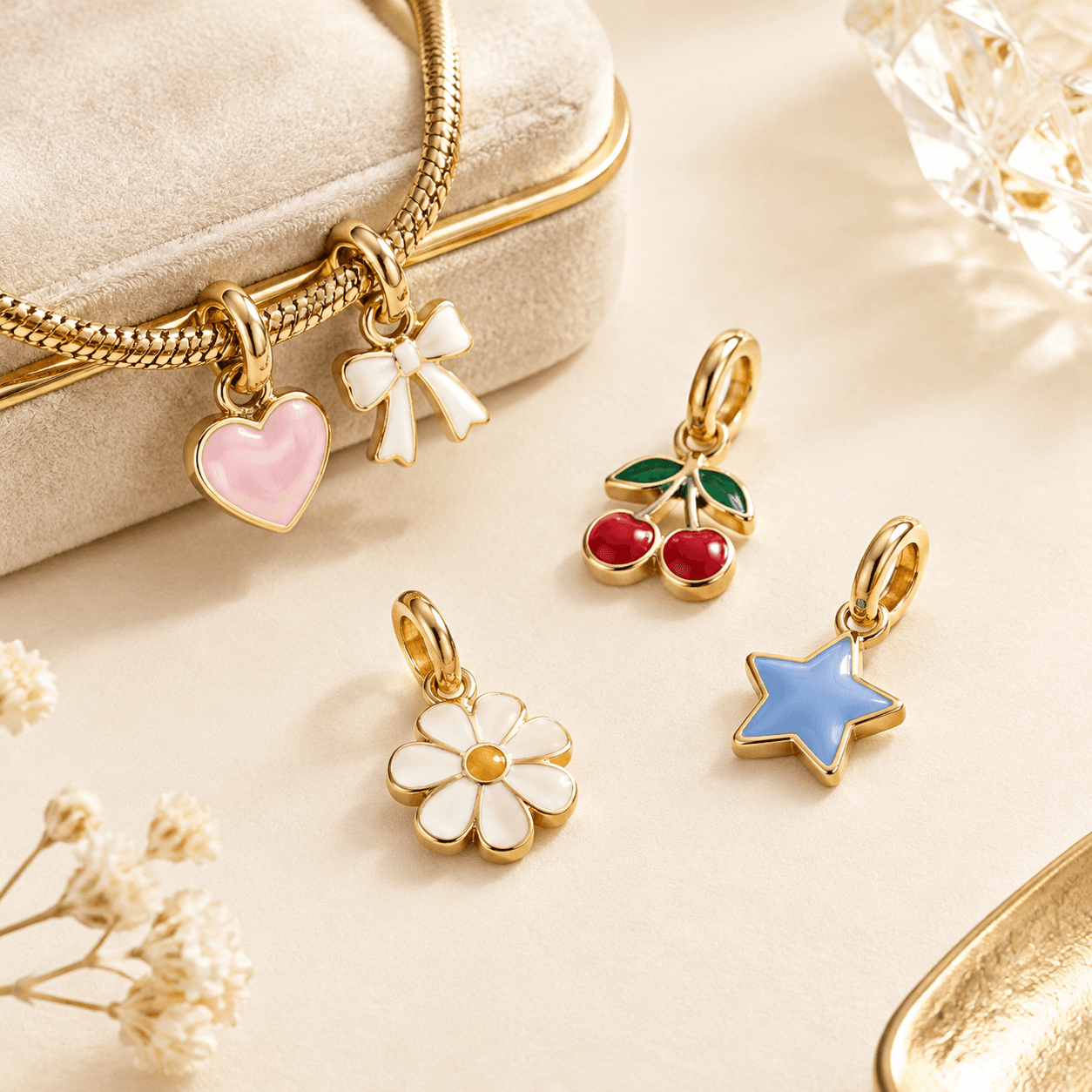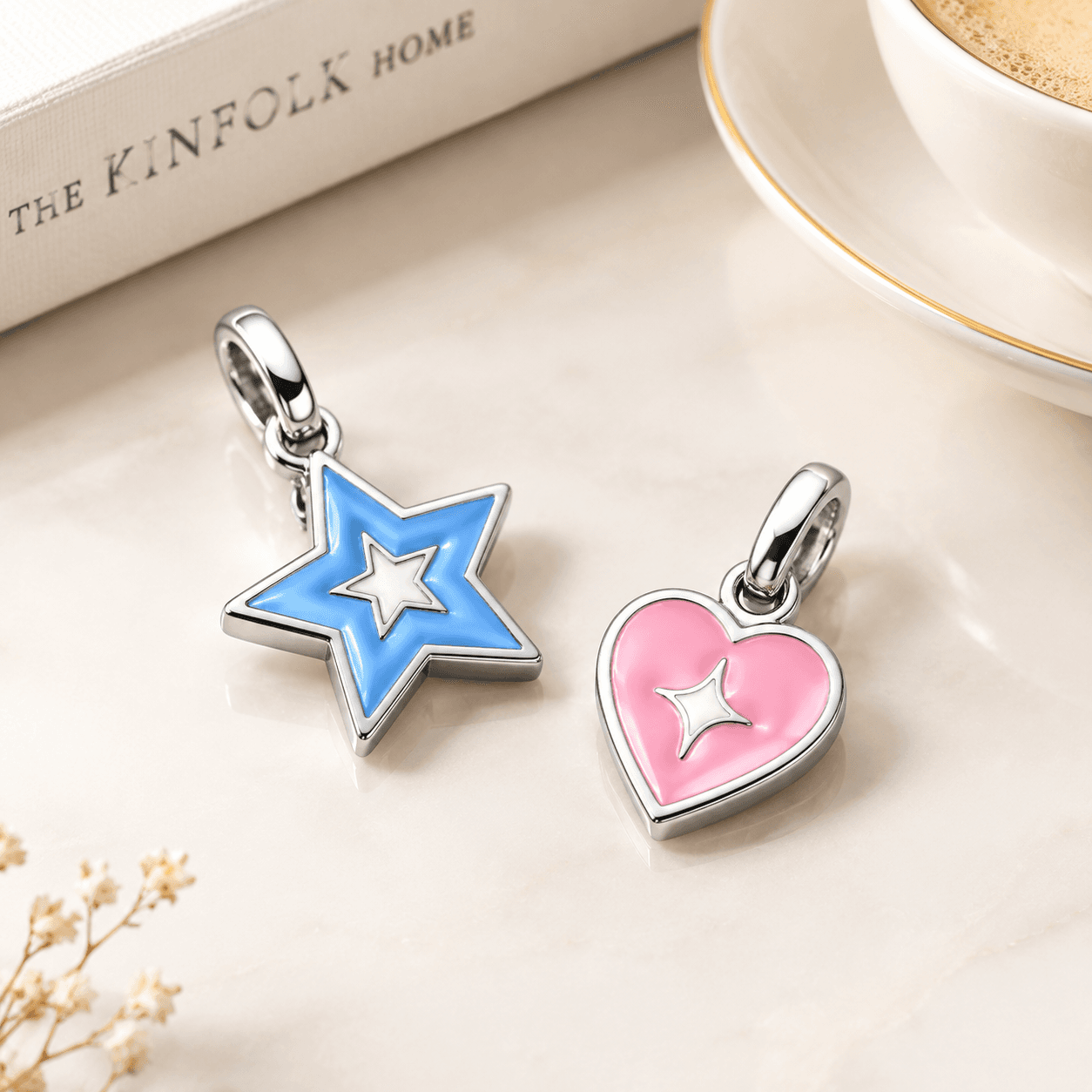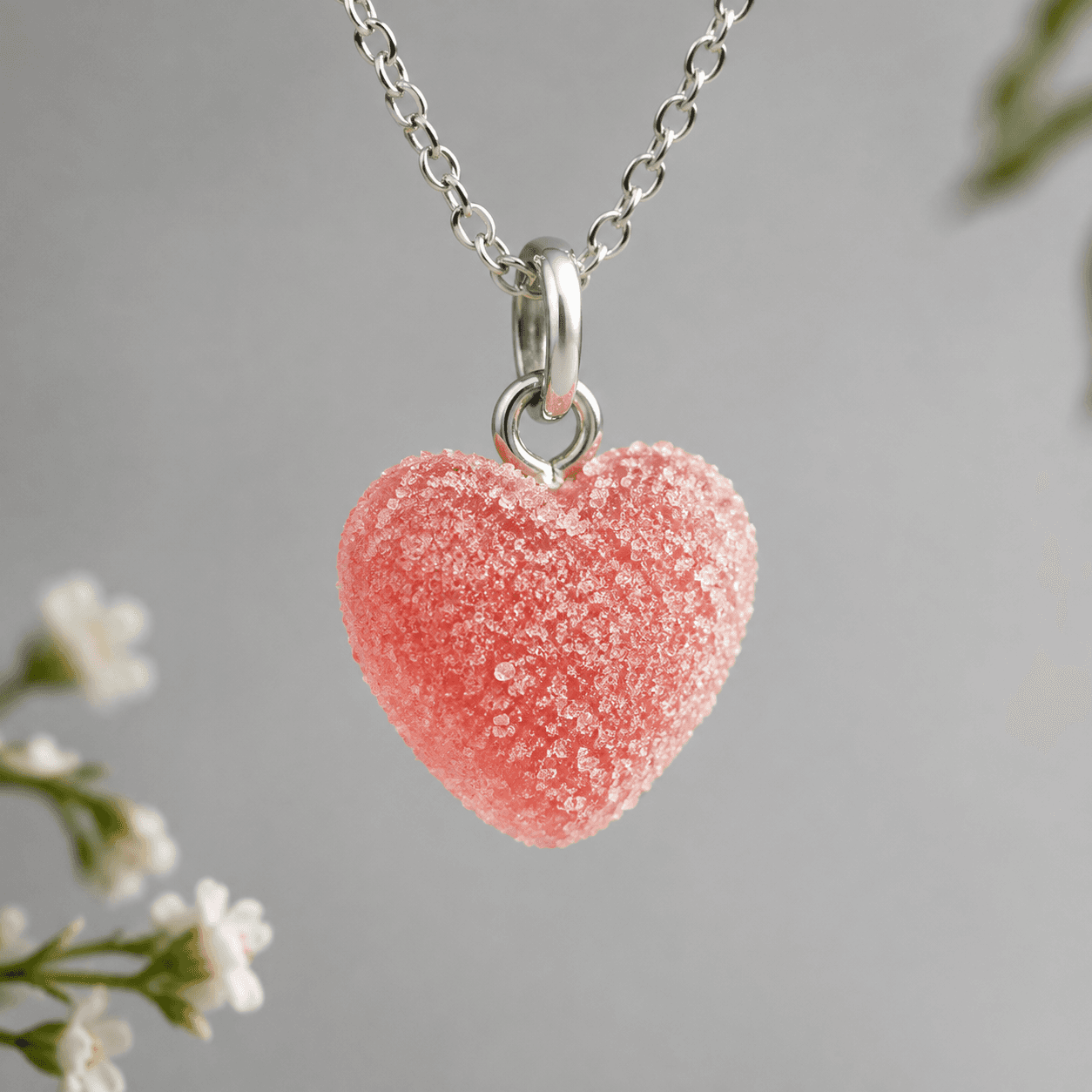
The candy hearts charm gummy concept combines soft-looking candy-inspired shapes, saturated colors, and a polished surface into a distinctive decorative charm. For jewelry designers, the technical challenge is to create a playful visual effect while maintaining the structural integrity, finish consistency, and attachment reliability expected from a commercial product. A successful design begins with a clear separation between the charm's structural material, its surface finish, and its decorative color treatment.
At Lancy Jewelry, every charm base is manufactured from 316L stainless steel. Designers can explore rounded heart silhouettes, recessed lettering, enamel color filling, PVD gold plated finishes, silver finish options, rose gold plating, and selected crystal inlay details. These techniques provide different ways to interpret a gummy-inspired appearance without relying on a soft or translucent base material. As a stainless steel charms manufacturer, Lancy supports OEM development, ODM design refinement, sample development, and private label production for boutique brands and gift businesses.
This material deep dive explains how to plan a candy hearts charm gummy design, evaluate color and surface effects, prepare a production-ready brief, and assess quality before bulk orders. It also outlines practical considerations for MOQ planning, technical documentation, and finish validation so jewelry designers can turn a creative concept into a repeatable commercial product.
Understanding the Candy Hearts Charm Gummy Design Concept
From a soft visual effect to a durable charm structure
A candy hearts charm gummy design uses rounded edges, compact proportions, smooth contours, and expressive color to suggest the appearance of a soft confection. In a manufactured jewelry charm, however, the perceived softness comes from geometry, reflectivity, color placement, and surface finishing rather than from the base material itself. The underlying component remains a solid 316L stainless steel charm, with the front design engineered to provide enough depth for decorative details while preserving a reliable attachment point.
Begin by defining the intended visual character. A rounded heart with a shallow central recess creates a different impression from a heart with a raised border and a flat decorative center. Soft corner transitions can reduce the appearance of sharp geometry, while carefully controlled highlights help the surface look smooth and dimensional. For a small charm measuring approximately 0.4 to 0.6 inches across, the design must remain legible at normal viewing distance. Oversized lettering, excessive relief, and overly narrow gaps can make the finished piece look crowded or obscure the intended gummy-inspired effect.
Separate structure, finish, and decoration
The most useful design brief distinguishes three elements: the structural body, the surface finish, and the decorative treatment. The 316L stainless steel body determines the shape, thickness, and mechanical features. A silver finish or PVD gold plated surface changes the overall appearance. Enamel color filling adds controlled color fields, while crystal inlay can introduce a focused point of reflection when the layout and setting geometry support it. These elements should be specified separately so changes to color do not unintentionally alter the approved silhouette or attachment design.
For commercial development, document the front view, side profile, back view, target dimensions in inches and millimeters, preferred finish, color references, and intended use. This gives the engineering team enough information to evaluate manufacturability before sampling. Lancy's custom stainless steel charms development process can use these details to establish a practical route from concept drawing to a reviewable sample, with revisions recorded against the approved design rather than managed through informal visual references alone.
316L Stainless Steel Properties and Charm Engineering
Why the base material matters
316L stainless steel is a low-carbon stainless steel grade containing chromium, nickel, and molybdenum. Its corrosion resistance depends on the alloy composition, surface condition, manufacturing process, and environment in which the finished component is used. Chromium supports the formation of a passive surface film, while molybdenum improves resistance to certain forms of localized corrosion compared with many less corrosion-resistant stainless steel grades. The low-carbon designation is relevant to the material's behavior during certain fabrication and joining processes, although the suitability of any particular process must still be evaluated for the actual design.
For jewelry designers, these properties are valuable because a charm is handled repeatedly, exposed to skin contact, and subjected to friction against adjacent components. Material selection is only one part of performance: edge quality, surface preparation, dimensional accuracy, finishing controls, and the condition of drilled or formed openings also influence the result. A well-selected base material cannot compensate for a poorly finished edge or a connector hole positioned too close to a thin section.
Translate material properties into design decisions
For a typical heart charm around 0.5 inches wide, define the minimum wall thickness around recessed lettering, decorative cavities, and attachment holes before approving the silhouette. The appropriate thickness depends on the overall dimensions, relief depth, production method, and expected handling. Avoid deep recesses that leave fragile sections behind the front design. Similarly, a narrow top loop can become the limiting mechanical feature even when the heart body is sufficiently robust. Request a side-profile drawing or sample review to verify the relationship between the body, hole, and jump ring.
Surface quality also deserves explicit attention. Scratches, embedded contamination, uneven polishing, or inconsistent preparation may become more visible after a reflective finish is applied. Designers should specify the intended surface appearance, including whether the face should be highly polished, satin-like, or selectively contrasted. The final specification should state which areas are decorative, which areas require smooth contact, and which dimensions are critical to assembly. These details help a 316L stainless steel charms project move beyond an attractive rendering toward a repeatable production standard.
Interpret material documentation correctly
Ask for documentation identifying the supplied material grade and the scope of any applicable test report. A material certificate, chemical composition report, finished-product test, and plating performance report answer different questions; none should be treated as interchangeable. When testing is performed by SGS or another qualified laboratory, confirm the sample identification, test method, issue date, and whether the results apply to the proposed finished charm or only to a representative material sample. Technical documentation should support the actual specification being purchased, not merely a general statement about the factory's capabilities.
Enamel Color Filling and Gummy-Inspired Surface Effects
Building color into a small decorative surface
Enamel color filling is a practical option when a candy hearts charm gummy design requires clearly defined, saturated color areas. The charm can be engineered with shallow recessed fields, raised separating borders, or selected engraved details that help organize the visual layout. Each cavity needs enough usable area for the intended color, and the boundary between adjacent colors must remain clear at the finished scale. A concept that appears simple on a large screen may require substantial simplification when reduced to a heart less than three-quarters of an inch wide.
Color planning should begin with a limited palette. For example, a coordinated range of pink, coral, cherry red, and pale cream can establish a recognizable candy-inspired theme while allowing a collection to share a consistent design language. These are decorative color choices rather than promises of an exact finished shade. The perceived result can change with the underlying surface, cavity depth, lighting, coating thickness, and adjacent finish. A digital color reference helps communicate intent, but an approved physical sample is more useful for final evaluation.
Control the boundaries and surface level
During design review, decide whether the enamel should appear flush with the surrounding surface, slightly recessed, or visually framed by a raised border. A flush appearance requires careful control of cavity depth and filling. A recessed treatment can emphasize the outline and reduce visual competition between the colored field and the body. Raised dividers help separate colors but must be proportioned so that they do not dominate the heart shape. Fine lettering and tiny enclosed spaces should be assessed early because the smallest features are often the hardest to fill consistently.
Specify each color by a documented reference and assign it to a labeled area on the artwork. Avoid instructions such as bright pink or candy red without a visual standard. If several colors meet at one boundary, include an annotated close-up showing the intended separation. For an OEM charms manufacturer, this information makes sample review more objective: the buyer can compare color placement, border definition, surface level, and overall appearance against a common reference instead of relying on subjective impressions alone.
Design for repeatability
Once the first sample is approved, retain the artwork version, color references, finish specification, and dated approval record. Evaluate the same design under consistent lighting and at normal viewing distance as well as under magnification. Magnification is useful for detecting small filling defects, but it should not replace a realistic assessment of the charm as a wearable or display product. Establish acceptable limits for minor cosmetic variation, and identify any defect that would make the piece unsellable, such as a misplaced color field, an exposed sharp edge, or a visible discontinuity that changes the intended design.
Lancy supports enamel stainless steel charms development for private label collections, including color mapping and sample review. For designers building a coordinated range, plan shared color standards across related heart shapes and sizes. This improves visual consistency across a collection and helps simplify future replenishment, provided the approved specifications and process conditions remain controlled.
PVD Finishes, Surface Preparation, and Visual Consistency
Choosing a finish that supports the concept
The surface finish determines how a candy hearts charm gummy design interacts with light. A polished silver finish can produce crisp highlights that emphasize the rounded heart silhouette. PVD gold plated and rose gold plating options introduce warmer tones and can create contrast against colored enamel. A dark finish can frame bright decorative areas, while a carefully selected reflective finish can make raised borders appear more dimensional. The best option depends on the color palette, collection positioning, surrounding display materials, and intended retail presentation.
PVD, or physical vapor deposition, is a coating process in which material is deposited onto a prepared surface under controlled conditions. The appearance and performance of a finished coating depend on the coating system, surface preparation, substrate condition, process controls, and the way the item is used. PVD should not be described as scratch-proof or permanent. Friction, impact, chemical exposure, and normal wear can affect the appearance of a coated surface, particularly at exposed edges and contact points.
Prepare the surface before approving the finish
Polishing and cleaning are important because the coating follows the condition of the surface beneath it. If a charm has visible scratches, uneven contours, or inconsistent polishing, the final finish may make these differences more noticeable. Review the face, side walls, reverse, and attachment opening as separate inspection zones. A finish specification should identify the target color, gloss level, coverage requirements, and areas where the coating must remain visually consistent. If the design intentionally uses contrasting surfaces, identify those boundaries on the drawing.
For a collection with several colorways, approve each proposed finish on a representative sample. Do not assume that the same coating name guarantees an identical visual result across different surface geometries or production batches. Record the approved reference, inspection lighting, and any agreed tolerance for color variation. If plating thickness or coating performance is commercially critical, discuss the applicable measurement method and acceptance limits with the manufacturer before production rather than introducing an undefined requirement during final inspection.
Use test reports to support purchasing decisions
Buyers may request SGS testing or relevant documentation concerning RoHS, REACH, EN1811, and salt spray performance. These references do not all assess the same property. RoHS concerns restrictions on specified hazardous substances within its applicable scope; REACH covers chemical controls and obligations under European Union legislation; EN1811 is a reference method used to assess nickel release from certain articles intended for direct and prolonged skin contact; and salt spray testing evaluates corrosion behavior under defined laboratory conditions. Applicability depends on the product, market, test method, and current requirements.
A report should identify the tested item, the test conditions, the result, and the laboratory or issuing organization. A passing result for one sample does not automatically certify every future production batch or every finish variation. Buyers should confirm whether the report covers the finished charm, the base material, the coating system, or a related representative sample. Where market compliance is required, verify the applicable obligations with a qualified compliance professional. This approach gives jewelry designers a technically meaningful basis for selecting a finish without making unsupported claims about universal compliance.
Prototyping Candy Hearts Charms for OEM and ODM Production
Turn a visual idea into an inspectable sample
Sample development is the stage where a creative brief becomes a physical specification. Begin with a dimensioned front view, side view, and reverse view, then identify the attachment point, finish, enamel colors, surface texture, and any engraving. For a candy hearts charm gummy concept, include the target heart width and height, the intended edge radius, the depth of the decorative fields, and the placement of any short message. If the charm is designed for a jewelry set, charm bar, keychain charm, or gift accessory program, explain the intended use so the connection geometry can be assessed correctly.
Design files should be clear enough to distinguish fixed requirements from optional creative suggestions. Vector artwork can help communicate outlines and lettering, while a dimensioned drawing clarifies physical geometry. If the design is supplied as a sketch or reference image, annotate the critical dimensions and explain which visual details must be preserved. A manufacturer can then identify areas that need adjustment for small-scale production, such as excessively thin borders, crowded text, or insufficient material around a hole.
Use a staged sample review
Review the first sample for silhouette, dimensions, attachment geometry, edge quality, color placement, and overall finish. Record every requested revision in one consolidated list. A second review can focus on the corrected details and verify that the changes have not introduced new issues elsewhere. When the design includes enamel and PVD finishing, assess the combined result rather than approving each visual element in isolation. A color that looks suitable on a plain surface may read differently when placed beside a highly reflective border.
Before signing off, confirm that the sample represents the intended production specification. Ask whether the approved sample, technical drawing, finish reference, and color map will be retained for repeat orders. Sample approval should establish a shared standard, not merely indicate that the buyer likes the prototype. For more involved projects, define inspection points and acceptable variation before placing a production order, especially where several sizes, finishes, or coordinated designs will be produced together.
Plan MOQ and bulk production together
MOQ depends on the design, tooling requirements, finish, number of colorways, and production arrangement. A single heart design with one finish may have different commercial requirements from a range containing multiple sizes and several enamel combinations. Buyers seeking low MOQ charm production should provide a realistic estimate of quantities by design and finish so the factory can assess a workable plan. Do not assume that a low quantity can be offered at the same unit price as a larger run; setup, sampling, finishing, and inspection costs may be distributed across fewer pieces.
Lancy provides OEM and ODM development, logo engraving, PVD finishing, enamel color filling, crystal setting where appropriate, sample support, and private label packaging. For a project with several related designs, ask for a consolidated proposal covering sample charges, estimated lead times, MOQ by variation, packaging options, and quality checkpoints. You can review the available scope through the OEM service page or browse the product catalog to help define the next development brief.
Quality Control and Certification Checks for Candy Hearts Charms
Build quality requirements into the specification
Quality control is most effective when requirements are established before sampling and bulk production. For a candy hearts charm gummy design, define the critical dimensions, silhouette, attachment opening, edge condition, finish appearance, color boundaries, and visible surface defects that matter to the buyer. A practical inspection plan separates measurable characteristics from visual judgments. Dimensions can be checked against an agreed drawing, while color and gloss should be evaluated against an approved reference under consistent lighting.
Incoming material verification, in-process checks, finish inspection, and final sampling serve different purposes. Material verification helps establish that the intended 316L stainless steel grade has been supplied. In-process inspection can identify shape or dimensional issues before decorative treatments are completed. Finish inspection evaluates coating coverage and surface appearance, while final inspection considers the assembled charm as a complete item. The appropriate sampling plan depends on order size, product risk, customer requirements, and the agreed quality standard.
Establish acceptance criteria that can be applied consistently
Write acceptance criteria in observable terms. Examples include no sharp burrs at the attachment hole, no obvious cracks or exposed defects, color fields positioned within the approved layout, and finish coverage consistent with the reference sample. Where exact dimensions are essential, provide numerical tolerances instead of using terms such as approximately correct. For color, identify the approved physical sample or agreed reference system and document how deviations will be reviewed. If a surface contains intentional texture or relief, distinguish those design features from accidental scratches or dents.
Ask the supplier to clarify which checks are performed on every unit and which are performed on a sampling basis. If the charm has a critical connector, consider specifying a practical mechanical assessment appropriate to its intended use. Test procedures, sample sizes, and pass criteria should be agreed in advance; an undefined statement that a product has been tested does not establish what was checked or whether the results are sufficient for the application.
Interpret compliance evidence without overclaiming
SGS reports and other third-party laboratory documents can support a purchasing review when they identify the relevant product and test scope. For RoHS and REACH, check the applicable regulatory provisions and the substances or obligations addressed by the evidence. For EN1811, confirm that the tested article and its skin-contact conditions fall within the method's scope. For salt spray, review the exposure conditions, duration, evaluation method, and acceptance criteria. A salt spray result is not a direct guarantee of long-term performance under every real-world environment.
Maintain a document file containing the final drawing, approved sample record, material documentation, applicable laboratory reports, finish specification, inspection criteria, and production approval. Verify report dates and product identifiers before relying on them for a new design. If the base material, coating, color process, or geometry changes materially, ask whether the existing evidence remains applicable or whether additional evaluation is necessary. This disciplined approach helps B2B buyers make defensible sourcing decisions and gives the manufacturer a clear reference for maintaining consistency across repeat orders.
Collection Planning, Packaging, and Commercial Applications
Design a coordinated range rather than an isolated charm
A candy hearts charm gummy concept can become the anchor for a small, commercially coherent collection. Instead of creating many unrelated designs, start with a recognizable heart silhouette and vary a controlled set of features: enamel color, engraved message, border treatment, and finish. This method supports a consistent product identity while allowing retailers to offer meaningful choice. For example, a range may include several colorways with the same dimensions and attachment geometry, plus a small number of differentiated designs for seasonal gifting or year-round display.
Collection planning should consider how the products will be presented and replenished. A charm bar retailer may prioritize easy visual differentiation and organized color selection, while a gift company may focus on coordinated packaging and clear product identification. Boutique brands may need a more tightly edited range with consistent finish quality and a distinctive color palette. In every case, the technical specification should remain stable across the approved variants, with any change in dimensions, coating, or decorative layout documented as a separate version.
Packaging is part of the product specification
Private label packaging can reinforce the intended retail presentation, protect the surface during storage and transit, and make inventory handling easier. Discuss packaging card dimensions, product positioning, label information, barcode requirements if applicable, and the method used to secure the charm. The attachment hardware should not rub excessively against the decorated face during shipment. A packaging sample is worth reviewing alongside the finished charm because a well-made product can still arrive with avoidable cosmetic damage if it moves freely inside its pack.
For a small charm around 0.5 inches wide, leave enough clear space around the silhouette so the heart shape and surface details remain visible. If the packaging card includes a display hole, ensure it does not interfere with the product or create an unstable presentation. Specify whether each charm will be packed individually or grouped by finish and colorway, and confirm how product identifiers will map to the approved order details. These decisions can reduce confusion during receiving, retail preparation, and repeat purchasing.
Prepare a commercially useful buying plan
Before requesting pricing, estimate the quantity for each design and finish, the anticipated reorder pattern, and the target delivery window. Identify whether you need a single development sample, a pre-production sample, or a larger production approval set. If several related products will launch together, ask for the proposed MOQ and pricing structure by variation rather than requesting one blended figure that obscures the actual costs. Clearly distinguish one-time development charges from recurring unit costs and packaging expenses.
As a wholesale stainless steel charms sourcing project, the order should balance creative ambition with repeatability. Lancy can discuss sample development, private label packaging, and bulk charm orders using the approved artwork and commercial brief. To prepare for an RFQ, organize the specifications, finish references, color map, packaging requirements, destination market, and quantity estimate in one document. Visit the contact page to discuss the project, or use the request a quote route to submit your sourcing inquiry.
Frequently Asked Questions About Candy Hearts Charm Gummy Design
A Practical Design Checklist Before Requesting a Quote
Bring creative and technical requirements together
Before sending a candy hearts charm gummy brief to a manufacturer, confirm that the creative direction has been translated into specific production information. Start with the target dimensions, heart outline, edge profile, front relief, reverse design, and attachment geometry. Add the preferred 316L stainless steel finish, enamel color map, engraving details, and any crystal inlay requirements. Indicate whether the product will be used as a jewelry charm, charm bar accessory, keychain charm, or gift accessory, because intended use can affect the connector design, packaging, and quality checks.
Next, establish commercial requirements. Estimate quantities by design and finish, identify the desired sample stage, and state the target order date and delivery destination. List packaging requirements and any relevant labeling or documentation needs for the destination market. If your launch includes several related designs, provide a simple variant table that links each design identifier to its dimensions, finish, colorway, and quantity. This is more actionable than combining several product variations into one broad description.
Use a consistent approval record
After reviewing the quotation and sample plan, make sure the scope covers the agreed specifications and commercial assumptions. Confirm which artwork version will be used, which sample is the approval reference, how requested changes will be documented, and which inspections will take place before shipment. Record open questions about finish performance, color tolerances, packaging, and test documentation instead of treating them as informal details. Any material deviation should be reviewed before it becomes part of the production order.
This process helps jewelry designers retain creative control while allowing the factory to assess feasibility, repeatability, and cost. It also supports more efficient communication between product development, purchasing, quality assurance, and packaging teams. A clear brief can shorten avoidable revision cycles because the supplier can identify missing information early rather than discovering it after the first sample has been made.
Recommended RFQ information
- Design files: Dimensioned drawings, vector artwork, annotated concept images, and revision identifiers.
- Material and finish: 316L stainless steel base, selected PVD or other supported finish, enamel requirements, and any crystal inlay details.
- Dimensions: Overall width, height, thickness, edge profile, attachment-hole diameter, and critical tolerances.
- Color and decoration: Named color references, labeled color areas, engraving text, and approved surface appearance.
- Commercial scope: Estimated quantities by variation, target MOQ, sample requirements, packaging specification, and requested delivery window.
- Quality requirements: Inspection criteria, applicable laboratory documentation, intended destination market, and sample approval expectations.
Use the OEM service page to understand customization options and the product catalog to review existing forms that may help clarify your brief. If you need a tailored design, share the technical details early so Lancy can evaluate a suitable sample development and production plan.
Start Your Candy Hearts Charm Development
Turn your design brief into a production-ready proposal
Planning a candy hearts charm gummy collection for a boutique brand, charm bar, or private label program? Lancy Jewelry can review your concept for a 316L stainless steel charm and discuss practical options for shape refinement, enamel color filling, PVD gold plated or silver finish treatments, engraving, selected crystal inlay, and private label packaging. The recommended development route will depend on your drawing, quantity, finish requirements, and target market.
To request an RFQ, send your artwork or annotated reference image, desired dimensions in inches and millimeters, finish selection, enamel color references, attachment requirements, estimated quantity by variation, packaging details, and destination market. Include any required SGS test documentation or specific RoHS, REACH, EN1811, or salt spray evaluation requirements so the applicable scope can be reviewed. Please also state whether you need an initial sample, a pre-production approval sample, or a repeat production quotation.
For tailored manufacturing support, visit Lancy OEM services, submit your inquiry through Request a Quote, or contact the team through the contact page. Clear specifications help establish realistic MOQ expectations, sample development requirements, finish approval criteria, and a practical route to bulk production.
Related resources
Related resources
- 316L Stainless Steel Custom Enamel Sterling Charms: A Buyer’s Guide
- Antique Distressed Finish on Stainless Steel Charms: A Buyer’s Guide to Durability
- How to Choose Stainless Steel Enamel Charms Wholesale UK Suppliers
- How to Evaluate 316L Stainless Steel Zodiac Bracelet Charms Wholesale Suppliers
- Stainless Steel Small Enamel Charms Bulk: A Finishing Guide
- The Ultimate ODM stamped 316L stainless steel angel charm customization Buying Guide
- Custom Stainless Steel Charm Bracelet Tutorial: A Buyer’s Guide to Quality
- How to Choose Stainless Steel Enamel Cat Charms Wholesale Suppliers
- 316L Stainless Steel Chinese Zodiac Charms Wholesale: A Finishing Guide
- How to Source Minimalist Stainless Steel Charms: Finishing Guide