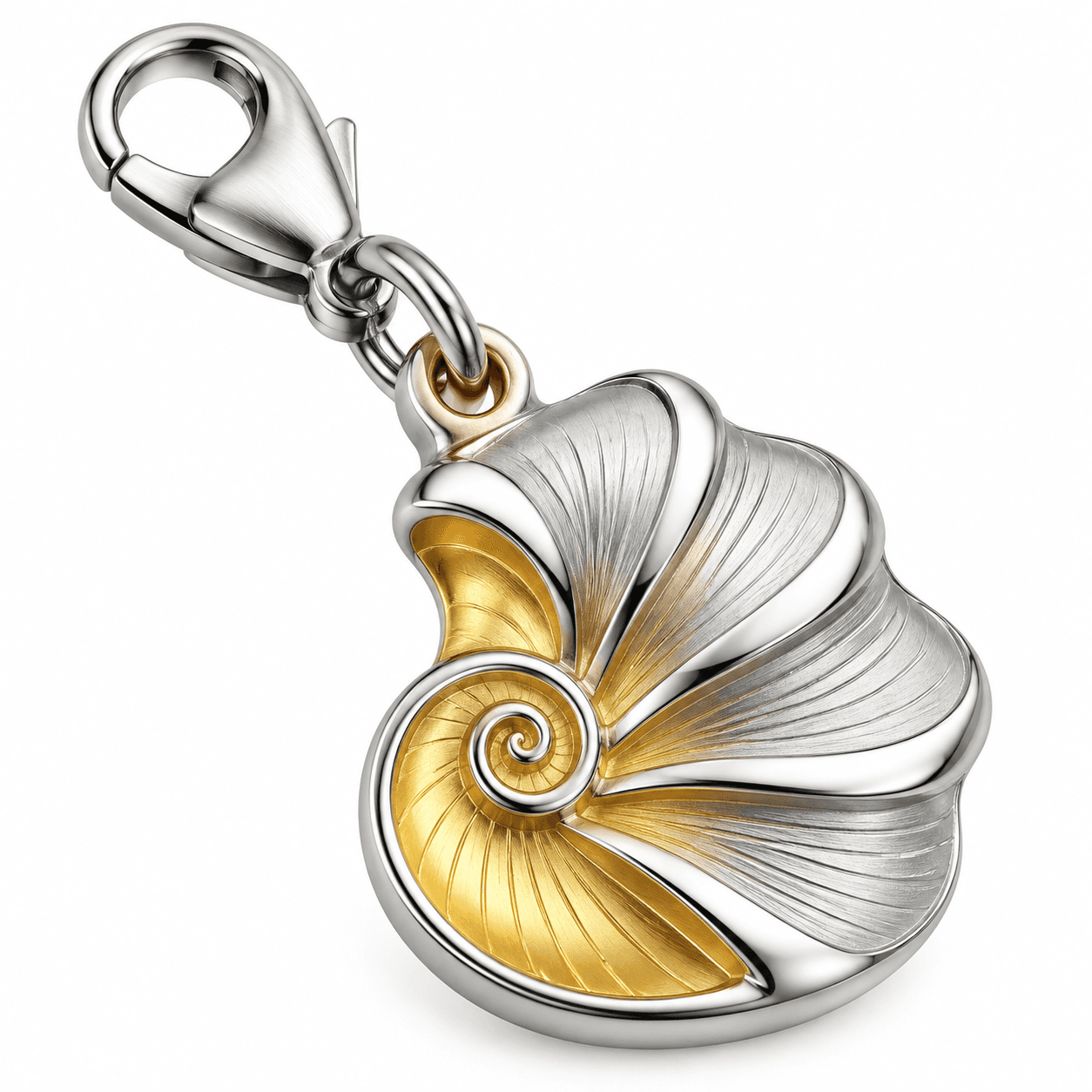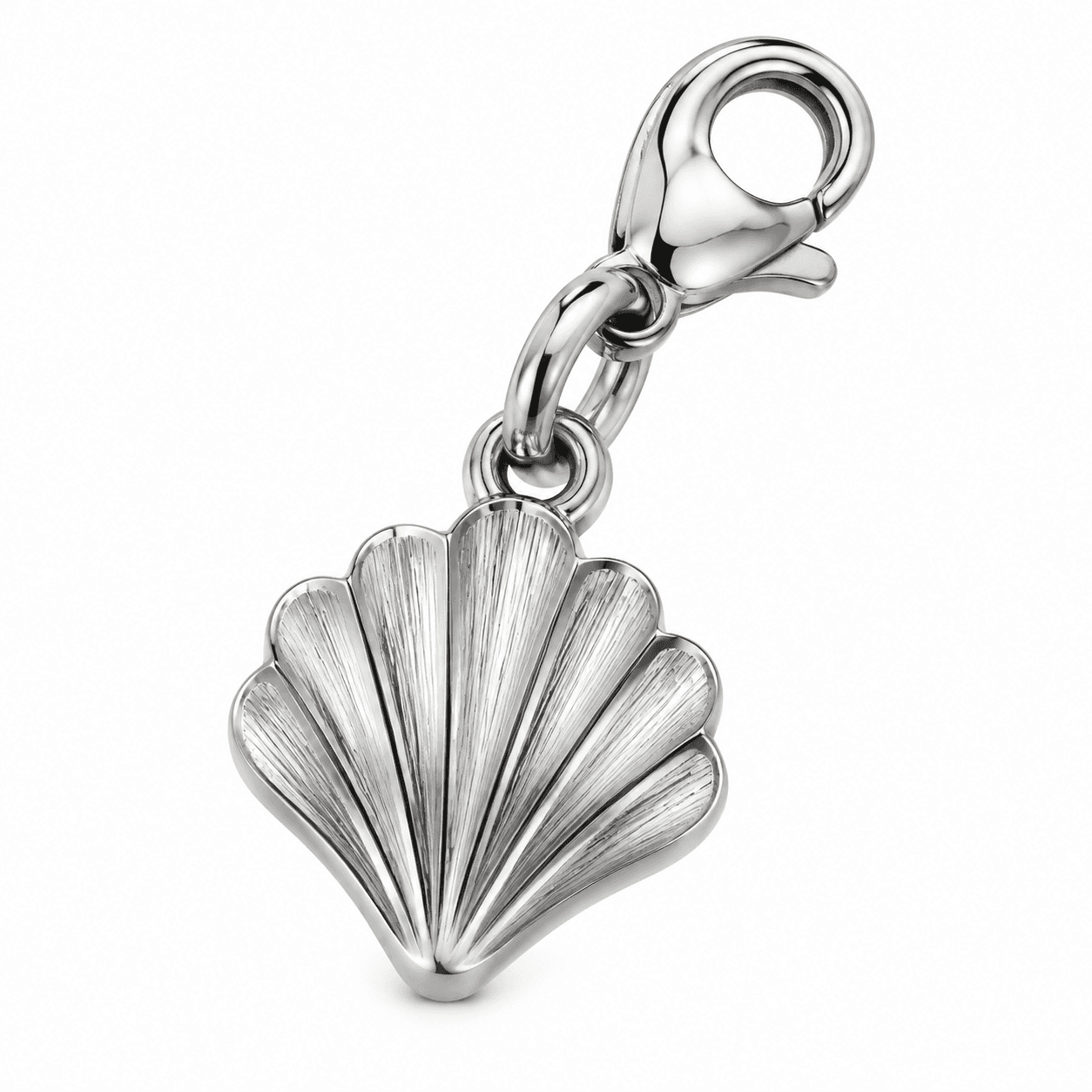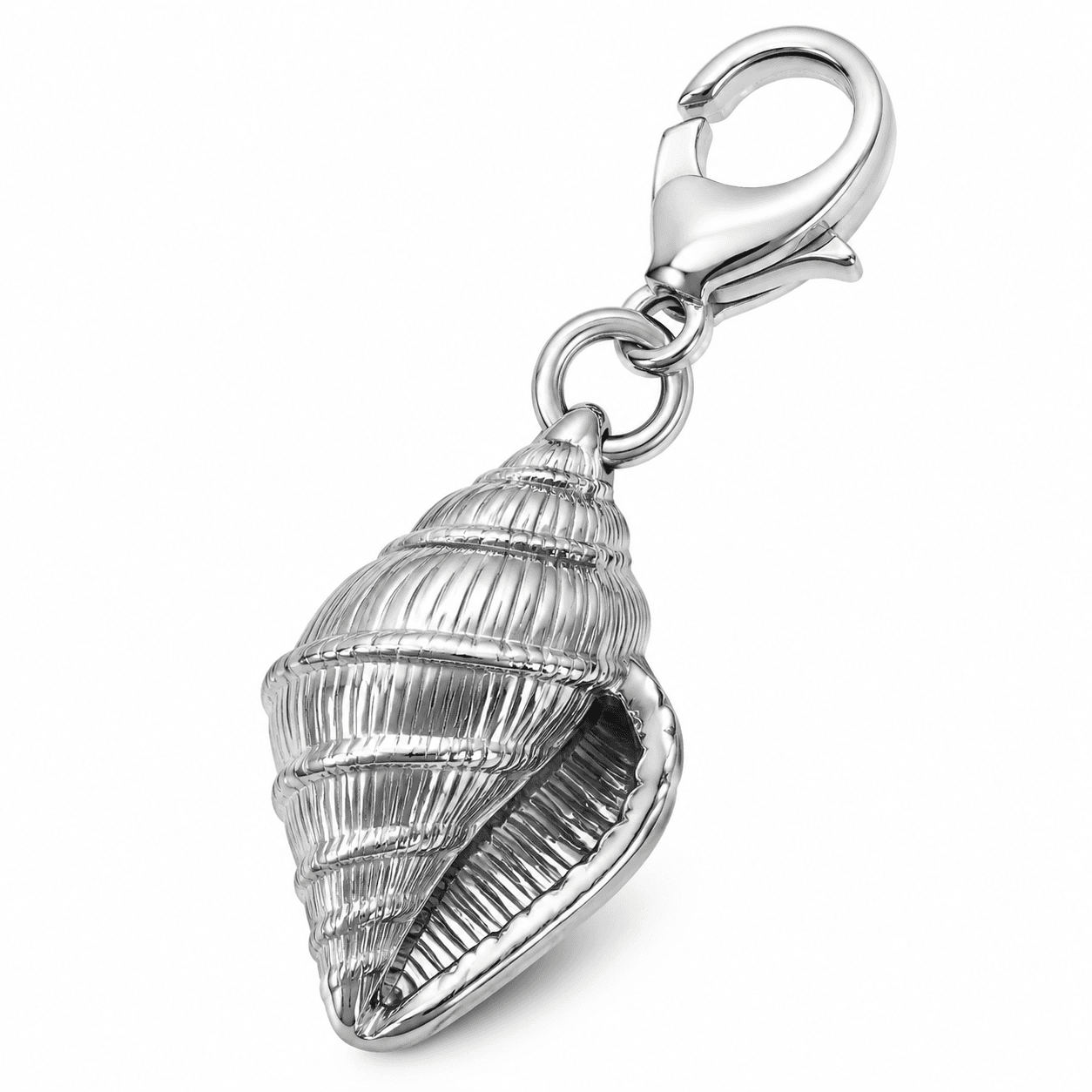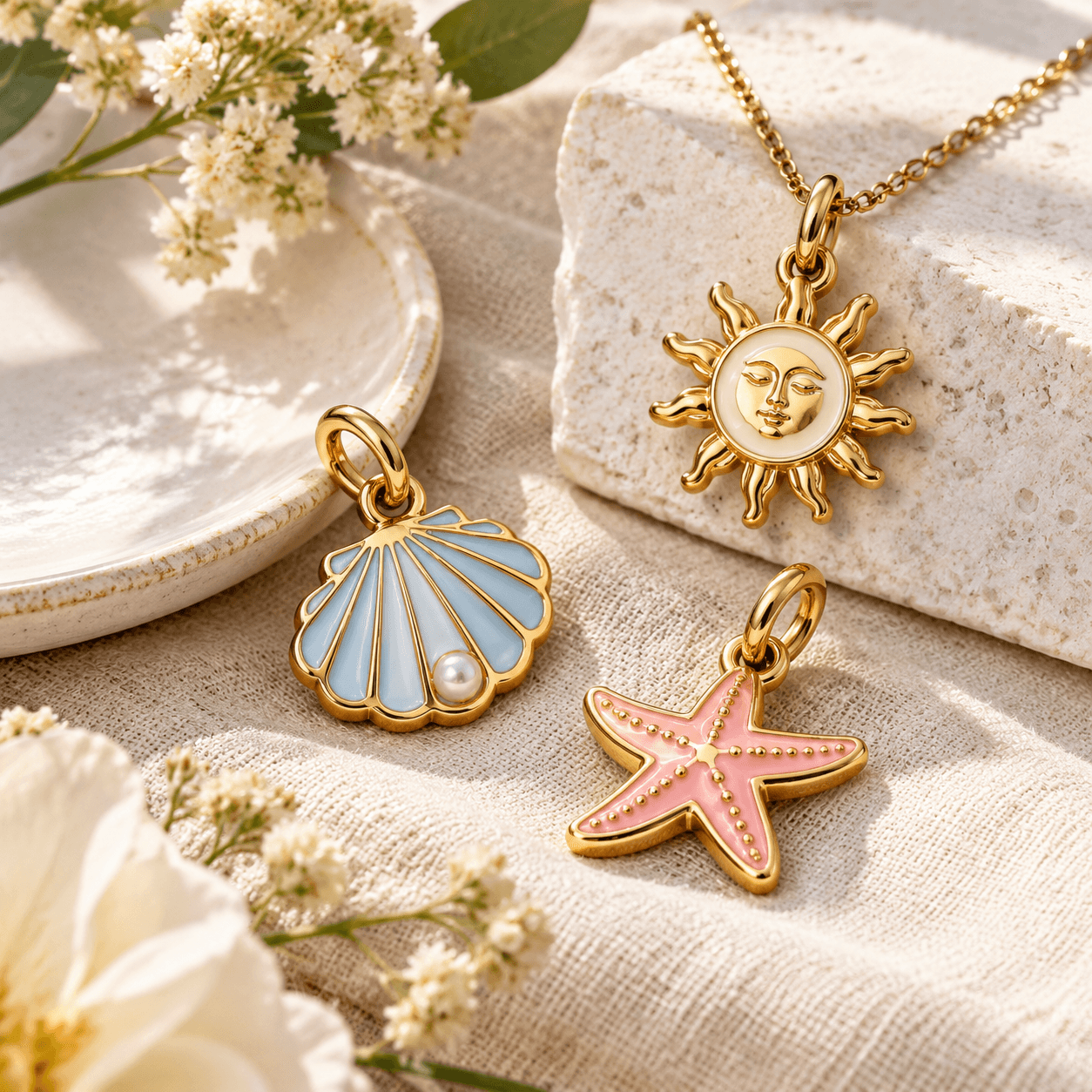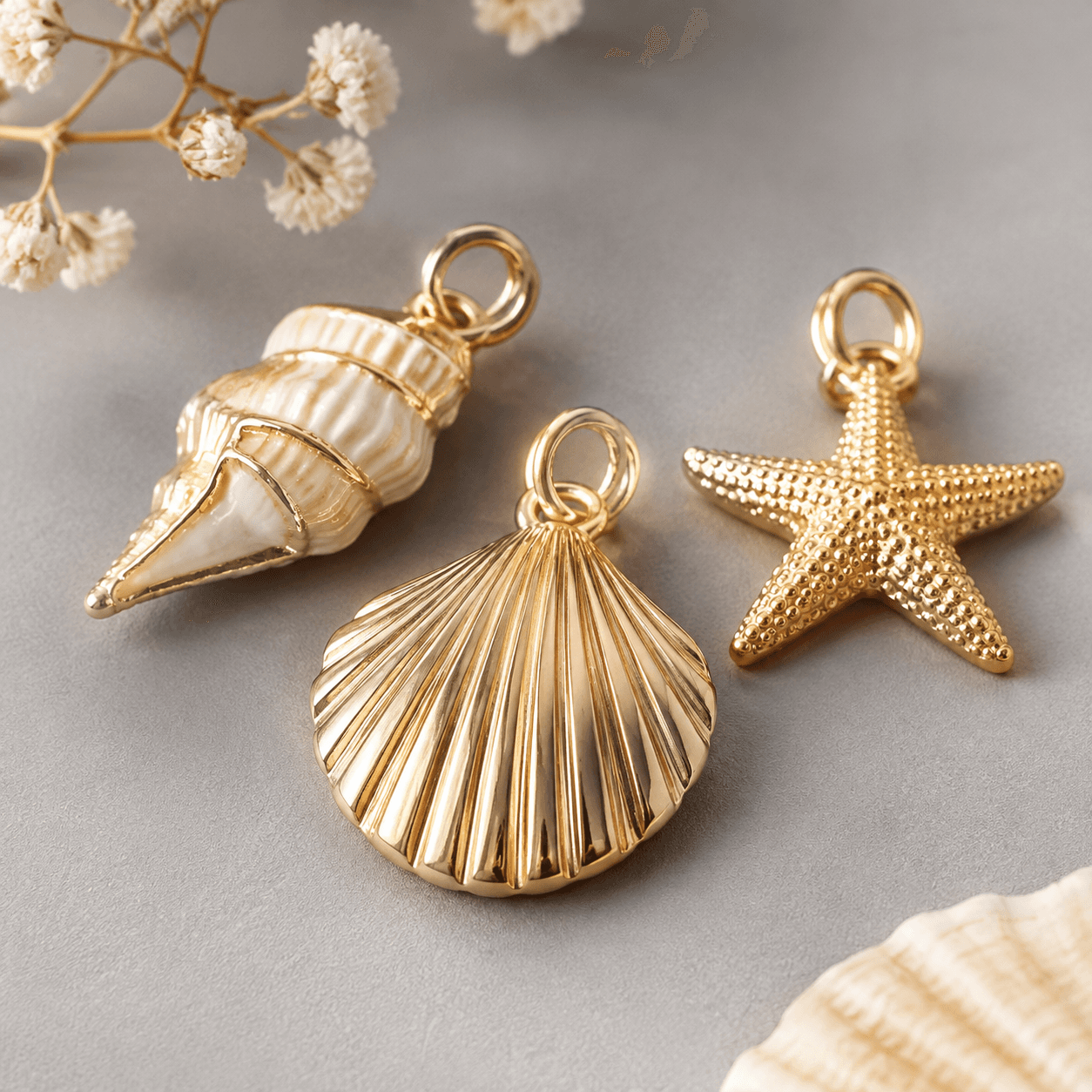
Seashell charms bring coastal forms, organic textures and marine-inspired details into contemporary jewelry collections. For jewelry designers, developing a successful seashell charm involves more than selecting an attractive silhouette. Material selection, dimensional structure, surface finishing, decorative detailing and attachment engineering all influence the final appearance, production consistency and long-term product performance.
At Lancy Jewelry, seashell charms are developed using 316L stainless steel as the exclusive base material. As a stainless steel charms manufacturer supporting OEM and ODM projects, Lancy combines precision shaping, PVD plating, enamel color filling and crystal inlay to help boutique brands translate creative concepts into commercially practical designs. This guide explores the material technology, customization possibilities, prototyping considerations and quality evaluation methods behind custom stainless steel charms.
Whether you are planning a coastal jewelry collection, developing a seasonal gift program or evaluating wholesale stainless steel charms for a boutique range, understanding these technical considerations can help you make more informed design and sourcing decisions.
Understanding the Material Structure of Seashell Charms
Why 316L Stainless Steel Is a Practical Foundation
When developing seashell charms, the base material determines the manufacturing possibilities, structural behavior and finishing characteristics of the finished component. Lancy Jewelry uses 316L stainless steel exclusively for its charm production. This grade is an austenitic stainless steel containing chromium, nickel and molybdenum. Its composition contributes to corrosion resistance, structural stability and suitability for precision jewelry components. Chromium supports the formation of a passive protective surface film, while molybdenum improves resistance to certain localized corrosion conditions compared with many conventional stainless steel grades.
For jewelry designers, these properties are relevant when developing small decorative components with fine edges, recessed details and repeated surface textures. Seashell charms often feature radial grooves, curved ridges, layered contours and delicate openings. The selected 316L stainless steel specification must support the intended manufacturing process while maintaining sufficient structural integrity around narrow sections and attachment points. Designers should consider the relationship between overall dimensions, wall thickness, relief depth and connector geometry before approving a production drawing.
Material Properties and Design Implications
- Corrosion resistance: The passive chromium-rich surface helps protect the component under suitable use and care conditions.
- Mechanical stability: Appropriate thickness and geometry help maintain the shape of small decorative components during normal handling.
- Surface finishing: The material supports polished, brushed and other controlled surface treatments.
- Dimensional consistency: Defined manufacturing tolerances help maintain repeatability across production batches.
- Decorative flexibility: The surface can be developed with PVD plating, enamel color filling and crystal inlay according to the approved design.
Material performance should not be judged by grade designation alone. Buyers should request clear material specifications, applicable test documentation and confirmation that the production sample represents the intended manufacturing configuration. For broader product planning, explore the Lancy Jewelry product catalog to understand the available charm design directions.
Seashell Charms Design Benefits and Decorative Features
Translating Natural Shell Geometry into Manufacturable Details
The visual appeal of seashell charms comes from recognizable organic geometry. Common design characteristics include fan-shaped outlines, spiral arrangements, scalloped edges, concentric ridges and radiating grooves. Converting these forms into a compact 316L stainless steel charm requires careful control of proportions and relief. If grooves are too shallow, the design may lose definition after finishing. If raised details are too narrow, polishing and subsequent surface treatments may soften their appearance. A well-developed design balances visual depth with practical manufacturing tolerances.
Designers should begin by defining the principal silhouette and identifying the visual details that must remain recognizable at the intended size. A medium charm measuring approximately 10–16 mm may require simplified ridge spacing and carefully controlled recesses. Larger statement designs can accommodate additional textural transitions and layered relief. For small components, the attachment hole and surrounding material should receive particular attention because the connector must pass through a real, correctly dimensioned opening without interfering with the decorative front.
Finishing Options for Coastal Design Collections
- Gold plated appearance through PVD: PVD gold plating creates a controlled decorative surface and supports coordinated warm-tone collections.
- Silver finish: A bright metallic appearance highlights the contours of shell-inspired relief and supports minimalist designs.
- Rose gold plating: A warmer color direction adds visual variation to romantic and gift-oriented assortments.
- Enamel: Selected recessed areas can receive controlled color filling to emphasize shell sections, central motifs or decorative accents.
- Crystal inlay: Small crystal details can introduce reflective points when the setting geometry and component dimensions permit secure installation.
These finishes can be planned as a coordinated series rather than isolated variations. For example, one seashell silhouette may be developed in silver finish, PVD gold plating and a champagne-tone decorative direction, with enamel details reserved for selected models. The result is a visually connected range that gives retailers several merchandising options while keeping the underlying design language consistent.
Related designs such as Tidal Ginkgo Moonflash Seashell Charm, Lagoon Whisper Scallop Seashell Charm in Champagne Gold, Iridescent Seashell Echo Charm and TideLace Seashell Charm illustrate different directions for exploring shell-inspired silhouettes, surface contrast and decorative detailing. These concepts can provide a starting point for an independent design brief without limiting the designer's original creative direction.
PVD Plating, Enamel and Crystal Inlay Technology
How Decorative Processes Influence the Finished Charm
Surface finishing is a critical stage in seashell charms development because it determines how light interacts with curved contours, recessed grooves and polished edges. PVD is a physical vapor deposition process in which material is deposited onto a prepared surface under controlled vacuum conditions. In jewelry manufacturing, this process is used to create decorative color finishes, including gold-tone and rose gold-tone appearances. The final result depends on surface preparation, process parameters, coating composition and the geometry of the component. Areas with different angles and recess depths may respond differently to coating conditions, so the design should be reviewed for finish uniformity before mass production.
Enamel color filling provides another way to distinguish a shell design. Designers can assign colors to individual recessed sections, create alternating color patterns or reserve enamel for a small central detail. The depth and width of each recessed area affect color application, edge definition and finished appearance. Very narrow channels may be difficult to fill consistently, so prototype evaluation is recommended before fixing the final artwork. Color references should be supplied using physical samples or clearly defined color standards wherever possible, because screen appearance can vary between devices and production environments.
Crystal Setting and Surface Preparation
Crystal inlay introduces localized reflective detail to seashell charms. The setting must be designed around the selected crystal dimensions, seating depth and retaining structure. Designers should avoid placing decorative elements too close to thin edges or narrow shell ridges, where insufficient surrounding material could compromise setting stability. The sample should be examined under normal viewing conditions and magnification to check alignment, seating consistency and visible gaps.
- Before PVD: Confirm surface preparation, polishing quality, edge transitions and areas that require masking or special attention.
- Before enamel filling: Check recess depth, color boundaries and the accessibility of the intended filling areas.
- Before crystal setting: Verify seat dimensions, surrounding material and visual alignment.
- After finishing: Inspect color consistency, surface cleanliness, detail definition and any visible defects.
For OEM charms manufacturer projects, documenting the finishing specification is particularly important. A complete specification should identify the intended finish, color reference, decorative process, inspection points and acceptable visual variation. This information helps connect the approved prototype with subsequent bulk charm orders and reduces uncertainty when a design is reproduced in future production runs.
Custom Seashell Charms Development and Prototyping
From Design Concept to an Approved Production Sample
Custom seashell charms development is most efficient when designers and manufacturing teams agree on the technical requirements before sample production begins. A useful starting point is a two-dimensional drawing or three-dimensional model showing the front profile, dimensions, thickness, relief structure and attachment position. If the concept begins as a sketch or reference photograph, the designer should identify which visual characteristics are essential and which details can be adjusted to improve manufacturability. This distinction helps prevent unnecessary design revisions during prototyping.
The first technical review should examine the overall silhouette, edge transitions, minimum structural thickness, groove depth and connector opening. A shell-shaped charm intended for a bracelet may require a different balance of dimensions from a larger decorative pendant intended for a necklace. Lancy generally develops standalone charm components rather than treating a complete necklace or bracelet as the main charm product. The bail or jump ring should pass through an actual hole or loop, with enough clearance for movement and a mechanically plausible closed connection. These details should be checked in the prototype rather than assumed from the visual drawing.
A Practical Sample Development Workflow
- Concept submission: Provide sketches, reference images, dimensions and the intended application context.
- Technical assessment: Review material thickness, relief, attachment geometry and decorative process requirements.
- Design confirmation: Approve the proposed silhouette, proportions, surface treatment and key dimensions.
- Prototype production: Develop a physical sample for evaluating appearance, construction and finishing.
- Sample review: Check the front design, back surface, edge quality, connector fit, color and decorative details.
- Production specification: Record the approved sample, finish references, inspection criteria and packaging requirements.
Sampling is especially useful for organic designs because a digital rendering cannot fully communicate tactile surface transitions, actual color appearance or the visual depth of polished ridges. A physical sample also provides an opportunity to evaluate the attachment mechanism and ensure that the charm hangs naturally in its intended application. Lancy supports sample development for custom stainless steel charms, helping buyers resolve design questions before confirming production quantities.
For more complex concepts involving several related silhouettes, an ODM charm supplier can assist with design development and coordinated series planning. Visit the OEM and ODM manufacturing service page to discuss customization requirements and the technical information needed for a development project.
Quality Control, SGS Testing and Material Verification
Evaluating Seashell Charms Beyond Appearance
A professional quality assessment should cover material identity, manufacturing consistency, finishing performance and component construction. For 316L stainless steel charms, buyers should request documentation that identifies the tested material and clarifies whether the report applies to the actual production specification. A material certificate, laboratory test report and finished-product inspection record serve different purposes. A material certificate addresses material composition or grade, while a finished-product inspection evaluates the physical characteristics of a particular sample or batch. Neither document should automatically be treated as proof of every possible performance claim.
SGS testing documentation may be relevant to several aspects of product compliance and quality assessment. RoHS relates to restrictions on specified hazardous substances in applicable electrical and electronic equipment and associated regulatory scopes; its applicability to a particular jewelry component should be confirmed rather than assumed. REACH concerns chemical substances and relevant obligations in the European market, including applicable substance restrictions and information requirements. EN1811 is a reference test method for determining nickel release from certain products intended for direct and prolonged skin contact. Salt Spray testing evaluates corrosion behavior under defined artificial test conditions. These reports should be interpreted according to their test scope, sample preparation, measured results and applicable market requirements.
Recommended Inspection Points
- Material identity: Confirm the specified 316L stainless steel grade through appropriate documentation and verification.
- Dimensional control: Measure overall length, width, thickness, hole diameter and critical design features.
- Surface inspection: Check for scratches, uneven polishing, pits, burrs and visible finishing defects.
- Plating consistency: Compare color and coverage across the sample and approved production reference.
- Enamel quality: Examine color boundaries, filling uniformity and visible surface irregularities.
- Crystal setting: Inspect alignment, seating and retention according to the agreed quality criteria.
- Attachment integrity: Verify that the jump ring or bail connects through the actual hole or loop and functions as intended.
Salt Spray results should be read with the test duration, method, preparation and acceptance criteria clearly documented. A test result under laboratory conditions does not guarantee identical behavior in every wearing environment. Similarly, EN1811 results should be checked against the relevant product category, testing conditions and market requirements. Buyers should not rely on a general statement that a product is compliant without reviewing the actual supporting report.
Lancy's factory quality approach combines defined material requirements, process checks, sample approval and finished-product inspection. Buyers can specify applicable SGS testing requirements during RFQ discussions so that the correct sample configuration and documentation expectations are established before production. This is particularly important for international distributors and private-label buyers serving markets with different regulatory obligations.
Building a Coordinated Seashell Charms Collection
Creating Design Variety Without Losing Collection Consistency
A commercially effective seashell charms range needs a recognizable design identity while providing enough variation for different retail preferences. Instead of developing every item independently, designers can establish a common visual system based on shell geometry, relief depth, finish palette and attachment proportions. A scallop silhouette, spiral shell and elongated shell form can share consistent edge treatment and surface finishing while maintaining distinct individual identities. This makes the range easier to merchandise and gives retailers opportunities to combine different designs in a coordinated display.
One practical approach is to establish a collection architecture with three levels. The first level contains core silhouettes that communicate the main coastal theme. The second introduces decorative variations through PVD gold plating, silver finish or rose gold plating. The third adds selected enamel or crystal inlay options for higher-detail models. This approach allows buyers to test a focused assortment before expanding into additional designs. It also supports clearer SKU management, sampling priorities and production planning.
Design and Merchandising Considerations
- Core designs: Use easily recognizable shell outlines with balanced dimensions and versatile attachment points.
- Color variations: Coordinate metallic finishes across the collection to maintain a consistent visual direction.
- Accent models: Reserve enamel and crystal inlay for selected designs to create visual hierarchy.
- Personalization: Consider custom logo engraving on suitable surfaces where the design provides sufficient space.
- Packaging: Plan private-label packaging around the collection theme, product dimensions and retail presentation requirements.
- Cross-category planning: Coordinate shell charms with related gift accessories and decorative accessories where appropriate.
Designers can also explore a broader thematic range through marine-inspired forms, botanical details, initials and symbolic motifs. For example, the Letterburst Micro Halo 316L Charm from the letter charm category offers a different design direction that can be considered when planning a personalized coastal assortment. The goal is not to make every product identical, but to establish common design rules that help the complete range feel intentional.
For boutique brands, charm bar retailers and gift companies, a well-planned series can simplify display organization and support repeat purchasing. Lancy provides boutique-ready series planning, custom logo engraving and private-label packaging support for suitable projects. The complete product range can be reviewed alongside an OEM development brief to identify possible collection extensions.
Production Planning, MOQ and Wholesale Sourcing
Turning a Custom Design into a Repeatable Commercial Product
Once the sample is approved, the next step is to establish a production specification that can be used consistently across manufacturing batches. For wholesale stainless steel charms, the specification should include the approved 316L stainless steel grade, finished dimensions, surface treatment, decorative details, connector configuration and packaging instructions. It should also identify the approved sample or reference standard. This reduces ambiguity when the same seashell charms are reordered or when a related design is introduced into the collection.
MOQ planning depends on the design complexity, manufacturing process, finishing requirements and packaging configuration. A simple polished shell silhouette may involve different production considerations from a design with several enamel sections and crystal settings. Buyers should therefore evaluate MOQ at the SKU and project level rather than assuming that every finish and design combination will have identical requirements. Lancy supports low MOQ discussions for suitable development projects, with final quantities confirmed after reviewing the technical specification and production scope.
What Buyers Should Confirm Before Bulk Production
- Final approved sample and technical drawing.
- Confirmed dimensions, tolerances and attachment configuration.
- 316L stainless steel material specification.
- PVD color and finish references, including acceptable visual variation.
- Enamel color references and crystal inlay requirements where applicable.
- Custom logo engraving position, size and artwork format.
- Packaging design, labeling and private-label requirements.
- Order quantity, SKU allocation, inspection criteria and delivery expectations.
Bulk charm orders should be planned around realistic lead-time expectations. Sample approval, material preparation, finishing, quality inspection and packaging each contribute to the overall schedule. Changes to artwork or surface treatment after approval may require additional review and sampling. Buyers should also identify whether they need separate samples for different finish options, because one approved color does not automatically establish the appearance of every other finish.
As a B2B accessory supplier, Lancy works with boutique jewelry brands, charm bar retailers, gift companies, private-label buyers and distributors. The OEM and ODM process can accommodate suitable custom designs, coordinated collections and branding requirements. For a project-specific assessment, buyers can use the Lancy Jewelry contact page or submit an inquiry through the RFQ request route.
Frequently Asked Questions About Seashell Charms
Designing Seashell Charms for Long-Term Collection Development
From Individual Motifs to a Recognizable Product Identity
The strongest seashell charms concepts often begin with a clear design principle that can be repeated across multiple product variations. A collection may focus on fan-shaped shell profiles, spiral geometry, layered scallops or simplified marine textures. Once the central visual direction is established, designers can develop additional shapes and finishes without losing the collection's identity. This approach is particularly useful for boutique brands that need newness across seasonal assortments while maintaining a consistent product language.
Technical planning should continue as the range expands. Changes in size can affect groove visibility, polishing access, attachment geometry and the feasibility of decorative processes. A design that works well as a 16 mm charm may need simplified relief when reduced to a smaller format. Likewise, an enamel pattern developed for one shell silhouette may require adjusted channel widths on another. Treating each variation as a technical development task, rather than simply changing the artwork color, helps protect manufacturing consistency.
Practical Collection Development Principles
- Establish a shared visual theme before developing individual SKUs.
- Define standard dimensions and connector preferences for related designs.
- Use a controlled finish palette across the collection.
- Reserve intricate enamel and crystal details for designs with suitable geometry.
- Approve representative samples before committing to a larger assortment.
- Document specifications so that future replenishment can follow the approved reference.
For designers exploring personalized assortments, shell motifs can be combined with initials, symbolic designs and other decorative forms through an independently developed collection plan. Custom logo engraving and private-label packaging provide additional opportunities to establish a distinct retail identity. The important consideration is that every component remains technically appropriate for its intended size, finish and application.
Lancy's OEM and ODM development process is intended to help buyers connect creative design decisions with practical factory requirements. From the first technical drawing to sample review and wholesale production planning, a documented development process makes it easier to manage revisions, compare finishing options and plan repeat orders. This foundation supports seashell charms collections that are visually distinctive, manufacturable and suitable for long-term B2B sourcing.
Start Your Custom Seashell Charms Development
Discuss Your Design with Lancy Jewelry
Ready to develop a distinctive seashell charms collection? Lancy Jewelry supports boutique brands, charm bar retailers, gift companies and distributors with 316L stainless steel charm manufacturing, OEM and ODM development, sample support and private-label services. Whether you are refining an existing shell design or starting with an original concept, our team can review the technical requirements and help identify suitable production and finishing options.
To receive a more accurate RFQ assessment, please prepare the following information:
- Design materials: Sketches, reference photographs, 2D drawings or 3D files showing the intended shell silhouette.
- Dimensions: Target length, width, thickness, relief depth and attachment hole specifications.
- Material: Confirmation of the required 316L stainless steel base material.
- Finish: Preferred PVD gold plating, silver finish or rose gold plating, including available color references.
- Decorative details: Enamel color placement, crystal inlay requirements and custom logo engraving artwork.
- Quantity: Estimated MOQ requirements, number of SKUs and expected bulk charm orders.
- Packaging: Private-label packaging, logo placement, labeling and retail presentation requirements.
- Compliance: Target sales markets and any applicable SGS RoHS, REACH, EN1811 or Salt Spray testing documentation requirements.
- Sampling: Sample quantity, prototype expectations and preferred evaluation schedule.
Providing these details helps the manufacturing team evaluate design feasibility, sample development requirements, production quantities and quality expectations. For coordinated collections, include a complete SKU list so that related designs can be reviewed together.
Explore the OEM and ODM service for custom manufacturing information, browse all available products, or submit your requirements through the RFQ request page. You can also reach the team through Lancy Jewelry contact to discuss your seashell charms project.
Build your next coastal jewelry collection on a clearly specified 316L stainless steel foundation, with practical design development and production support from Lancy Jewelry.
Related resources
Related resources
- 316L Stainless Steel Custom Enamel Sterling Charms: A Buyer’s Guide
- Stainless Steel Custom Enamel Charms: A Buyer’s Quality Guide
- How to Choose a Stainless Steel Custom Enamel Bracelet Charms Supplier
- Stainless Steel Animal Jewelry Charms Wholesale: Quality Guide
- Custom OEM/ODM Guide to Stainless Steel African Jewelry Charms Wholesale
- 316L Stainless Steel Custom Enamel Pins with Charms: A Buyer’s Guide
- Stainless Steel Custom Enamel Charms: A Buyer’s Quality Checklist
- Antique Distressed Finish on Stainless Steel Charms: A Buyer’s Guide to Durability
- How to Source Minimalist Stainless Steel Charms: Finishing Guide
- How to Get the Best Price on Bulk Stainless Steel Enamel Charms